Calculate Air Compressor Pulley Size: A Step-by-Step Guide
To calculate pulley size for an air compressor, you’ll want to match your motor’s RPM to the compressor’s target RPM using the pulley diameter ratio. A common formula involves dividing the motor’s RPM by the desired compressor RPM, then multiplying that result by the motor pulley’s diameter to find the compressor pulley’s diameter. This ensures your compressor runs at its optimal speed for efficient air production.
Getting this ratio right is more art than science sometimes. It’s not just about speed; it impacts how hard your motor works and the overall efficiency of your setup. We found that many folks overlook this, leading to problems down the road like a motor that overheats or a compressor that just won’t keep up. It’s worth taking a few minutes to get it right.
TL;DR:
- Match motor RPM to compressor RPM for best results.
- Use the pulley diameter ratio formula.
- Proper sizing prevents motor strain and ensures efficiency.
- It’s an important step for compressor longevity.
- Don’t skip this calculation!
Ready to figure out those pulley sizes? Let’s walk through exactly how this works step by step so you can get your air compressor running just right.
Figuring Out Your Air Compressor Pulley Sizes
You’re looking to calculate the right pulley sizes for your air compressor. This is a smart move for keeping your equipment running smoothly. Getting this calculation right ensures your motor isn’t working too hard. It also makes sure your compressor can produce air efficiently. Let’s break down how to do it.
Understanding the Basics: RPM and Pulley Ratios
The core idea is to match the revolutions per minute (RPM) of your motor to the desired RPM of your air compressor pump. Think of it like gears on a bicycle. The size of the pulleys and the speed they spin determine how much power is transferred and at what rate.
You’ll have two pulleys: one on the motor shaft and one on the compressor pump shaft. The ratio of their diameters is what controls the speed change. A smaller motor pulley driving a larger compressor pulley will slow down the pump. Conversely, a larger motor pulley driving a smaller compressor pulley will speed it up.
Why Pulley Size Matters for Your Compressor
Why go through the trouble of calculating this? Well, the wrong pulley sizes can cause a few headaches. If your compressor pump spins too fast, your motor can overheat. It might even trip its breaker because it’s struggling to keep up. Your compressor might also wear out faster.
On the flip side, if the pump spins too slowly, you won’t get the air volume you need. You might find your tank pressure drops too quickly during use. This means you’re not getting efficient work done. Finding that sweet spot is key to a happy, productive compressor.
The Calculation: Step-by-Step
Let’s get down to the numbers. You’ll need a few pieces of information before you start.
Information You’ll Need
First, you need to know your motor’s RPM. This is usually listed on the motor’s nameplate. Next, find out the ideal operating RPM for your compressor pump. This is often found in the compressor pump’s manual or manufacturer’s specifications. If you can’t find it, research similar pump models. Many small to medium-sized compressors work well between 600 and 1200 RPM.
Finally, you need the diameter of the pulley already on your motor. Measure this from the center of the shaft to the center of the belt groove on one side, then double it for the full diameter. If you’re replacing pulleys, you might already know the diameter of the existing compressor pulley you want to keep or replace.
The Formula Explained
Here’s the most common formula used:
(Motor RPM / Compressor RPM) * Motor Pulley Diameter = Compressor Pulley Diameter
Let’s imagine some numbers. Suppose your motor runs at 1750 RPM. Your compressor pump needs to run at about 800 RPM for optimal performance. The pulley on your motor is 3 inches in diameter.
Plug those numbers into the formula:
(1750 / 800) * 3 inches = Compressor Pulley Diameter
2.1875 * 3 inches = 6.5625 inches
So, you would need a compressor pulley that is approximately 6.5 inches in diameter. This ratio ensures your pump spins at the target speed.
What if You Already Have a Compressor Pulley?
What if you already have the compressor pulley and need to find the motor pulley size? The formula simply flips:
(Compressor RPM / Motor RPM) * Compressor Pulley Diameter = Motor Pulley Diameter
Using the same example: If your compressor pulley is 6.5 inches and your motor runs at 1750 RPM, but you want the pump at 800 RPM:
(800 / 1750) * 6.5 inches = Motor Pulley Diameter
0.457 * 6.5 inches = 2.97 inches
This tells you that a 3-inch motor pulley is the correct size to achieve that 800 RPM on the pump.
Tips for Accurate Measurement
When measuring pulley diameters, always measure the diameter of the groove where the belt sits, not the overall width of the pulley. This is the part that dictates the effective diameter. We found that using a tape measure or a ruler works well for most standard pulleys.
For very precise measurements, a caliper can be handy. Double-check your measurements. Even a small error can affect the final RPM.
Practical Considerations and Adjustments
Calculations are great, but real-world application sometimes needs a little fine-tuning. Here are a few things to keep in mind.
Belt Alignment and Tension
Proper belt alignment is critical. If the pulleys aren’t lined up perfectly, the belt can wear unevenly. It can also slip, affecting the actual speed transfer. Make sure the motor and compressor shafts are parallel.
Belt tension is also important. Too loose, and you get slippage and reduced efficiency. Too tight, and you put unnecessary strain on the motor and pump bearings. You want the belt to have just a little bit of give when you press on it – about a quarter to a half-inch is often recommended.
Motor Horsepower and Compressor Needs
The calculation is just one part of the puzzle. You also need to ensure your motor has enough horsepower for the compressor pump. A motor that’s too small, even with perfect pulley sizing, will struggle. Many experts suggest a minimum of 1 horsepower (HP) for every 4-6 CFM (cubic feet per minute) of air delivery the compressor is rated for (National,’” Compressor Guide).
If your motor is struggling, it might be a sign that it’s undersized for the pump, or the pulleys are set up incorrectly, making it work harder than it should. You might need a larger motor or a different pulley ratio.
Types of Pulleys and Belts
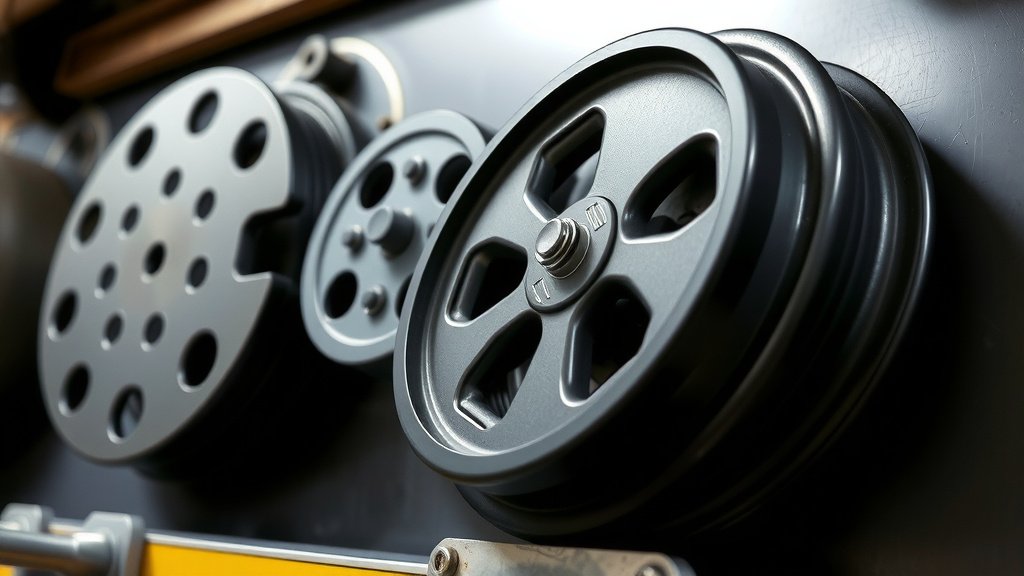
There are various types of pulleys, like keyed bore and adjustable bore. Make sure the pulleys you choose fit your motor and compressor shafts correctly. Most air compressors use V-belts. The belt size must match the pulley grooves for optimal grip and power transfer.
We often see people using older, worn-out belts. Replacing an old, stretched belt with a new one can sometimes improve performance noticeably. Always use the correct belt profile (e.g., A, B, or 3V, 5V) for your pulleys.
Checking Your Work After Installation
Once you’ve installed your new pulleys and belt, it’s time to test. You can use a tachometer to measure the actual RPM of the compressor pump shaft. This will tell you if your calculations were spot on.
Start the compressor and let it run for a bit. Listen for any unusual noises. Feel the motor and compressor for excessive heat. Check the belt tension again after a short run-in period. If the pump speed is off, you may need to slightly adjust the motor pulley size or compressor pulley size.
Quick Checklist for Pulley Sizing
- Know your Motor RPM: Check the motor’s nameplate.
- Find your Compressor RPM Target: Consult the pump manual.
- Measure your Motor Pulley Diameter: Accurately measure the groove.
- Do the Math: Use the formula (Motor RPM / Compressor RPM) * Motor Pulley = Compressor Pulley.
- Check Alignment and Tension: Ensure the belt runs true and is snug.
- Test and Verify: Use a tachometer to confirm the pump speed.
Conclusion
You’ve now got a clear roadmap for calculating the correct pulley sizes for your air compressor. Remember, matching your motor’s RPM to the compressor pump’s ideal speed is key. This simple calculation prevents motor strain and boosts your compressor’s overall efficiency. Getting this right means less wear and tear, and more reliable air when you need it. Take your time with the measurements and calculations. Then, double-check your work by testing the actual pump RPM. You’ll be rewarded with a compressor that runs smoother and lasts longer.
Frequently Asked Questions
What happens if my compressor pulley is too large?
If your compressor pulley is too large, it will cause the compressor pump to spin slower than its optimal speed. This can lead to reduced air output, meaning your tank won’t fill as quickly, and you might not have enough air for your tools. Your motor might also run at a lower RPM than ideal, potentially affecting its efficiency.
Can I use a different type of belt if it fits the pulley?
It’s best to stick with the V-belt type that your pulleys are designed for. Using the wrong belt profile can cause slippage, reduced power transfer, and faster wear on both the belt and the pulley grooves. Always match the belt profile (like A, B, 3V, 5V) to your pulley’s design for optimal performance and longevity.
How do I find the ideal RPM for my specific compressor pump?
The best place to find your compressor pump’s ideal operating RPM is in the owner’s manual or the manufacturer’s specifications. If you can’t locate this information, research the model number of your compressor pump online or look for similar models to get a general idea of typical operating speeds, often between 600-1200 RPM for many common units.
What if my motor RPM is not listed on the nameplate?
If the motor’s RPM isn’t clearly labeled, you might need to do a bit more digging. Check the motor’s model number and search for its specifications online. Sometimes, it can be inferred from the motor’s horsepower and number of poles, but a direct specification is always best. If all else fails, using a tachometer on the motor shaft while it’s running can give you a direct reading.
Do I need to account for belt slippage in my calculations?
The standard pulley calculation formula doesn’t directly account for belt slippage. However, ensuring proper belt tension and alignment significantly minimizes slippage. If you find your actual pump RPM is consistently lower than calculated after installation and proper tensioning, you might consider a slightly smaller compressor pulley or a slightly larger motor pulley to compensate for any minor, unavoidable slippage.