Choosing the Right Laundry Machine for Your Home
Picking the right laundry machine involves balancing your budget, laundry needs, and available space. You’ll want to decide between a high-efficiency front-loader or a top-loader, considering factors like water usage and wash cycles. Front-loaders generally use less water and are gentler on clothes, while top-loaders can be faster and often cost less upfront.
Your choice also depends on whether you prioritize energy savings or capacity. Newer models offer advanced features like steam cycles and smart connectivity, but these often come at a higher price point. It’s worth researching different brands and reading reviews to find a machine that best suits your household’s laundry habits and your home.
- Decide between front-load or top-load washers.
- Consider your budget and available space.
- Think about capacity and cycle needs.
- Look into energy efficiency ratings.
- Research different brands and read reviews.
Let’s walk through the key features and considerations to help you make an informed decision on your next laundry machine.
Finding the Right Washing Machine for Your Home
Choosing a new washing machine can feel overwhelming. You have so many options! We want to help you sort through them. Let’s break down the key things to consider so you can make a smart purchase.
Top-Load vs. Front-Load Washers: The Big Decision
This is often the first big choice you’ll make. Both types have their pros and cons, and the best one for you depends on your priorities.
Top-Load Washers: Familiar and Fast
Top-loaders are what many of us grew up with. Clothes go in from the top, and they usually have an agitator in the middle. This is the traditional style.
- Pros: They are generally less expensive upfront. You can also add clothes mid-cycle easily. Many people find them more comfortable to load since you don’t have to bend over as much.
- Cons: They tend to use more water per load. The agitator can be rougher on delicate fabrics. They may not clean as thoroughly as some front-loaders for very soiled items.
Front-Load Washers: Efficient and Gentle
Front-loaders have a door on the front, and they tumble clothes rather than using an agitator. Think of it like a gentle tumble dryer.
- Pros: They are much more water-efficient and energy-efficient. Clothes generally come out cleaner and with less damage because they are gentler. They also spin faster, meaning less drying time.
- Cons: They usually cost more upfront. You have to bend down to load them, which can be a hassle for some. Some people don’t like that you can’t easily add clothes once the cycle starts.
High-Efficiency (HE) Top-Loaders
It’s worth noting that there are now “HE” top-loaders. These don’t have the central agitator. Instead, they use an impeller on the bottom. They use less water than traditional top-loaders and are gentler on clothes, bridging the gap between the two types.
Capacity: How Much Laundry Do You Do?
Think about the size of your household. Do you have a big family or just one or two people? This will affect the size of the drum you need.
- Small loads (1-2 people): A capacity of 2-3 cubic feet is usually plenty.
- Medium loads (3-4 people): Look for something around 3-4 cubic feet.
- Large loads (5+ people or frequent heavy laundry): You might need 4.5 cubic feet or more. Some machines even offer extra-large capacities.
You don’t want a machine that’s too small, or you’ll be doing laundry all the time. But an oversized machine for just a few socks can waste water and energy.
Energy and Water Efficiency: Saving Money and the Planet
Washing machines use a good amount of energy and water. Look for the ENERGY STAR label. These appliances meet strict energy efficiency guidelines set by the U.S. Environmental Protection Agency.
ENERGY STAR certified washers use about 50% less water and energy than older, standard models. This can lead to significant savings on your utility bills over the life of the machine. Many experts say this is a key factor for long-term savings (ENERGY STAR).
When comparing models, check the Water Factor (WF) and Modified Energy Factor (MEF) ratings. Lower WF and higher MEF mean better efficiency.
Wash Cycles and Features: What Do You Really Need?
Modern washers come with tons of settings. It’s easy to get excited about steam cycles or sanitizing options, but do you actually need them?
Standard Cycles
Most machines offer basic cycles like:
- Normal/Cotton: For everyday laundry.
- Permanent Press: For synthetic fabrics that need medium heat.
- Delicate: For lacy items or anything fragile.
- Heavy Duty: For heavily soiled items like work clothes.
- Quick Wash: For lightly soiled items you need in a hurry.
Advanced Features to Consider
Some machines offer more:
- Steam: Helps remove wrinkles, allergens, and sanitize clothes. Great for people with allergies or sensitive skin (Cleveland Clinic).
- Sanitize: Uses very hot water to kill bacteria and allergens.
- Allergen Cycle: Similar to sanitize, specifically targeting common allergens.
- Smart Features: Wi-Fi connectivity allows you to control your washer from your phone. You can start, stop, or get alerts when a cycle is done.
- Automatic Dispensers: Some machines can store detergent and fabric softener and dispense them automatically.
Think honestly about your laundry habits. If you never wear delicate items, you might not need a super-specialized cycle for them. Features like steam and smart tech add to the cost, so weigh the benefits carefully.
Budget and Cost of Ownership
Washing machines range widely in price. You can find basic models for a few hundred dollars, while high-end, feature-rich units can cost well over $1,000.
Remember to consider the total cost of ownership. A more expensive, energy-efficient machine might save you money on utility bills in the long run. Also, factor in the cost of any necessary accessories like hoses or pedestals.
Space and Installation Requirements
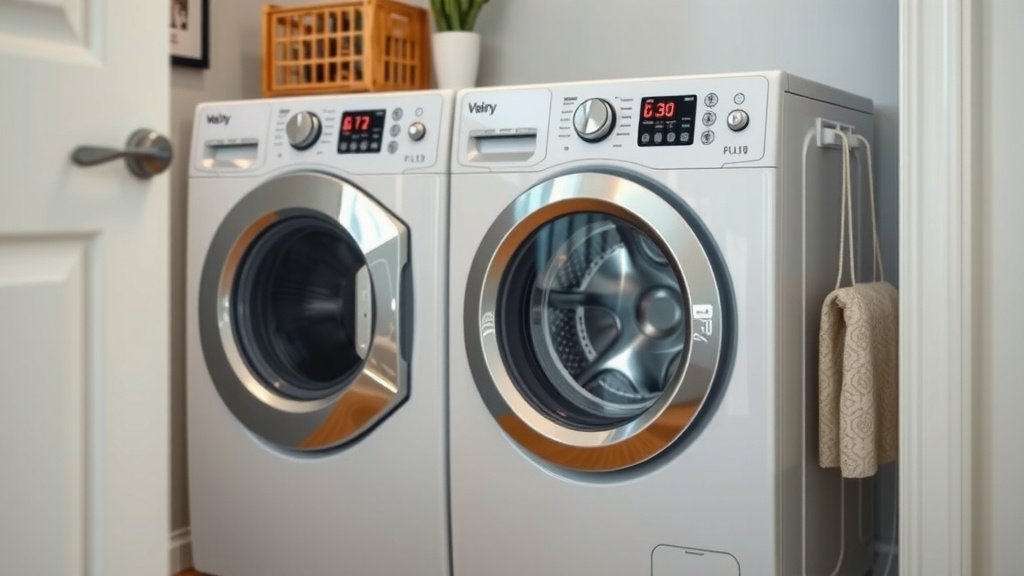
Measure your laundry space carefully! You need to know the width, depth, and height available. Don’t forget to account for space behind the machine for water hoses and electrical cords.
Check the door swing for front-loaders. Will it interfere with cabinets or other appliances? If space is really tight, consider a stackable washer-dryer unit or a compact model. If space is really tight, consider a stackable washer-dryer unit or a compact model.
Noise Level: Is Quiet Important?
Some washers are louder than others, especially during the spin cycle. If your laundry room is near a living area or bedroom, look for models that advertise quiet operation or vibration reduction technology. Reviews often mention how noisy a machine is.
Checking Reviews and Reliability
Once you’ve narrowed down your choices, read reviews from other consumers. Websites of major retailers and independent review sites can offer real-world feedback on performance and reliability.
Some consumer advocacy groups and magazines test appliances rigorously. They often provide ratings for reliability based on repair data. We found that brands with consistently good ratings tend to offer better long-term value.
Quick Checklist for Your Laundry Machine Search
- Measure your laundry space accurately.
- Decide on top-load vs. front-load.
- Determine the right capacity for your household.
- Look for ENERGY STAR certification.
- List the essential wash cycles and features you need.
- Set a realistic budget, considering long-term costs.
Conclusion
You’re now equipped to find the perfect laundry machine for your home. Remember to weigh your needs against your budget and space constraints. Prioritizing energy efficiency and the right capacity will lead to long-term savings. Don’t forget to check reliable reviews to ensure you’re picking a dependable model.
Take a moment to measure your space and list your must-have features. Your next step is to visit a retailer or browse online, armed with this knowledge. You’ve got this!
Frequently Asked Questions
Are front-load washers worth the extra cost?
Often, yes. Front-load washers typically use less water and energy, leading to lower utility bills over time. They also tend to be gentler on your clothes, which can help them last longer.
How often should I clean my washing machine?
It’s a good idea to clean your washing machine about once a month. This helps prevent mold, mildew, and odors, especially in high-efficiency front-loaders which tend to be more prone to buildup.
Can I stack my washer and dryer if they aren’t a matching set?
It’s generally not recommended to stack mismatched units. Most manufacturers design stacking kits and machines to work together safely and efficiently. Always check the manufacturer’s guidelines for compatibility.
What does “high-efficiency” mean for a washing machine?
High-efficiency (HE) washers use less water and energy per load compared to standard machines. They achieve this through advanced wash actions and improved spinning technology, resulting in cleaner clothes with a smaller environmental footprint.
How much space do I really need behind a washing machine?
You’ll need at least 4-6 inches of space behind the machine. This allows for proper ventilation and ample room for the water hoses and drain pipes without kinking them.
![7 Best And Cheapest Washing Machine [In 2026]](https://homeunderstandable.com/wp-content/uploads/2026/09/7-best-and-cheapest-washing-machine-in-2026-featured-768x432.jpg)
![7 Best Price For Washing Machine And Dryer [In 2026]](https://homeunderstandable.com/wp-content/uploads/2026/08/7-best-price-for-washing-machine-and-dryer-in-2026-featured-768x432.jpg)
![7 Best Compact Washer Dryer For Apartment [In 2026]](https://homeunderstandable.com/wp-content/uploads/2026/08/7-best-compact-washer-dryer-for-apartment-in-2026-featured-768x432.jpg)