How to Select Air Compressor Capacity for Your Needs
Selecting the right air compressor capacity is key to avoiding frustration. You need a compressor that can power your tools without quitting. The best way to choose is to calculate your total air demand and then add a buffer for safety. This ensures your tools work when you need them to.
Getting the capacity wrong means your tools might sputter or the compressor might overheat. We found that understanding CFM (cubic feet per minute) is essential. It’s like figuring out how much water your shower needs. You don’t want a trickle when you’re trying to get clean, right? So, matching your tools’ needs is super important.
- Figure out how much air your tools use.
- Add up the CFM needs of all tools.
- Choose a compressor with higher CFM than your max need.
- Consider future tool additions.
Let’s walk through exactly how to figure out the perfect air compressor capacity for your needs.
Choosing the Right Air Compressor Size for Your Needs
Picking the correct air compressor capacity is all about matching its power to your tasks. You don’t want a compressor that quits halfway through a job. We found that understanding your tool’s air needs is the **most important step**. This ensures your projects get done without a hitch.
Understanding Air Compressor Metrics: CFM is King
The main number you’ll see on air compressors is its CFM rating. This stands for Cubic Feet per Minute. It tells you how much air the compressor can deliver at a certain pressure. Think of it like water flow from a hose. A higher CFM means more air is available, like a wider, more powerful hose.
Why CFM Matters More Than PSI
You’ll also see a PSI rating. This is Pounds per Square Inch, which is the pressure. Most tools operate within a range of PSI. While pressure is important for your tools to function, the amount of air they use is usually the limiting factor. Running out of air means your tool stops working, even if the pressure is still high. We found that CFM is the better metric for capacity planning.
How to Find Your Tools’ CFM Requirements
Your tool’s manual is the best place to look. It will usually list the air consumption in CFM. If you can’t find it, don’t worry. Many common tools have standard CFM ratings. We found that a quick online search for your specific tool model often yields this information.
Common Tool CFM Needs (Approximate)
Here are some typical CFM needs for common air tools. Remember, these are averages. Always check your tool’s specific rating if possible.
| Tool Type | Average CFM @ 90 PSI |
|---|---|
| Brad Nailer | 0.5 – 2 CFM |
| Stapler | 1 – 2 CFM |
| Impact Wrench | 4 – 6 CFM |
| Air Sander | 8 – 12 CFM |
| Paint Sprayer | 8 – 15 CFM (varies greatly) |
| Grinder | 5 – 10 CFM |
Calculating Your Total Air Demand
To figure out what size compressor you need, you have to add up the CFM of the tools you’ll use simultaneously. This is where many people go wrong. They only think about one tool at a time.
The Simultaneous Use Factor
Ask yourself: Will I ever use two air tools at the exact same moment? If the answer is yes, you need to add their CFM requirements together. For example, if you’re sandblasting and someone else is using a nail gun, you need a compressor that can handle both. This is a key consideration for **workshop efficiency**.
Adding a Safety Margin: The Buffer Zone
Once you have your total CFM need, it’s smart to add a buffer. Many experts recommend adding 30% to 50% to your calculated CFM. This accounts for a few things. Compressors can lose efficiency over time. Also, your tools might have higher peak demand than their average rating. This buffer ensures your compressor won’t run constantly, which can lead to overheating and premature wear.
We found that a compressor that’s just barely powerful enough will struggle. It will run almost non-stop. This is hard on the motor and can lead to frustrating shutdowns. Adding that extra CFM capacity gives you breathing room.
Considering Other Important Factors
Beyond CFM, a few other things can influence your choice. Think about the type of compressor and how you’ll use it.
Portable vs. Stationary Compressors
Are you working on various job sites, or is this for a dedicated home garage? Portable compressors are great for mobility. They are often smaller and lighter. Stationary compressors, like two-stage units, are typically more powerful. They are designed for continuous use and are ideal for busy workshops. Your workspace size and portability needs are important.
Duty Cycle: How Often Can It Run?
Air compressors have a duty cycle. This is the percentage of time they can run within a 10-minute period without overheating. A 50% duty cycle means it can run for 5 minutes and then needs to rest for 5 minutes. For demanding tasks, look for a compressor with a 75% or 100% duty cycle. This is especially important for continuous applications like spray painting.
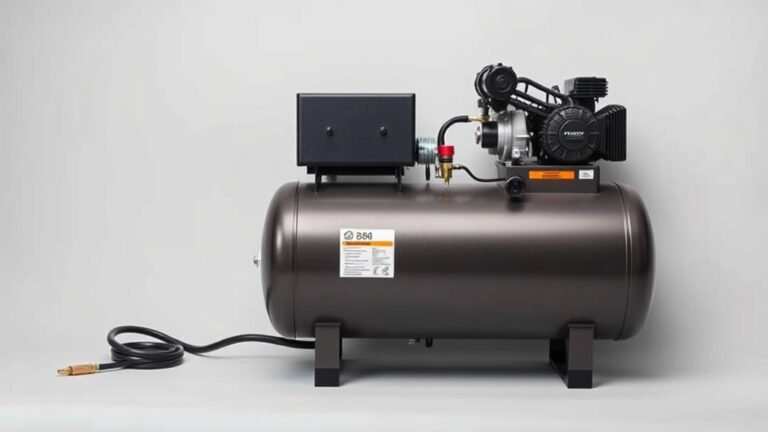
Tank Size: Air Storage Matters
The tank stores compressed air. A larger tank can supply air for longer periods, especially for tools that use air in bursts. However, tank size doesn’t increase the CFM output. If your tools require a high CFM, a large tank will only delay the inevitable compressor shutdown. We found that CFM is still the primary driver, but tank size helps with **tool run-time between cycles**.
Your Air Compressor Capacity Checklist
Ready to make a decision? Use this quick checklist to make sure you’ve covered all your bases:
- List all air tools you use.
- Find the CFM requirement for each tool.
- Determine which tools you might use at the same time.
- Add the CFM of simultaneously used tools.
- Add a 30-50% buffer for safety and future needs.
- Consider your workspace and portability needs.
Conclusion
You’ve learned the essential steps to choosing the right air compressor capacity. Remember, it’s all about matching your tools’ demands. By calculating your total CFM needs and adding that vital buffer, you ensure your compressor can keep up. This prevents frustration and extends the life of your equipment. Taking a moment to assess your current and future tool needs now saves you headaches later. Now you’re ready to find an air compressor that truly powers your projects.
Frequently Asked Questions
What if I can’t find the exact CFM for my tool?
Don’t worry if you can’t find an exact CFM rating. You can often find average CFM needs for common tools with a quick online search. It’s better to go with an average than to guess. We found that checking a few sources helps get a reliable estimate.
Do I really need to add a buffer to my CFM calculation?
Yes, adding a buffer is highly recommended. We found that compressors rated just at your maximum need tend to run constantly. This can lead to overheating and premature wear. A buffer of 30-50% gives your compressor breathing room.
How does tank size affect compressor capacity?
The tank stores compressed air, but it doesn’t increase the amount of air the compressor can produce per minute (CFM). A larger tank means your tools can run longer between compressor cycles. However, if your tools have high CFM demands, even a large tank won’t prevent the compressor from struggling eventually.
Is it okay to use a compressor with a lower CFM than recommended for a tool?
Using a compressor with a lower CFM than your tool requires will likely lead to poor performance. Your tool might run weakly or stop altogether. We found that consistently underpowering a tool puts extra strain on both the tool and the compressor.
How do I account for buying new tools in the future?
When calculating your total CFM, consider any tools you might add soon. If you anticipate adding a tool with a higher CFM requirement, factor that into your buffer. It’s often more cost-effective to buy a slightly larger compressor now than to upgrade later.