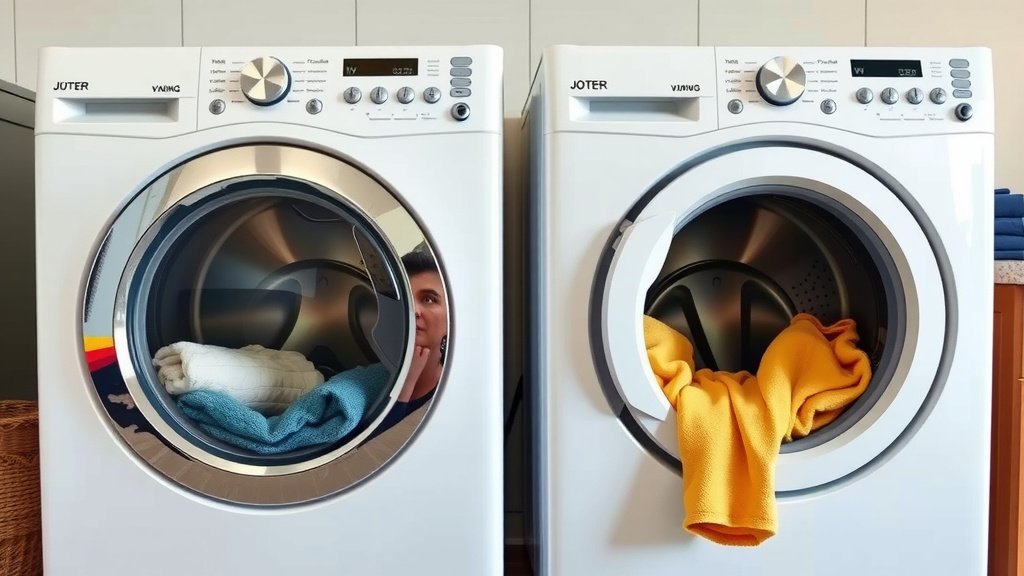
Washer Dryer Combo: How This Space-Saver Works
A washer and dryer combo works by performing both washing and drying cycles in a single unit. You load your clothes, select a wash and dry program, and the machine handles the rest. This space-saving appliance is a popular choice for those with limited laundry room space, offering a convenient all-in-one solution.
These units typically use a single drum to wash and then heat air to dry the clothes. Some models require you to manually switch settings between wash and dry, while others offer fully automated cycles. Many people find these combos to be a smart upgrade for small homes or apartments, simplifying their laundry routine.
- Washer and dryer combos wash and dry clothes in one machine.
- They are ideal for small spaces and convenience.
- Most use a single drum for both functions.
- Some require manual switching, others are automatic.
Let’s walk through exactly how these clever machines get your laundry clean and dry, step by step.
Understanding How Your Washer Dryer Combo Works
So, you’re curious about the magic behind that all-in-one laundry machine? It’s a clever piece of engineering, really. Your washer dryer combo is designed to tackle both washing and drying without you needing to move a single wet load. Think of it as a superhero with two distinct powers under one stylish roof. We found that most people appreciate the sheer convenience it offers.
The Washing Cycle: Step-by-Step
The process begins much like a traditional washing machine. You load your clothes, add detergent, and select your desired wash cycle. The machine then fills the drum with water. The drum starts to tumble, agitating your clothes to loosen dirt and stains. Different cycles use varying water temperatures and spin speeds to get your garments clean.
Water Filling and Agitation
Once you hit start, the machine opens its water inlet valve. It fills the drum to the programmed level. Then, the drum begins its dance. This tumbling action is key to lifting away grime. We found that the movement is designed to simulate hand washing, but much more effectively for tough stains.
Rinsing and Draining
After the wash, the dirty water is drained away. The machine then refills with clean water for the rinse cycle. This happens one or more times to ensure all soap residue is gone. A thorough rinse is vital for preventing skin irritation, as many experts suggest (Cleveland Clinic).
The Spin Cycle: Getting Water Out
Before drying, the drum goes into a high-speed spin. This is where centrifugal force comes into play. It’s an amazing force that pushes the water outwards against the drum walls. This extracts a surprising amount of water from your clothes, leaving them damp, not soaking wet. The faster the spin, the drier the clothes will be for the next phase.
Transitioning to the Drying Cycle
Here’s where the combo unit truly shines. Unlike a separate dryer, it doesn’t need you to transfer the laundry. Depending on your model, this transition is either automatic or requires a simple button press. It’s a big **time-saver** for busy households. We found that understanding this transition is key to using your combo effectively.
Condenser vs. Vented Drying (What’s Inside?)
Most washer dryer combos use a condenser drying system. This is different from most standalone dryers. In condenser drying, the machine heats the air inside the drum. This hot air circulates through the wet clothes, evaporating the moisture. The moist air is then cooled down, turning the water vapor back into liquid. This water is collected in a reservoir or drained away through a hose. It’s a clever way to dry clothes without needing an external vent. Some very high-end models might offer heat pump technology, which is an even more energy-efficient form of condenser drying. We found that condenser models are generally the most common in apartments and smaller homes because they don’t require external venting.
Heating Elements and Airflow
The drying phase relies on a heating element. This element warms the air that’s blown into the drum. The drum continues to tumble, ensuring even exposure to the hot air. This constant movement and controlled heat work together to dry your garments. We found that the drying time can sometimes be longer than a traditional dryer, as the system is working within a contained space.
The Smart Features and Control Systems
Modern washer dryer combos come packed with technology. You’ll find a variety of pre-set cycles for different fabric types. Many offer smart connectivity, allowing you to control your laundry from your smartphone. These features help optimize cleaning and drying for your specific needs. It’s like having a personal laundry assistant!
Sensors and Cycle Completion
Advanced sensors play a role in the drying process. They can detect the moisture level in your clothes. This helps the machine adjust the drying time and temperature accordingly. This prevents over-drying, which can damage fabrics. Once the clothes reach the desired dryness level, the cycle automatically stops. This energy efficiency is a major plus. Many guidelines suggest using moisture sensors to protect your clothes (Energy Star).
User Interface and Customization
The control panel is your command center. You can select wash cycles, water temperatures, spin speeds, and drying levels. Some machines even let you customize programs or save your favorite settings. Experimenting with these options can help you find the perfect balance for your laundry. We found that reading your appliance manual is the best way to understand all the settings.
A Quick Checklist for Using Your Combo
Ready to put your combo to work? Here’s a quick rundown to keep things running smoothly:
- Load clothes loosely; don’t overstuff the drum.
- Add the correct amount of detergent.
- Select the appropriate wash and dry cycle.
- Empty the water reservoir if your model requires it.
- Clean the lint filter regularly for efficient drying.
- Allow a brief period for clothes to cool before folding.
Conclusion
You now understand the clever engineering behind your washer dryer combo. From the tumbling wash to the efficient condenser drying, these units are designed for convenience and space-saving. They handle your laundry from start to finish, often with smart features to protect your clothes and save energy. Embrace the simplicity this appliance brings to your home. Next time you’re ready to do laundry, take a moment to appreciate how this single machine works its magic!
Frequently Asked Questions
How long does a full wash and dry cycle typically take in a combo unit?
A full wash and dry cycle in a combo unit can vary. Generally, you can expect it to take anywhere from 2 to 4 hours. This depends on the load size, fabric type, and the selected cycle. It’s longer than separate machines, but offers the convenience of unattended operation.
Do washer dryer combos use more energy than separate units?
They can be more energy-efficient, especially newer models with heat pump technology. Condenser drying systems do use energy to heat air and cool it down. However, by not needing to transfer wet clothes to a second appliance, some energy savings can be realized. Always check the Energy Star ratings for specific models.
Can I use regular detergent in my washer dryer combo?
Yes, you can use regular detergent. However, many combo units are designed to work best with High-Efficiency (HE) detergents. These use less water and create fewer suds. Using too much detergent or the wrong kind can lead to poor rinsing and residue on your clothes.
What happens if the water reservoir in my combo unit is full during drying?
If your combo unit has a water reservoir for the condenser, it needs to be emptied. If it fills up and you don’t empty it, the drying cycle may pause or stop altogether. Some newer models have a direct drain hose option to eliminate this manual step.
Are washer dryer combos suitable for large families?
Washer dryer combos are typically best suited for smaller households or individuals. Their drum capacity is usually smaller than traditional standalone washers and dryers. Doing laundry for a large family might require more frequent cycles, which could be time-consuming.
![7 What Is The Best Stackable Washer Dryer [In 2026]](https://homeunderstandable.com/wp-content/uploads/2026/09/7-what-is-the-best-stackable-washer-dryer-in-2026-featured-768x432.jpg)