Largest Top Load Washer Capacity Explained
When you’re looking for the biggest top load washer, you’re likely aiming for maximum capacity. Many models boast large drum sizes, often around 5.0 cubic feet or more. These super-sized machines are designed to handle your largest laundry loads with ease.
Finding the right large-capacity washer means considering both its physical dimensions and its internal volume. While a bigger drum holds more clothes, you’ll want to ensure it fits comfortably in your laundry space. Many top-load models are designed for convenience and efficiency in mind.
- The biggest top load washers offer capacities of 5.0 cu. ft. or larger.
- This is ideal for families or those with bulky items like comforters.
- Consider the washer’s external size to ensure it fits your space.
- Look for features that maximize efficiency despite the large size.
We’ve gathered information to help you understand what makes a top load washer truly “big” and what to look for. Let’s get started on finding the perfect fit for your laundry needs.
“`htmlUnderstanding the Largest Top Load Washers
When you’re looking for the biggest top load washer, you’re aiming for a machine that can tackle family-sized laundry piles or bulky bedding. These aren’t just slightly larger machines; they represent the peak of capacity in top-load designs. We’re talking about washers that can easily swallow a king-sized comforter and still have room for more.
The definition of “biggest” in this context primarily refers to the internal drum volume, measured in cubic feet. Manufacturers often advertise this capacity prominently. However, it’s also wise to consider the machine’s external dimensions to ensure it fits your designated laundry space. You don’t want a giant drum stuck in a cramped closet, right?
What Defines a “Big” Top Load Washer?
The main differentiator for a large-capacity top load washer is its cubic foot capacity. While standard top loaders might hover around 3.5 to 4.5 cubic feet, the truly massive ones start at 5.0 cubic feet and go up. Think of it this way: a bigger number means more space for your clothes to move freely during the wash cycle.
This generous space is essential. Clothes need room to agitate and rinse properly. In smaller machines, overcrowding can lead to clothes not getting clean, and it puts extra strain on the motor. A bigger drum, when used correctly, actually allows for a more effective wash.
Capacity vs. Physical Size
It’s important to distinguish between the internal capacity and the external footprint of the washer. A 5.0 cu. ft. washer might be taller or wider than another model with the same stated capacity. Always check the physical height, width, and depth of the appliance.
Why does this matter? Your laundry room has specific dimensions. You need to account for door swings, space for venting hoses, and clearance for maintenance. A common mistake is buying the largest capacity without measuring your space. You’d be surprised how often this happens!
Typical Capacity Ranges
Let’s break down what you’ll typically find:
- Standard Top Loaders: 3.5 – 4.5 cu. ft.
- Large Capacity Top Loaders: 4.6 – 4.9 cu. ft.
- Extra-Large/Biggest Capacity Top Loaders: 5.0 cu. ft. and above
So, when we talk about the “biggest,” we’re generally pointing to that 5.0 cu. ft. and larger category. These machines are designed for households that do a lot of laundry or frequently wash bulky items.
Who Needs an Extra-Large Top Load Washer?
Several types of households benefit most from these behemoths of the laundry world. If any of these sound like you, a big top load washer might be your next laundry best friend.
Families with Children
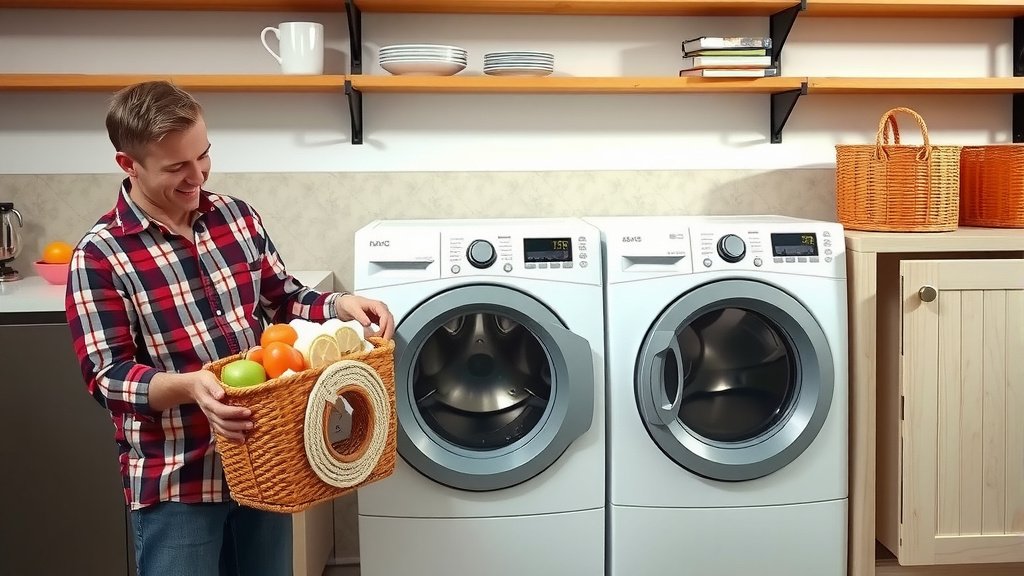
Kids generate a lot of laundry, don’t they? Between school uniforms, sports gear, and the inevitable spills, family laundry piles up quickly. A large-capacity washer means you can do fewer loads per week. This saves you time and energy, which are precious commodities when you have a busy household.
Those with Bulky Items
Do you own pets? Do you have queen or king-sized bedding? Washing bulky items like comforters, blankets, and pet beds is a breeze in a large-capacity machine. You won’t have to struggle to cram them in, and they’ll get a much better clean. Many experts suggest that washing these items at home saves money compared to professional cleaning services (Cleveland Clinic).
Households that Minimize Laundry Frequency
Perhaps you simply prefer to do laundry just once or twice a week. A large machine allows you to consolidate your washing efforts. This can be particularly appealing if you have limited space for drying, as you can dry an entire load at once. It simplifies your chore schedule.
Key Features to Look For in Large Top Loaders
Beyond just the sheer size, modern large-capacity top load washers come with features designed to enhance their performance and your laundry experience. Here are a few things we found that make a big difference.
Motor and Agitation System
A large drum needs a robust motor. Look for washers with direct-drive motors, which tend to be more durable and quieter. The agitation system is also key. Some large top loaders use an agitator (the central post), while others are “impeller” or “wash plate” models. Impeller models often offer more usable space in the drum.
Water Efficiency and Sensing Technology
Even though these machines hold a lot, they are designed to be water-efficient. Many use auto-sensing technology to fill the tub with just enough water for the load size. This prevents wasting water, which is good for your utility bill and the environment.
Spin Speed
Higher spin speeds (measured in RPMs) extract more water from your clothes. This means shorter drying times. For large loads, a high spin speed is particularly beneficial. Look for models that offer 1200 RPM or higher if possible.
Smart Features
Some of the largest washers now come with smart connectivity. You can often monitor cycles, receive alerts when laundry is done, and even download specialized wash cycles via a smartphone app. This adds a layer of convenience for busy households.
Top Considerations Before You Buy
So, you’ve decided a big top load washer is the way to go. Before you click “buy,” let’s run through a quick checklist to make sure you’re making the best choice for your home.
- Measure your space: Double-check height, width, and depth, including door clearances.
- Check water hookups: Ensure your plumbing can handle the connection.
- Consider noise: Larger machines can sometimes be noisier. Look for models with noise-reducing features if this is a concern.
- Read reviews: See what real users say about capacity and performance.
- Budget: Extra-large capacity models can be more expensive upfront.
- Energy Star rating: Look for models that are energy-efficient to save on utility costs long-term.
Choosing the biggest top load washer is about more than just size; it’s about finding a machine that fits your lifestyle, your space, and your laundry needs efficiently. By considering these points, you’ll be well on your way to conquering Mount Laundry!
“`Conclusion
You’ve learned that the biggest top load washers typically offer 5.0 cubic feet of capacity or more. These machines are perfect for handling large family loads and bulky items like comforters. Remember to balance that generous drum size with your laundry room’s physical dimensions. By considering motor power, water efficiency, and spin speed, you can find a large washer that’s also highly effective. Your next step is to measure your space carefully and then start comparing models that fit your needs and budget.
Frequently Asked Questions
What is the largest cubic foot capacity for a top load washer?
Research shows that the largest top load washers generally start around 5.0 cubic feet and can go slightly higher. Some manufacturers may offer models pushing towards 5.5 cubic feet, but 5.0 is the common benchmark for truly extra-large capacity in this style.
Will a 5.0 cu. ft. top load washer fit in my existing laundry space?
Not always. While the cubic footage refers to internal drum size, you must check the external dimensions (height, width, depth) against your laundry area. Also, ensure you have clearance for doors and ventilation, as these large machines can be quite bulky.
Are top load washers with agitators or impellers generally larger?
Washers with impellers or wash plates (no central agitator) often offer more usable space within the drum. This design allows you to fit more clothes and bulky items, making them a common feature in the largest top load washer models.
How do I know if my home’s water hookups can support a large top load washer?
Standard hot and cold water hookups are usually sufficient for most residential washers, including large ones. However, it’s wise to check your existing connections to ensure they are in good condition and compatible with modern washer hoses, which you can do before purchasing.
Are the biggest top load washers less energy efficient than smaller ones?
Not necessarily. While larger machines use more water per cycle, many now incorporate auto-sensing technology to optimize water levels. Look for the Energy Star certification on any large capacity washer to ensure it meets high efficiency standards for both water and energy usage.
![7 Best Washer And Dryer Stackable [In 2026]](https://homeunderstandable.com/wp-content/uploads/2026/09/7-best-washer-and-dryer-stackable-in-2026-featured-768x432.jpg)