Stackable Washer Dryer Widths Explained
The width of a stackable washer and dryer Our reviews of the best small stackable washer and dryer units can help you find compact options. unit typically ranges from about 27 to 30 inches. This standard size helps them fit into most laundry closets and small spaces. When shopping, remember to measure your available area carefully before making a choice.
Stackable units are designed to save floor space by placing the dryer directly on top of the washer. This makes them a fantastic solution for apartments or homes with limited laundry room real estate. Understanding the common dimensions is your first step to finding the perfect fit for your home.
- Stackable washer and dryer width is usually 27-30 inches.
- This standard size fits most small laundry spaces.
- Always measure your area before buying.
- Units stack vertically to save floor space.
Ready to find the perfect stackable washer and dryer for your home? Let’s break down the common sizes and what you need to consider to make sure it fits just right.
Understanding Stackable Washer and Dryer Dimensions
You’re likely here because you need a new laundry setup but space is tight. A stackable washer and dryer is a genius solution for this! But before you fall in love with a specific model, let’s talk about the most important measurement: width. Getting this right ensures your new appliance won’t be a squeeze or, worse, won’t fit at all. We’ll guide you through what to expect regarding width and why it matters so much.
Standard Widths for Stackable Laundry Units
So, what’s the typical width you’ll find when looking at stackable washers and dryers? You’ll be happy to know there’s a pretty standard size. Most stackable washer and dryer units measure between 27 and 30 inches wide. This range is designed to fit into the most common laundry spaces, like closets or alcoves.
Think of it like buying a standard door. Manufacturers aim for consistency so their products work in most homes. This 27-30 inch width means you generally won’t be searching for hours for a unit that fits. It’s a practical dimension for efficient space utilization.
Why Width is a Critical Measurement
While height and depth are also important, width often causes the most headaches. Why? Because it’s the dimension that dictates if the unit can even get through doorways and into its designated spot. You might have plenty of height and depth available, but if the unit is too wide for your hall or laundry room entrance, it’s a no-go.
It’s also vital for clearance. You need a little breathing room around the appliances for ventilation and to avoid scuffing walls. We found that having at least half an inch to an inch of clearance on each side is a good rule of thumb (Consumer Reports). This prevents snagging and allows for minor adjustments during installation.
Comparing Widths: Washer vs. Dryer in a Stack
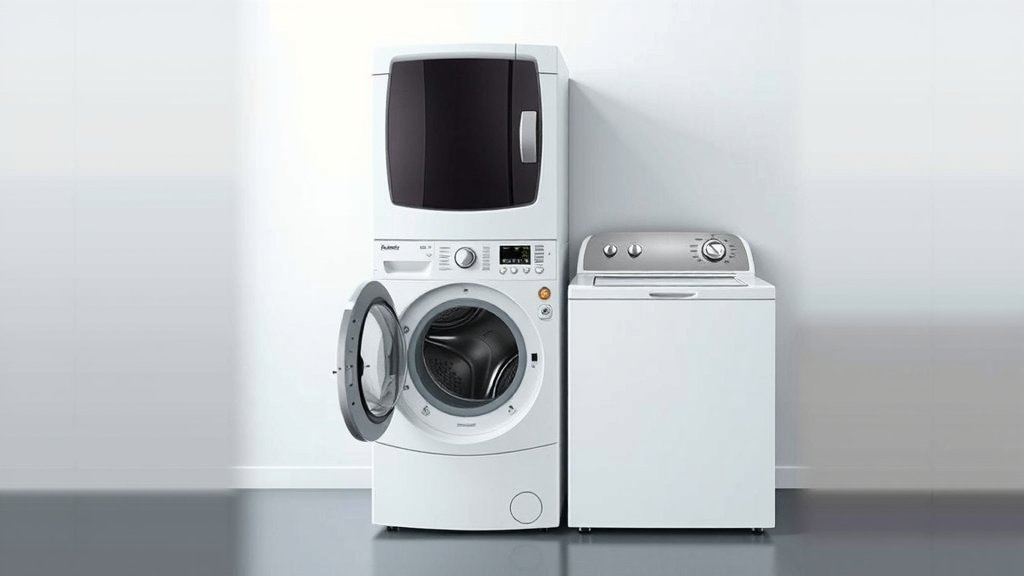
When you buy a stackable set, the washer and the dryer are usually designed to be the same width. This uniformity is what makes them stack securely and look neat. You won’t typically find a situation where the washer is 27 inches and the dryer is 30 inches in a matched pair.
This consistency is a big plus for you. It means you can focus on the overall width of the unit without having to calculate different measurements for each appliance. The unit you see advertised as 27 inches wide will have both the washer and dryer components fitting within that 27-inch span.
Beyond the Standard: What Affects Width?
While 27-30 inches is the norm, a few factors can slightly influence the actual width you might encounter. It’s good to be aware of these nuances to avoid surprises.
Compact vs. Full-Size Stackables
Within the stackable category, there are different sizes. You’ll find what are often called “compact” or “apartment-sized” stackables. These tend to be on the narrower side of the spectrum, often around 24 inches wide. They are perfect for extremely tight spaces, like a small closet or a nook under a staircase.
On the other hand, you have what might be considered “standard” or “full-size” stackables. These are the ones we’ve been talking about, typically in that 27-30 inch range. They offer larger capacities and more features but require a bit more room.
Brand and Model Variations
Even within the same width category, different brands and models can have slight variations. One brand’s 27-inch unit might be fractionally wider or narrower than another’s. This is usually only by a fraction of an inch, perhaps a quarter or half inch.
These minor differences often come down to the design of the appliance’s casing, control panels, or any exterior trim. It’s like how two different car models might both be classified as “mid-size” but have slightly different lengths. Always check the specific product dimensions for the model you’re interested in.
Measuring Your Space: A Crucial Step
We cannot stress this enough: measure your laundry space before you buy anything! It sounds obvious, but many people skip this vital step. A tape measure is your best friend in this process. Don’t just guess; take actual measurements.
What to Measure
When measuring, consider the following:
- Width of the opening: Measure the narrowest point of the doorway or opening where the appliance needs to pass.
- Depth of the space: Ensure the unit won’t stick out too far, especially if it’s in a high-traffic area.
- Height clearance: For stackables, you also need to consider the height when stacked, but for width, focus on the side-to-side.
- Path to the space: Measure hallways, stairwells, and any other paths the appliance must travel to reach its final destination.
Don’t Forget Doorways and Hallways
It’s not just the laundry room itself! We’ve heard stories of people buying a perfectly sized unit only to find it couldn’t fit through their front door or up the stairs. You need to measure the width of every single opening the appliance will pass through. Also, check for any obstructions like radiators or light fixtures that might reduce the available width.
A Quick Checklist for Fit
To make sure your stackable washer and dryer will fit, use this handy checklist:
- Measure the exact width of your designated laundry space.
- Check the width of all doorways and hallways the unit must pass through.
- Add at least 1-2 inches for clearance around the unit.
- Note the depth and height requirements as well.
- Confirm the exact dimensions of your chosen model.
- Consider any potential obstructions in the path.
Conclusion
You’ve learned that stackable washer and dryer units generally measure between 27 and 30 inches wide. This standard sizing is key for fitting them into most homes, from apartments to houses with compact laundry spaces. Remember that minor variations exist between brands and models, and some compact units may be narrower. The most important step you can take now is to measure your space and the paths leading to it. This ensures your chosen unit will not only fit your laundry area but also make it through doorways and hallways.
Frequently Asked Questions
Can I fit a stackable washer and dryer in a closet?
Yes, many stackable units are designed specifically for closets. Their typical width of 27-30 inches, or even 24 inches for compact models, makes them suitable for most standard closets. Just be sure to measure the closet opening and the unit’s dimensions carefully before purchasing.
What’s the smallest width for a stackable washer and dryer?
The smallest widths you’ll typically find for stackable units are around 24 inches. These are often labeled as “compact” or “apartment-sized” models. They are ideal for very tight spaces where standard sizes won’t fit, but they may have smaller capacities.
Do I need extra space around a stackable washer and dryer?
Yes, you should leave a small amount of clearance for ventilation and ease of installation. Aim for at least half an inch to an inch of space on each side of the unit. This helps prevent scuffing walls and allows for proper airflow, which is important for appliance longevity.
Is the washer and dryer in a stackable set always the same width?
Generally, yes. For matched stackable sets, the washer and dryer are designed to be the exact same width. This ensures they stack securely and create a uniform appearance. You won’t typically find a set where one component is significantly wider than the other.
What if my hallway is narrower than the stackable unit?
If your hallway or any doorways are narrower than the appliance’s width, you may need to explore alternative solutions. Some units might have removable panels, or you might need to consider smaller, more compact models if available. In some cases, professional movers may be able to assist with delivery.
![7 Best Low Cost Washer Dryer [In 2026]](https://homeunderstandable.com/wp-content/uploads/2026/09/7-best-low-cost-washer-dryer-in-2026-featured-768x432.jpg)
![7 Best Wash Machine [In 2026]](https://homeunderstandable.com/wp-content/uploads/2026/09/7-best-wash-machine-in-2026-featured-768x432.jpg)
![7 What Is The Best Stackable Washer Dryer [In 2026]](https://homeunderstandable.com/wp-content/uploads/2026/09/7-what-is-the-best-stackable-washer-dryer-in-2026-featured-768x432.jpg)
![7 The Best Stackable Washer Dryer [In 2026]](https://homeunderstandable.com/wp-content/uploads/2026/09/7-the-best-stackable-washer-dryer-in-2026-featured-768x432.jpg)