
Honeywell vs Blueair Air Purifiers: Which Is Best
Deciding between a Honeywell vs Blueair air purifier can feel like choosing between two great flavors of ice cream – both are good, but one might be your perfect match. Generally, Honeywell often wins for budget-friendly options and widespread availability, while Blueair typically stands out for its quieter operation and advanced filtration technology, especially in premium models. Your best choice depends on your specific needs and priorities.
When breathing easier, you want to know you’re making the right choice for your home’s air quality. We’ve researched and found that both Honeywell and Blueair offer a range of purifiers designed to tackle common airborne irritants. Understanding their core differences in features, performance, and price points will help you make a decision that feels just right for your family’s health and comfort.
TL;DR:
- Honeywell is often more budget-friendly and easy to find.
- Blueair tends to be quieter and uses advanced filters.
- Consider your budget for upfront cost and filter replacements.
- Think about the room size and the types of pollutants you want to remove.
Let’s walk through a direct comparison of Honeywell and Blueair air purifiers to help you find the perfect fit for your home.
Comparing Honeywell and Blueair Air Purifier Models
When you’re looking for cleaner air, it’s smart to compare brands side-by-side. We’ve researched how Honeywell and Blueair stack up. They both aim to improve your home’s air quality. Understanding their differences helps you pick the right one for your needs and budget. Let’s break down what makes each brand unique.
Honeywell Air Purifiers: Value and Accessibility
Honeywell is a name many people trust in their homes. They offer a wide range of air purifiers that are generally more budget-friendly. You can often find Honeywell models easily at major retailers, making them a convenient choice for many.
Key Strengths of Honeywell
One of the biggest draws of Honeywell is its affordability. They provide reliable air purification without breaking the bank. Their units are designed to tackle common airborne particles like dust, pollen, and pet dander. This makes them a great option if you’re on a tighter budget.
Many Honeywell purifiers use HEPA-type filters. These are effective at capturing small particles. You’ll find their models available in various sizes, suitable for small rooms to larger living areas. The controls are usually straightforward and easy to operate. This simplicity is a big plus for many users.
Considerations for Honeywell
While Honeywell offers great value, some of their models can be a bit noisier than competitors. This is especially true for older or more basic units. Filter replacement costs can add up over time, so it’s worth factoring that into your long-term budget.
Some advanced features might be missing in their lower-priced models. You might not find smart connectivity or advanced sensor technology on every unit. However, they excel at delivering core purification performance at an accessible price point. Many guidelines suggest HEPA filters for effective particle removal (CDC).
Blueair Air Purifiers: Performance and Quiet Operation
Blueair has built a reputation for high-performance air purifiers. They often use advanced filtration systems and focus on quiet operation. If you prioritize a peaceful environment, Blueair might be your top contender. Their premium models often come with innovative features.
Blueair’s Advanced Filtration and Technology
Blueair is known for its unique HEPASilent technology. This system combines electrostatic charging with mechanical filtration. The result is powerful purification that is also very quiet. Many experts note that combining these methods can boost efficiency (US Environmental Protection Agency).
Their filters are designed to capture a wide range of pollutants. This includes fine particles, allergens, and even some odors. Blueair also offers smart features on many of their units. These can include air quality sensors and Wi-Fi connectivity. You can often control them with a smartphone app.
What to Expect from Blueair
When you invest in a Blueair purifier, you’re often investing in superior air cleaning. They are particularly good for people with allergies or asthma. The quiet operation is a significant advantage, especially for bedrooms or offices. You can run them continuously without much disturbance.
However, Blueair units typically come with a higher upfront cost. The replacement filters can also be more expensive compared to some other brands. While they offer excellent performance, the price point might be a barrier for some shoppers. But for those seeking top-tier air quality and quietness, Blueair delivers.
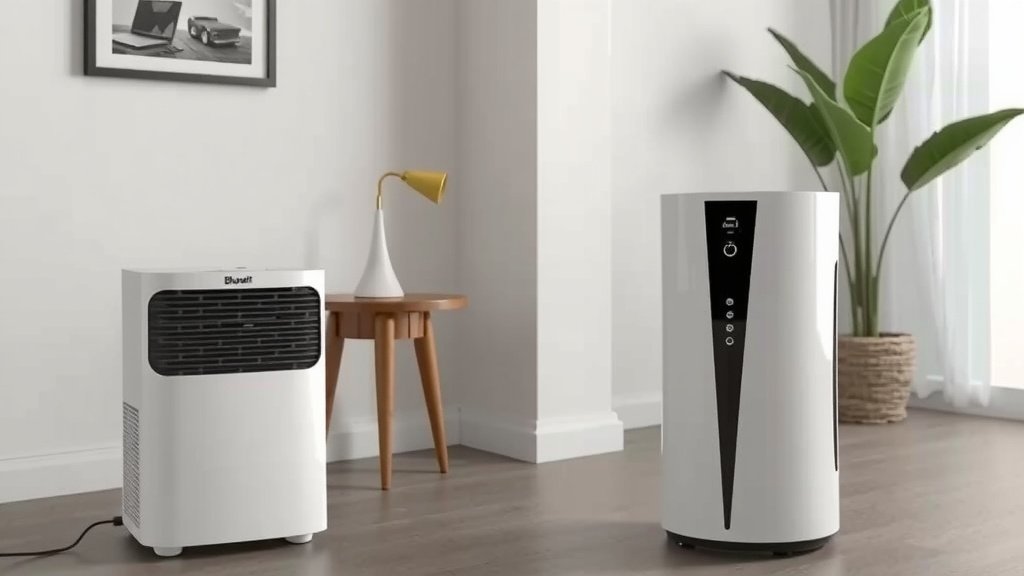
Direct Comparison: Key Features
Let’s put them head-to-head on some important factors. Understanding these differences will help you see which brand aligns better with your priorities.
Filtration Technology
Honeywell often uses traditional HEPA or HEPA-type filters. These are good at trapping particles. Blueair uses its proprietary HEPASilent technology, which combines filtration with electrostatic charge. This often results in higher CADR (Clean Air Delivery Rate) for its size, and quieter operation.
Noise Levels
This is a significant difference. Many Honeywell models can be noticeable when running on higher settings. Blueair units, especially those with HEPASilent, are generally much quieter. They are often designed to be unobtrusive, even in living spaces.
Price Point and Filter Costs
Honeywell generally offers lower initial purchase prices. Their replacement filters are also typically less expensive. Blueair units usually have a higher starting price. Their proprietary filters can also cost more. You’ll need to consider this long-term expense.
Smart Features and Controls
Blueair often leads in smart technology. Many of their models offer app control, air quality monitoring, and automation. Honeywell offers some smart models, but it’s less common across their entire range, especially in their more basic options.
Making Your Choice: A Quick Checklist
To help you decide, consider these points:
- Your Budget: Are you looking for a lower initial cost or willing to invest more for advanced features?
- Room Size: How large is the space you need to purify? Check the CADR for both brands.
- Noise Tolerance: How important is quiet operation to you?
- Pollutant Focus: Are you targeting general dust, or do you need to combat strong odors or very fine particles?
- Filter Availability and Cost: Research the cost and availability of replacement filters for both brands.
- Desired Features: Do you want smart controls, or is a simple, manual unit sufficient?
| Feature | Honeywell | Blueair |
|---|---|---|
| Typical Price | More Affordable | Higher Upfront Cost |
| Filtration | HEPA/HEPA-type | HEPASilent (Electrostatic + Mechanical) |
| Noise Level | Can be Noisier | Generally Quieter |
| Smart Features | Less common, varies by model | More prevalent, especially in premium models |
| Filter Replacement Cost | Usually Lower | Can be Higher |
| Availability | Widely Available | Available, may vary by retailer |
Conclusion
Choosing between a Honeywell and Blueair air purifier boils down to your personal priorities. If your budget is a primary concern and you need reliable, straightforward air cleaning, Honeywell often provides excellent value and is easy to find. For those who prioritize whisper-quiet operation, advanced filtration technology, and smart features, Blueair is a strong contender, though it typically comes with a higher initial investment. We’ve found that both brands offer effective solutions, so carefully consider your space, budget, and desired features. Your next step is to look at specific models from each brand that match your needs and check current prices and user reviews to make your final decision for cleaner air at home.
Frequently Asked Questions
Which brand is better for allergies: Honeywell or Blueair?
Blueair often gets the edge for allergies due to its advanced HEPASilent technology, which combines electrostatic charging and mechanical filtration. This method can capture smaller particles more efficiently and quietly. Honeywell models with true HEPA filters are also very effective at removing allergens. Your choice may depend on how sensitive you are to noise and your budget.
Are Blueair filters more expensive to replace than Honeywell filters?
Generally, yes. Blueair’s proprietary replacement filters tend to be more expensive than the standard HEPA or HEPA-type filters used by many Honeywell models. You should factor in the ongoing cost of filter replacements when comparing the long-term expense of owning a unit from either brand.
Which brand is typically quieter?
Blueair units are well-known for their quiet operation, especially their models featuring HEPASilent technology. Many Honeywell models can be noticeably louder, particularly on higher fan speeds. If a quiet environment is a top priority for your bedroom or office, Blueair usually has an advantage.
Do I need smart features in an air purifier?
Smart features, like app control and air quality sensors, can be very convenient. They allow you to monitor your air quality remotely and adjust settings without being in the room. Blueair offers these features more frequently, especially on their premium models. Honeywell has some smart options, but they are less common across their entire product line.
Where can I usually find Honeywell vs. Blueair air purifiers?
Honeywell air purifiers are widely available in many big-box stores, department stores, and online retailers across the US. Blueair purifiers are also readily available online through major e-commerce sites and directly from their website, and can be found in select home goods or electronics retailers.


![What Is The Best Air Purifier for Cough [In 2026]](https://homeunderstandable.com/wp-content/uploads/2025/06/best-air-purifier-for-cough.jpg)

![What Is The Best Air Purifier for Big Spaces [In 2026]](https://homeunderstandable.com/wp-content/uploads/2025/06/best-air-purifier-for-big-spaces-top-picks-for-large-rooms-768x384.jpg)