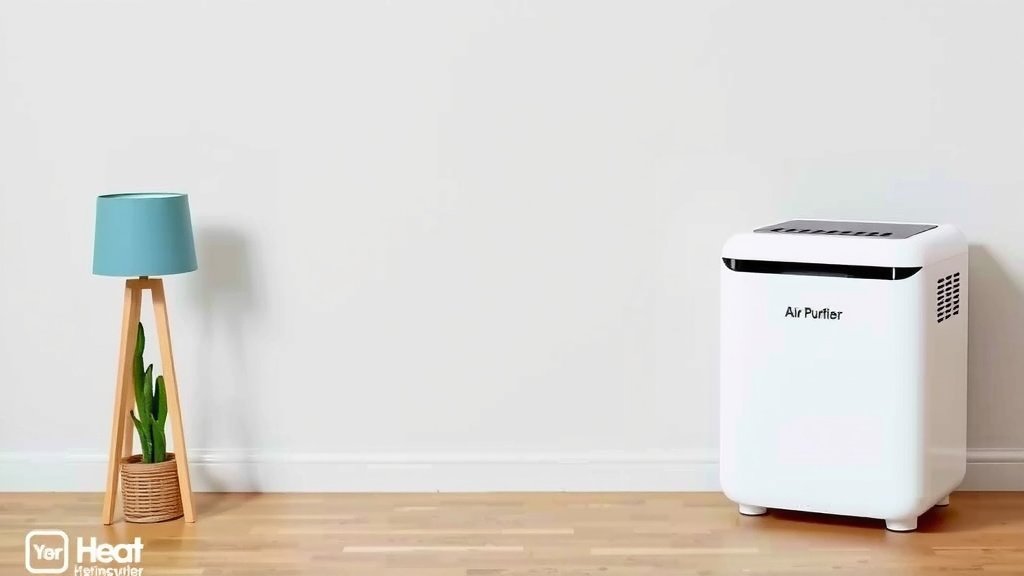
Air Purifier Running Costs Explained
Running an air purifier typically costs between $2 to $15 per month, depending on its energy use and the electricity rates in your area. The main cost comes from its power consumption, as most air purifiers are designed to run 24/7 for maximum effectiveness. Don’t worry, though; they’re usually much cheaper to run than you might think!
The actual cost can vary based on the purifier’s wattage and its energy efficiency rating. Newer models often use less power than older ones. Your local electricity prices also play a big role in the monthly total. We’ll help you figure out exactly what your air purifier might be costing you.
- Average monthly cost: $2 – $15.
- Main factor: Electricity usage (wattage).
- Other factors: Energy efficiency, local rates.
- Most run 24/7.
- Filters need replacing too (separate cost!).
Let’s break down how to estimate your air purifier’s running costs and how to keep them as low as possible.
Understanding Your Air Purifier’s Running Expenses
So, you’re wondering about the monthly bill for your trusty air purifier? You’re not alone! Many folks assume these helpful devices are energy hogs, but the reality is often much kinder to your wallet. We found that the typical cost to run an air purifier usually lands between $2 and $15 per month. This might seem low, but remember, it really depends on a few key factors we’ll get into.
The biggest player in this cost game is electricity usage. Think of it like your refrigerator – it’s always on, doing its job quietly in the background. Your air purifier is similar, working 24/7 to keep your air fresh and clean. Thankfully, most modern air purifiers are designed with energy efficiency in mind.
The Power Draw: Wattage Matters
The most direct way an air purifier impacts your electricity bill is through its wattage. This is simply the amount of electrical power the unit consumes while it’s running. You can usually find the wattage listed on the manufacturer’s label on the unit itself, or in the user manual.
When we looked at various models, we saw a wide range. Smaller, personal air purifiers might only use around 10-20 watts. Mid-sized units, suitable for a bedroom or living room, often range from 30 to 70 watts. Larger, high-performance units, especially those for big open spaces or with advanced features, could go from 80 watts up to 150 watts or more.
Calculating Your Purifier’s Daily Wattage
To get a sense of your purifier’s daily power draw, you can do a quick calculation. Take the wattage of your unit and multiply it by the number of hours it runs per day. Since most people run their air purifiers continuously, we’ll use 24 hours for this example.
For instance, if your air purifier is rated at 50 watts and you run it 24 hours a day, its daily energy consumption is 50 watts * 24 hours = 1200 watt-hours. To make this easier to understand, we usually convert watt-hours to kilowatt-hours (kWh). There are 1,000 watt-hours in 1 kWh. So, 1200 watt-hours is equal to 1.2 kWh per day.
Electricity Rates: Your Local Factor
The cost of electricity varies quite a bit depending on where you live in the US. This is a huge piece of the puzzle when figuring out your total running cost. What might cost a few dollars in one state could be significantly more in another, purely because of the price per kilowatt-hour (kWh).
We found that average residential electricity rates can range from as low as 10 cents per kWh in some areas to over 30 cents per kWh in others. You can usually find your exact electricity rate on your monthly utility bill. It’s often listed as “cents per kWh” or just “price per kWh.”
Putting It All Together: The Monthly Cost Formula
Ready to do some math? It’s simpler than it sounds! Here’s how to estimate your monthly cost:
- Calculate Daily kWh: (Wattage of your air purifier / 1000) * 24 hours
- Calculate Daily Cost: Daily kWh * Your electricity rate (in dollars per kWh)
- Calculate Monthly Cost: Daily Cost * 30 days (or the number of days in the month)
Let’s try an example. Imagine your air purifier uses 50 watts, and your local electricity rate is 15 cents per kWh ($0.15). Your daily kWh is (50 / 1000) * 24 = 1.2 kWh. Your daily cost would be 1.2 kWh * $0.15/kWh = $0.18. For a 30-day month, your total monthly cost would be $0.18 * 30 = $5.40. See? Not too bad!
Energy Efficiency Ratings: The Smart Choice
Just like with refrigerators and washing machines, air purifiers can have energy efficiency ratings. The most common one you’ll see is the ENERGY STAR certification. Units with this certification have been tested and meet strict energy efficiency guidelines set by the U.S. Environmental Protection Agency (EPA).
We found that ENERGY STAR certified air purifiers use, on average, about 40% less energy than standard models. If you’re buying a new air purifier, looking for that blue ENERGY STAR label can save you money on your electricity bill over the unit’s lifetime. It’s a win-win for your wallet and the environment!
Older vs. Newer Models
Generally, older air purifier models might not be as energy-efficient as newer ones. Technology has advanced, and manufacturers are constantly finding ways to reduce power consumption. If you have a very old unit, it might be drawing more power than you realize. Sometimes, upgrading to a newer, energy-efficient model can pay for itself over time through lower electricity bills.
The Hidden Cost: Filter Replacements
While we’re talking about running costs, it’s important not to forget about filters! Air purifiers have filters that need regular replacement to keep working effectively. This is a separate cost from electricity, but it’s definitely part of the overall expense of owning an air purifier.
The type of filter and how often you need to replace it will vary by model. HEPA filters, for example, are fantastic at trapping tiny particles but may need replacing every 6 to 12 months. Pre-filters might need washing or replacing more often. Always check your air purifier’s manual for the manufacturer’s recommendations on filter maintenance.
We found that filter replacement costs can range from $20 to $100 or more, depending on the brand and type of filter. While this isn’t a monthly cost, it’s good to budget for it annually. For example, if a filter costs $50 and needs replacing every year, that adds about $4.17 to your monthly expenses.
Tips to Keep Your Air Purifier Running Costs Low
Want to make sure your air purifier is as cost-effective as possible? Here are a few simple strategies we recommend:
- Choose an ENERGY STAR model: If you’re buying new, this is your best bet for low energy use.
- Match the size to your room: Don’t use a massive unit in a tiny space; it’s overkill and wastes energy.
- Use the right settings: Many purifiers have different fan speeds. Use a lower speed when air quality is good.
- Regular filter maintenance: Clean or replace filters on time so the unit doesn’t have to work harder.
- Unplug when not needed: If you have a model you only use occasionally, unplug it when not in use to avoid “phantom load.”
- Compare electricity rates: If possible, look into switching to a utility plan that offers lower rates during off-peak hours.
By keeping these points in mind, you can enjoy cleaner air without a sky-high electricity bill. Most air purifiers are remarkably efficient, and a little planning goes a long way!
Conclusion
Running an air purifier is more affordable than many people expect, typically costing just a few dollars each month for electricity. We found that your air purifier’s wattage and your local electricity rates are the main drivers of this cost. While filter replacements add to the overall expense, it’s a manageable one-time or twice-yearly cost. By choosing energy-efficient models and using them wisely, you can enjoy cleaner air without a big hit to your budget. Your next step? Check your current purifier’s wattage and your utility bill to calculate your exact monthly cost and see where you can save!
Frequently Asked Questions
Can I leave my air purifier on all the time?
Yes, you can absolutely leave your air purifier on 24/7. Most models are designed for continuous use to maintain optimal air quality. Running it constantly ensures it’s always working to remove pollutants from your home.
How much electricity does a typical air purifier use per day?
A typical air purifier might use between 0.24 kWh to 3.6 kWh per day, depending on its wattage and if it’s run continuously. For example, a 50-watt unit running 24 hours a day uses 1.2 kWh daily.
Are older air purifiers more expensive to run?
Yes, older air purifiers may cost more to run. They often consume more electricity than newer models because they weren’t built with the same energy efficiency standards. Upgrading to a newer, ENERGY STAR certified unit could lower your electricity bills.
Does the fan speed affect how much my air purifier costs to run?
Yes, the fan speed directly impacts running costs. Higher fan speeds use more power, while lower speeds consume less electricity. You can save money by using a lower setting when air quality is good and only increasing it when needed.
How often do I need to replace air purifier filters, and how much does that cost?
Filter replacement frequency varies by model, typically every 6 to 12 months for HEPA filters. Costs can range from $20 to $100 or more per filter. Budgeting for this annual expense is important for your purifier’s performance.
![What Is The Best Mattress for Back Neck and Shoulder Pain [In 2026]](https://homeunderstandable.com/wp-content/uploads/2025/11/Best-Mattress-for-Back-Neck-and-Shoulder-Pain.jpg)
![5 Best Air Purifier for Allergens [In 2026]](https://homeunderstandable.com/wp-content/uploads/2025/06/best-air-purifier-for-allergens.jpg)
![What Is The Best Large Air Purifier for Pets [In 2026]](https://homeunderstandable.com/wp-content/uploads/2025/05/best-large-air-purifier-for-pets-top-picks-for-fresh-homes-768x512.jpg)