
How to Shop for a Washing Machine: A Buyer’s Guide
Shopping for a new washing machine can feel overwhelming, but the easiest way to choose the right one is to focus on your household’s specific needs and your budget. You’ll want to consider capacity, type (top-load or front-load), and energy efficiency to find a model that cleans your clothes effectively without breaking the bank or wasting resources.
When you’re looking at washing machines, remember that features matter. Do you need delicate cycles for special fabrics? Or perhaps a steam function to tackle stubborn stains? Many consumers find that balancing essential functions with energy savings leads to the most satisfying purchase. We’ve researched what most households need.
- Consider your laundry habits and family size.
- Decide between top-load and front-load machines.
- Look for energy-efficient models to save money.
- Don’t forget important features like cycle options.
- Set a realistic budget before you start shopping.
Let’s walk through exactly how to pick the best washing machine for your home.
Finding the Right Washing Machine for Your Home
Choosing a new washing machine doesn’t have to be a chore. We’re here to help you navigate the options. Let’s look at what makes a washing machine a good fit for you. It’s all about matching its capabilities to your laundry needs and living situation.
Understanding Washing Machine Capacity
Capacity is key. It’s measured in cubic feet. Think about how much laundry your household generates each week.
What Size Washer Do You Need?
A smaller household of one or two might only need a compact machine. This can be around 2.5 to 3.5 cubic feet. Larger families or those who do a lot of big loads might aim higher. We found that a capacity of 4.0 to 5.0 cubic feet or more works well for many. This is especially true if you wash bulky items like comforters.
Consider your lifestyle. Do you do laundry every day? Or do you prefer to tackle it all in one big weekend session? Bigger loads mean fewer wash cycles. This can save you time and energy in the long run.
Top-Load vs. Front-Load: Which is Best for You?
This is a big decision for many shoppers. Both types have their pros and cons. We’ll break them down.
Top-Load Washing Machines
Top-load washers are generally more affordable upfront. They also tend to be quicker to load and unload. You don’t have to bend over as much.
Traditional Agitator Models
These have a central post, called an agitator. It twists and turns clothes. They are great at getting tough stains out. However, they can be rougher on fabrics. They also use more water than some other types. Many experts suggest these are good for very large, sturdy loads.
High-Efficiency (HE) Impeller Models
These don’t have a central agitator. Instead, they use a low-profile disc or cone at the bottom. This basket spins clothes through the water. They use less water and are gentler on clothes. HE top-loaders often have larger capacities. They can also clean clothes more thoroughly. We found that HE models are a popular choice for many.
Front-Load Washing Machines
Front-loaders use a tumbling action. They lift clothes up and drop them back into the water. This is very effective at cleaning. It’s also much gentler on your garments.
Many front-loaders are more energy-efficient. They use less water per cycle. They also tend to spin faster. This removes more water, meaning shorter drying times. Shorter drying times mean less energy used by your dryer. This can lead to significant savings over time (Energy Star).
On the flip side, front-loaders often cost more. They can also have longer wash cycles. Some people find bending down to load and unload to be inconvenient. You might want to consider a pedestal for these models. That elevates the machine.
Energy Efficiency: Saving Money and the Planet
Look for the ENERGY STAR certification. This label tells you a machine meets strict energy efficiency guidelines. These are set by the U.S. Environmental Protection Agency.
ENERGY STAR certified washers use less water and energy. This can cut your utility bills. It also reduces your environmental footprint. We found that choosing an ENERGY STAR model is a smart move for your wallet and the planet.
Water Usage Matters
Top-loaders with agitators use the most water. HE top-loaders use less. Front-loaders generally use the least. If water conservation is a priority for you, a front-loader is likely your best bet.
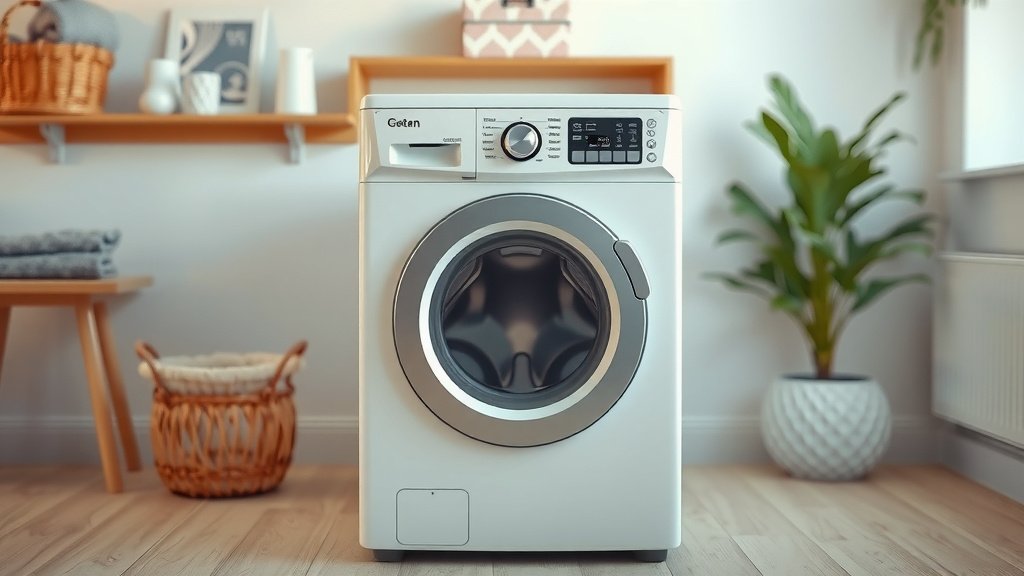
Essential Washing Machine Features to Consider
Beyond the basics, many features can enhance your laundry experience. Think about what’s important for your routine.
Wash Cycles and Options
Most washers come with standard cycles like Normal, Delicate, and Heavy Duty. But what about specialty needs?
- Sanitize cycles: These use high heat to kill bacteria. They are great for baby clothes or allergy sufferers.
- Steam functions: Steam can help remove tough stains and reduce wrinkles.
- Quick wash cycles: Perfect for lightly soiled items you need in a hurry.
- Allergen cycles: Designed to remove common allergens like pet dander and dust mites.
Consider if you have specific fabrics that need special care. Do you own a lot of wool or silk items? Look for machines with dedicated cycles for those.
Smart Technology
Some newer machines offer smart features. You can connect them to your smartphone via an app. This allows you to start, stop, and monitor cycles remotely. You can also receive notifications when a load is finished. Some apps even help diagnose problems. This is a nice convenience, but not essential for everyone.
Noise Levels
If your laundry room is near a living area, noise might be a factor. Some machines are designed to run more quietly. Check reviews for noise level information.
Setting Your Washing Machine Budget
Washing machines range from a few hundred dollars to over $2,000. Your budget will influence your choices.
| Machine Type | Average Price Range | Key Considerations |
|---|---|---|
| Top-Load (Agitator) | $400 – $800 | Durable, good for large loads, can be rough on clothes, uses more water. |
| Top-Load (HE Impeller) | $600 – $1,100 | Gentler, more water-efficient, larger capacity options. |
| Front-Load | $800 – $2,000+ | Most water and energy-efficient, gentlest on clothes, often faster drying results, higher upfront cost. |
Remember to factor in potential installation costs. Also, consider the cost of an extended warranty if you choose to purchase one.
Quick Checklist Before You Buy:
- Measure your laundry space.
- Know your household’s laundry volume.
- Decide on top-load vs. front-load.
- Prioritize energy efficiency (look for ENERGY STAR).
- Identify essential wash cycles and features.
- Determine your maximum budget.
Conclusion
You’re now well-equipped to choose the perfect washing machine for your home. Remember to focus on your household’s laundry habits and size. Deciding between a top-load or front-load model is key. Don’t forget to check for ENERGY STAR certification to save on utility bills. By considering capacity, type, efficiency, and essential features within your budget, you’ll find a washer that makes laundry day easier. Start by measuring your space and confirming your needs. Your next step is to visit a store or browse online with your checklist in hand!
Frequently Asked Questions
How often should I run a cleaning cycle on my washing machine?
We found that running a cleaning cycle once a month is generally recommended. This helps prevent mold, mildew, and odor buildup inside your machine. Check your owner’s manual for specific instructions, as some newer models have self-cleaning features.
Can I use regular detergent in a high-efficiency (HE) washing machine?
No, you should not use regular detergent in an HE machine. HE washers require special HE detergent, which produces fewer suds. Using regular detergent can create too many suds, which may damage your machine and leave residue on your clothes.
What is the difference between a sanitize cycle and a steam function?
A sanitize cycle typically uses very high heat to kill bacteria and allergens. A steam function uses steam to help lift stains and reduce wrinkles. While both can improve cleaning, a sanitize cycle is generally more effective for sanitizing purposes.
How do I know if a washing machine will fit in my laundry space?
Before shopping, measure the width, depth, and height of your laundry space. Also, ensure there’s enough clearance for the door to open fully. For stacked units, measure the total height. We suggest bringing these measurements with you when you shop.
Are front-load washing machines worth the extra cost?
Many consumers find front-loaders are worth the investment. They tend to be more energy and water-efficient, leading to long-term savings on utility bills. They are also gentler on clothes, which can help them last longer. Plus, the higher spin speeds mean shorter drying times.
![7 Best Compact Dryer For Apartment [In 2026]](https://homeunderstandable.com/wp-content/uploads/2026/08/7-best-compact-dryer-for-apartment-in-2026-featured-768x432.jpg)
![7 Stackable Washer And Gas Dryer Best [In 2026]](https://homeunderstandable.com/wp-content/uploads/2026/08/7-stackable-washer-and-gas-dryer-best-in-2026-featured-768x432.jpg)
![7 Best Washer Dryer Combo Deals [In 2026]](https://homeunderstandable.com/wp-content/uploads/2026/09/7-best-washer-dryer-combo-deals-in-2026-featured-768x432.jpg)
![7 Best Stackable Washer/Dryer [In 2026]](https://homeunderstandable.com/wp-content/uploads/2026/08/7-best-stackable-washer-dryer-in-2026-featured-768x432.jpg)