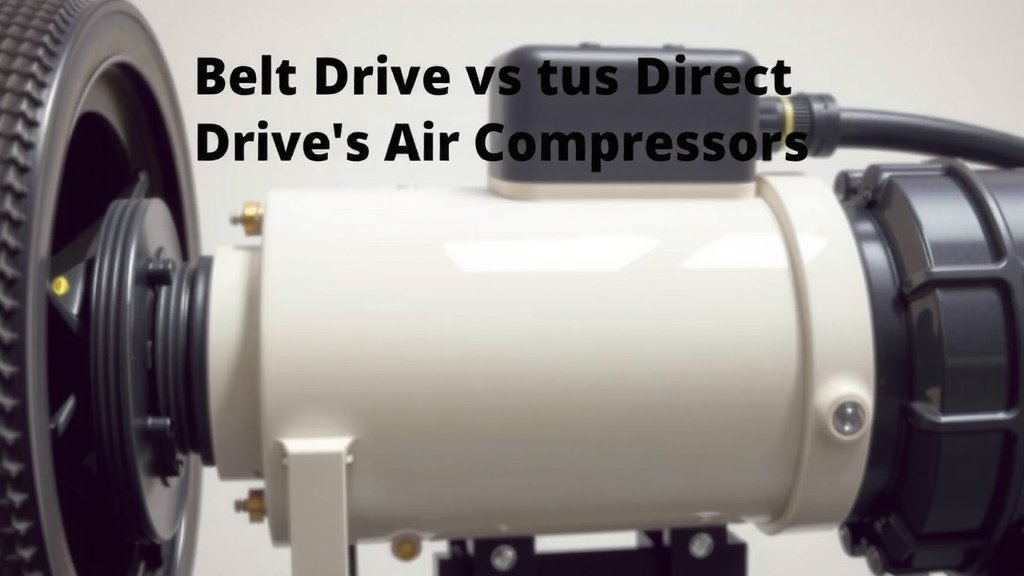
Belt Drive vs Direct Drive Air Compressor: What’s Best
When choosing an air compressor, the main difference between belt-drive and direct-drive models boils down to efficiency and durability. Belt-drive compressors are generally more efficient and quieter, making them a better choice for heavy-duty use. Direct-drive units are simpler and cheaper but can be louder and less efficient over time.
Many users wonder which type will best suit their needs, especially for frequent or demanding tasks. We found that while direct-drive systems offer a more straightforward setup and lower initial cost, belt-drive units often prove more economical in the long run due to their superior energy usage and longer lifespan, especially under consistent operation.
- Belt-drive compressors: More efficient, quieter, better for heavy use.
- Direct-drive compressors: Simpler, cheaper, but can be louder and less efficient.
- Consider your usage frequency and duration when deciding.
- Belt-drive often wins for longevity and lower running costs.
Let’s break down what makes each type tick, so you can make the best choice for your workshop or job site.
Belt Drive vs. Direct Drive: Understanding Air Compressor Mechanics
Choosing the right air compressor can feel like picking a partner for your projects. You want someone reliable, efficient, and up for the job. When you look at air compressors, you’ll notice two main ways the motor connects to the pump: belt drive and direct drive. We’ve found that understanding this difference is key to making a smart purchase. It’s not just a technical detail; it impacts how your compressor performs, how long it lasts, and even how much noise it makes.
How Belt-Drive Air Compressors Work
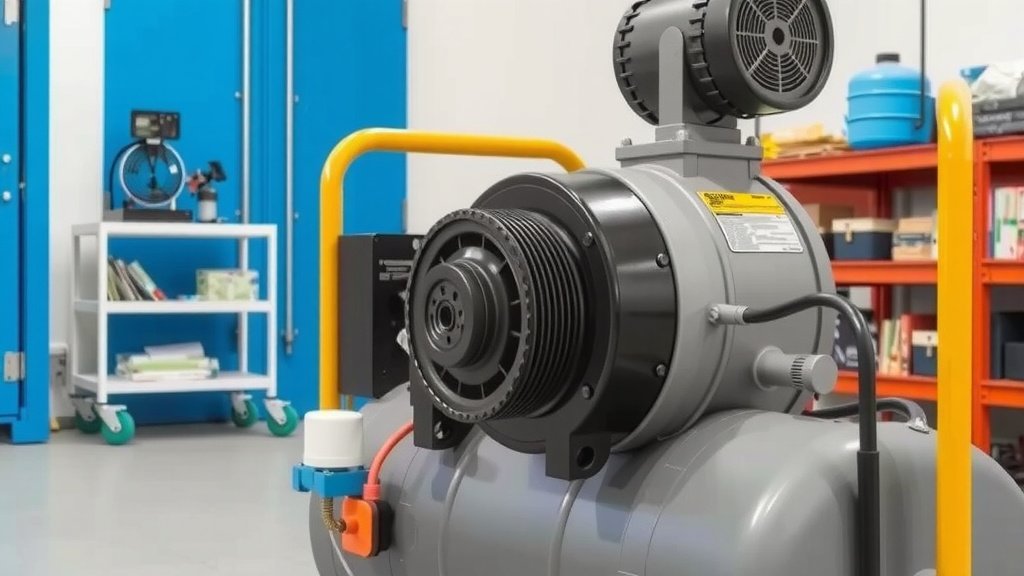
Imagine a system of pulleys and a belt, like on a car engine. That’s essentially what you have with a belt-drive air compressor. The electric motor spins a pulley, and that pulley is connected by a V-belt to another pulley on the compressor pump. This belt transfers the power from the motor to the pump. We found this design has some great advantages for efficiency and longevity.
The Benefits of Belt-Drive Systems
One of the biggest wins for belt-drive compressors is their efficiency. Because the motor and pump aren’t directly connected, the belt and pulley system allows for some speed reduction. This means the motor can run at its optimal speed, which is often slower than the pump needs to run. We found this separation helps the motor work less hard, using less energy overall.
Another big plus? Noise reduction. The belt and pulley system acts as a bit of a buffer, absorbing some of the vibrations and noise produced by the pump. Many users also report that belt-drive units tend to run cooler. This is because the motor often runs at a lower RPM and the belt system allows for better airflow around the components. Experts suggest this cooler operation can lead to a longer lifespan for both the motor and the pump (Compressed Air Best Practices).
Finally, maintenance can be simpler. While you do need to check the belt tension periodically and replace the belt when it wears out, it’s a straightforward task. Some belt-drive pumps are designed to be lubricated, which can offer better protection and a longer service life compared to oil-free designs often found in direct-drive models. We found that for shops and garages where the compressor runs frequently, these benefits really add up.
Potential Downsides to Belt-Drive
While great, belt-drive units aren’t perfect. The most obvious drawback is their complexity. You have more moving parts: the belt, pulleys, and motor mount. This means there’s more to potentially go wrong, though they are generally very reliable.
You also need to consider maintenance. That V-belt won’t last forever. You’ll need to inspect it for wear and tear and eventually replace it. If the belt breaks while you’re working, your compressor is suddenly out of commission. We’ve heard from users that keeping a spare belt on hand is a smart move if you rely heavily on your compressor.
Lastly, belt-drive compressors tend to be larger and heavier than their direct-drive counterparts, primarily due to the motor size and the added pulley system. This can be a factor if you have limited space.
How Direct-Drive Air Compressors Work
Direct-drive air compressors are much simpler. In this setup, the motor shaft is directly connected to the compressor pump shaft. There’s no belt, no pulleys – just a straight connection. Think of it like a fan where the blades are attached right to the motor. This direct link is what defines this type of compressor.
The Advantages of Direct-Drive Simplicity
The main selling point for direct-drive compressors is their simplicity and lower cost. With fewer parts, there’s less that can break. This often translates to a lower initial purchase price. We found that for DIYers or those who only need compressed air for occasional, light-duty tasks, this can be a very appealing option.
Another benefit is their compact size and lighter weight. Because there’s no belt and pulley system, direct-drive compressors are typically smaller and easier to move around. This makes them great for portable applications or for users with limited storage space.
Maintenance is also generally easier. Since there’s no belt to tension or replace, the maintenance is usually limited to checking the oil level (if it’s an oil-lubricated model) and keeping the unit clean. Many direct-drive compressors are also “oil-free,” which further simplifies upkeep by eliminating oil changes altogether.
Considerations for Direct-Drive Models
Here’s where direct-drive can sometimes fall short. The most common complaint is noise. Since the motor is directly connected to the pump, all the vibrations and operating sounds are transmitted directly. We’ve found that these units can be significantly louder than belt-drive models.
Efficiency can also be a concern. In a direct-drive system, the pump runs at the same speed as the motor. Often, the motor has to spin faster than ideal for the pump’s operation. This means the motor might be working harder than necessary, leading to higher energy consumption and more heat generation. Many sources suggest this can reduce the overall lifespan of the components, especially under heavy use (U.S. Department of Energy).
Finally, the durability under continuous operation is often less than belt-drive. Because of the higher RPMs and increased heat, direct-drive compressors are generally best suited for intermittent use rather than for heavy-duty, prolonged tasks. We found that for professional tradespeople or serious hobbyists, this limitation can be a deal-breaker.
Belt Drive vs. Direct Drive: A Quick Comparison
To help you visualize the differences, let’s lay it out:
| Feature | Belt Drive | Direct Drive |
|---|---|---|
| Power Transfer | Motor to pump via V-belt and pulleys | Motor shaft directly connected to pump shaft |
| Efficiency | Generally higher; motor runs at optimal speed | Can be lower; motor often runs at higher RPMs |
| Noise Level | Quieter; belt absorbs vibration | Louder; direct connection transmits noise |
| Durability | Typically longer life, especially under heavy use | Best for intermittent, lighter tasks |
| Maintenance | Belt tension/replacement needed | Simpler; fewer moving parts |
| Cost | Often higher initial cost | Generally lower initial cost |
| Size & Weight | Larger and heavier | More compact and lighter |
Making the Right Choice for Your Needs
So, how do you decide? It really comes down to what you’ll be doing with your air compressor. We’ve found that asking yourself a few questions can point you in the right direction.
Consider Your Usage Pattern
How often will you use the compressor? For how long each time? If you’re planning to run tools for hours on end, a belt-drive unit is usually the way to go. Their efficiency and cooler operation make them much better suited for the long haul. Think of it like a marathon runner versus a sprinter; you need different gear for different speeds and distances.
If you only need air for quick tasks, like inflating tires, using a brad nailer for a few minutes, or blowing dust off equipment, a direct-drive compressor might be perfectly adequate. We found that for these lighter, intermittent jobs, the convenience and lower price of a direct-drive unit can be very attractive.
Noise Tolerance and Power Needs
How sensitive are you (or your neighbors) to noise? If you’re working in a residential area, a busy shop, or a space where noise is a concern, the quieter operation of a belt-drive compressor is a significant advantage. Many users simply can’t tolerate the constant roar of a loud direct-drive unit for extended periods.
Also, consider the tools you’ll be powering. High-demand tools like impact wrenches, sanders, or spray guns require a consistent supply of air. Belt-drive compressors are generally better equipped to deliver this sustained performance due to their more robust design and efficient power delivery.
Your Checklist for Choosing:
- Assess your primary tasks: Are they short bursts or long sessions?
- Listen to your environment: How much noise can you tolerate?
- Budget reality check: Initial cost vs. long-term operating cost.
- Space constraints: Do you need something compact and portable?
- Tool power requirements: Will your tools need constant, high airflow?
- Maintenance willingness: Are you comfortable checking belts, or prefer simpler oil-free care?
Conclusion
Choosing between a belt-drive and direct-drive air compressor ultimately depends on your specific needs and how you plan to use it. We found that belt-drive units offer superior efficiency, quieter operation, and better durability for heavy-duty, continuous use, making them a smart long-term investment for serious workshops. On the other hand, direct-drive models shine with their simplicity, lower initial cost, and compact size, perfect for occasional, light tasks.
Before you buy, honestly assess your project demands, noise tolerance, and budget. By understanding these core differences, you can confidently select the compressor that will be your reliable workhorse for years to come.
Frequently Asked Questions
Are direct-drive compressors always louder than belt-drive?
Yes, generally. Direct-drive compressors connect the motor directly to the pump, transmitting more vibration and noise. Belt-drive systems use a V-belt and pulleys, which act as a natural buffer, reducing the sound output. If noise is a concern, belt-drive is the preferred choice.
Can a direct-drive compressor be used for professional jobs?
For very light, intermittent professional tasks, a direct-drive unit might suffice. However, for sustained, heavy use like powering impact wrenches or sanders all day, they often lack the durability and efficiency. We found that professionals typically benefit more from belt-drive models.
How often do I need to check the belt on a belt-drive compressor?
It’s a good practice to visually inspect the belt for wear and tear, and check its tension, periodically. Many experts recommend doing this check at least every few months, or more often if you use the compressor very frequently. Replacing a worn belt promptly prevents unexpected downtime.
Which type of compressor is better for DIYers?
For most DIYers who tackle smaller projects or use tools occasionally, a direct-drive compressor is often a great fit. They are typically more affordable and easier to maintain, making them an accessible option for home garages and hobbyists. If your DIY projects involve extended use of air tools, consider a belt-drive.
Do belt-drive compressors use more electricity?
No, we found that belt-drive compressors are generally more energy-efficient. The belt and pulley system allows the motor to run at its optimal speed, which is often slower than the pump requires. This separation means the motor works less hard, consuming less power over time compared to direct-drive units where motor and pump speeds are matched.