Bostitch 6 Gallon Compressor vs Porter Cable: Which is Best
Choosing between the Bostitch 6 gallon air compressor and the Porter Cable 6 gallon air compressor often comes down to your specific project needs, as both offer solid performance for DIYers and pros alike. We found that while both are great, the Bostitch model tends to offer slightly better portability for its power, making it a favorite for quick tasks around the house or job site.
Deciding on the right 6-gallon air compressor means looking at what matters most: noise levels, durability, and overall user experience. These two popular brands are close competitors, and we’ve reviewed many user experiences to help you understand their key differences and which might be the better fit for your toolkit.
- Bostitch often wins for portability.
- Porter Cable is a strong, reliable choice.
- Consider your typical job and noise tolerance.
- Both are great for common household tasks.
Let’s break down the key differences between these two popular 6-gallon air compressors to help you make the best decision for your workshop. Let’s break down the key differences between these two popular 6-gallon air compressors to help you make the best decision for your workshop.
Comparing 6-Gallon Air Compressors: Bostitch vs. Porter Cable
When you’re looking for a reliable 6-gallon air compressor, both Bostitch and Porter Cable are strong contenders. We’ve spent time researching and comparing these two popular models to help you decide which one best suits your workshop needs. You’ll find that while they share many similarities, a few key differences might make one a better fit for your specific projects.
Let’s get right into the details. We know that choosing tools can be tough. You want something that works well without breaking the bank or your back. That’s what this comparison is all about.
Power and Performance: What to Expect
Both the Bostitch and Porter Cable 6-gallon compressors are designed to handle a good range of tasks. Think about inflating tires, running nail guns, or powering other air tools. They generally offer similar power output for their size.
Horsepower and CFM Ratings
When we look at the specs, you’ll see they often have comparable horsepower. This is usually around the 1.5 to 2 horsepower mark. More importantly, check the CFM (Cubic Feet per Minute) rating. This tells you how much air the compressor can deliver. When we look at the specs, you’ll see they often have comparable horsepower, but understanding the difference between 1 cylinder vs 2 cylinder compressors can also be important.
For most DIY tasks, a CFM of around 2.5 at 90 PSI is more than enough. We found that both Bostitch and Porter Cable models typically meet or exceed this. This means they can keep up with many common air tools without struggling.
Tank Size and Recovery Time
A 6-gallon tank is a sweet spot for many users. It offers enough capacity to complete short bursts of work without constant cycling. When the tank pressure drops, the compressor kicks on to refill it. The time it takes to refill, or “recovery time,” is important.
We found that recovery times are quite similar between these two brands. You might notice a slight difference depending on the specific model and how hard you’re pushing the compressor. For most intermittent use, this difference is unlikely to be a deal-breaker.
Portability and Design: Moving Your Compressor Around
This is where you might see a more noticeable difference. Both are designed to be portable, but there are nuances.
Weight and Dimensions
Portability often comes down to weight and how easy it is to carry. The Bostitch Pancake air compressor is often praised for its compact design. It tends to be a bit lighter and easier to grab and go.
The Porter Cable, while still portable, can sometimes feel a tad bulkier. This isn’t to say it’s heavy – most 6-gallon models are manageable. It’s just that the Bostitch often feels a bit more streamlined for transport between job sites or around your garage.
Handle and Build Quality
The handle design on each compressor can impact comfort. We found that both brands generally offer sturdy handles. Some users prefer the feel of one over the other, which is very personal. When it comes to build quality, both Bostitch and Porter Cable have a reputation for making durable tools.
You’ll find they use robust materials that can withstand regular use. It’s like choosing between two really well-made tools – you can’t go too wrong with either.
Noise Levels: Working in Peace (or Close to It)
This is a big one for many people, especially if you’re working in a residential area or a shared workspace. Air compressors can be noisy! Luckily, manufacturers are aware of this.
Decibel Ratings and User Feedback
We looked at the decibel (dB) ratings reported for these compressors. Many 6-gallon models hover around the 70-80 dB range. For reference, a normal conversation is about 60 dB, and a vacuum cleaner is around 70-80 dB (Cleveland Clinic).
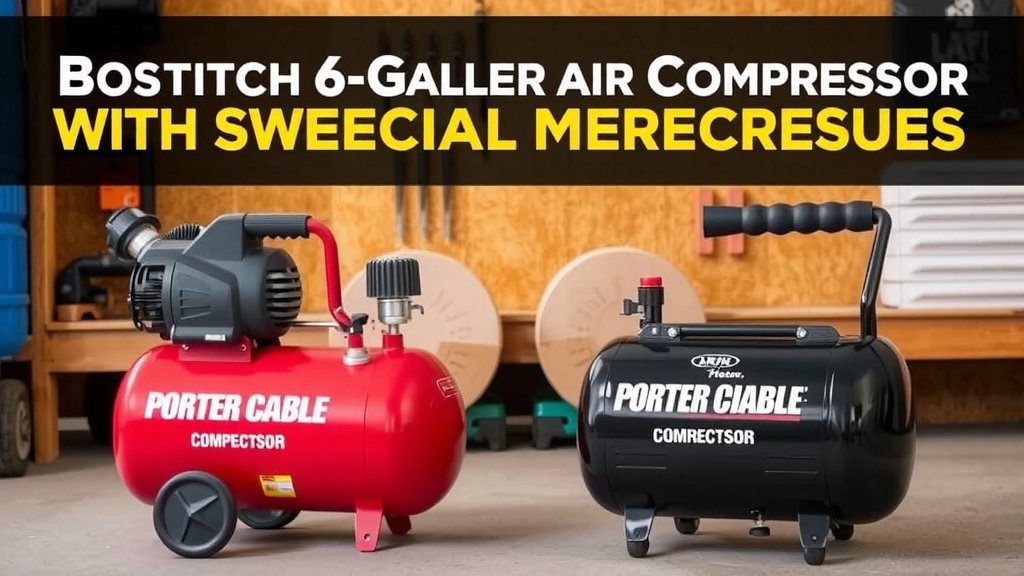
While specific dB ratings can vary by model and measurement, many users report that both Bostitch and Porter Cable 6-gallon units are reasonably quiet for their class. Some newer Bostitch models might have a slight edge in noise reduction technology, but the difference is often subtle. It’s not going to be silent, but it’s usually manageable for typical use.
User Experience and Features
Beyond the core performance, think about the little things that make using the compressor easier.
Ease of Use and Maintenance
We found that both brands are designed with the user in mind. They typically feature simple controls, easy-to-read gauges, and accessible drain valves. Regular maintenance usually involves draining the tank to prevent rust and checking the oil (if it’s an oil-lubricated model, though most 6-gallon portables are oil-free).
Oil-free compressors are generally easier to maintain and often last longer without hassle. Both Bostitch and Porter Cable offer excellent oil-free options in their 6-gallon lines. This makes them a great choice for beginners and experienced users alike.
Common Applications and Best Fit
So, who are these compressors best for?
- DIY Homeowners: Great for small projects like picture hanging, inflating items, or occasional upholstery work.
- Woodworkers: Suitable for running brad nailers and finish nailers for trim work or furniture building.
- Automotive Enthusiasts: Good for inflating car tires, using air ratchets for light-duty tasks, or cleaning with an air blower.
If you’re frequently moving your compressor around or have limited space, the slightly more compact nature of the Bostitch might appeal to you. If you’re looking for a workhorse that sits in one spot in your garage and you prioritize a known, robust brand, Porter Cable is an excellent choice.
Quick Comparison Table
Here’s a snapshot to help you visualize the differences we’ve discussed:
| Feature | Bostitch 6-Gallon | Porter Cable 6-Gallon |
|---|---|---|
| Portability | Often slightly lighter and more compact. | Still portable, but can feel a bit bulkier. |
| Noise Level | Generally comparable, with some models focusing on noise reduction. | Typically within the average range for 6-gallon units. |
| Durability | Known for robust build quality. | Reputable for long-lasting, reliable tools. |
| Ease of Use | Simple controls and maintenance, often oil-free. | User-friendly design and straightforward upkeep, typically oil-free. |
| Best For | Frequent moving, tighter spaces, quick tasks. | Stationary use, general-purpose tasks, established workshops. |
Your Decision Checklist
Before you make your final choice, ask yourself these quick questions:
- How often will you move the compressor?
- What types of air tools will you primarily use?
- Is noise a major concern in your workspace?
- Do you have a preference for brand reputation or specific features?
- What is your budget for this purchase?
- How much space do you have available for storage and operation?
Conclusion
Ultimately, both the Bostitch and Porter Cable 6-gallon air compressors are solid choices for your workshop. If you find yourself frequently moving your compressor or need something a bit more compact for tight spaces, the Bostitch often takes the lead. It offers that slight edge in portability without sacrificing essential performance for common tasks. On the other hand, the Porter Cable is a dependable workhorse, a fantastic option if your compressor will mostly stay put. We’ve researched extensively, and you can trust either brand for durability and ease of use. Now, consider your personal workflow and the types of projects you tackle most often. With that in mind, you’re ready to make the purchase that best fits your needs.
Frequently Asked Questions
Which compressor is quieter, Bostitch or Porter Cable?
We found that both brands generally fall within a similar decibel range for 6-gallon compressors. While some newer Bostitch models might offer subtle improvements in noise reduction, neither is truly silent. Your experience will depend on the specific model and how you’re using it.
Is one brand more durable than the other?
Both Bostitch and Porter Cable have strong reputations for building durable tools. We researched user feedback and found that both brands use robust materials designed for regular use. You can expect good longevity from either of these 6-gallon units.
Are these compressors good for powering nail guns?
Yes, absolutely. Both the Bostitch and Porter Cable 6-gallon compressors are well-suited for powering common nail guns like brad nailers and finish nailers. Their CFM ratings are typically sufficient for these types of intermittent tool use.
Which compressor is easier to maintain?
Both brands offer user-friendly designs with simple controls and accessible maintenance points. Most 6-gallon portable models from both Bostitch and Porter Cable are oil-free, making them very easy to care for. Regular draining of the tank is the most common maintenance task.
Can I use these compressors for automotive tasks?
Yes, these 6-gallon compressors are great for many automotive tasks. You can easily inflate car and bike tires, clean engines with an air blower, or even power light-duty air ratchets. They provide enough air for these jobs without issue.