Central Pneumatic vs Husky Air Compressor: Which is Best
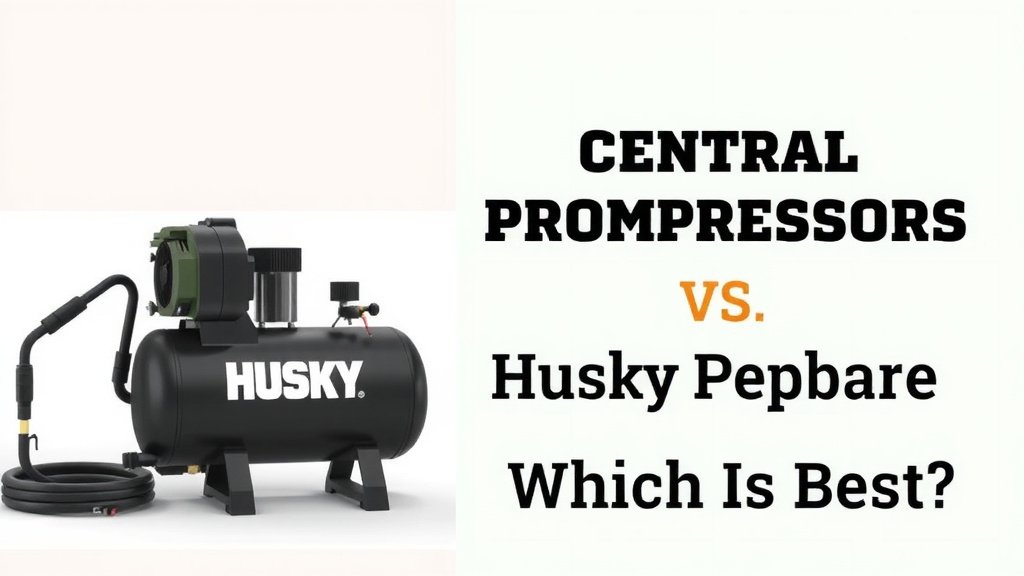
When comparing Central Pneumatic vs. Husky air compressors, the key difference often comes down to price point and intended use. Husky generally offers a wider range of models suitable for DIYers and light professional use, often at a more accessible price. Central Pneumatic, often found at Harbor Freight, can provide good value for budget-conscious shoppers looking for basic functionality.
Both brands aim to meet the air needs of various tasks, from inflating tires to powering pneumatic tools. Understanding your specific needs, like the CFM required for your tools and the duty cycle you’ll be running, will help you choose the right compressor. We’ve researched both to help you make an informed decision for your workshop or garage. To help you choose, consider the differences between a 1 gallon vs 2 gallon air compressor.
- Husky is often a go-to for homeowners and DIYers.
- Central Pneumatic offers budget-friendly options.
- Consider your tool’s air needs (CFM).
- Think about how often you’ll use the compressor (duty cycle).
- Both brands have options for various project scopes.
Let’s break down the pros and cons of each to help you decide which air compressor is the right fit for you.
Choosing the Right Air Compressor: Central Pneumatic vs. Husky
So, you’re in the market for an air compressor, and you’ve landed on two popular choices: Central Pneumatic and Husky. It can feel like a big decision, especially when you’re trying to power your tools without breaking the bank. We’ve looked into what makes each brand tick to help you decide.
Understanding Your Air Compressor Needs
Before we dive into brand specifics, let’s talk about what your tools actually need. This is the most important step in picking any compressor. Think of it like buying shoes; you wouldn’t buy a hiking boot for a sprint. Your tools have specific air demands.
CFM: The Unsung Hero
The key metric here is CFM, or Cubic Feet per Minute. This tells you how much air the compressor can deliver at a certain pressure. Your tools will usually list their CFM requirement. If your compressor can’t keep up, your tools will sputter and underperform. That’s a frustrating experience nobody wants.
PSI and Tank Size: The Supporting Cast
You’ll also see PSI (Pounds per Square Inch), which is the pressure. Most common tools run between 90-120 PSI. Tank size matters too. A bigger tank means more stored air, giving you longer run times for tools that need a lot of air. For tasks like sandblasting or running multiple tools, you’ll need a larger tank and higher CFM.
Husky Air Compressors: A Familiar Friend
Husky is a brand many of us see at The Home Depot. They’re often praised for their accessibility and variety, making them a solid choice for homeowners and DIY enthusiasts. They offer a pretty wide range of models to fit different needs and budgets.
What We Found with Husky
Our research indicates Husky compressors are generally well-regarded for their ease of use and decent performance for common tasks. They tend to have a good balance for tasks like powering nail guns, inflating tires, and running impact wrenches for automotive work. Many users find their noise levels acceptable for a home garage setup.
Pros of Husky
- Widely available at major retailers.
- Good range of models for various applications.
- Often seen as a reliable choice for DIYers.
- Generally straightforward operation.
Cons of Husky
- Can be more expensive than some budget brands for equivalent specs.
- Heavy-duty professional use might require stepping up to higher-end models or brands.
Central Pneumatic Air Compressors: The Value Proposition
Central Pneumatic is the house brand for Harbor Freight Tools. These compressors are often the go-to for shoppers looking for the best bang for their buck. They can be a smart pick if you’re on a tighter budget or need a compressor for less frequent or less demanding tasks.
What We Found with Central Pneumatic
Central Pneumatic often delivers on its promise of affordability. We found that for basic tasks like topping off car tires, using brad nailers for small projects, or even powering lighter-duty air tools, they can perform quite well. Many users appreciate the lower initial cost, which can make getting started with pneumatic tools much easier.
Pros of Central Pneumatic
- Typically very budget-friendly.
- Good options for light-duty home use.
- Harbor Freight frequently offers coupons, increasing the value.
- A good entry point for beginners.
Cons of Central Pneumatic
- Durability for heavy-duty or constant use can be a concern for some users.
- Specifications (like CFM) might be lower compared to similarly priced Husky models.
- Customer service and warranty experiences can vary.
Direct Comparison: Key Differences Summarized
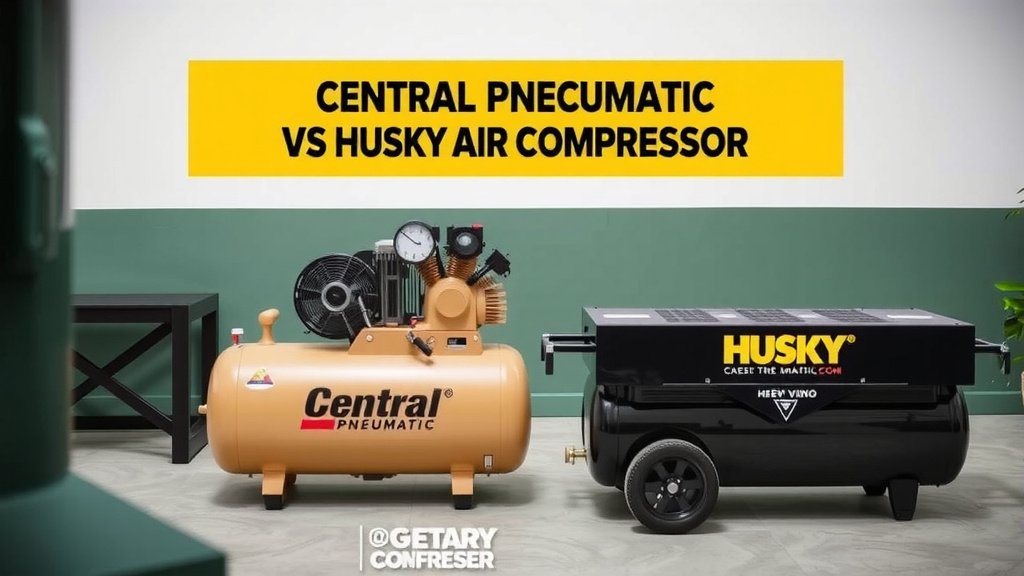
When you put them side-by-side, the choice often boils down to what you’ll be doing and how much you want to spend. Think of it like this: Husky aims to be your reliable weekend warrior, while Central Pneumatic offers a solid option for those who need air power without a big investment.
| Feature | Husky | Central Pneumatic |
|---|---|---|
| Price Point | Mid-range to Upper Mid-range | Budget-friendly to Mid-range |
| Target User | DIYers, Homeowners, Light Professionals | Budget-conscious DIYers, Hobbyists |
| Availability | Major Retailers (e.g., Home Depot) | Harbor Freight Tools |
| Durability (Heavy Use) | Generally Good | Can vary, may not be ideal for constant heavy use |
| Model Variety | Extensive | Good, but often focused on core needs |
Making the Final Call: Your Checklist
To help you solidify your decision, run through this quick checklist:
- What are your primary tasks? (Inflating, nailing, impact wrench, painting?)
- What CFM do your main tools require? (Check the tool manual!)
- How often will you use the compressor? (Daily, weekly, monthly?)
- What’s your budget? (Be realistic about what you can afford.)
- Are you looking for long-term, heavy-duty use or occasional projects?
- Where do you prefer to shop? (Retail store convenience vs. specialty tool shop.)
Conclusion
Deciding between a Central Pneumatic and a Husky air compressor hinges on your specific needs and budget. Husky often provides a reliable, user-friendly option for a wide range of DIY projects and homeowners, balancing performance with accessibility. Central Pneumatic, on the other hand, shines for those prioritizing cost savings, offering a solid entry point for lighter tasks and budget-conscious users. Your best bet is to assess the CFM your tools demand and your intended usage frequency. Once you have that information, you can confidently choose the compressor that will best serve your workshop or garage.
Frequently Asked Questions
Which brand is better for heavy-duty automotive work?
For heavy-duty automotive tasks that require sustained high airflow, our research suggests that Husky often provides more robust options. While Central Pneumatic can handle lighter tasks, Husky models are generally better equipped for the demands of frequent, heavy use in a professional or serious DIY auto shop environment.
Can Central Pneumatic compressors be used for painting?
Yes, Central Pneumatic compressors can be used for painting, especially for smaller projects or touch-ups. However, you’ll need to ensure the compressor’s CFM output meets or exceeds the requirements of your paint sprayer. For larger or continuous spray painting jobs, you might find a higher-CFM Husky model more suitable.
Are Central Pneumatic compressors noisy?
Like most air compressors, Central Pneumatic models do produce noise. The perceived loudness can vary by model and the surrounding environment. While some users find them acceptable for home use, if noise is a major concern, you might want to look into specific quieter models or consider sound dampening solutions.
What if my tools require more CFM than the compressor can provide?
If your tools require more CFM than the compressor can deliver, you will likely experience inconsistent air delivery. This means your tools might sputter, lose power, or stop working altogether. For optimal tool performance, always match or exceed your tool’s CFM requirements with your compressor’s output.
Where can I find replacement parts for Husky or Central Pneumatic compressors?
For Husky compressors, replacement parts are typically available through The Home Depot or their authorized service centers. Central Pneumatic parts might be more challenging to source; often, contacting Harbor Freight Tools directly or checking their website for parts diagrams and availability is your best starting point.