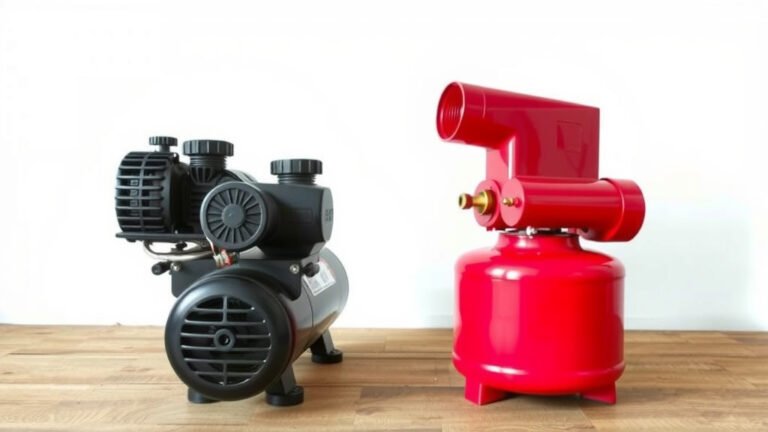
Air Compressor Classifications: A Simple Guide
Air compressors are primarily classified based on how they compress air. The two main categories are positive displacement and dynamic compressors. Positive displacement types trap air and reduce its volume. Dynamic types use rotating elements to accelerate air and convert velocity to pressure. We found this distinction is key to understanding their performance.
Understanding these classifications helps you choose the right compressor for your needs. Whether you need steady, high pressure or large volumes of air, the compression method makes a big difference. Many applications, from small workshops to large industrial sites, rely on knowing these basic classifications to work efficiently. It’s all about matching the tool to the job, and knowing how they’re built is the first step.
- Air compressors are classified by their compression method.
- The main types are positive displacement and dynamic.
- Positive displacement compressors trap and squeeze air.
- Dynamic compressors use speed to build pressure.
- Choosing the right type depends on your specific air needs.
Below, we’ll break down these classifications and what they mean for you. Let’s get started on understanding your air compressor options!
How Air Compressors Are Grouped Together
Air compressors are primarily sorted based on how they physically compress air. The two main families are positive displacement and dynamic compressors. Understanding this fundamental difference helps you pick the perfect machine for your needs. We found that knowing this basic distinction is key to avoiding confusion later on.
Positive Displacement Compressors: The Squeezers
These compressors work by trapping a fixed amount of air in a chamber. Then, they reduce the size of that chamber, forcing the air into a smaller space. This process steadily increases the air’s pressure. Think of it like squeezing a balloon in your hands – you trap the air and then reduce the volume.
Reciprocating Compressors: The Pistons
Reciprocating compressors are the most common type of positive displacement compressor. They use a piston moving back and forth inside a cylinder. As the piston moves down, it draws air into the cylinder. As it moves up, it squeezes that trapped air and pushes it out. Many experts say these are great for applications needing steady, high pressure.
Single-Stage vs. Two-Stage Reciprocating
You’ll often see single-stage and two-stage versions. Single-stage compressors compress the air once. They are simpler and usually less expensive. Two-stage compressors compress the air, cool it down, and then compress it again. This second compression makes the air even hotter but also more pressurized. Many professional workshops prefer two-stage for demanding tasks.
Rotary Screw Compressors: The Spirals
Rotary screw compressors are another popular positive displacement type. They use two interlocking helical screws. As the screws rotate, they trap air in the spaces between their threads. The rotating action moves the trapped air along the length of the screws, reducing the volume and increasing pressure. We found these are known for their continuous air delivery and lower noise levels compared to some other types.
Rotary screw compressors are often used in industrial settings where a constant supply of compressed air is needed. They are built for heavy-duty, continuous operation. While they might have a higher initial cost, their efficiency and durability often make them a smart long-term investment for businesses.
Other Positive Displacement Types
There are a few other less common positive displacement designs. These include vane compressors, which use sliding vanes in a rotor, and scroll compressors, which use two interleaved scrolls. Each has unique advantages, but the core principle of trapping and squeezing air remains the same.
Dynamic Compressors: The Speed Demons
Dynamic compressors don’t trap air. Instead, they use the force of motion to accelerate air. They then convert this speed into pressure. Imagine a fan blowing air – it moves a lot of air quickly. Dynamic compressors do something similar, but much more intensely, to build pressure.
Centrifugal Compressors: The Spinners
Centrifugal compressors are the main type of dynamic compressor. They have an impeller that spins at very high speeds. This impeller throws the air outwards due to centrifugal force. As the air is forced out, its velocity increases. Then, a diffuser slows the air down, converting its kinetic energy (speed) into potential energy (pressure). Many sources suggest these are ideal for large volumes of air at moderate pressures.
Centrifugal compressors are often found in large industrial applications like chemical plants, refineries, and large manufacturing facilities. They are known for their robustness and reliability in demanding environments. Because they don’t have parts that rub together, they tend to have a longer lifespan and require less maintenance than some other types.
Axial Compressors: The Jet Engine Style
Axial compressors work by passing air through a series of rotating and stationary blades. The rotating blades speed up the air. The stationary blades then slow the air down and redirect it to the next set of rotating blades, further increasing pressure. Think of the front of a jet engine – that’s an axial compressor in action! We found these are best for moving massive amounts of air, typically at lower pressures than centrifugal types.
These are less common in general workshops and more suited for very specific, large-scale industrial needs, such as in gas turbines or large-scale ventilation systems. Their design allows for very high flow rates but often requires many stages to achieve significant pressure increases.
Choosing the Right Type for You
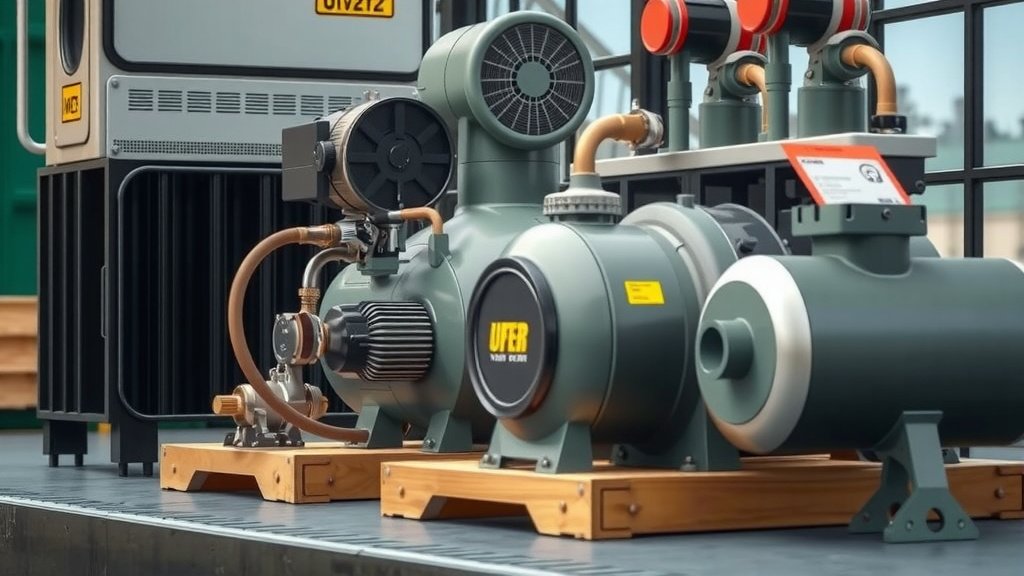
Deciding between positive displacement and dynamic compressors comes down to your specific needs. Do you need a lot of air at high pressure? A reciprocating or rotary screw might be your best bet. Are you looking for massive airflow, even if the pressure isn’t extremely high? A centrifugal or axial compressor could be the answer. We found that many users overlook this initial classification and end up with a compressor that doesn’t quite fit their workflow.
Here’s a quick checklist to help you think about your requirements:
- What is the primary use for the compressed air? (e.g., tools, painting, machinery)
- How much air do you need, measured in CFM (Cubic Feet per Minute)?
- What pressure, measured in PSI (Pounds per Square Inch), do your tools require?
- Will the compressor run continuously or intermittently?
- What is your budget for the initial purchase and ongoing maintenance?
- How important is noise level to your working environment?
| Compressor Type | How It Works | Best For | Pros | Cons |
|---|---|---|---|---|
| Reciprocating | Piston squeezes air | High pressure, intermittent use | Simple, lower cost, good pressure | Can be noisy, pulsating air |
| Rotary Screw | Interlocking screws trap air | Continuous high-volume use | Smooth flow, durable, quieter | Higher initial cost, oil contamination risk |
| Centrifugal | Impeller speeds air, diffuser converts | Very large volumes, moderate pressure | High flow, reliable, low maintenance | Less efficient at low flow, high initial cost |
| Axial | Blades move air through stages | Massive volumes, low pressure | Extremely high flow rates | Complex, specialized, large footprint |
Conclusion
You’ve learned the two main ways air compressors are classified: positive displacement and dynamic. Positive displacement types trap and squeeze air, like reciprocating and rotary screw models. Dynamic types use speed to build pressure, such as centrifugal and axial designs. We found understanding this core difference is vital for selecting the right compressor for your tasks. Don’t let air pressure confusion slow you down. Now that you know the classifications, you can better match a compressor’s capabilities to your needs. Take a moment to review your tool requirements and choose wisely!
Frequently Asked Questions
Are there any other ways to classify air compressors besides how they compress air?
While compression method is the primary classification, you might also see compressors grouped by their power source (electric, gas, diesel) or by their intended application (portable, stationary, industrial). These secondary classifications can also help narrow down your choices based on your environment and usage.
What’s the main difference in performance between positive displacement and dynamic compressors?
Positive displacement compressors excel at providing high pressure, often in bursts, and are great for tools that need steady, strong air. Dynamic compressors are usually better for moving large volumes of air continuously, even if the pressure isn’t as high. We found this difference is key for matching airflow needs.
Why are rotary screw compressors so popular in industrial settings?
Rotary screw compressors offer a consistent, smooth flow of compressed air without the pulsations common in reciprocating types. They are also generally quieter and more durable for continuous, heavy-duty operation. This makes them a reliable choice for factories and large workshops.
When would I choose a centrifugal compressor over a reciprocating one?
You’d typically choose a centrifugal compressor if your priority is a massive volume of air at moderate pressure, like for large-scale ventilation or industrial processes. Reciprocating compressors are usually better if you need high pressure for intermittent tasks, such as powering pneumatic tools.
Does the classification affect maintenance needs?
Yes, the classification can hint at maintenance requirements. For example, dynamic compressors like centrifugal types often have fewer moving parts that wear down, leading to less frequent maintenance compared to positive displacement types with pistons or screws. However, always follow manufacturer guidelines for upkeep.