Air Compressor Size for Texture Gun: What You Need
Choosing the right air compressor size for your texture gun is key for a smooth finish. You’ll generally need a compressor that can deliver at least 5 CFM (Cubic Feet per Minute) at 90 PSI (Pounds per Square Inch). Going too small means your texture gun will sputter and your work will suffer. This ensures consistent pressure for professional-looking results.
The air compressor’s job is to supply a steady stream of air. Too little air means uneven spray patterns and frustrating clogs. Too much air can damage your texture gun or waste energy. Finding the sweet spot based on CFM and PSI is crucial for any DIY or professional job, preventing burnout for both you and your tools.
- CFM and PSI are the main specs to watch.
- Aim for at least 5 CFM at 90 PSI.
- A compressor that’s too small will cause sputtering.
- Too much air can also be a problem.
Let’s dive into the specifics of picking the perfect air compressor for your texture spraying needs.
Picking the Right Air Compressor Size for Your Texture Sprayer
So, you’ve got your texture gun ready to go, but what about the air compressor? This is where things can get a little technical, but don’t worry, we’ll break it down. The main job of your compressor is to feed your texture gun with enough air. This air powers the gun’s ability to atomize and spray the texture material onto your walls or ceiling.
Think of it like your lungs. If you try to blow up a huge balloon with tiny puffs of air, it’s going to take forever and might not even work right. It’s the same idea with a texture gun. You need a steady, strong supply of air to get a good, even spray pattern. Getting the air compressor size wrong is a common mistake, and it can lead to a lot of frustration.
Understanding Air Compressor Specs: CFM and PSI
You’ll see two main numbers when looking at air compressors: CFM and PSI. These are super important for your texture gun. They tell you how much air the compressor can deliver and at what pressure.
What is CFM? Cubic Feet per Minute Explained
CFM stands for Cubic Feet per Minute. This is the most critical number for your texture gun. It measures the volume of air a compressor can deliver. Your texture gun will have a specific CFM requirement listed in its manual. You need a compressor that meets or exceeds this number.
Many experts recommend aiming for at least 5 CFM at 90 PSI for most texture guns. This is a good starting point. If your compressor’s CFM is too low, your gun will sputter. It won’t be able to atomize the texture material properly. This means you’ll get an uneven, clumpy spray. It’s like trying to paint with a leaky hose – messy and ineffective.
What is PSI? Pounds per Square Inch
PSI stands for Pounds per Square Inch. This measures the air pressure. Most texture guns operate within a certain PSI range, usually between 30 and 60 PSI for spraying. Your compressor needs to be able to deliver this pressure consistently.
The compressor’s tank stores the air. It builds up pressure to the PSI level you set on the regulator. Once you pull the trigger on your texture gun, air flows out. The compressor then works to refill the tank and maintain that pressure. A compressor that can’t keep up with the demand will lead to dropping pressure. This causes inconsistent spraying.
Matching Your Texture Gun to the Right Compressor
Your texture gun is the heart of the operation, and the compressor is its lungs. You need to make sure they’re a good match. Most texture gun manufacturers will tell you exactly what kind of air supply you need.
Check Your Texture Gun’s Manual
This is your bible. Seriously, grab that manual. It will clearly state the minimum CFM and ideal PSI range for your specific model. Don’t guess! If you can’t find the manual, a quick online search for your gun’s model number should help. Many common texture guns require around 5 CFM at 90 PSI. Some larger or more professional models might need more.
What Happens If Your Compressor is Too Small?
We’ve all been there – starting a project with the wrong tools. If your compressor is too small (meaning it has a lower CFM than your gun needs), you’ll experience sputtering. The spray will be uneven. You might even get clogs. It’s incredibly frustrating. You’ll spend more time fiddling with the gun than actually spraying. Many sources, like DIY forums, consistently point this out as a major pitfall.
What If Your Compressor is Too Big?
Can you have too much of a good thing? With air compressors, sometimes yes. If you get a compressor that’s way overkill, it’s not necessarily harmful to the gun itself, especially if you’re careful with the pressure setting. However, a much larger compressor will cost more upfront and use more electricity. It might also be noisier and heavier. For most DIY texture spraying, a moderately sized compressor is usually the most economical and practical choice.
Types of Air Compressors to Consider
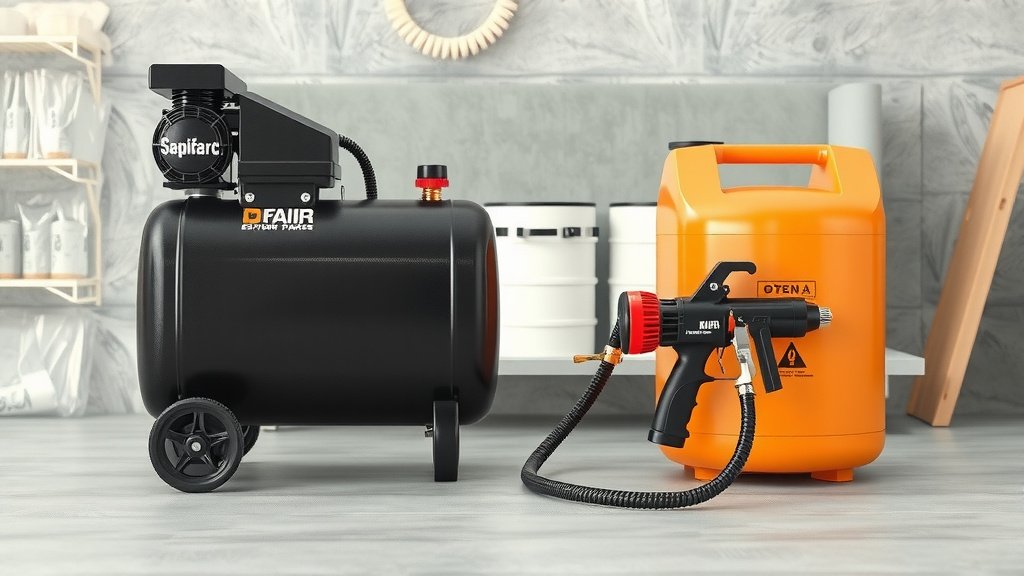
There are a few common types of air compressors you’ll see. For texture spraying, you’ll typically be looking at portable electric models.
Electric vs. Gas-Powered Compressors
For most home use and smaller job sites, electric compressors are the way to go. They’re quieter, cleaner, and don’t produce exhaust fumes, making them suitable for indoor use. Gas-powered compressors are much louder and are best suited for large outdoor projects where electricity isn’t readily available.
Tank Size Matters (But CFM is King)
Air compressors come with tanks of various sizes, measured in gallons. A larger tank means the compressor can store more air. This allows you to spray for longer periods before the compressor has to kick on and refill. While a larger tank can be convenient, don’t let it distract you from the CFM rating. A big tank with low CFM won’t do you any good. Many texture spraying jobs benefit from at least a 10-20 gallon tank to provide a buffer, but again, CFM is the priority.
Single-Stage vs. Two-Stage Compressors
Single-stage compressors compress air once. They’re good for lighter tasks. Two-stage compressors compress air twice, delivering higher pressures and more consistent output. For texture spraying, a good quality single-stage compressor that meets your CFM needs is usually sufficient. Two-stage compressors are generally more powerful and durable, but often more expensive and might be overkill for simple texture jobs.
Choosing the Right Air Compressor: A Quick Checklist
Here’s a simple rundown to help you make the best choice:
- Check Your Texture Gun’s CFM Requirement: This is non-negotiable.
- Match or Exceed the CFM: Aim for at least 5 CFM at 90 PSI.
- Ensure Sufficient PSI Output: Your gun needs consistent pressure.
- Consider Tank Size: 10-20 gallons offers a good buffer for continuous spraying.
- Opt for Electric for Indoors: Safety and convenience are key.
- Read Reviews: See what other users say about reliability.
Conclusion
You’ve learned that matching your air compressor to your texture gun is all about understanding CFM and PSI. Aiming for at least 5 CFM at 90 PSI is your golden rule, preventing sputtering and ensuring a smooth finish. Remember to always check your texture gun’s manual for its specific needs. Getting this right means less frustration and better results for your project. Now that you know the specs, you’re ready to find the perfect compressor!
Frequently Asked Questions
What happens if my air compressor has lower CFM than my texture gun needs?
If your compressor’s CFM is too low, your texture gun will likely sputter and struggle to spray evenly. You’ll end up with an inconsistent texture pattern, making your project look unprofessional. It can also lead to frustrating clogs in the gun.
Can I use a gas-powered air compressor for texture spraying indoors?
It’s generally not recommended to use gas-powered compressors indoors. They produce exhaust fumes which can be dangerous in enclosed spaces. Electric compressors are a much safer and cleaner option for indoor texture spraying jobs.
How important is the PSI setting on my air compressor for texture spraying?
PSI is important for consistent pressure, but CFM is usually the primary concern for the gun’s operation. Your texture gun will have an ideal PSI range, typically between 30-60 PSI, for optimal spraying. Ensure your compressor can maintain this pressure steadily.
Is a larger air compressor tank always better for texture spraying?
A larger tank can be convenient as it allows you to spray longer without the compressor cycling on. However, the tank size is secondary to the CFM output. A large tank with insufficient CFM won’t help your texture gun perform correctly.
Where can I find the CFM and PSI requirements for my texture gun?
The best place to find your texture gun’s requirements is in its user manual. If you can’t locate the manual, a quick online search using your texture gun’s specific model number should provide the necessary specifications.