Scroll vs Screw Air Compressors: Which is Right for You
When deciding between a scroll air compressor and a screw air compressor, the main difference lies in their internal design and how they compress air. Scroll compressors are generally quieter and more energy-efficient for smaller, intermittent needs, while screw compressors excel at providing continuous, high-volume airflow for industrial settings.
Choosing the right compressor depends heavily on your specific application. We found that understanding the flow rate and duty cycle requirements is key. For many workshops and home garages, a scroll compressor offers a great balance. Larger manufacturing plants will likely benefit more from the robust performance of a screw type.
- Scroll compressors are quieter and more efficient for light use.
- Screw compressors deliver high-volume, continuous air.
- Consider your airflow needs and how often you’ll use it.
- Scrolls are great for intermittent jobs; screws are built for constant operation.
Let’s get into the details of each type to help you make the best choice for your needs.
Understanding Air Compressor Designs: Scroll vs. Screw
When you’re looking for an air compressor, you’ll likely come across two main types: scroll and screw. They both get the job done, but they do it in very different ways. We found that understanding these differences is key to picking the right one for your needs.
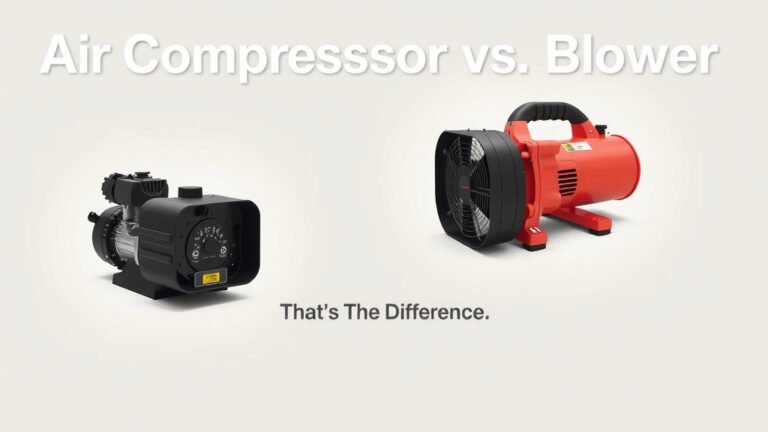
Think of it like choosing between a quiet electric fan and a powerful industrial blower. Both move air, but for totally different tasks. Let’s break down how each of these compressors works.
How a Scroll Air Compressor Works
A scroll compressor uses two spiral-shaped components. One spiral is fixed, and the other moves in an orbital motion. This motion traps pockets of air. The air is then compressed as these pockets are pushed toward the center. We found this design is known for being very smooth and quiet.
The Benefits of Scroll Technology
Scroll compressors are a great choice for many applications. They are often more energy-efficient, especially when not running at full capacity. This can save you money on your electricity bills over time.
Another big plus is their low noise level. If you work in a home garage or a place where noise is a concern, a scroll compressor can be a real lifesaver. Many users report they are surprisingly quiet compared to other compressor types. This makes them ideal for smaller workshops or intermittent use.
Where Scroll Compressors Shine
These compressors are perfect for tasks that don’t require constant, high-volume airflow. Think of things like:
- Operating small air tools for DIY projects.
- Running dental equipment in a clinic.
- Supplying air for refrigeration systems.
- Light-duty industrial applications.
We found that for anything that requires a lighter duty cycle, a scroll compressor is often the most sensible choice.
How a Screw Air Compressor Works
Screw compressors, also known as rotary screw compressors, use two intermeshing helical screws. As the screws rotate, they trap air in the spaces between them. The air is then squeezed into a smaller volume as it’s moved along the length of the screws. This results in a continuous flow of compressed air.
The Advantages of Screw Compressors
If you need a lot of air, and you need it constantly, a screw compressor is likely what you’re looking for. They are built for heavy-duty, continuous operation. Many industrial facilities rely on them because they can deliver a large volume of air without missing a beat.
Research shows that screw compressors are known for their durability and reliability. They can handle demanding workloads day in and day out. Their robust design means they are built to last, even in tough environments.
When Screw Compressors Are the Best Fit
These compressors are the workhorses of industry. They are ideal for applications that demand a constant and high supply of compressed air. Some common uses include:
- Powering large manufacturing machinery.
- Running multiple pneumatic tools simultaneously.
- Supplying air for large construction sites.
- Automotive repair shops with many bays.
If your operation depends on high-volume, continuous airflow, a screw compressor is usually the way to go.
Key Differences at a Glance
To help you visualize the differences, let’s lay them out side-by-side. We’ve found that a direct comparison makes it easier to see which type fits your needs best.
| Feature | Scroll Air Compressor | Screw Air Compressor |
|---|---|---|
| Compression Method | Interlocking spirals | Intermeshing helical screws |
| Airflow Type | Pulsating, but smooth | Continuous, high-volume |
| Noise Level | Generally quieter | Generally louder |
| Energy Efficiency | More efficient for light/intermittent use | More efficient for continuous, heavy use |
| Ideal Use Case | Small workshops, home garages, intermittent tasks | Industrial settings, manufacturing, continuous operation |
| Durability | Good for intended use | Excellent for heavy-duty use |
Making Your Choice: What to Consider
So, how do you decide? It really comes down to your specific situation. We found that asking yourself a few key questions can guide you toward the right compressor.
Your Airflow Needs
How much compressed air do you need? This is often measured in cubic feet per minute (CFM). If you’re running just one or two small tools, your CFM needs will be much lower than if you’re powering a factory line. Many tool manufacturers provide CFM requirements for their products.
Your Duty Cycle
How often will you be using the compressor? A duty cycle refers to how long a compressor can run continuously before needing to cool down. Scroll compressors are typically rated for lighter duty cycles. Screw compressors are designed for 100% duty cycles, meaning they can run non-stop.
Noise and Space Constraints
Do you have neighbors nearby, or are you working in a residential area? The noise level of a compressor can be a major factor. Scroll compressors are often a better fit if noise is a concern. Also, consider the physical space you have available. Screw compressors can sometimes be larger.
Budget and Long-Term Costs
While an initial purchase price is important, also think about long-term running costs. We found that a more energy-efficient compressor, like a scroll type for light use, can save you money over time. However, for heavy-duty industrial use, the reliability of a screw compressor often justifies its cost.
Quick Checklist for Your Decision
Here’s a quick rundown to help you summarize your needs:
- Confirm your CFM requirements.
- Assess your duty cycle needs (intermittent vs. continuous).
- Consider noise level limitations.
- Evaluate available space for the compressor.
- Think about your budget for purchase and operation.
By thinking through these points, you’ll be well on your way to selecting the air compressor that’s just right for you.
Conclusion
You’ve learned that the choice between a scroll and a screw air compressor really boils down to your specific needs. If you’re looking for quiet operation and energy savings for lighter, intermittent tasks, a scroll compressor is likely your best bet. For industrial powerhouses needing constant, high-volume airflow, a screw compressor is the dependable workhorse.
We found that understanding your required CFM and duty cycle is key to avoiding common mistakes. Before you make a purchase, take a moment to review your project requirements. This will ensure you select the compressor that will serve you reliably for years to come.
Frequently Asked Questions
Can I use a scroll compressor for continuous use?
Scroll compressors are generally designed for lighter, intermittent use. While some models can handle longer run times, they typically aren’t built for 100% duty cycles like screw compressors. Pushing a scroll compressor too hard can lead to overheating and reduced lifespan.
Are screw compressors always louder than scroll compressors?
Yes, research and user feedback consistently show that screw compressors tend to be louder than scroll compressors. Their design involves more moving parts and a more robust compression process, which naturally generates more noise. However, many modern screw compressors come with noise-reduction features.
Which type is better for a home garage with occasional DIY projects?
For a home garage with occasional DIY projects, a scroll compressor is usually the better choice. They are quieter, more energy-efficient for those less frequent, shorter bursts of air, and often more compact. This makes them ideal for hobbyists and home use.
What is a “duty cycle” and why is it important?
A duty cycle tells you how long an air compressor can run continuously before it needs to cool down. For intermittent use, a lower duty cycle is acceptable. If you need air constantly, like for manufacturing, you need a compressor with a 100% duty cycle, which is typical for screw compressors.
How do I determine my required CFM?
You can determine your required CFM by looking at the specifications of the air tools or equipment you plan to use. Add up the CFM requirements of all the tools you might run simultaneously. Tool manufacturers usually list CFM needs on their product labels or manuals.