Air Compressor vs Blower: What’s the Difference
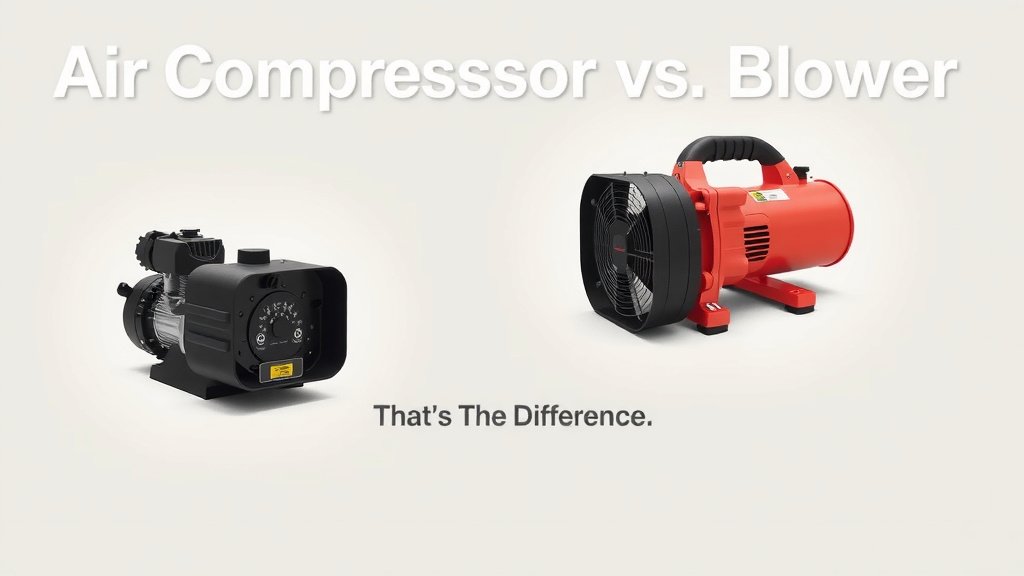
When choosing between an air compressor and a blower, the main difference lies in their purpose and how they move air. An air compressor is designed to increase air pressure for tools, while a blower focuses on moving a large volume of air at a lower pressure for ventilation or material handling. Your specific task will determine which is the right fit.
Think of it this way: a compressor is like squeezing air into a tiny space, building up a lot of force. A blower, on the other hand, is more like a strong fan, pushing air around. We found that understanding this core difference helps immensely when deciding for your projects, whether it’s for DIY tasks or industrial applications.
- Air compressors build high pressure for tools.
- Blowers move large air volumes at low pressure.
- Compressors use oil or are oil-free.
- Blowers are often used for cooling and ventilation.
- Your project needs define the best choice.
Below, we’ll break down the key differences and help you figure out which one is best suited for your needs.
Air Compressor vs. Blower: Understanding the Core Differences
It’s easy to get confused between an air compressor and a blower. They both move air, right? But they do it for very different reasons and in very different ways. Understanding this distinction is key to picking the right tool for your job.
What Exactly is an Air Compressor?
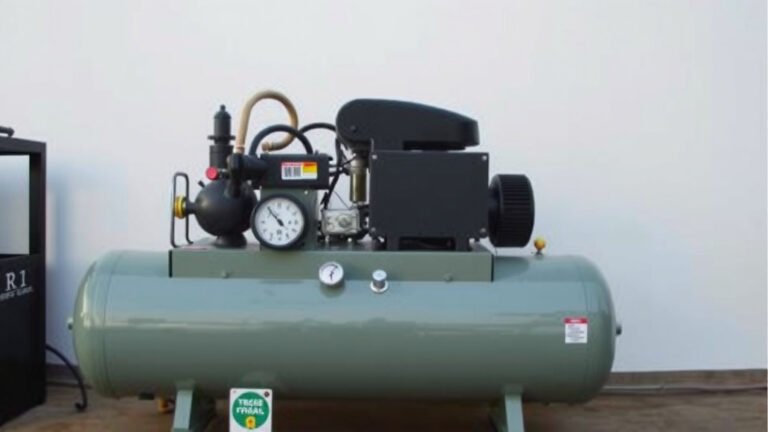
An air compressor’s main job is to take in ambient air. Then, it squeezes this air into a smaller space. This process greatly increases the air’s pressure. Think of it like pushing a lot of air into a small balloon. The result is high-pressure air ready to do work.
The Pressure Factor
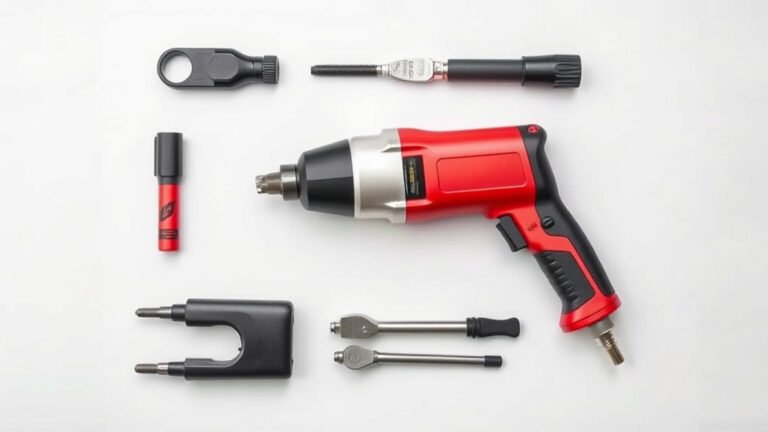
The defining characteristic of an air compressor is its ability to deliver air at high pressure. This pressure is measured in pounds per square inch (PSI). Many common air tools, like nail guns, impact wrenches, and spray paint guns, require this high-pressure air to operate effectively. Without sufficient pressure, these tools simply won’t perform as intended.
How Compressors Work (Simply Put)
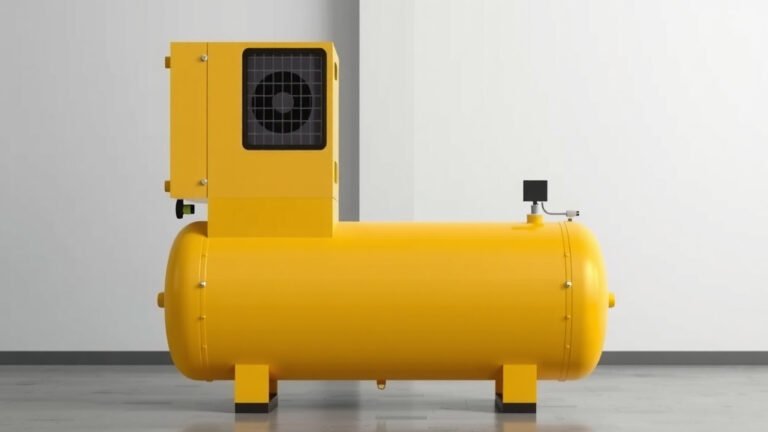
Most air compressors use a piston or a screw mechanism. A piston moves up and down in a cylinder. This action draws air in and then compresses it. Screw compressors use rotating screws to trap and compress air. The compressed air is then stored in a tank. This tank provides a consistent supply of pressurized air when you need it.
What Exactly is a Blower?
A blower, on the other hand, is all about moving a large volume of air. It doesn’t focus on squeezing that air into a high-pressure state. Instead, it moves air at a relatively low pressure. Its purpose is often for cooling, ventilation, or moving lighter materials.
Volume Over Pressure
The key here is volume. Blowers are designed to push a lot of air, measured in cubic feet per minute (CFM). This makes them perfect for tasks where you need to circulate air, dry surfaces, or move things like leaves or sawdust. They are more like a very powerful fan than a pressure-building machine.
Common Blower Applications
You’ll find blowers used in many everyday situations. Leaf blowers are the most obvious example. Industrial settings use blowers for ventilation in mines or to cool down large machinery. Some HVAC systems use blowers to circulate conditioned air throughout a building. They’re also used in applications like drying paint or inflating large structures.
Key Differences at a Glance
Let’s break down the fundamental differences so you can see them clearly. We found that focusing on these points helps immensely when deciding.
Pressure vs. Volume
This is the main distinction. Air compressors excel at building high pressure. This is essential for operating pneumatic tools that need a strong force. Blowers excel at moving a high volume of air. This is useful for tasks requiring air circulation or material movement, not force.
Operational Design
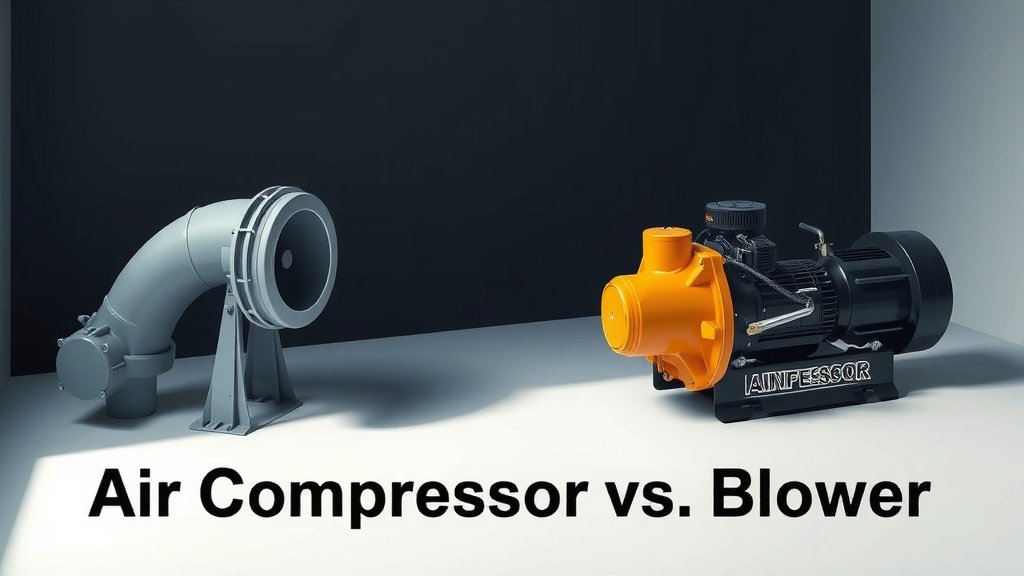
Compressors are built to constrict air, increasing its density and pressure. This often involves pistons, screws, or vanes working to reduce volume. Blowers typically use impellers or fans. These rotate to create airflow, moving a large quantity of air with less effort to increase its pressure.
Typical Use Cases
You’ll reach for an air compressor for tasks like inflating tires, powering air-powered tools for construction or auto repair, and sandblasting. You’ll use a blower for clearing debris, ventilating spaces, drying surfaces, or moving lightweight materials like grain or plastic pellets. Many sources, like engineering handbooks, highlight these distinct roles.
Power Source and Type
Both can be electric or gas-powered. However, there’s a difference in their internal workings. Compressors often have oil-lubricated or oil-free mechanisms. Blowers are typically simpler, often just a motor driving a fan or impeller.
When to Choose an Air Compressor
Your decision hinges on what you need the air to do. If your task requires force or the operation of specific tools, an air compressor is likely your answer. We found that users often consider their existing toolset when making this choice.
Powering Pneumatic Tools
This is the prime reason to own an air compressor. If you have or want to use air-powered tools, like those for woodworking, auto mechanics, or home renovation, you need the pressure they deliver. Think about the force needed to drive a nail or tighten a stubborn bolt. That power comes from compressed air.
High-Pressure Applications
Beyond tools, compressors are used for tasks requiring significant air pressure. This can include things like:
- Inflating vehicle tires to the correct PSI.
- Operating pneumatic lifts.
- Paint spraying for a smooth finish.
- Sandblasting or pressure washing.
When to Choose a Blower
If your goal is moving a lot of air around with minimal pressure, a blower is your go-to. It’s about circulating, ventilating, or moving lighter items. Many DIYers find them incredibly useful for yard work and quick drying tasks.
Ventilation and Cooling
Blowers are excellent for circulating air in workshops, garages, or even outdoors. They can help cool down hot spaces or keep dust and fumes moving away from you. Think of industrial fans or the blowers used in commercial kitchens for ventilation.
Material Handling and Cleaning
For tasks like clearing leaves from your yard, drying wet surfaces quickly, or even moving small, light materials in an industrial setting, a blower is ideal. They are designed to push air effectively over larger areas without needing high pressure. For instance, grain blowers move feed on farms.
Making Your Final Decision: A Quick Checklist
Still on the fence? Ask yourself these questions to guide your choice. We’ve found that a simple checklist can clear up a lot of confusion.
- Do you need to power pneumatic tools? (e.g., nail gun, impact wrench)
- Is high air pressure (PSI) a critical requirement for your task?
- Are you primarily focused on moving a large volume of air at low pressure?
- Is the task related to ventilation, cooling, or drying large areas?
- Are you moving lightweight materials or debris?
Conclusion
You’ve learned that the core difference between an air compressor and a blower comes down to their primary function: pressure versus volume. Air compressors build high pressure needed for pneumatic tools and specific tasks. Blowers excel at moving large volumes of air at lower pressures for ventilation and cooling. We found that understanding your project’s demands is key. By asking yourself whether you need force or circulation, you can confidently choose the right equipment. Now that you know the distinctions, you’re ready to make the best choice for your workshop, yard, or industrial needs.
Frequently Asked Questions
Can I use a blower to inflate a tire?
Generally, no. While a blower moves air, it doesn’t generate the necessary high pressure (PSI) required to inflate a tire effectively and safely. You need an air compressor for that specific task.
Can an air compressor be used for ventilation?
An air compressor isn’t ideal for general ventilation. Its strength is in its high pressure, not its volume. For circulating air in a room or space, a blower or fan is much more suitable and energy-efficient.
Are there oil-free air compressors?
Yes, oil-free air compressors exist. They are designed to not introduce oil into the compressed air stream, which is important for certain applications like food processing or medical equipment where air purity is essential.
How does a leaf blower compare to a shop blower?
Both are types of blowers, meaning they focus on air volume over pressure. A leaf blower is designed for outdoor debris clearing. A shop blower might be used for cooling machinery, drying surfaces, or moving lightweight materials within a workshop.
Which is better for sandblasting, a compressor or a blower?
You will definitely need an air compressor for sandblasting. Sandblasting requires a consistent supply of high-pressure air to propel the abrasive media effectively, something a blower cannot provide.