Tank vs Tankless Air Compressor: Which Is Right for You
Choosing between a tank air compressor and a tankless air compressor depends on your specific needs. Tank compressors store air, offering bursts of power, while tankless models provide continuous airflow but can be less powerful overall. Many users find tank models better for quick tasks and tankless ones for ongoing jobs. Our guide to 1-gallon vs. 2-gallon air compressors can help you understand tank size.
Your decision should consider factors like power requirements and continuous use. We found that tank compressors are great for pneumatic tools that need a lot of air at once. Tankless units shine when you need steady, lower-pressure air over extended periods, like for inflating items.
- Tank compressors store air for quick bursts.
- Tankless compressors offer continuous air supply.
- Consider your tool’s air needs.
- Think about how long you’ll use it.
- Power and runtime are key differences.
Let’s dive into the details of each type so you can pick the perfect air compressor for your projects.
Tank Versus Tankless Air Compressors: Which One is Right for You?
Deciding between a tank and a tankless air compressor can feel like choosing between a sprinter and a marathon runner. Both are powerful, but they excel in different situations. We’ve found that understanding their core functions will guide you to the perfect fit for your needs.
Understanding the Tank Air Compressor
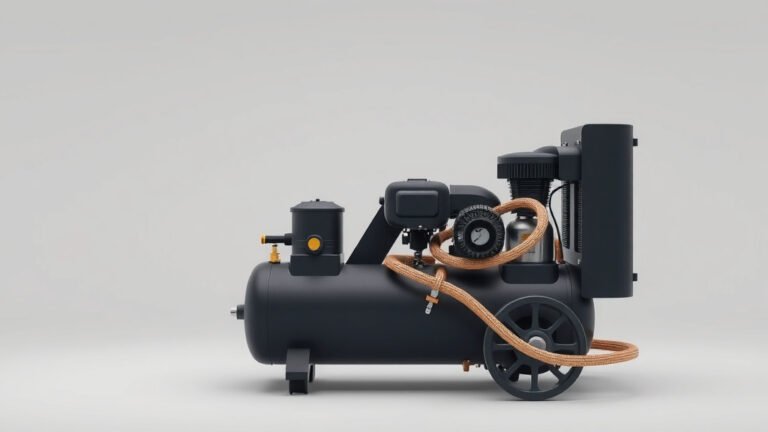
Think of a tank air compressor like a water bottle. It stores compressed air, ready for when you need a big gulp. This stored air provides a powerful burst, which is fantastic for tools that consume a lot of air in short periods.
How a Tank Compressor Works
An electric motor or gas engine drives a pump. This pump pulls in ambient air and compresses it. The compressed air is then stored in a pressurized tank. When you open the valve to use an air tool, the air is released from the tank. The pump will cycle on and off to maintain pressure.
When to Choose a Tank Compressor
These are your go-to for demanding tasks. If you’re using pneumatic nail guns, impact wrenches, or sanders, a tank model is usually the better choice. They can handle the high CFM (cubic feet per minute) requirements of these tools.
Power for Impact
The ability to store air means you get a consistent, high-volume output when you pull the trigger. This is vital for tools that need a strong jolt of air to operate correctly. You won’t experience power dips mid-task.
Limitations to Consider
The main drawback is that once the air in the tank is depleted, you have to wait for it to refill. This can interrupt your workflow if your tool uses air faster than the compressor can replenish it. They can also be larger and heavier due to the tank itself.
Exploring the Tankless Air Compressor
A tankless air compressor is more like a faucet. It generates compressed air on demand and delivers it continuously. There’s no storage tank; the air is produced as you need it.
The Mechanics of Tankless Operation
These compressors typically use a smaller pump. It continuously compresses air and sends it directly to your connected tool. They don’t store air, so their output is directly tied to their motor’s capacity. This means they generally produce less air volume at any given moment compared to a tank compressor.
Ideal Scenarios for Tankless Models
Tankless compressors shine when you need steady, lower-pressure air over extended periods. Think about inflating tires, airbrushes, or powering low-demand pneumatic tools. They are perfect for jobs where a constant, gentle stream of air is more important than a powerful blast.
Continuous Airflow Advantage
You get an uninterrupted supply of air as long as the compressor is running. This is a huge benefit for tasks like inflation or operating airbrushes where a constant flow prevents interruptions and ensures consistent results. You don’t have to worry about running out of air mid-job.
What They Aren’t Best For
If your tools require a high CFM rating, a tankless model might struggle. They can’t provide the same quick bursts of power that a tank compressor can. Trying to run a heavy-duty impact wrench with one will likely lead to disappointment. They are also generally limited to lower PSI (pounds per square inch) than tank models.
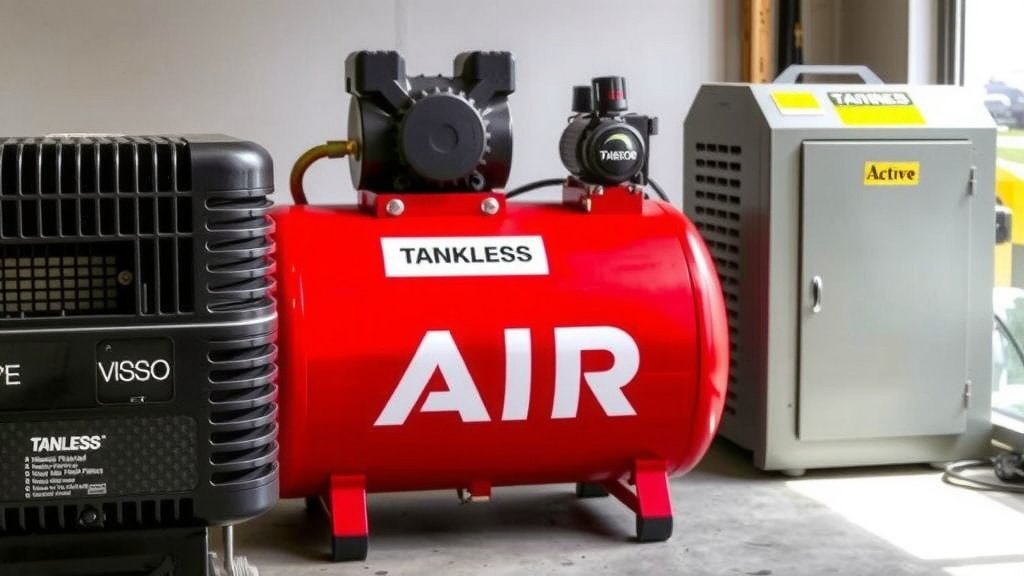
Key Differences at a Glance
Let’s break down the core distinctions so you can easily compare them.
| Feature | Tank Air Compressor | Tankless Air Compressor |
|---|---|---|
| Air Storage | Yes, stores compressed air in a tank. | No, generates air on demand. |
| Power Delivery | Provides bursts of high power. | Delivers continuous, lower-pressure air. |
| Best For | Nail guns, impact wrenches, sanders. | Tire inflation, airbrushes, small tools. |
| Runtime | Limited by tank size, then requires refilling. | Continuous as long as powered. |
| Portability | Often larger and heavier. | Typically smaller and lighter. |
| Noise Level | Can be very loud when pump cycles. | Often quieter, more consistent operation. |
Making Your Choice: A Quick Checklist
Here’s a simple way to think about which type fits your projects best:
- Do your tools need a lot of air all at once? (Lean towards tank)
- Do you need air for a long, continuous time? (Lean towards tankless)
- Are you using heavy-duty pneumatic tools? (Definitely tank)
- Is portability your top priority for quick jobs? (Consider tankless, but check power)
- Do you need consistent, low-pressure air? (Tankless is likely your winner)
- Is a quick setup and go more important than storage? (Tankless might be easier)
Conclusion
You’ve seen how tank and tankless air compressors serve different purposes. Tank models are your powerhouse for high-demand tools, delivering robust bursts of air when needed. Tankless units excel in providing a steady, consistent flow for lighter, continuous tasks. Your choice hinges on matching the compressor’s capabilities to your specific project requirements. We found that considering your tools’ air needs and how long you’ll be using them is the best way to make the right decision. Now that you know the differences, you can confidently select the compressor that will help you get the job done right.
Frequently Asked Questions
Can a tankless air compressor power a nail gun?
Generally, no. Most nail guns require a significant amount of air volume quickly, which tankless compressors usually can’t provide. You’ll likely need a tank compressor to ensure consistent power for nailing tasks.
How do I know if I need a tank or tankless compressor for my hobby projects?
For hobbyists, it depends on the tools. If you use airbrushes or inflate items, a tankless model is often sufficient. For tasks like small framing nailers or light-duty impact wrenches, a small tank compressor might be better.
Are tankless air compressors quieter than tank models?
Often, yes. Tankless compressors tend to have a more consistent sound because the motor runs continuously. Tank compressors can be louder when their pump cycles on to refill the tank.
What happens if my tank compressor runs out of air mid-job?
If your tank compressor depletes its stored air, it will stop delivering air to your tool. The compressor’s pump will then need time to build pressure back up in the tank before you can use your tool again.
Can I use a tankless compressor for car tire inflation?
Yes, tankless compressors are excellent for car tire inflation. They provide a continuous air supply, which is ideal for slowly and steadily inflating tires without interruption.