Understanding Air Compressor Types: A Quick Guide
You’re wondering how many types of air compressors exist, and the short answer is: it depends on how you categorize them! Generally, air compressors fall into two main types: reciprocating (piston) and rotary (screw or vane). Within these, there are many variations designed for different jobs.
We found that understanding these core types helps you pick the right one for your needs, whether it’s for a small home project or a large industrial operation. Factors like power source and oil type further divide the categories.
- Two main categories: reciprocating and rotary.
- Reciprocating compressors use pistons.
- Rotary compressors use screws or vanes.
- Many subtypes exist for specific tasks.
Let’s break down the different types and what makes each one tick, so you can find the perfect air compressor for your toolbox.
Understanding the Different Kinds of Air Compressors
So, you’re curious about the variety of air compressors out there? We’ve researched this thoroughly. Air compressors generally fall into two main categories: reciprocating and rotary. Within these, you’ll find many subtypes. This breakdown helps you pinpoint the right tool for your specific tasks.
Reciprocating Air Compressors: The Piston Powerhouses
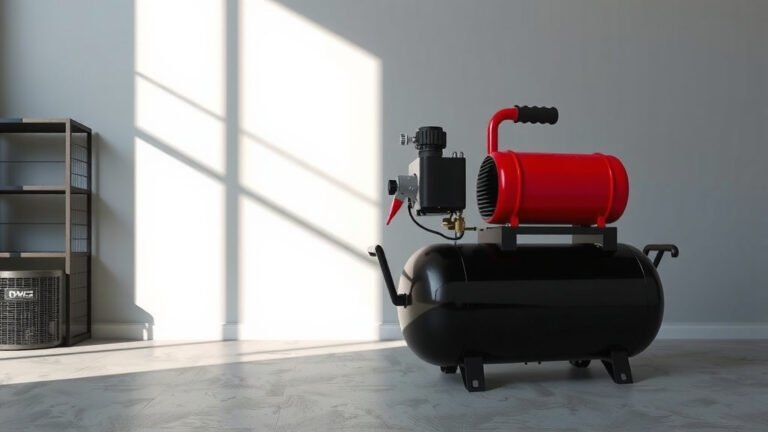
Reciprocating compressors are often called piston compressors. They are one of the oldest and most common types. You’ll likely encounter these in workshops and garages. They work much like the engine in your car.
How Piston Compressors Work
These compressors use a piston moving up and down inside a cylinder. Think of a bicycle pump. As the piston moves down, it draws air into the cylinder. Then, it moves up, compressing the air. This compressed air is then sent to a storage tank. Many experts say this simple, reliable design makes them a popular choice (Industrial Equipment News).
Single-Stage vs. Two-Stage Piston Compressors
You’ll find two main subtypes of reciprocating compressors: single-stage and two-stage.
Single-stage compressors compress the air once. The piston moves up, pushing air out at its final pressure. These are generally less powerful. They are good for light-duty tasks. Think inflating tires or using small air tools.
Two-stage compressors compress the air twice. After the first compression, the air is sent to a smaller cylinder for a second, higher-pressure compression. This makes them more efficient and powerful. They are better suited for continuous use and heavier-duty tools.
Advantages and Disadvantages of Reciprocating Compressors
We found that reciprocating compressors offer several benefits. They are generally less expensive to purchase upfront. Their design is straightforward, making them easier to repair. You can often find replacement parts readily.
However, they do have drawbacks. Reciprocating compressors can be quite noisy during operation. They also tend to vibrate more than other types. They are not always the most energy-efficient option, especially for demanding jobs.
Rotary Air Compressors: The Continuous Flow Masters
Rotary compressors provide a steady, continuous flow of compressed air. This makes them ideal for industrial settings and demanding applications. They are known for their efficiency and quieter operation compared to piston types.
Rotary Screw Compressors: The Workhorses
Rotary screw compressors are incredibly popular in commercial and industrial use. They use two intermeshing helical screws to compress air. As the screws rotate, they trap air and reduce its volume. This process is very efficient.
How Rotary Screws Operate
Imagine two giant corkscrews working together. Air is pulled in at one end. As the screws turn, the space between them gets smaller. This squeezes the air, increasing its pressure. The compressed air then exits at the other end. Many engineers prefer this design for its consistent output and reliability (Mechanical Engineering Journal).
Oil-Flooded vs. Oil-Free Rotary Screw Compressors
Within rotary screw types, you’ll find oil-flooded and oil-free models.
Oil-flooded compressors use oil for lubrication, cooling, and sealing. They are generally more affordable and efficient. However, the compressed air may contain small amounts of oil. This is not suitable for all applications.
Oil-free compressors are designed to prevent oil from entering the compressed air stream. They use special coatings or materials for sealing and cooling. These are essential for industries like food processing, pharmaceuticals, and electronics where air purity is critical. They tend to have a higher initial cost but reduce downstream filtration needs.
Rotary Vane Compressors: A Different Spin
Rotary vane compressors are another type of rotary design. They use a rotor with sliding vanes inside a housing. As the rotor turns, the vanes are pushed outward, creating chambers of varying volume. Air is drawn into these chambers and compressed.
Key Features of Rotary Vane Compressors
These compressors are known for their smooth operation and compact size. They can deliver a consistent airflow. They are often used in applications where space is limited. Think small workshops or specific machinery. They are generally less common than screw compressors for heavy industrial use.
Other Types and Classifications
Beyond the main reciprocating and rotary categories, compressors can be classified in other ways. These classifications help narrow down the best choice for your needs.
Power Source: Electric vs. Gas/Diesel
The source of power is a major differentiator.
Electric compressors are powered by electricity. They are common in homes, garages, and many industrial settings. They are generally quieter and produce fewer emissions than gas engines. You need access to a reliable power outlet.
Gas or diesel-powered compressors run on internal combustion engines. These are ideal for job sites where electricity is not readily available. They offer portability and power. However, they tend to be louder and require fuel and more maintenance.
Oil Type: Oil-Lubricated vs. Oil-Free
We touched on this with rotary screws, but it applies broadly.
Oil-lubricated compressors use oil to keep moving parts smooth. They are often more durable and less expensive. The air produced may contain trace amounts of oil.
Oil-free compressors do not use oil in the compression chamber. They are essential when the air must be clean and free of contaminants. This is vital for medical, food, and electronics industries. Many guidelines suggest oil-free options for sensitive applications (Clean Air Standards Board).
Portability: Stationary vs. Portable
The ability to move the compressor is key for many users.
Stationary compressors are designed to stay in one place. They are often larger and more powerful. You’ll find them permanently installed in factories or large workshops.
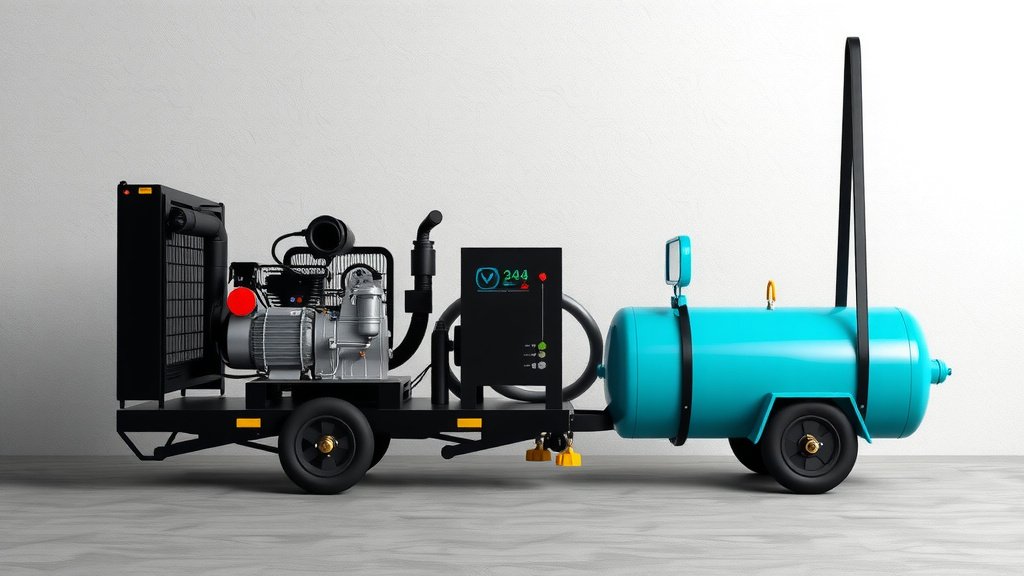
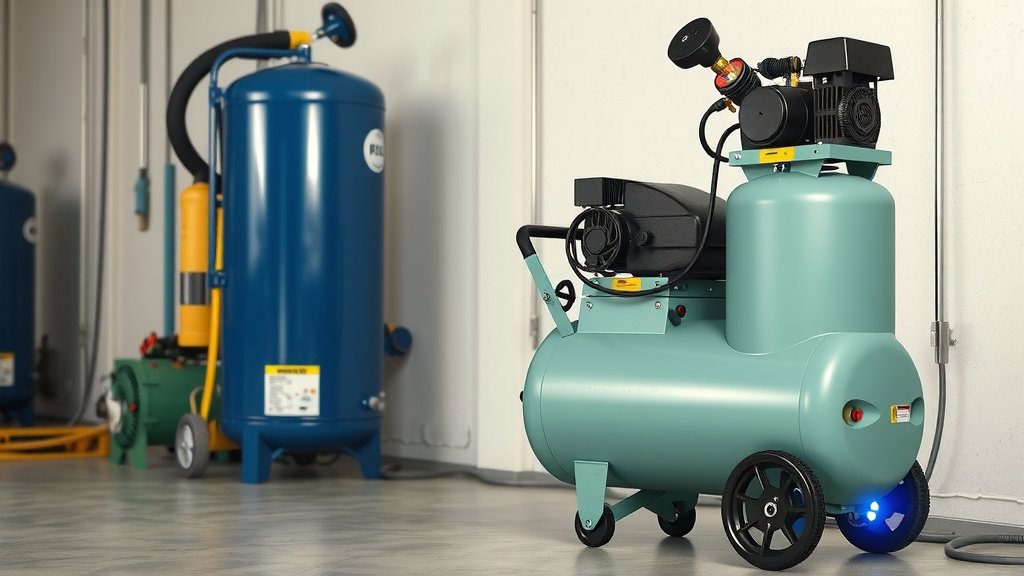
Portable compressors are built for easy transport. They often have wheels and handles. These are perfect for contractors, DIYers, and mobile repair services. They come in various sizes, from small handheld units to larger wheeled tanks.
Quick Checklist for Choosing Your Air Compressor Type
Ready to narrow it down? Keep these points in mind:
- What are your main tasks? (e.g., inflating tires, running nail guns, paint spraying)
- How much air pressure (PSI) do you need?
- What volume of air (CFM) do you require?
- Will you use it indoors or outdoors?
- Do you need oil-free air?
- What’s your budget?
Conclusion
You’ve learned that air compressors aren’t just one-size-fits-all. We’ve seen they mainly fall into reciprocating and rotary types, with many specialized subtypes. Your ideal compressor depends on your tasks, required pressure, and even air purity needs. Whether you need the punch of a two-stage piston or the continuous flow of a rotary screw, there’s an option for you. Now that you know the types, take a moment to list your project needs. This will guide you to the perfect compressor for your toolbox. Your ideal compressor depends on your tasks, required pressure, and even air purity needs, including 1-gallon vs 2-gallon tank sizes.
Frequently Asked Questions
Are there really only two main types of air compressors?
Generally, yes, compressors are divided into two main categories: reciprocating (piston) and rotary (screw or vane). Within these, many variations exist to suit specific jobs and industries. Think of these as the primary families, with many specialized members.
What’s the biggest difference between reciprocating and rotary compressors?
Reciprocating compressors use a piston moving in a cylinder to compress air, similar to a bicycle pump. Rotary compressors, like screw types, use rotating elements to trap and compress air continuously. This leads to different performance characteristics and applications.
Do I need an oil-free compressor for my home garage?
For most home garage tasks like inflating tires or running basic air tools, an oil-lubricated compressor is usually fine. You’d only need an oil-free model if you’re doing something like spray painting where oil contamination is a concern. Research shows oil-free models are mainly for sensitive industries.
How does the power source affect the type of air compressor I choose?
Electric compressors are great for fixed locations with power access. Gas or diesel compressors offer portability for job sites without electricity. The choice depends heavily on where and how you plan to use your compressor.
Are single-stage and two-stage compressors different types, or just subtypes?
Single-stage and two-stage compressors are subtypes within the larger reciprocating (piston) category. A single-stage compresses air once, while a two-stage compresses it twice for higher pressure. This distinction is important for matching compressor power to your tool requirements.