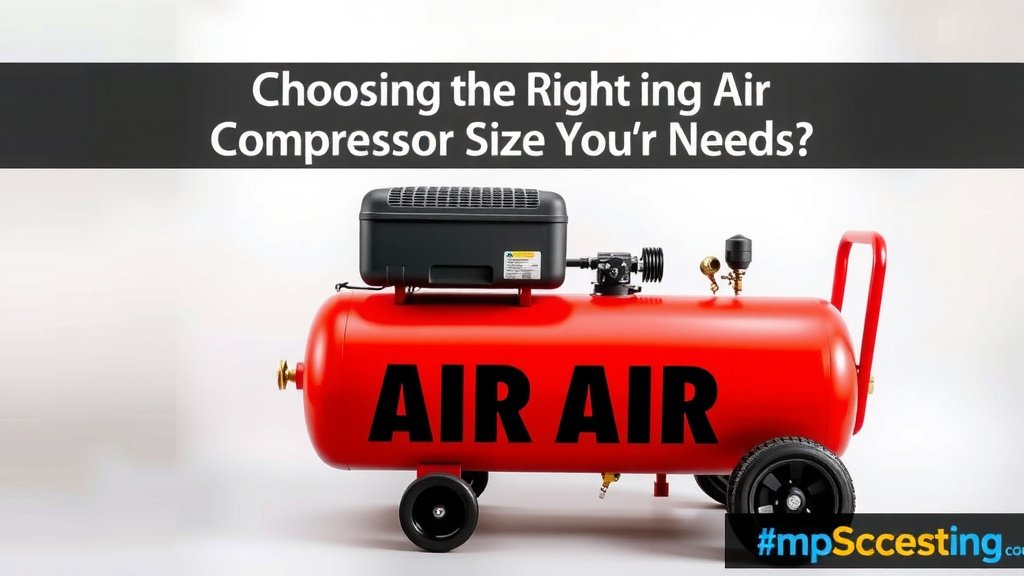
Choosing the Right Air Compressor Size for Your Needs
Choosing the right air compressor size comes down to two main things: CFM and PSI. You need enough airflow (CFM) and pressure (PSI) for the tools you’ll use. For most DIYers, a compressor providing around 4-6 CFM at 90 PSI is a great starting point. Bigger tools need more air, so always check your tool’s requirements first!
Think about your air compressor as the heart of your workshop. It needs to pump enough air to keep your tools running smoothly without sputtering. We found that underestimating your air needs is a common mistake. It’s better to get a slightly larger unit than one that struggles to keep up, especially if you plan to use multiple tools or larger ones.
- Check your tools’ CFM and PSI needs.
- A 4-6 CFM @ 90 PSI unit works for most DIY tasks.
- Bigger tools mean you need a more powerful compressor.
- Don’t skimp; a struggling compressor is frustrating.
- Consider future tool purchases.
Let’s break down exactly how to figure out the best air compressor size for your garage or shop.
Figuring Out the Right Air Compressor Size for Your Needs
Picking the correct air compressor size is all about matching its power to your tools. You don’t want a compressor that runs constantly. You also don’t want one that can’t keep up. Let’s look at the key specs to make sure you get it right.
Understanding CFM and PSI: The Two Pillars of Air Power
The two most important numbers for any air compressor are its CFM and PSI ratings. Think of CFM as the volume of air it can deliver. PSI is the force or pressure of that air. Most tools have specific needs for both.
CFM: Cubic Feet per Minute Explained
CFM stands for Cubic Feet per Minute. This tells you how much air the compressor can pump out. A higher CFM means more air is available for your tools. Many tools, like sanders or paint sprayers, use a lot of air. They need a higher CFM to run properly.
If your compressor’s CFM is too low, your tools will sputter and stop working. This can be very frustrating. You might end up running the compressor constantly. This can overheat the motor. We found that checking tool requirements for CFM is the most critical step.
PSI: Pounds per Square Inch Explained
PSI stands for Pounds per Square Inch. This is the air pressure. Most air tools operate efficiently at around 90 PSI. Your compressor needs to be able to reach and maintain this pressure.
Compressors have a maximum PSI. They also have a regulator to control the output PSI. Ensure your compressor’s maximum PSI is higher than your tool’s required PSI. This gives you some wiggle room. Most common tools work well with 90 PSI. Some specialized tools might need more.
How to Determine Your Tool’s Air Requirements
Your tools are the best guide to compressor size. Look for a label on the tool itself. You can also check the owner’s manual. They will list the required CFM and PSI. Sometimes this is listed as SCFM (Standard Cubic Feet per Minute). SCFM is a standardized measurement that accounts for temperature and pressure.
Locating Tool Specifications
Often, the information is right on the tool. Look for a small plate or sticker. It might be near the air inlet or on the side of the housing. If you can’t find it there, the manual is your next best bet.
Many manufacturers also list these specs on their websites. If you have the model number, a quick online search can help. We found that for many common DIY tools, the CFM requirement is around 4-6 CFM at 90 PSI.
What If You Have Multiple Tools?
If you plan to use more than one air tool at a time, you need to add their CFM requirements. For example, if you have two tools that each need 3 CFM, you’ll want a compressor that can deliver at least 6 CFM. This is important for smooth operation.
Many experts suggest adding a buffer of about 30-50% to your total CFM needs. This accounts for any small leaks. It also ensures the compressor isn’t always running at its absolute limit. This adds longevity to the unit.
Understanding Different Types of Air Compressors
Air compressors come in various types. This affects their size, power, and how they run. The main types you’ll see are electric and gas-powered. Within electric, there are portable and stationary units.
Portable vs. Stationary Compressors
Portable compressors are smaller and easier to move around. They are great for DIYers who might work on projects in different areas. Stationary compressors are larger and more powerful. They are usually bolted down and designed for a dedicated workshop.
Tank Size Matters Too
The tank size is measured in gallons. A larger tank stores more compressed air. This means the motor doesn’t have to cycle on and off as frequently. For intermittent use tools like nail guns, a smaller tank might be fine. For tools that run continuously, like sanders, a larger tank is better. The tank size is measured in gallons, and our guide to 1-gallon vs. 2-gallon air compressors explains how it affects your compressor’s performance.
Many users find that a tank size between 20 and 60 gallons is a good middle ground for home garages. This range offers enough storage for most tasks. It also balances portability with air supply.
Matching Compressor Ratings to Your Projects
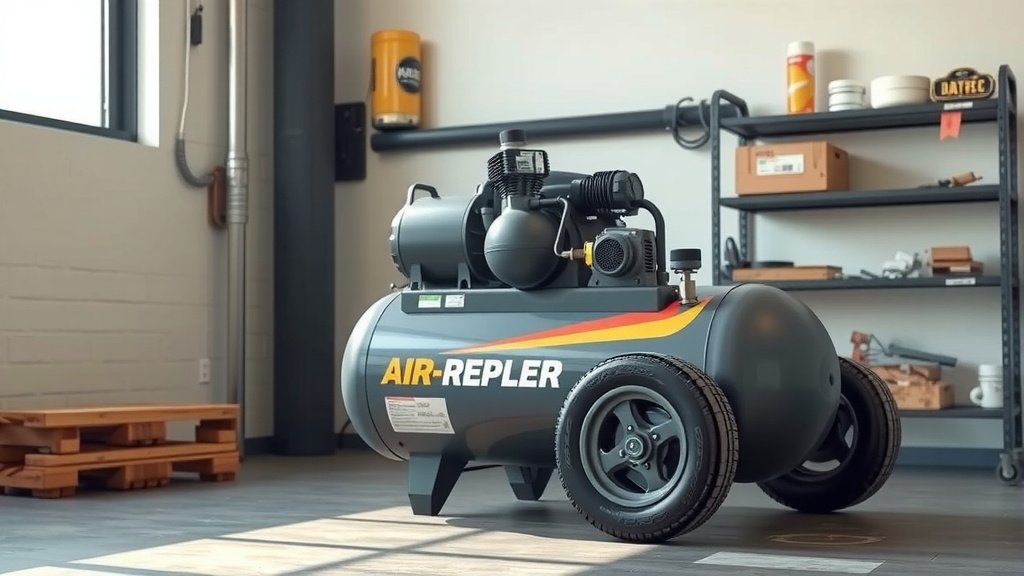
Here’s a quick guide to help you match compressor specs to common projects. Remember, always check your specific tool’s requirements first!
| Project Type | Typical CFM @ 90 PSI | Typical Tank Size |
|---|---|---|
| Tire Inflation, Brad Nailer, Stapler | 1-3 CFM | 1-10 Gallons |
| Impact Wrench, Air Ratchet, Finish Nailer | 3-6 CFM | 10-30 Gallons |
| Orbital Sander, Grinder, Paint Sprayer (HVLP) | 5-10+ CFM | 30-80+ Gallons |
| Sandblasting, Demolition Hammer | 15+ CFM | 80+ Gallons (often industrial) |
DIYer’s Sweet Spot
For the average DIYer tackling projects like automotive repairs, basic woodworking, or occasional painting, a compressor in the 4-6 CFM range at 90 PSI is often sufficient. Many found this size offers a good balance of power and portability.
When to Go Bigger
If your projects involve a lot of sanding, painting with a spray gun, or using larger air tools like impact wrenches for extended periods, you’ll need more power. Aim for a compressor with at least 6-10 CFM. A larger tank will also help ensure a consistent air supply.
A Quick Checklist for Choosing Your Compressor Size
Here’s a handy checklist to keep you on track:
- List all the air tools you currently own.
- Check the CFM and PSI requirements for each tool.
- Add up the CFM needs if you’ll run tools simultaneously.
- Consider adding a 30-50% buffer to your CFM total.
- Research compressors that meet or exceed your calculated needs.
- Think about any future tools you might buy.
Conclusion
You’ve learned how CFM and PSI are your compass points for choosing an air compressor. Don’t guess; check your tool’s needs first! For most DIY tasks, aim for around 4-6 CFM at 90 PSI, but bigger jobs demand more airflow. Remember that adding a buffer for future tools or simultaneous use is smart. Getting the right size means less frustration and more efficient work. Now, go find that perfect compressor that won’t leave you waiting!
Frequently Asked Questions
What’s the difference between CFM and SCFM?
SCFM stands for Standard Cubic Feet per Minute. It’s a standardized way to measure airflow, accounting for temperature and pressure. CFM is a more general term. For most practical purposes when choosing a compressor for DIY, focusing on the CFM rating listed for your tools and the compressor is usually sufficient.
Do I really need to add a buffer to my CFM calculation?
Yes, adding a 30-50% buffer to your total CFM needs is highly recommended. This accounts for potential air leaks in hoses or fittings. It also ensures your compressor doesn’t have to run at its absolute maximum all the time, which extends its lifespan and prevents frustrating slowdowns.
Can a compressor with a high PSI but low CFM still work for my tools?
Not effectively. While PSI is the pressure, CFM is the volume of air available. If a tool needs a lot of air (high CFM), a compressor with low CFM will struggle to keep up, even if it can reach the required PSI. Your tools might sputter or stop working altogether.
Is a larger tank size always better?
Not necessarily. A larger tank stores more compressed air, meaning the motor cycles less often. This is great for tools that run continuously, like sanders. However, for intermittent tools like nail guns, a smaller tank might suffice, and it makes the compressor more portable.
My tool’s manual just says “90 PSI.” What CFM should I look for?
When a tool only lists PSI, you’ll need to check its type. For common tools like brad nailers or tire inflators, 1-3 CFM is often enough. For more demanding tools like impact wrenches or sanders, you’ll likely need 3-6 CFM or more. Always try to find a CFM rating if possible; it’s the most critical factor.