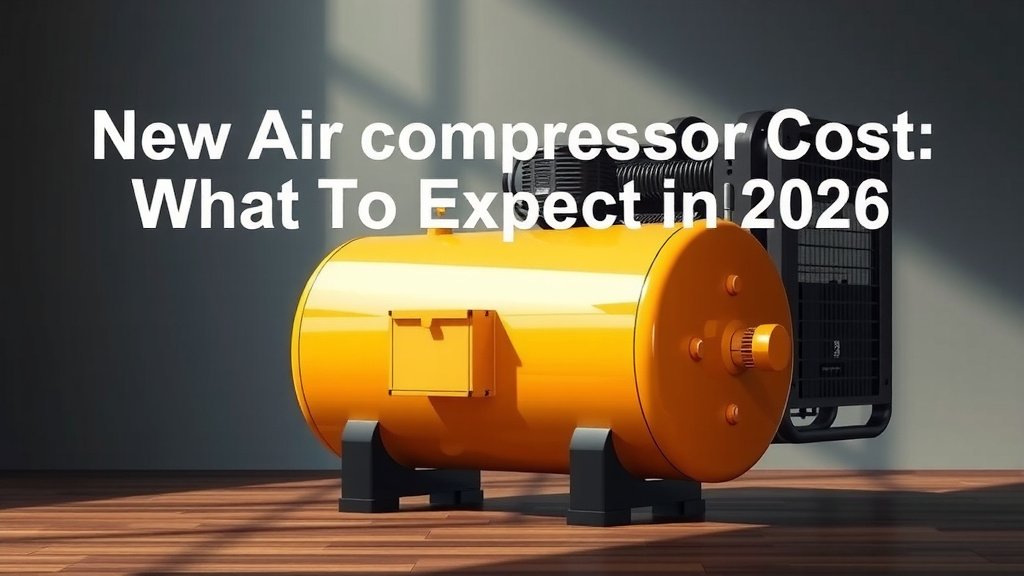
New Air Compressor Cost: What to Expect in 2026
You’re probably wondering: how much does a new air compressor cost? You can expect to pay anywhere from $100 for a small portable unit to over $2,000 for a large industrial model. The price depends heavily on its size, power, and intended use, so finding the right one for your needs is key to getting a good deal. Our guide to 1-gallon vs. 2-gallon air compressors explains how tank size affects performance.
Think of it like buying a car. A tiny compact might get you around town, but a powerful truck is needed for heavy hauling. Similarly, a small compressor is fine for inflating tires, but a workshop needs something much more robust. We found that many factors influence the final price tag, from the type of pump to the tank size.
- Small portable units: $100 – $300
- Medium workshop compressors: $300 – $800
- Large stationary compressors: $800 – $2,000+
- Specialty/industrial models: Can exceed $2,000
Let’s break down the different types of air compressors and what they’ll cost you, so you can make an informed decision for your garage or workshop.
Understanding Air Compressor Pricing
So, you’re curious about how much a new air compressor might set you back? We found that prices can swing wildly. You might find a small, handy unit for around $100. But if you need something for serious professional work, you could easily spend over $2,000. It really boils down to what you need it to do.
Think about your specific needs. Are you just topping off tires at home? Or are you running a busy auto shop with multiple air tools? We discovered that the intended use is the biggest driver of cost. The more demanding your tasks, the more powerful and, yes, more expensive your compressor will need to be.
Factors That Shape the Price Tag
Several key components directly influence the cost of an air compressor. We looked into what makes one unit more costly than another. Understanding these elements will help you pinpoint what features you truly need, and which ones you can skip to save some money.
Horsepower (HP) and CFM Ratings
The horsepower (HP) tells you how much power the motor has. More HP generally means more air output. CFM (Cubic Feet per Minute) is the real workhorse. It tells you how much air the compressor can deliver at a certain pressure. Tools have specific CFM requirements. We found that compressors with higher HP and CFM ratings are naturally more expensive because they can handle bigger jobs.
Tank Size Matters
The tank size stores compressed air. A bigger tank means you can run air tools for longer without the compressor constantly cycling on. For light tasks like inflating sports equipment, a small tank is fine. But if you’re using impact wrenches or sanders, you’ll want a larger tank. Larger tanks mean higher costs, plain and simple.
Pump Type: Oil vs. Oil-Free
We discovered two main types of pumps: oil-lubricated and oil-free. Oil-lubricated pumps tend to be quieter and last longer. They require regular maintenance, like oil changes. These are often found in more robust, professional-grade compressors. Oil-free pumps are typically lighter and maintenance-free, making them great for portability. However, they can be louder and may have a shorter lifespan than their oil-lubricated counterparts. This difference in design impacts the price.
Duty Cycle: Continuous vs. Intermittent Use
The duty cycle indicates how long a compressor can run before needing to cool down. A 50% duty cycle means it can run for 5 minutes out of every 10. For home garages and DIY projects, a lower duty cycle might suffice. But if you need the compressor to run for extended periods, like in a commercial setting, you’ll need a unit with a higher duty cycle. These are built for heavy-duty use and come with a higher price tag.
Price Ranges for Different Compressor Types
Now, let’s get down to the numbers you’re likely looking for. We’ve broken down typical price ranges based on the common types of air compressors available. Remember, these are general estimates, and specific features can always push prices up or down.
Portable and Compact Compressors
These are your go-to for small tasks. Think inflating car tires, powering brad nailers, or cleaning off workbenches. They are lightweight and easy to move around. You can often find these for $100 to $300. They usually have smaller tanks (under 10 gallons) and lower CFM ratings.
Consumer/DIY Workshop Compressors
Stepping up a bit, these compressors are suitable for the serious home hobbyist or small workshop. They can handle more demanding tasks like running impact wrenches or air ratchets for short periods. We found these generally range from $300 to $800. They typically feature larger tanks (10-30 gallons) and better HP/CFM output compared to portable units.
Professional/Heavy-Duty Compressors
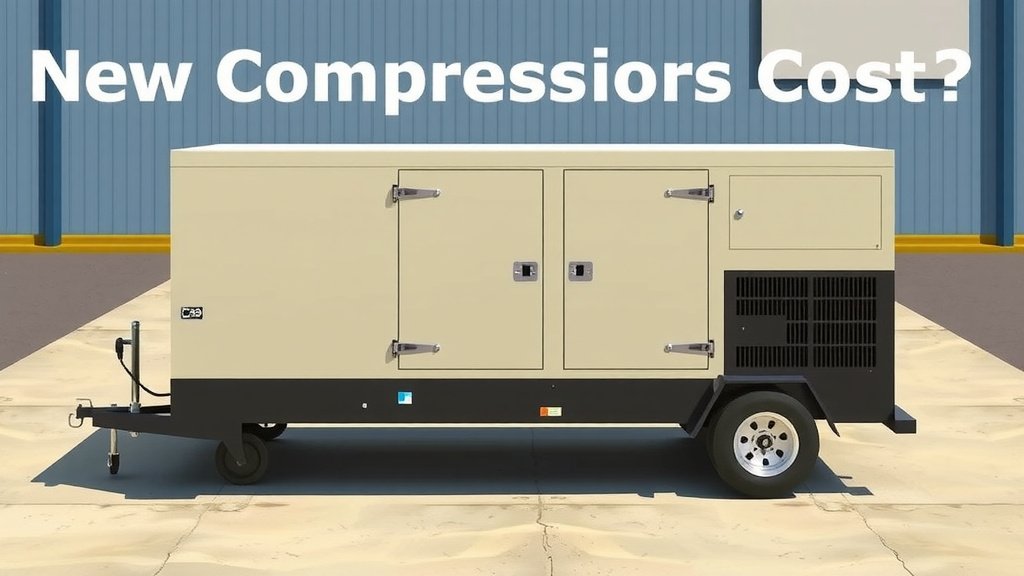
If you’re a professional mechanic, carpenter, or run a production line, this is where you’ll be looking. These units are designed for continuous use and can power multiple air tools simultaneously. They boast larger tanks (30+ gallons), higher HP, and robust construction. Prices for these can start around $800 and go up to $2,000 or more.
Specialty and Industrial Models
Beyond the typical workshop, there are specialized compressors. These might be designed for specific applications like painting, medical use, or heavy industrial settings. Their advanced features, custom builds, and extremely high output capabilities mean they can easily cost well over $2,000, sometimes reaching tens of thousands of dollars.
| Compressor Type | Typical Price Range | Common Uses |
|---|---|---|
| Portable/Compact | $100 – $300 | Tire inflation, small tools, cleaning |
| Consumer/DIY Workshop | $300 – $800 | Nail guns, small grinders, occasional impact wrench |
| Professional/Heavy-Duty | $800 – $2,000+ | Multiple tools, continuous operation, larger projects |
| Specialty/Industrial | $2,000+ | Factory, specialized trades, high-volume air needs |
Making the Smart Purchase Decision
When you’re ready to buy, consider these quick points. We learned that being prepared makes all the difference in finding the right compressor without overspending.
- Assess your tool needs: Check the CFM requirements for the air tools you plan to use.
- Consider your workspace: Do you need portability, or will it be stationary?
- Think about noise levels: Some compressors are much louder than others.
- Factor in maintenance: Oil-free is easier but might cost more long-term.
- Don’t overbuy: Get what you need, but don’t pay for power you’ll never use.
- Look for warranties: A good warranty can save you money down the road.
Conclusion
You’ve seen that air compressor costs can really vary. We found a small portable unit might cost around $100, while a heavy-duty industrial model could exceed $2,000. Your needs are the biggest factor. Matching the horsepower, CFM, tank size, and duty cycle to your specific tasks will help you avoid overspending. Understanding these elements means you can confidently choose a compressor that fits your budget and gets the job done. Now, take a moment to list your air tool requirements and your workshop space. This preparation will guide you to the perfect compressor for your garage or business.
Frequently Asked Questions
What is the cheapest type of air compressor?
The cheapest air compressors are typically the portable and compact models. These are designed for light-duty tasks like inflating tires or powering small brad nailers. You can often find basic units for under $100, though more capable ones in this category usually range from $100 to $300.
Can I get a decent air compressor for under $500?
Yes, absolutely. For under $500, you can likely find a good consumer or DIY workshop compressor. These units offer more power and larger tanks than portable models, making them suitable for tasks like running impact wrenches for short periods or powering framing nailers.
Are oil-free air compressors more expensive?
Generally, oil-free compressors are not necessarily more expensive than their oil-lubricated counterparts, especially in the portable and smaller workshop categories. However, high-end, very quiet, and long-lasting oil-lubricated models designed for professional continuous use can often be more costly than comparable oil-free units designed for intermittent DIY use.
How much extra does a larger tank cost?
A larger tank directly increases the price because it requires more material and adds to the overall size and weight. We found that stepping up from a small 2-6 gallon tank to a 20-30 gallon tank can easily add $100-$300 or more to the cost, depending on the overall quality and features of the compressor.
Is it worth buying a more expensive, professional-grade air compressor?
If you use air tools frequently or require them for your livelihood, investing in a professional-grade compressor is usually worth it. We found these units offer better durability, higher CFM output for running multiple tools, and longer duty cycles, meaning they are built to last and perform under heavy use, ultimately saving you money on repairs and replacements.