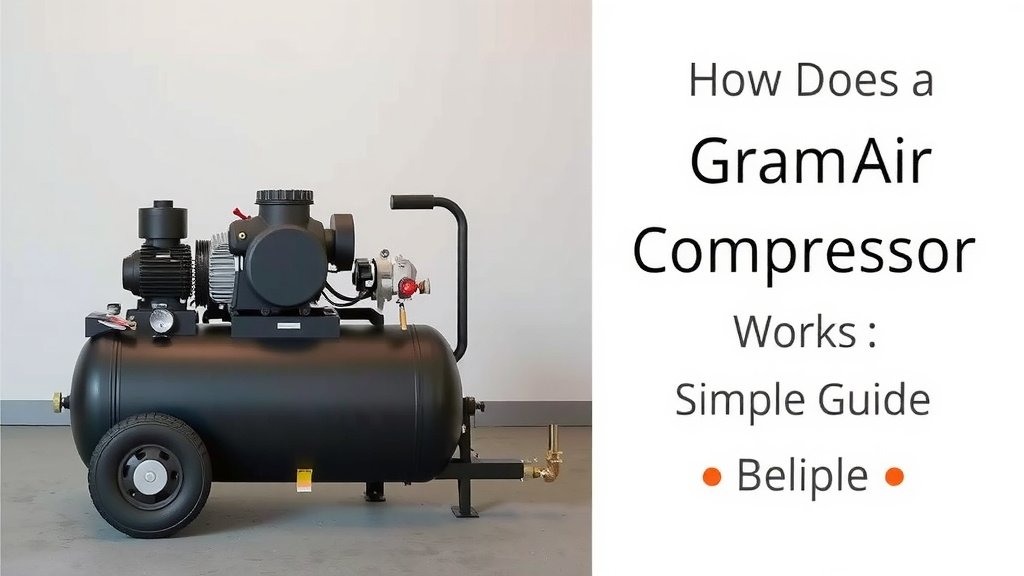
How a Gas Air Compressor Works: A Simple Guide
A gas air compressor works by using an engine’s power to drive a pump that draws in ambient air, compresses it, and then stores it in a tank. This compressed air can then be used to power various tools and machinery. Think of it like a mighty lung for your equipment, squeezing air to give it more force.
Many homeowners and DIYers wonder about these powerful machines. They’re common on job sites and in garages. Understanding how they operate means you can better maintain yours and choose the right one for your needs. It’s all about turning raw air into a usable power source.
- Gas air compressors use an engine to compress air.
- This air is then stored under pressure in a tank.
- The stored air powers tools and equipment.
- They are essential for many jobs and projects.
Let’s walk through exactly how your gas air compressor turns that regular air into potent, tool-driving pressure.
How Your Gas Air Compressor Puts Air to Work
Ever wonder what’s happening under the hood of your gas air compressor? It’s a clever process. Your compressor takes regular air and turns it into a powerful force. This force can then drive everything from nail guns to impact wrenches. Let’s break down how it achieves this magic.
The Engine: The Heartbeat of the Compressor
First, you need power to compress air. That’s where the engine comes in. For gas air compressors, this is typically a small gasoline engine, much like the one on a lawnmower or a generator. Its main job is to create the rotational force needed for the compression process.
Fueling the Power
You fill the engine’s fuel tank with gasoline, just like you would for a car. When you start the engine, it begins its combustion cycle. This cycle burns fuel to generate power. This power then turns a crankshaft.
Connecting to the Pump
The rotating crankshaft is connected to the air compressor’s pump mechanism. This connection is usually made via a belt and pulley system. The engine’s speed (RPMs) directly influences how fast the pump spins. Many engines have governors to help maintain a consistent speed, even under changing loads.
The Compression Cycle: Squeezing the Air
The air compressor pump is where the real air-squeezing happens. Most gas air compressors use a positive displacement pump, often a piston-style pump. Think of it like a bicycle pump, but much more robust and engine-driven.
Drawing in Air
On the downstroke of the piston, a valve opens, and the pump draws in surrounding ambient air. This air enters the pump’s cylinder. The intake valve then closes, sealing the cylinder.
The Squeeze (Compression)
As the piston moves back up, it significantly reduces the space inside the cylinder. This action forces the trapped air into a smaller volume. According to the gas laws, when you decrease the volume of a gas while keeping its temperature somewhat consistent, its pressure increases. You’re essentially cramming more air molecules into the same space.
Releasing Compressed Air
Once the air is sufficiently compressed, a second valve, the discharge valve, opens. This allows the high-pressure air to be pushed out of the cylinder and into the next stage of the system.
Stages of Compression (Single-Stage vs. Two-Stage)
Some compressors are single-stage, meaning the air is compressed once in a single cylinder. Others are two-stage. In a two-stage compressor, the air is compressed partially in one cylinder, then sent to a second, smaller cylinder for further compression. This multi-stage process allows for higher pressures and often more efficient cooling between stages.
We found that two-stage compressors are generally better suited for heavier-duty applications requiring sustained high pressure (National Safety Council).
Cooling the Air: A Necessary Step
Compressing air generates heat. Lots of it. Hot air takes up more space and can be harder on your equipment. So, compressors need a cooling system.
Fins and Airflow
Most portable gas air compressors use air cooling. You’ll notice fins on the pump’s cylinder head and body. These fins increase the surface area, allowing heat to dissipate into the surrounding air more effectively. The fan often attached to the engine’s flywheel also helps push air over these cooling fins.
Intercoolers (for Two-Stage)
In two-stage compressors, an intercooler might be present between the first and second stages. This is a small heat exchanger that cools the air before it enters the second compression stage. This leads to more efficient compression and higher final pressure.
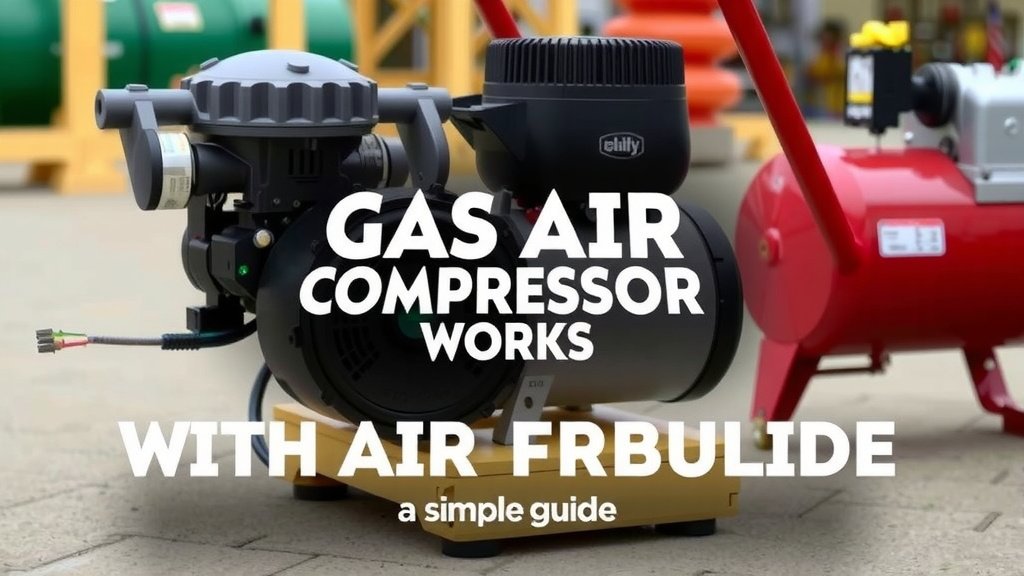
Storing the Pressure: The Air Tank
The compressed air needs a place to go. That’s the air tank, also known as a receiver tank. It’s a robust, ASME-certified vessel designed to hold air under high pressure safely.
Filling the Tank
As the pump discharges compressed air, it flows into the tank. The tank acts as a reservoir, smoothing out the pulses of air coming from the pump and providing a consistent supply of compressed air. Understanding the role of the air tank is key, and our guide on 1-gallon vs. 2-gallon compressors can help you choose the right size.
Pressure Regulation
Your compressor will have a pressure switch. This switch monitors the air pressure inside the tank. When the pressure reaches a pre-set maximum level, it tells the engine to slow down or even shut off. As you use air and the pressure drops, the switch signals the engine to start up again and repressurize the tank. This automatic cycle keeps your air supply ready without constant monitoring.
We found that keeping your tank pressure regulated is key to preventing damage and ensuring consistent tool performance (Occupational Safety and Health Administration).
Delivering Usable Air: Regulators and Outlets
The air in the tank is under high pressure. You usually don’t need that much pressure for your tools. That’s where regulators and outlets come into play.
The Regulator
Attached to the tank is a regulator. You can adjust this knob to set the desired output pressure for your tools. The regulator ensures you get a steady, controlled flow of air at the correct PSI (pounds per square inch), regardless of the higher pressure stored in the tank.
Quick-Connect Couplers
Most compressors have quick-connect couplers. These allow you to easily and quickly attach and detach your air hoses and tools without fumbling with threads or clamps. Just push the hose fitting in, and it locks!
Here’s a quick rundown of what happens:
- The engine powers the pump.
- The pump sucks in and compresses air.
- The compressed air is cooled.
- The air fills the storage tank.
- A pressure switch controls when the engine runs.
- A regulator sets the output pressure for your tools.
Understanding this cycle helps you appreciate the engineering behind these workhorses. It’s a chain reaction, with each part playing a vital role in turning ambient air into useful power for your projects.
Conclusion
You’ve now journeyed through the inner workings of your gas air compressor. You’ve seen how the engine’s power drives the pump, how air is skillfully compressed and cooled, and how the tank stores that energy. Understanding this cycle means you can better care for your equipment. This knowledge helps ensure it runs efficiently and lasts longer for all your projects. Next time you power up your compressor, you’ll know exactly what’s happening under the hood. Now, you’re equipped to choose the right compressor and keep it in top shape for years to come.
Frequently Asked Questions
Why does my gas air compressor engine keep shutting off?
Your compressor’s pressure switch is likely designed to stop the engine when the tank reaches its maximum pressure. This is a safety feature. If the engine shuts off unexpectedly at lower pressures, check your fuel level and ensure the air filter isn’t clogged, as these can cause premature shutdowns.
How often should I drain the water from my air compressor tank?
You should drain the water from your air compressor tank regularly, ideally after each use or at least weekly. Water accumulates as a byproduct of compressing air and can cause rust and corrosion inside the tank, leading to damage and potentially hazardous situations.
What’s the difference between single-stage and two-stage air compressors?
A single-stage compressor compresses air once to reach its final pressure. A two-stage compressor compresses air in two steps, with cooling in between. Two-stage models can achieve higher pressures and are generally more efficient for continuous, heavy-duty tasks.
Can I use any type of gasoline in my gas air compressor?
Always check your compressor’s manual for the recommended fuel type. Most typically use regular unleaded gasoline. Using the wrong fuel can damage the engine and affect its performance.
Why does my air compressor seem to run constantly?
If your compressor runs continuously, it might be struggling to reach its set pressure. Check for air leaks in hoses or fittings, as these can cause the compressor to work harder. Also, ensure the air filter is clean, allowing the engine to breathe properly.