AC Unit Air Compressor Cost: What to Expect
The cost of an air compressor for an AC unit can range widely, typically from $100 for a small DIY unit to $500 or more for professional-grade models. The price depends heavily on the size, power, and features you need for your specific AC system. You might be surprised by the options available.
Choosing the right air compressor involves understanding your AC unit’s requirements. Factors like the CFM (Cubic Feet per Minute) rating and the PSI (Pounds per Square Inch) it delivers are critical. Getting this right ensures your AC runs efficiently without unnecessary strain. We’ve researched the most common scenarios.
TL;DR:
- Air compressor costs vary from $100 to over $500.
- Price depends on size, power, and features.
- Check CFM and PSI for your AC unit.
- DIY vs. professional models have different price points.
- Proper selection ensures AC efficiency.
Let’s break down what goes into that price and help you find the perfect fit for your home’s cooling needs. We’ll guide you through the key considerations.
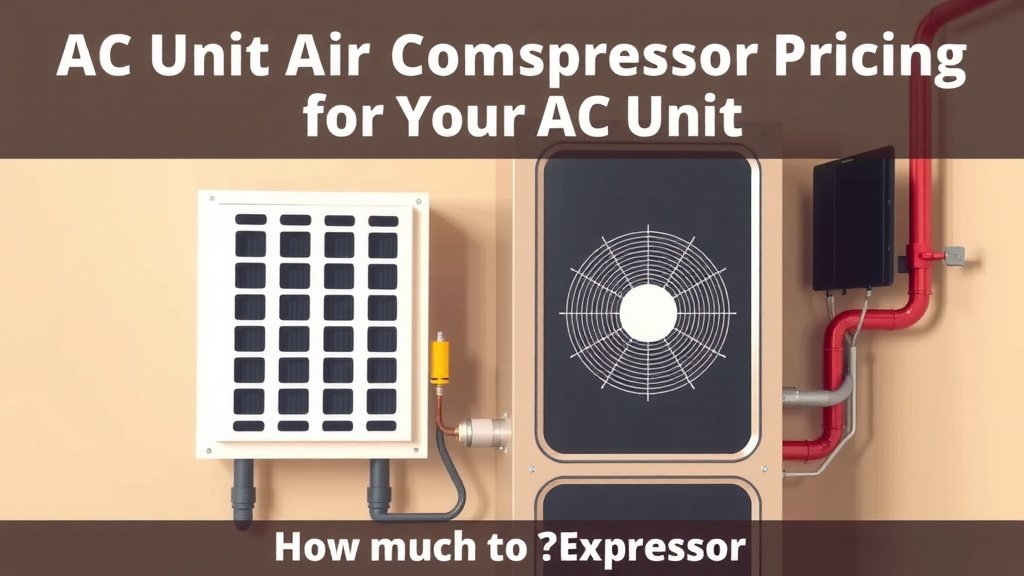
Understanding Air Compressor Pricing for Your AC Unit
So, you’re wondering about the cost of an air compressor for your AC unit, right? It’s a common question, and the price tag can really vary. We found that it’s not a one-size-fits-all answer. Think of it like buying a car; there are budget models and high-performance machines. Your AC system’s specific needs will dictate which type of compressor you’ll need, and that directly impacts the price.
Factors Driving the Cost
Several key elements influence how much you’ll spend on an air compressor. It’s not just about the brand name. The size and power output are huge factors. A larger home or a more demanding AC unit will require a bigger, more powerful compressor, naturally costing more. Also, think about special features. Some compressors are designed for quieter operation, while others offer advanced controls or greater energy efficiency. These extras add to the overall price.
Size Matters: Horsepower and Tank Capacity
When we look at air compressors, size is often measured in horsepower (HP). More horsepower means more power to run your AC effectively, especially during peak cooling times. You’ll also see tank capacity, measured in gallons. A larger tank stores more compressed air, meaning the compressor doesn’t have to work as often. For AC units, the horsepower and tank size directly correlate with the compressor’s ability to meet your cooling demands. Higher HP and larger tanks generally mean a higher price point.
Performance Metrics: CFM and PSI Explained
Two critical numbers you’ll encounter are CFM and PSI. CFM stands for Cubic Feet per Minute, which is how much air the compressor can deliver. PSI stands for Pounds per Square Inch, indicating the air pressure. Your AC unit has specific requirements for both. A compressor that can’t meet the CFM needs will struggle to keep up. If the PSI is too low, your AC might not function correctly. We found that matching these ratings to your AC’s specifications is essential for optimal performance and longevity. Getting this wrong can lead to inefficiency or even damage.
Type of Compressor: Reciprocating vs. Rotary Screw
Most home AC units use reciprocating compressors. These are the piston-style ones you often see. They are generally more affordable and suitable for typical residential needs. For larger commercial systems, you might find rotary screw compressors. These are more expensive but offer continuous operation and higher efficiency for heavy-duty use. For your home AC, you’re almost certainly looking at a reciprocating type, which helps keep costs down.
Price Ranges: What to Expect
Let’s get down to brass tacks. What kind of money are we talking about? Based on our research, you can find a basic, smaller air compressor for around $100 to $200. These are often suitable for smaller AC units or DIY projects. Moving up to a mid-range compressor with better features and higher output will likely cost between $200 and $400. These offer a good balance of performance and price for many homeowners. If you need a heavy-duty, professional-grade unit with superior durability and advanced capabilities, be prepared to spend $400 to $600 or even more.
DIY Enthusiast vs. Professional Grade
The distinction between DIY and professional-grade units is important. DIY models are typically lighter, less powerful, and may not last as long under constant use. They are great for occasional tasks. Professional-grade compressors, on the other hand, are built for durability and continuous operation. They use higher-quality components and often come with longer warranties. Naturally, this increased quality and performance come with a higher price tag. For your home’s AC, you likely want something more robust than a basic DIY model but might not need the absolute top-tier professional unit unless you have a very large or complex system.
| Tier | Price Range | Typical Use Case | Key Features |
|---|---|---|---|
| Budget/DIY | $100 – $200 | Small AC units, occasional use | Lower HP, smaller tank, basic functionality |
| Mid-Range | $200 – $400 | Average home AC, moderate use | Good HP, decent tank size, improved durability |
| High-Performance/Pro | $400 – $600+ | Larger AC units, heavy use, specific needs | High HP, large tank, advanced features, superior build quality |
Additional Costs to Consider
Don’t forget that the compressor itself might not be the only expense. You might need associated accessories You might need associated accessories like specialized hoses, which our guide on 1/4 vs 3/8 air compressor hose sizes can help you choose.. This could include special hoses, connectors, or filters. Installation costs are also a factor if you’re not comfortable doing it yourself. We found that some homeowners opt for professional installation to ensure everything is connected correctly and safely. Factor in potential shipping costs if you order online. A little planning here can prevent surprises.
Installation and Maintenance Costs
Are you planning to install it yourself? That’s great if you’re handy! If not, hiring an HVAC technician or a qualified professional can add anywhere from $100 to $300 or more to your total cost, depending on the complexity. Regular maintenance is also key to extending the life of your air compressor. This might involve draining the tank periodically, checking oil levels (if applicable), and cleaning air filters. While these aren’t large, one-time expenses, they are ongoing considerations for keeping your system running smoothly.
Making the Right Choice for Your Home
Ultimately, the “how much” question depends entirely on your specific situation. Do you have a small apartment AC or a whole-house system? Are you looking for a basic setup or something with all the bells and whistles? We found that taking the time to assess your AC unit’s requirements is the most important first step. Consulting your AC unit’s manual or speaking with an HVAC professional can help you determine the correct CFM and PSI ratings needed. Getting this right ensures you buy a compressor that works efficiently without overspending or underspending.
To help you make sure you’ve covered all your bases, here’s a quick checklist:
- Check your AC unit’s manual for CFM and PSI needs.
- Determine if you need a DIY or professional-grade compressor.
- Factor in the cost of any necessary accessories or installation.
- Consider long-term maintenance requirements.
- Compare prices from different reputable retailers.
- Read reviews to gauge durability and performance for your specific AC model.
Conclusion
So, you’ve seen how the cost of an air compressor for your AC unit can vary quite a bit, from a basic $100 model to a more robust $600+ option. Remember, the key is matching the compressor’s power (like its CFM and PSI) to your AC’s specific needs. We found that investing a little extra time upfront to understand these requirements saves you money and frustration in the long run. Don’t forget to factor in potential accessory and installation costs. Your next step is to check your AC manual and start comparing models that fit your budget and cooling demands.
Frequently Asked Questions
What’s the difference between a DIY and a professional-grade air compressor for my AC?
A DIY compressor is typically less powerful and built for lighter, occasional use, making it more budget-friendly. A professional-grade unit, on the other hand, is designed for durability and continuous operation, meaning it’s more robust but comes at a higher price point. For most home AC units, a mid-range or slightly higher-quality DIY model often strikes the right balance.
Do I really need to worry about CFM and PSI for my home AC compressor?
Yes, absolutely. Your AC unit has specific air volume (CFM) and pressure (PSI) requirements to function efficiently. Getting these ratings wrong can lead to poor cooling performance or even put undue stress on your AC system. We’ve found that matching these metrics precisely is essential for optimal performance and longevity.
Are there hidden costs I should know about when buying an air compressor for my AC?
Beyond the price of the compressor itself, you might need to budget for accessories like specialized hoses or connectors. Installation costs are also a factor if you’re not doing it yourself. We also found that some homeowners consider extended warranties for added peace of mind.
How often do I need to maintain an air compressor for my AC unit?
Maintenance needs vary by model, but generally, you’ll want to drain the tank regularly to prevent moisture buildup and check air filters. If your compressor uses oil, you’ll need to monitor and change that periodically. Keeping up with these simple tasks, which we found don’t take long, helps ensure your compressor runs smoothly and lasts longer.
Can I use a very small, cheap air compressor for my central air conditioner?
Likely not. Central air conditioning systems are usually designed for higher air volume and pressure demands than what a small, inexpensive compressor can provide. Using one that’s too small will result in insufficient cooling and could damage both the compressor and your AC unit. We recommend checking your AC’s specifications to find a correctly sized unit.