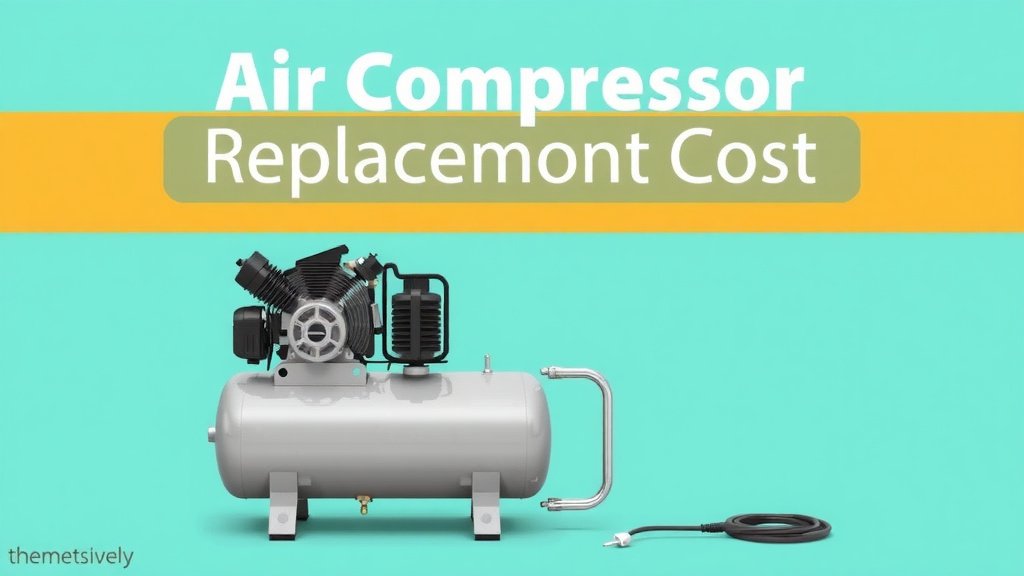
Air Compressor Replacement Cost: What to Expect
Deciding how much to replace an air compressor depends on a few factors, but generally, if your air compressor is older than 10 years or requires frequent, costly repairs, it’s often more economical to replace it. You might find that the cost of parts and labor starts to outweigh the price of a new unit.
Your air compressor’s lifespan can vary greatly. We found that factors like usage frequency, maintenance habits, and the initial quality of the compressor all play a big role. A well-maintained unit used only occasionally might last much longer than one running daily for demanding tasks.
- Age is a big indicator: 10+ years is a common replacement point.
- Repair costs are key: If repairs cost too much, replace it.
- Usage matters: Heavy use shortens life.
- Maintenance helps: Regular checks extend its life.
- Efficiency changes: New models are more energy-efficient.
We’ve gathered the key indicators to help you make the best decision for your needs. Let’s break down when it’s time to say goodbye to your old compressor and welcome a new one.
When It’s Time to Consider an Air Compressor Replacement
So, you’re wondering if your trusty air compressor has seen better days? It’s a common question, and often, the answer depends on more than just the date it was manufactured. Think of it like an old car; sometimes it’s cheaper to keep patching it up, and other times, a new model is the smarter buy.
Understanding Air Compressor Lifespans
Generally speaking, most residential and light-duty air compressors can last anywhere from To understand compressor capabilities, learn about the difference between a 1 gallon vs 2 gallon air compressor.5 to 15 years. This is a wide range, and we’ve found that many factors influence where yours might fall. A compressor used daily for a professional workshop will likely have a shorter lifespan than one used only a few times a year for occasional DIY projects.
Factors Affecting Compressor Longevity
Several key elements contribute to how long your air compressor will reliably serve you. It’s not just about how old it is.
Usage Frequency and Intensity
The most significant factor is often how often and how hard you push your compressor. A unit working overtime to power multiple tools all day will wear out faster than one that’s just topping off a tire now and then.
Maintenance Habits
Did you know that regular care can drastically extend a compressor’s life? We found that owners who follow maintenance schedules report fewer issues. This includes things like draining the tank, checking oil levels, and cleaning air filters.
Initial Quality and Type
Not all air compressors are created equal. Higher-quality units, often those with cast-iron cylinders or better cooling systems, tend to last longer. The type of compressor also matters; industrial-grade models are built for durability. The type of compressor also matters; learn about 1 cylinder vs 2 cylinder air compressor models.
Signs Your Air Compressor Might Need Replacing
Sometimes, your compressor will give you clear signals that it’s on its last legs. Paying attention to these can save you a lot of frustration.
Frequent or Costly Repairs
If you find yourself constantly calling a technician or buying replacement parts, it’s time to do some math. We researched and found that when the cost of repairs starts approaching 50% of the price of a new unit, replacement usually makes more sense.
Performance Issues
Is your compressor taking longer than usual to build pressure? Does it struggle to maintain that pressure when you use a tool? These are classic signs of wear and tear. Many experts say a noticeable drop in performance means internal components are likely failing.
Loss of Air Pressure
A slow leak that you can’t find, or a consistent inability to reach optimal PSI, often points to worn-out seals, valves, or a damaged pump.
Unusual Noises or Vibrations
Grinding, rattling, or excessive shaking are never good signs. These sounds can indicate issues with the motor, pump, or even loose internal parts.
Visible Signs of Wear and Tear
Rust, significant corrosion, or cracks in the tank or other components can be safety hazards. We found that any visible damage, especially to the pressure vessel, warrants immediate attention.
The Cost of Running an Old Air Compressor
Beyond repair bills, older compressors can be surprisingly expensive to operate. They often lack the efficiency of newer models.
Energy Consumption
Modern air compressors are designed with energy efficiency in mind. Older units can consume significantly more electricity to produce the same amount of compressed air. The U.S. Department of Energy suggests that upgrading to an energy-efficient model can lead to substantial savings over time.
Downtime Costs
For professionals, an air compressor that’s always breaking down means lost productivity and, consequently, lost income. We found that the cost of downtime often far outweighs the expense of a new, reliable machine.
Making the Smart Decision: Repair vs. Replace Checklist
Unsure if you should fix it or ditch it? Ask yourself these questions:
- How old is it? 10+ years? Lean towards replacing.
- What’s the repair cost? Is it more than half the price of a new one?
- How often do you use it? Heavy use makes repairs less economical.
- Is performance suffering? Pressure drops or slow fill times?
- Are there safety concerns? Rust, cracks, or leaks?
- Is energy efficiency important? New models save on electricity.
When It’s Economical to Buy New
We’ve seen that a good rule of thumb is this: if your compressor is nearing the 10-year mark, and especially if it’s showing signs of serious wear or requiring frequent, expensive fixes, it’s usually more cost-effective in the long run to invest in a new one. You’ll often benefit from better performance, improved energy efficiency, and fewer headaches.
Conclusion
You’ve learned that deciding when to replace your air compressor is about more than just its age. We’ve seen that frequent, costly repairs and declining performance are strong indicators. Paying attention to unusual noises and visible wear can also signal it’s time for an upgrade. Investing in a new compressor often means better energy efficiency and less downtime. If your unit is over a decade old or repairs are adding up, it’s likely time to start shopping for a reliable new model.
Frequently Asked Questions
How often should I drain my air compressor tank?
You should drain your air compressor tank at least once a day, especially if you use it frequently or live in a humid climate. This prevents moisture buildup, which can lead to rust and damage internal components over time.
Can a small air compressor last 10 years or more?
Yes, a small air compressor can last 10 years or more if it’s a high-quality unit and receives regular maintenance. Light usage and proper care significantly extend its lifespan. Even smaller compressors benefit from daily draining and filter cleaning.
What is the average repair cost that makes replacing an air compressor worthwhile?
If the cost of a single repair approaches or exceeds 50% of the price of a new, comparable air compressor, replacement usually makes more financial sense. We found that this “break-even point” helps avoid throwing good money after bad.
Should I worry about old air compressor noise levels?
Yes, you should pay attention to changes in your air compressor’s noise. While some noise is normal, sudden increases in loudness, rattling, or grinding sounds often indicate internal problems that could lead to failure.
Are newer air compressors much more energy-efficient than older models?
Absolutely. Modern air compressors are designed with improved motor technology and better sealing to reduce energy waste. You can expect significant savings on your electricity bill by upgrading from an older, less efficient unit.