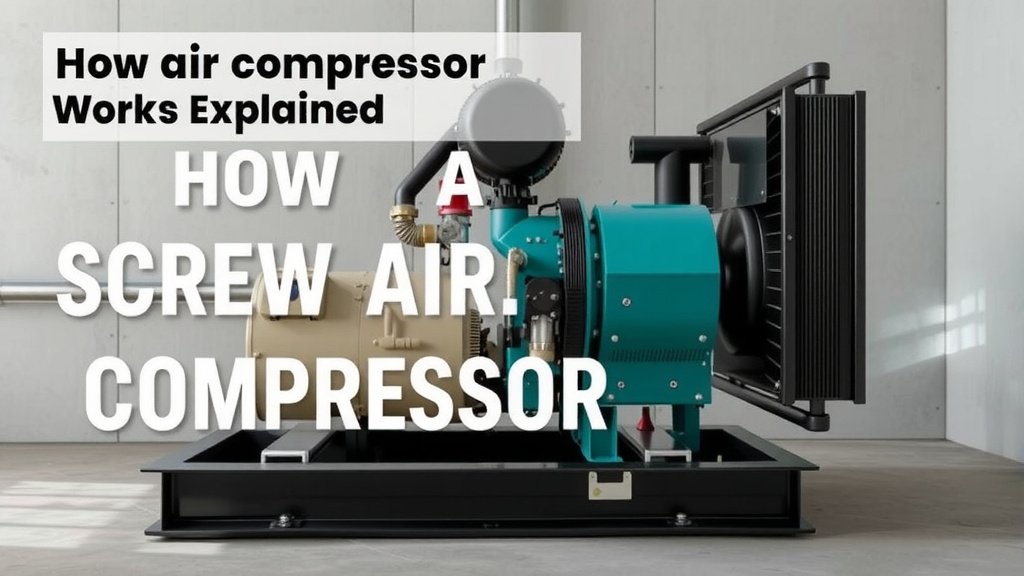
How a Screw Air Compressor Works Explained
A screw air compressor works by using two interlocking helical rotors. One rotor is male, and the other is female. As they spin in opposite directions, they create chambers that trap air. These chambers get progressively smaller, squeezing the air. This efficiently compresses the air without needing oil for lubrication. You get high-quality compressed air for your tools.
This method is different from older compressor types. It provides smooth, continuous airflow. Screw compressors are known for their durability and reliability. They are often used in industrial settings. Their design makes them very efficient for large-scale air needs. They handle demanding tasks with ease.
- Screw compressors use two spinning rotors to compress air.
- The rotors create smaller air pockets that squeeze the air.
- They offer smooth, consistent airflow for tools.
- This design is known for being durable and long-lasting.
- They are a popular choice for industrial applications.
Let’s dive into the mechanics and see precisely how these clever machines generate all that powerful compressed air you rely on.
Understanding How a Screw Air Compressor Works
You’re probably wondering how these machines take regular air and turn it into the high-pressure power your tools need. It’s all thanks to a clever design using spinning rotors. Think of it like a super-efficient system that squeezes air into smaller and smaller spaces until it’s ready to go.
The Heart of the Machine: The Rotors
At the core of every screw compressor are two helical rotors. You can imagine them like two interlocked screws or gears. One rotor, often called the male rotor, has a more prominent lobe. The other, the female rotor, has deeper grooves to match. These rotors are precisely engineered to mesh together perfectly.
How the Rotors Spin
When the compressor is running, these rotors spin in opposite directions. This counter-rotation is key to the whole process. The male rotor is usually driven directly by the motor. It then turns the female rotor through a set of timing gears. These gears ensure the rotors stay perfectly synchronized. This synchronized spinning prevents them from touching, which is important for their longevity.
Creating the Air Chambers
As the rotors turn, they create a series of pockets or chambers between their surfaces. These pockets are formed by the space between the rotor lobes and the compressor’s casing. Initially, as the rotors unmesh on the inlet side, these pockets are large. They draw in ambient air from your workshop or facility.
The Pockets Grow and Shrink
As the rotors continue to spin, these air pockets move along the length of the rotors towards the discharge end. Crucially, the shape of the rotors is designed so that these pockets gradually get smaller. This is where the compression happens. Imagine a set of rolling shutters closing in on the air.
The Squeeze is On
The air trapped in these progressively shrinking chambers gets squeezed. Since the volume decreases, the air pressure must increase. This happens efficiently because the air is contained within these defined spaces. It’s like squeezing a balloon – the air inside has nowhere else to go but to get denser and hotter. Many industrial processes require this consistent, high-pressure air supply (National Science Foundation).
From Air Intake to High Pressure Output
The journey of the air is a continuous cycle. It enters, gets trapped, and then gets compressed. Let’s break down the stages you’d see if you could peek inside.
Stage 1: Air Intake
Air enters the compressor through an inlet valve. It’s drawn into the space created as the rotors begin to separate. At this point, the air is at atmospheric pressure. It’s essentially the air around you. This stage is all about filling the initial space.
Stage 2: Compression
As the rotors turn, the trapped air pockets move toward the center of the compressor. The volume of these pockets decreases. This causes the air to compress. The pressure builds up steadily. You might notice the air getting warmer during this stage. This is a natural result of compression, often called adiabatic heating.
Stage 3: Air Discharge
Once the air reaches the desired high pressure, it’s pushed out of the compressor. This happens as the rotors fully mesh at the discharge end. The compressed air is then sent through a discharge valve. It’s ready to be used by your tools or systems. This whole process is remarkably smooth and quiet compared to older compressor types.
Oil-Free vs. Oil-Injected Screw Compressors
You might encounter two main types of screw compressors. The design we’ve discussed is often an oil-injected type. However, oil-free versions are also common, especially where air purity is critical.
Oil-Injected Screw Compressors
In these compressors, oil is injected into the compression chamber. This oil serves multiple purposes. It lubricates the rotors, reducing wear and tear. It also acts as a coolant, helping to manage the heat generated during compression. Finally, it helps to seal the small gaps between the rotors and the casing, improving efficiency. The oil is then separated from the compressed air before it’s delivered.
Oil-Free Screw Compressors
These compressors use special coatings on the rotors. They also rely on precise manufacturing tolerances. This allows them to operate without any oil injection. They are essential in industries like food and beverage, pharmaceuticals, and electronics where any oil contamination is unacceptable. Research shows that oil-free compressors can meet stringent air quality standards (ISO 8573-1).
Why Choose a Screw Compressor?
So, why are screw compressors so popular, especially in industrial settings? Their design offers several distinct advantages.
Smooth and Continuous Airflow
Unlike older reciprocating compressors that produce air in pulses, screw compressors provide a steady, consistent stream of compressed air. This is great for tools and machinery that require a stable air supply. You won’t experience those annoying fluctuations. This smooth delivery enhances tool performance and longevity.
Durability and Reliability
The rotating action of the rotors means fewer moving parts compared to piston compressors. There’s no banging or vibration. This often translates to a longer service life and less frequent maintenance. They are built to run for long periods without issues. Many experts agree that their robust design contributes to high reliability ratings.
Energy Efficiency
When properly sized for your application, screw compressors can be very energy efficient. They are designed to compress air with minimal energy loss. This means lower operating costs for your business over time. You’re essentially getting more compressed air for your energy dollar.
Quiet Operation
Compared to other compressor types, screw compressors are generally much quieter. This can be a significant benefit in busy workplaces. It contributes to a better working environment and can reduce the need for noise suppression measures.
Quick Checklist: Is a Screw Compressor Right for You?
- Do you need a consistent air supply for your tools?
- Are you looking for a long-lasting and dependable machine?
- Is energy efficiency a priority for your operations?
- Do you want a compressor that runs quieter than other types?
- Do you require very pure compressed air (consider oil-free)?
- Are you operating in an industrial or demanding setting?
Conclusion
You’ve learned how the ingenious design of screw air compressors works. The interlocking rotors create progressively smaller chambers, efficiently squeezing air without oil in many cases. This process delivers the smooth, continuous airflow crucial for your demanding tools and industrial applications. Their durability and reliability mean less downtime and lower operational costs for your business. If you’re looking for dependable, efficient compressed air, understanding this technology is your first step to making a smart choice. Consider consulting with a professional to find the right screw compressor for your specific needs.
Frequently Asked Questions
How often do screw air compressors need maintenance?
Maintenance schedules vary by model and usage. However, a typical oil-injected screw compressor might need oil and filter changes every few thousand hours. Oil-free models require less frequent internal maintenance but still need regular checks on seals and other wear parts.
Can a screw compressor overheat?
Yes, like any machinery, screw compressors can overheat if not properly maintained or if operated outside their design parameters. Issues like low oil levels, blocked air filters, or a malfunctioning cooling system can lead to overheating.
What is the lifespan of a screw air compressor?
With proper maintenance, a screw air compressor can last for many years, often 15 to 20 years or even longer. Their robust design with fewer moving parts than piston compressors contributes to their exceptional longevity in industrial settings.
How do I know if my screw compressor needs servicing?
Listen for unusual noises like grinding or rattling. Also, watch for performance drops, increased vibration, or warning lights on the control panel. These are all signs that your compressor may need professional attention.
What’s the main difference between oil-free and oil-injected screw compressors?
The primary difference is the presence of oil in the compression chamber. Oil-injected types use oil for lubrication, cooling, and sealing, while oil-free models rely on special rotor coatings and precision engineering to operate without any added oil.