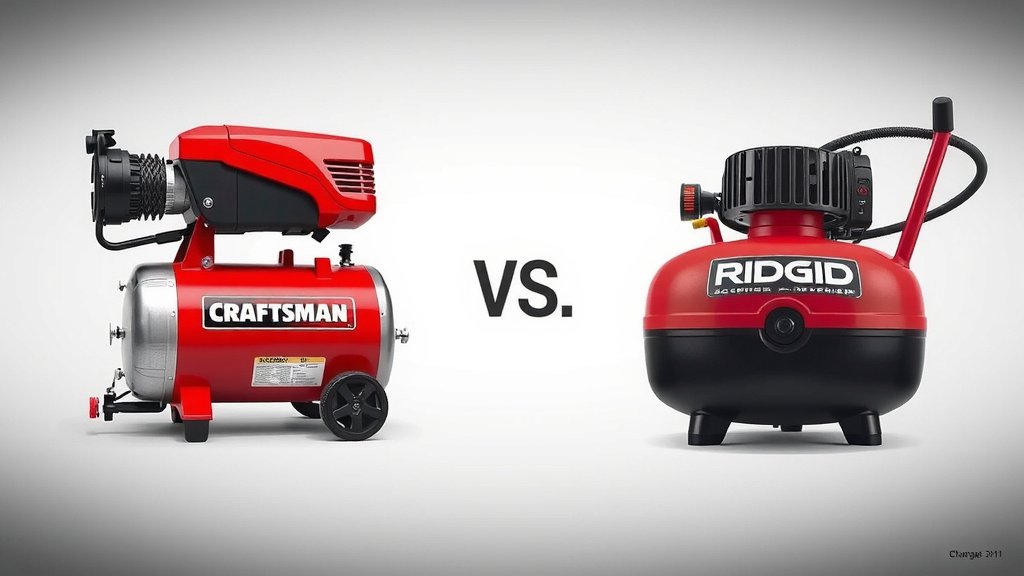
Craftsman vs. Ridgid Air Compressor: Which is Best for You
When choosing between a Craftsman air compressor and a Rigid air compressor, think about your specific needs and budget. Craftsman often provides a great balance of performance and affordability, making them a solid choice for DIYers. Rigid generally offers more robust features and professional-grade durability, typically at a higher price point.
Both brands are well-respected in the tool world. We’ve found that Craftsman is fantastic for getting common tasks done around the house. Rigid compressors, on the other hand, are built for those who demand consistent power and longevity from their equipment. Your project scope will really help guide this decision.
- Craftsman: Good for home use, DIY projects, and a balance of cost and performance.
- Rigid: Better for demanding tasks, professional use, and those prioritizing durability and power.
- Consider your budget and how often you’ll use the compressor.
- Think about the type of tools you’ll be powering.
Let’s break down what each brand brings to the table so you can pick the perfect compressor for your workshop or garage.
Comparing Craftsman and Rigid Air Compressors for Your Needs
When you’re looking to buy an air compressor, you want something reliable that won’t let you down. Craftsman and Rigid are two brands that pop up often. We’ve spent time looking at what each offers. They cater to slightly different users, and knowing that can save you time and money.
The main difference often comes down to who the compressor is for. Craftsman tools usually aim for the home user or DIY enthusiast. Rigid, on the other hand, often targets the professional tradesperson. This doesn’t mean Craftsman can’t handle tough jobs, or Rigid isn’t good for home use. It’s more about the intended use and build quality To understand compressor capabilities, learn about the difference between a 1 cylinder vs 2 cylinder air compressor..
Craftsman Air Compressors: The Dependable DIYer’s Choice
Craftsman has built a reputation for making tools that are accessible and work well for everyday tasks. For air compressors, this means you’ll often find models that are easy to use and move around. They’re a great starting point if you’re just getting into air-powered tools or need a compressor for occasional projects.
What Craftsman Excels At
Many users tell us they appreciate Craftsman for its balance of features and price. You can typically find a Craftsman compressor that delivers enough power for tasks like inflating tires, powering brad nailers, or using airbrushes. They often come with features that make them user-friendly, like simple controls and convenient portability.
We found that Craftsman compressors are particularly good for those who need to do things like:
- Inflate car and bike tires regularly.
- Use pneumatic tools for light woodworking projects.
- Clean dusty areas with an air blower.
- Run small airbrushes for crafts or painting models.
Potential Considerations for Craftsman
Because Craftsman often aims for affordability, some of their more entry-level models might not have the highest CFM (Cubic Feet per Minute) ratings. CFM is a measure of how much air the compressor can deliver. If your tools require a lot of air, a lower CFM might mean the compressor struggles to keep up. This means you might have to wait for it to build pressure. However, for many common household tasks, the CFM is perfectly adequate.
Rigid Air Compressors: Power and Durability for Demanding Work
When you look at Rigid air compressors, you’ll often see a focus on robust construction and sustained performance. These are tools built to withstand the rigors of daily use in professional settings. If you plan on running demanding tools or need a compressor that can perform consistently under pressure, Rigid is definitely worth a closer look.
Rigid’s Strengths and Features
Rigid compressors are known for their powerful motors and durable tanks. They are engineered to provide high air output, meaning they can keep up with tools that consume a lot of air. Think impact wrenches, sanders, or paint sprayers used for longer periods. Many Rigid models also come with advanced features designed for efficiency and longevity.
We’ve observed that Rigid compressors are often favored by users who:
- Work with tools that require a high and consistent airflow.
- Need a compressor for frequent or extended use.
- Prioritize long-term durability and reliability.
- Are involved in automotive repair or construction work.
What to Expect with Rigid
The trade-off for this increased power and durability is often a higher price point. Rigid compressors can be a bigger investment upfront. They may also be heavier and less portable than some Craftsman options, especially the larger industrial-grade models. But if your work demands it, that investment pays off in performance and lifespan.
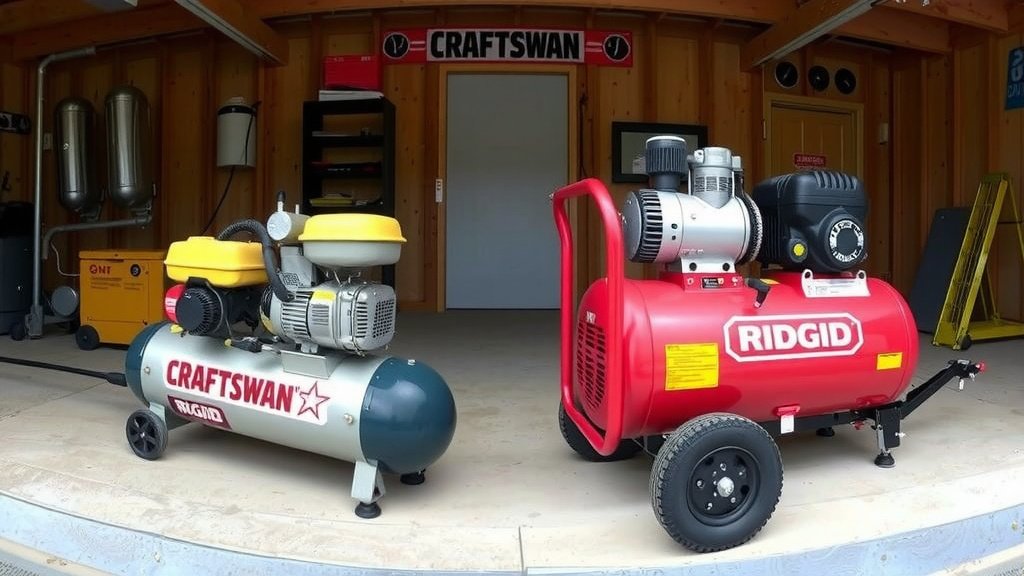
Key Comparison Points: Craftsman vs. Rigid
Let’s break down how these brands stack up in a few key areas. This should help you visualize which might be the better fit for your workshop.
Power and Performance (CFM and PSI)
CFM (Cubic Feet per Minute) is king when it comes to powering tools. Higher CFM means more air for your tools. Rigid often offers higher CFM ratings, especially in their professional lines. This allows them to power more air-hungry tools without interruption.
PSI (Pounds per Square Inch) refers to the pressure the compressor can hold. Both brands generally offer sufficient PSI for most common tools. However, if you’re using tools that require very high pressure, you’ll want to check the specs carefully for both brands.
Durability and Build Quality
Rigid generally leans towards heavy-duty construction. You might see thicker metal tanks and more robust components. This is built for the long haul. Craftsman offers good quality for its price range, but it might not always match the sheer toughness of a professional-grade Rigid unit. For home use, Craftsman durability is usually more than enough.
Portability and Size
When it comes to moving your compressor around, portability is key. Craftsman often has lighter, more compact models designed with wheels and handles for easy transport. Rigid, especially their larger models, can be quite heavy. If you need to move your compressor frequently across a large workshop or job site, weight becomes a big factor. Many Rigid compressors are designed for stationary use, though some portable options exist.
Noise Levels
Nobody likes a deafeningly loud air compressor. We found that both brands offer models with varying noise levels. Some Rigid models are designed with noise reduction features, which can be a real plus if you’re working in a residential area or a shared space. Craftsman’s noise levels can vary, so it’s always a good idea to check reviews or specifications for specific models if noise is a major concern for you.
Price and Value
This is often where the decision really hinges. Craftsman is typically the more budget-friendly option. You get solid performance for the money, making it a great value for DIYers. Rigid compressors often come with a higher price tag, reflecting their enhanced durability and professional-grade performance. For professionals, the longevity and power justify the cost. For hobbyists, it’s about finding that sweet spot between performance and affordability.
Here’s a quick table to summarize:
| Feature | Craftsman | Rigid |
|---|---|---|
| Best For | Homeowners, DIYers, light-duty tasks | Professionals, heavy-duty use, demanding tools |
| Price Range | More affordable | Higher investment |
| Durability | Good for home use | Excellent, heavy-duty construction |
| Power Output (CFM) | Adequate for most common tools | Often higher, better for air-hungry tools |
| Portability | Generally lighter and more portable | Can be heavier, some stationary models |
Making Your Final Choice: A Quick Checklist
To help you decide, ask yourself these questions:
- How often will I actually use this compressor?
- What types of tools will I be running with it?
- What is my total budget for this purchase?
- Do I need to move it around a lot, or will it stay in one spot?
- How important is long-term durability versus immediate cost savings?
- Am I looking for a simple, straightforward tool, or one with more advanced features?
Conclusion
Deciding between a Craftsman and a Rigid air compressor comes down to your specific needs and how you’ll use it. If you’re a DIYer tackling home projects and need a reliable, affordable option, Craftsman is likely your best bet. For professionals or serious hobbyists who demand consistent power for demanding tools and long-term durability, Rigid offers superior performance at a higher investment. We’ve found that by considering your project scope, tool requirements, and budget, you can confidently choose the compressor that will serve you best.
Take a moment to review your tool list and your typical workday. Then, confidently make the choice that fits your workshop’s future.
Frequently Asked Questions
Which brand is better for automotive repair?
For automotive repair, especially if you’re using tools like impact wrenches or sanders frequently, a Rigid air compressor is often the better choice. Their higher CFM ratings and robust build quality are designed to handle the sustained air demands of these tools. Craftsman can work for occasional light-duty automotive tasks, but Rigid offers the power and durability for consistent professional use.
Are Rigid air compressors too expensive for a home garage?
Rigid air compressors can be a larger initial investment, so they might seem expensive for a home garage. However, if you plan on using air tools regularly or need a compressor that will last for many years without issues, the durability and performance often justify the cost. For less frequent use, a Craftsman might offer better value.
How important is CFM when choosing between these brands?
CFM (Cubic Feet per Minute) is very important. It tells you how much air your compressor can deliver. Tools that use a lot of air, like spray guns or sanders, require higher CFM. Rigid generally offers higher CFM options, making them ideal for air-hungry tools. Craftsman’s CFM ratings are usually sufficient for lighter tasks like inflating tires or powering brad nailers.
Which brand is generally quieter?
Noise levels can vary greatly by model within both brands. However, some Rigid compressors are designed with noise reduction features for professional environments. If noise is a major concern for you, it’s best to check the specific decibel ratings of the models you’re considering from either Craftsman or Rigid.
Can a Craftsman compressor handle spray painting?
Yes, a Craftsman air compressor can handle spray painting, but it depends on the type of spray painting and the compressor’s CFM rating. For small touch-up jobs or using a siphon-feed spray gun, a Craftsman might suffice. For larger projects or HVLP (High Volume Low Pressure) spray guns that require consistent airflow, you’ll want to ensure the Craftsman model has a high enough CFM output, or consider a Rigid compressor.