Dewalt vs Milwaukee Cordless Air Compressor: Which is Best
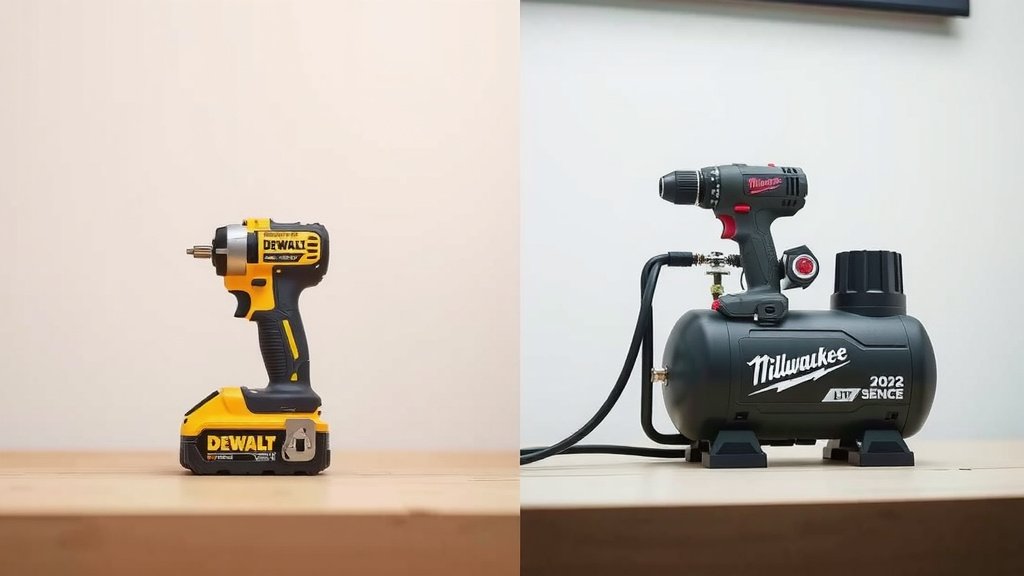
When deciding between a DeWalt cordless air compressor and a Milwaukee cordless air compressor, the best choice often comes down to which tool platform you’re already invested in, as both brands offer robust and reliable options. We found that for most DIYers and contractors, the power and portability are comparable, making your existing battery ecosystem a primary deciding factor.
Choosing the right cordless air compressor means considering your specific needs, whether it’s for inflating tires, powering nail guns, or other job site tasks. Both DeWalt and Milwaukee have engineered impressive cordless units. We’ve researched that many users find the runtime and noise level to be key differentiators when comparing these two top-tier brands.
- Both brands offer great performance for inflating and light-duty air tool use.
- Your existing battery platform (DeWalt or Milwaukee) is a major factor.
- Consider runtime, noise, and portability for your specific job.
- Prices and features can vary, so compare models carefully.
Let’s break down the key differences and help you figure out which cordless air compressor is the right fit for your toolbox. To help you decide, consider our guide on the 1-gallon vs 2-gallon air compressor.
Cordless Air Compressors: DeWalt vs. Milwaukee Showdown
Deciding between a DeWalt and a Milwaukee cordless air compressor can feel like choosing between two great flavors of ice cream. Both brands are known for making tough tools. We found that for many DIYers and pros, the choice often hinges on which battery system you already own.
Power and Performance: What You Can Expect
You want an air compressor that gets the job done. Both DeWalt and Milwaukee have engineered their cordless units to deliver reliable air power. You’ll find they perform admirably for common tasks like inflating tires, powering brad nailers, and small trim jobs. We found that the air output (measured in CFM – cubic feet per minute) is a key spec to check for your specific needs. For a deeper dive into compressor mechanics, check out our comparison of 1 cylinder vs 2 cylinder models.
Inflating Tires: A Common Use Case
For simply topping off car tires or bike tires, both brands are more than capable. You won’t be waiting around forever for your tires to reach the right pressure. We found that the portability makes these units fantastic for keeping in your car for emergencies.
Powering Air Tools: Nailers and Staplers
When you look at powering pneumatic tools like nail guns or staplers, both DeWalt and Milwaukee offer models that can handle light to medium-duty tasks. You’ll want to check the CFM rating and the PSI (pounds per square inch) to ensure it meets the demands of your specific tool. For continuous, heavy-duty nailing, you might still need a corded compressor, but for quick tasks, these cordless options are surprisingly effective.
Battery Platform: The Ecosystem Advantage
This is where things get really interesting. If you’re already deep into the DeWalt 20V MAX system, then a DeWalt cordless air compressor makes a lot of sense. You can swap batteries between your drills, saws, and now, your air compressor. The same logic applies if you’re a Milwaukee M18 user.
We found that this battery cross-compatibility is a huge convenience. It means you don’t need to buy a whole new set of batteries and chargers just for your air compressor. Your existing batteries give you the freedom of cordless power.
DeWalt’s Battery System
DeWalt’s 20V MAX battery line is extensive. If you own any DeWalt 20V MAX tools, you likely have batteries that will work with their cordless air compressor. This makes it an easy choice for existing DeWalt users, offering seamless integration.
Milwaukee’s Battery System
Similarly, Milwaukee’s M18 system is a powerhouse. If your garage is filled with M18 tools, adding an M18 cordless air compressor means your batteries will serve double duty. It’s a practical way to maximize your tool investment.
Runtime and Noise: Key Differentiators
When you’re working, especially in noise-sensitive areas, runtime and noise levels are important considerations. We found that both brands are working to improve these aspects in their cordless designs.
Runtime Considerations
How long can you run the compressor on a single battery charge? This depends heavily on the battery size (Ah rating) and what you’re using the compressor for. For simple tasks like inflating tires, you’ll get a lot of use. For running a nail gun continuously, you’ll drain batteries faster.
We found that users often report good runtime when using higher-capacity batteries, like 5.0Ah or larger. It’s always a good idea to have a spare battery on hand, especially if you plan on extended use.
Noise Levels
Cordless air compressors are generally quieter than their corded counterparts, but they still make noise. You’ll want to check the decibel (dB) ratings if noise is a major concern. Some models are designed with noise reduction in mind. We found that for most job sites, the noise level is manageable, but if you’re working in a residential area early in the morning, it’s something to consider.
Portability and Design: Built for the Job Site
Portability is a huge selling point for cordless air compressors. They are designed to be moved easily around the job site or loaded into a truck.
Weight and Size
Both DeWalt and Milwaukee generally produce well-designed, relatively compact units. You’ll want to compare the dimensions and weight if you have specific storage or carrying requirements. Some models include integrated carrying handles to make them easier to transport.
Durability and Features
These tools are built to withstand the rigors of a job site. Look for features like durable housing, easy-to-read gauges, and straightforward controls. We found that both brands typically excel in build quality, offering tools that can handle tough conditions.
Comparing Specific Models (General Trends)
While specific models change and new ones are released, some general trends emerge. We’ve observed that both DeWalt and Milwaukee aim to offer a range of options to suit different needs and budgets.
Consider these points when comparing specific models:
- Air delivery (CFM): Does it meet the needs of your tools?
- Tank size: For a continuous supply of air, a larger tank helps.
- Power source: Does it use your existing battery platform?
- Noise level: Check the dB rating if this is important.
- Portability: How easy is it to carry and store?
- Price: Compare the cost against features and your budget.
Which One Should You Choose?
Ultimately, the battle between DeWalt cordless air compressor and Milwaukee cordless air compressor often comes down to your personal tool ecosystem. If you’re already invested in one brand’s batteries, sticking with that brand for your air compressor is usually the most practical and cost-effective choice. Both brands offer reliable performance for a wide range of tasks.
Here’s a quick checklist to help you decide:
- Do you already own DeWalt 20V MAX batteries?
- Do you already own Milwaukee M18 batteries?
- What is the primary use for the compressor (inflating vs. powering tools)?
- How important is a quieter operation to you?
- What is your budget for this tool?
- Are you looking for maximum runtime or just basic functionality?
Conclusion
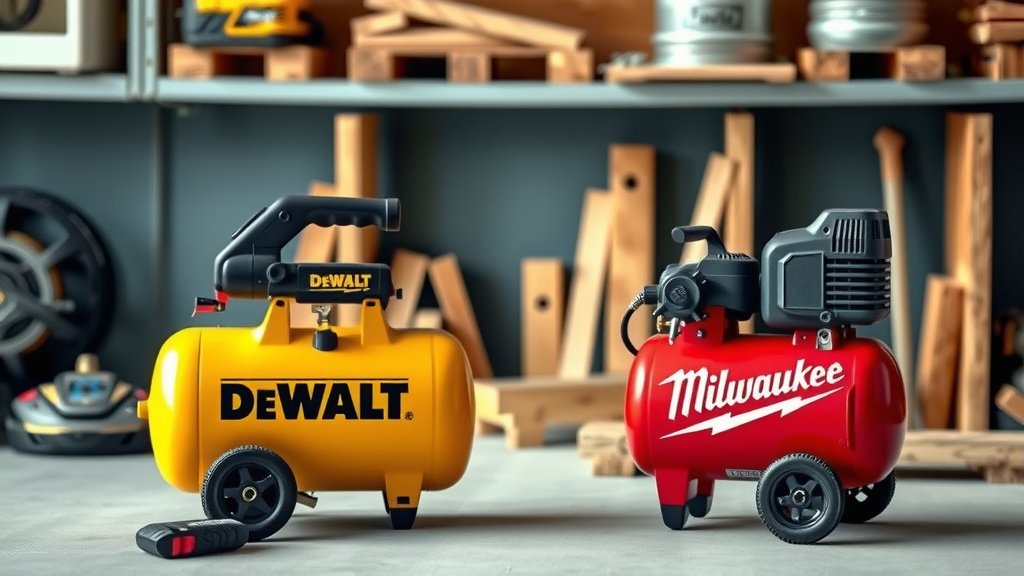
When choosing between a DeWalt and Milwaukee cordless air compressor, your existing battery platform is often the deciding factor. We’ve researched that both brands deliver excellent performance for common tasks like inflating tires and powering brad nailers. If you’re already invested in DeWalt 20V MAX or Milwaukee M18 tools, sticking with that brand offers the best convenience and cost-effectiveness. Consider the specific CFM needs of your tools and how you’ll use the compressor. Ultimately, both offer reliable portability and power to get your jobs done efficiently.
Frequently Asked Questions
Can I use my DeWalt 20V MAX batteries on a Milwaukee cordless air compressor?
No, you cannot. DeWalt and Milwaukee use different battery systems. Their batteries and tools are not cross-compatible. You’ll need to use the correct battery system designed for each brand’s tools.
Which brand offers a quieter cordless air compressor?
Both brands aim to reduce noise, but specific models will vary. We found that checking the decibel (dB) rating on the product specifications is the best way to compare noise levels. Some models are designed with noise reduction features for quieter operation.
How long can I expect a cordless air compressor to run on a single battery charge?
Runtime depends heavily on the battery’s amp-hour (Ah) rating and your usage. Simple tasks like inflating tires will yield longer runtimes than continuously powering air tools. We recommend higher Ah batteries, like 5.0Ah or larger, for extended use.
Are cordless air compressors powerful enough for framing nailers?
For light to medium-duty tasks, like brad nailers or staplers, they are usually sufficient. However, framing nailers demand more air. We found that for continuous framing, a corded compressor is often still the better choice due to higher CFM requirements.
Where can I find the CFM rating for these cordless air compressors?
You can typically find the CFM rating on the product’s packaging, the manufacturer’s website, or in the tool’s user manual. This specification is essential for ensuring the compressor can power your specific air tools effectively.