Test Your Air Purifier for Ozone Production
You can tell if your air purifier produces ozone by looking for a distinct, sharp, bleach-like smell, especially when you first turn it on. Some purifiers are designed to intentionally create ozone, while others might produce it as a byproduct. If you notice this smell consistently, it’s a strong indicator your unit is generating ozone, which many health experts advise against exposing yourself to. It’s important to know your purifier’s technology.
While ozone can technically help neutralize odors and pollutants, it’s also a lung irritant. Many air purifiers that use ionization or UV light can unintentionally create ozone. We found that understanding the type of technology your air purifier uses is key to identifying potential ozone production. Always check the manufacturer’s specifications to be sure.
- Ozone often smells like bleach or chlorine.
- Ionizers and UV light purifiers may produce ozone.
- Ozone can irritate your lungs.
- Check your purifier’s manual for details.
- Look for certifications like CARB.
Let’s walk through the common signs and what you can do to check if your air purifier might be adding ozone to your air.
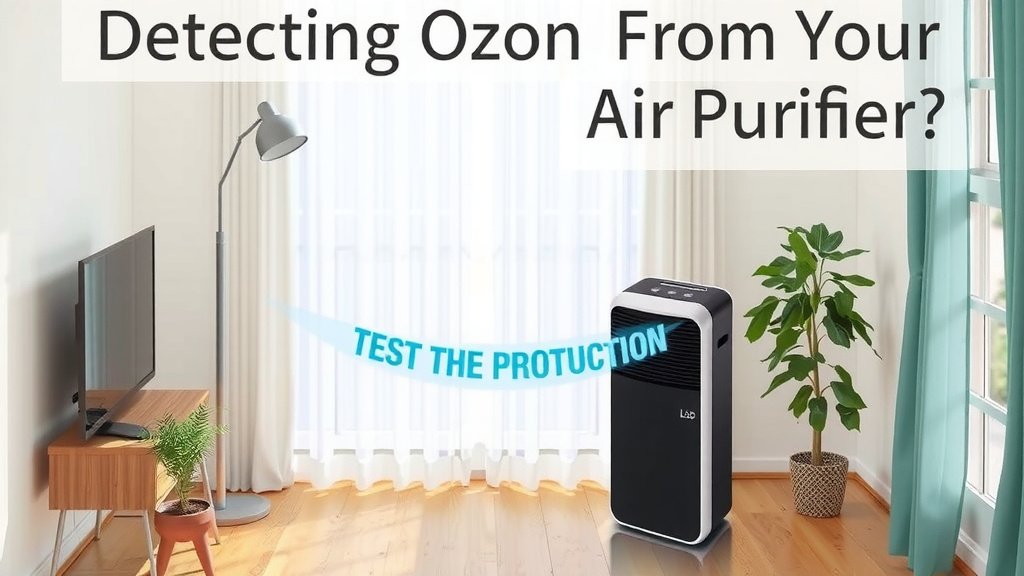
Detecting Ozone From Your Air Purifier
So, you’ve got an air purifier, hoping for cleaner air. That’s a great goal! But what if your purifier is adding something you *don’t* want? Ozone is a tricky one. While it can reduce odors, it can also irritate your lungs. You want to be sure your unit is helping, not harming.
We’ve looked into how air purifiers can produce ozone and what signs to watch for. The good news is, there are clear indicators. You can often tell by what you smell and by understanding the technology inside your device.
What Does Ozone Smell Like?
The most common sign of ozone production is a distinct smell. It’s often described as sharp, like bleach or chlorine. Some people also liken it to the smell after a thunderstorm. This smell is ozone molecules interacting with other compounds in the air.
This odor is usually strongest when you first turn on your air purifier. If you notice this scent, especially if it’s persistent, it’s a strong clue your unit might be emitting ozone. Think of it like a faint whiff of a swimming pool changing room – that can be a sign of ozone!
Understanding Air Purifier Technologies and Ozone
Different types of air purifiers work in different ways. Some technologies are more prone to creating ozone than others. Knowing what’s under the hood of your purifier is key to understanding potential ozone output.
Ionizers and Ozone
Air purifiers that use ionizers release negative ions into the air. These ions attach to airborne particles like dust and allergens, making them heavier. They then fall out of the air, or stick to surfaces. Unfortunately, this process can also produce ozone as a byproduct.
If your purifier has an “ionizer” setting or feature, there’s a higher chance it could be generating ozone. Some models allow you to turn the ionizer off. This is often a good step if you’re concerned about ozone.
UV-C Light and Ozone
Ultraviolet (UV) light, particularly UV-C, is used in some air purifiers to kill germs and bacteria. While effective for sterilization, UV-C light can sometimes split oxygen molecules (O2) in the air. This can lead to the formation of ozone (O3).
It’s important to note that not all UV purifiers produce significant ozone. Many manufacturers design their UV systems carefully to minimize ozone output. However, if your unit uses UV-C, it’s something to keep in mind.
Other Technologies: HEPA and Activated Carbon
On the flip side, technologies like HEPA filters and activated carbon filters are very unlikely to produce ozone. HEPA filters physically trap particles. Activated carbon filters adsorb odors and gases. These are generally considered safe from an ozone-production standpoint.
If your air purifier primarily uses HEPA and activated carbon, you likely have little to worry about regarding ozone generation. These are often combined in a single unit for comprehensive air cleaning.
Checking Your Air Purifier’s Specifications
The best way to know for sure is to check the manufacturer’s information. Your air purifier’s manual is your best friend here. It should detail the technologies used and any potential byproducts.
Look for sections on “specifications,” “technology,” or “ozone output.” Manufacturers are usually upfront about these details, especially if their product is designed to be ozone-free. They want you to feel confident in your purchase.
Manufacturer Websites and Product Listings
If you can’t find your manual, visit the manufacturer’s website. Search for your specific model. Product descriptions and specification sheets often list the technologies used. You can also find customer reviews or forums where people discuss ozone concerns.
Ozone Emission Standards and Certifications
Some regions and organizations have set standards for ozone emissions from air purifiers. In California, for example, air purifiers are tested and certified for ozone production. Look for certifications like the California Air Resources Board (CARB) certification.
CARB-certified air purifiers meet strict safety standards for ozone emissions. If your unit carries this seal, it means it has been tested and found to produce ozone at levels deemed safe. This is a great indicator of a responsible design.
What to Do If You Suspect Ozone Production
If you’re smelling that bleach-like odor or have concerns based on the technology, there are steps you can take. Your health and comfort are the top priorities.
Turn Off Ionizer or Ozone-Generating Features
Many air purifiers with ionizers allow you to disable this function. If yours does, try running it without the ionizer to see if the smell disappears. This is often the simplest solution for ionizer-produced ozone.
Consider a Different Type of Purifier
If your current purifier consistently produces ozone and you can’t disable the feature, it might be time to consider a replacement. Look for models that explicitly state they are ozone-free or are CARB-certified.
Many high-quality air purifiers rely solely on HEPA filtration and activated carbon. These are excellent choices for general air cleaning without the risk of ozone. You can find purifiers designed for various room sizes and specific needs.
Improve Ventilation
If you continue to use a purifier that may produce some ozone, ensuring good ventilation can help. Opening windows periodically can help disperse any ozone that might be released. However, this is more of a workaround than a solution.
A Quick Checklist for Your Purifier
To help you quickly assess your situation, use this checklist:
- Do you notice a bleach or chlorine-like smell?
- Does your purifier have an ionizer feature?
- Does your purifier use UV-C light technology?
- Have you checked your owner’s manual for ozone information?
- Does your purifier have a CARB certification?
- Can you turn off any ionizer or ozone-generating features?
Conclusion
Knowing if your air purifier emits ozone is important for your home’s air quality. You can often detect ozone by its distinct bleach-like smell, especially when the unit starts. Pay attention to the technology your purifier uses; ionizers and UV-C lights are the most common culprits for ozone production. Always consult your manual and look for certifications like CARB to ensure your device is safe. If you suspect ozone, try disabling ionizer features or consider a purifier that relies solely on HEPA and activated carbon filters for a truly ozone-free experience.
Frequently Asked Questions
Can I smell ozone from my air purifier?
Yes, you absolutely can. The most common sign is a sharp, bleach-like, or chlorine-like odor, sometimes compared to the smell after a thunderstorm. This smell is often strongest when you first turn on the unit.
Which air purifier technologies are most likely to produce ozone?
Air purifiers that use ionizers or UV-C light technology are more likely to produce ozone as a byproduct. These technologies can alter oxygen molecules in the air, leading to ozone formation.
Are HEPA filters safe regarding ozone production?
Yes, HEPA filters are very safe. They work by physically trapping particles and do not produce ozone. Air purifiers that rely on HEPA and activated carbon filters are generally considered ozone-free.
What is the CARB certification, and why should I look for it?
CARB stands for the California Air Resources Board. This certification means an air purifier has been tested and meets strict standards for ozone emissions, ensuring it produces very little to no harmful ozone.
What should I do if I suspect my air purifier is making ozone?
First, check your manual to see if you can turn off any ionizer features. If the smell persists or your purifier uses UV-C and you’re concerned, consider replacing it with a model that is CARB-certified or known to be ozone-free.
![5 Best Indoor Plant for Air Purifying [In 2026]](https://homeunderstandable.com/wp-content/uploads/2025/05/best-indoor-plant-for-air-purifying.jpg)