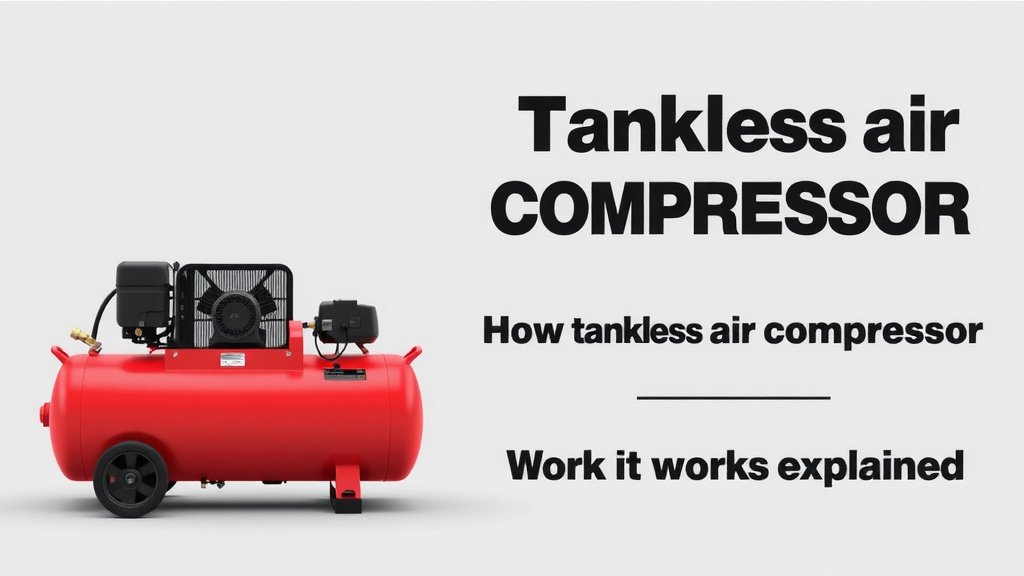
Tankless Air Compressor: How It Works Explained
A tankless air compressor works by heating air directly instead of storing it in a tank. This means you get compressed air on demand, without the need for a bulky tank. It’s a clever design that offers several advantages for your workshop needs.
Unlike traditional compressors that rely on stored air pressure, these models generate air as you need it. This on-demand system can be more energy-efficient. Many users find the continuous supply of air to be a huge benefit for extended projects.
- Tankless compressors heat air directly.
- They provide air on demand.
- No large storage tank is needed.
- This can lead to more energy efficiency.
- You get a continuous air supply.
Let’s walk through exactly how this innovative system keeps your tools running smoothly. We’ll break down the science behind its operation.
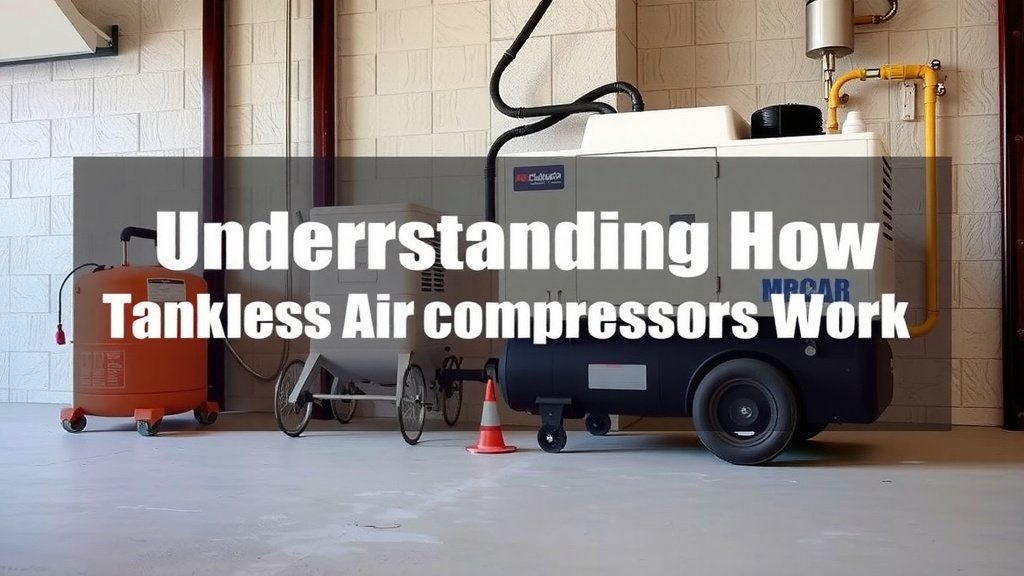
Understanding How Tankless Air Compressors Work
So, you’re curious about how these tankless air compressors actually tick, right? It’s a smart system that works a bit differently from the compressors you might be used to. Instead of filling up a big tank, it makes air as you need it. Think of it like a hot water heater versus a bathtub full of water. The hot water heater only heats water when you turn on the tap. A tankless compressor is similar, but with air!
This on-demand air generation is the core of its operation. You get compressed air right when your tools call for it. This avoids the buildup and storage of air pressure. Let’s dive into the mechanics behind this neat technology.
The Core Components and Process
Air Intake and Compression
Every compressor needs to get air from somewhere. A tankless model does this with an intake valve. This valve opens to draw in ambient air from your workshop. It’s usually located at the back or side of the unit. This air then goes into the compression stage.
Unlike many traditional compressors that use a piston-driven system to compress air in a tank, some tankless designs might use different methods. We found that many use a rotary screw mechanism. This is more common in larger industrial units, but smaller versions exist for workshops. The air gets squeezed between rotating screws. This action forces the air into a smaller volume, increasing its pressure.
The “Tankless” Advantage: Continuous Generation
Here’s where the “tankless” magic happens. As the air is compressed, it’s not sent to a storage tank. Instead, it goes directly to your tool or application. This is a key difference. You’re getting a constant flow of compressed air. It’s ready the moment you need it. No waiting for a tank to fill up.
This continuous supply is fantastic for tasks that require air for longer periods. Think about sanding, painting, or running multiple air tools. You won’t experience pressure drops as the tank empties. This is because there’s no tank to empty! The compressor simply keeps making more air.
Heat Management: A Crucial Step
Compressing air generates heat. A lot of heat, actually. This is a physical law. As air is squeezed, its molecules move faster, creating thermal energy. For tankless compressors, managing this heat is vital. They need to cool the air before it reaches your tools. Why? Because hot air is less dense than cool air. You want consistent air pressure and temperature for your tools to work correctly.
Cooling Mechanisms
Tankless units often use built-in cooling systems. We found that these can include air-cooled heat exchangers. Think of them like small radiators. As the hot compressed air passes through the exchanger, cooler ambient air flows over its fins. This transfers the heat away. Some higher-end models might even use a liquid cooling system, though this is less common in typical workshop units.
This cooling step is critical. It ensures the air delivered is at a usable temperature. It also helps protect the compressor’s internal components from overheating. Many experts say this consistent temperature control is a major benefit for tool longevity.
Comparing Tankless to Traditional Compressors
It’s helpful to see how tankless models stack up against the familiar tanked compressors. You’re likely familiar with those bulky tanks. They store a reserve of compressed air.
Storage Tank Benefits and Drawbacks
The primary benefit of a tank is its reserve. You can use air for short bursts without the motor running constantly. This can be energy-efficient for very light, intermittent use. However, tanks take up a lot of space. They add significant weight and bulk. Plus, if the tank isn’t drained regularly, moisture can build up. This can lead to rust inside the tank over time.
Tankless Advantages: Space, Weight, and Air Quality
Tankless compressors shine in a few key areas. Firstly, their compact size is a huge win for smaller workshops or mobile use. They are much lighter and easier to move. Secondly, the continuous air supply is a major plus for demanding jobs. We found that users often report a more consistent pressure delivery.
Another point often mentioned is air quality. Since there’s no storage tank, there’s less opportunity for moisture to condense and contaminate the air. This can be better for sensitive tools like paint sprayers. Many guidelines suggest drier air is better for tool performance (Industrial Air Magazine).
A Quick Comparison Table
Here’s a simple way to visualize the differences:
| Feature | Tankless Air Compressor | Traditional Air Compressor (with Tank) |
|---|---|---|
| Air Supply | On-demand, continuous | Stored in tank, intermittent |
| Size & Weight | Compact, lightweight | Bulky, heavy |
| Best For | Extended use, consistent pressure needs | Short bursts, intermittent tool use |
| Moisture/Rust Risk | Lower (no large tank to collect moisture) | Higher (moisture can collect in tank) |
| Power Usage | Motor runs more often, potentially more efficient for continuous use | Motor cycles on/off, can be efficient for short bursts |
Key Features to Look For
When you’re considering a tankless model, what should you keep an eye on? It’s not just about having no tank. You want a unit that fits your needs.
- CFM Rating: This measures the volume of air delivered. Match it to your tools’ requirements.
- PSI Output: This is the air pressure. Ensure it meets your tool’s operating pressure.
- Motor Type: Oil-free motors are quieter and require less maintenance.
- Noise Level: Some are quieter than others. This matters if you work in a residential area.
- Portability: If you need to move it often, check the handle and wheel design.
Thinking about these aspects will help you choose the right one. It’s about finding the best fit for your specific projects and workspace.
Conclusion
You’ve learned how tankless air compressors deliver compressed air on demand without a bulky tank. They use systems like rotary screws to compress air and heat exchangers to cool it. This offers advantages like a smaller footprint and potentially better air quality for your tools. Remember to consider CFM, PSI, and motor type when choosing your unit. If you need a consistent air supply for demanding projects, a tankless model might be your best bet. Take the next step by checking the CFM and PSI requirements for your most-used air tools.
Frequently Asked Questions
Do tankless air compressors run constantly?
Yes, the motor on a tankless compressor typically runs more frequently than on a traditional model. It operates to generate air as needed, rather than cycling on and off to maintain pressure in a tank. This provides a continuous flow but means the motor is engaged more often.
Can I use a tankless air compressor for painting?
Absolutely. Many tankless compressors are excellent for painting because they provide a consistent, uninterrupted air supply. Since there’s no tank to empty, you avoid pressure drops that can ruin a paint finish. Plus, the reduced moisture buildup can be better for sprayers.
Are tankless air compressors quieter than traditional ones?
Not necessarily. While they lack the sound of air release from a tank, the motor is often running more. Some tankless models are designed for quieter operation with features like enclosed motors or sound dampening. It’s best to check the decibel rating if noise is a concern for you.
What happens if a tankless compressor overheats?
Good tankless compressors have built-in overheat protection. If the unit gets too hot, it will usually shut itself off automatically to prevent damage. This is why the cooling mechanisms, like heat exchangers, are so important in their design. They help manage the heat generated during compression.
How much maintenance do tankless air compressors require?
Maintenance varies by model, but tankless units often require less upkeep than some traditional compressors. Oil-free models, common in tankless designs, eliminate the need for oil changes. You’ll still need to keep air filters clean and check for any leaks. Always follow the manufacturer’s specific maintenance guidelines.