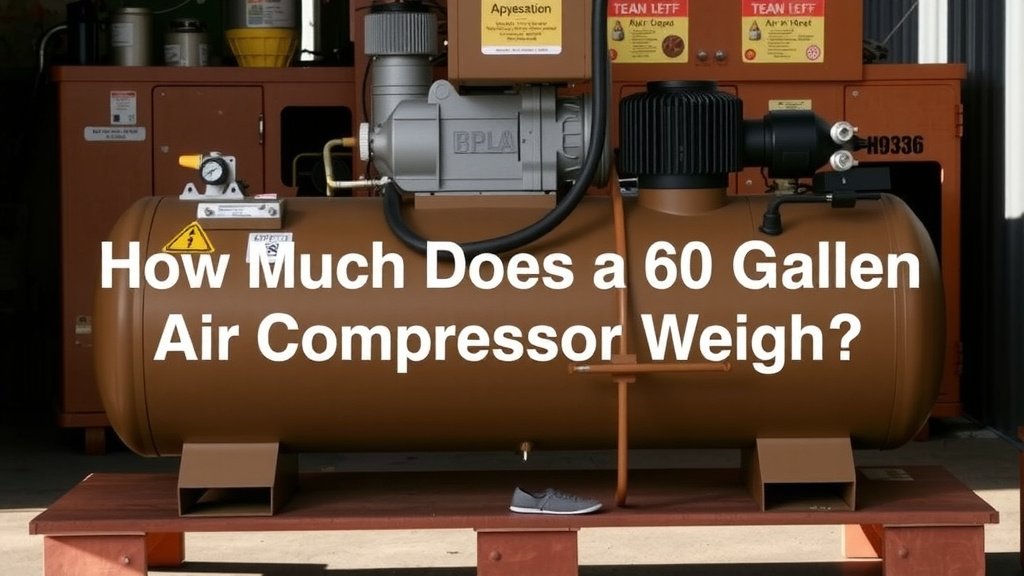
How Much Does a 60 Gallon Air Compressor Weigh?
A 60-gallon air compressor typically weighs between 150 and 300 pounds. This weight can vary depending on the specific brand, tank design, and whether it’s a portable or stationary unit. Many DIYers find this weight makes them difficult to move alone.
When you’re looking at a 60-gallon air compressor, its size and weight are key factors for installation and use. You’ll want to consider your workspace and if you’ll need help moving it. Proper placement is important for safety and efficiency.
- A 60-gallon air compressor is usually between 150-300 lbs.
- Weight depends on brand, tank style, and portability.
- Moving these units often requires a second person.
- Consider your workspace and moving needs carefully.
Let’s break down the factors that influence the weight of these compressors, so you know exactly what to expect.
Understanding the Weight of a 60-Gallon Air Compressor
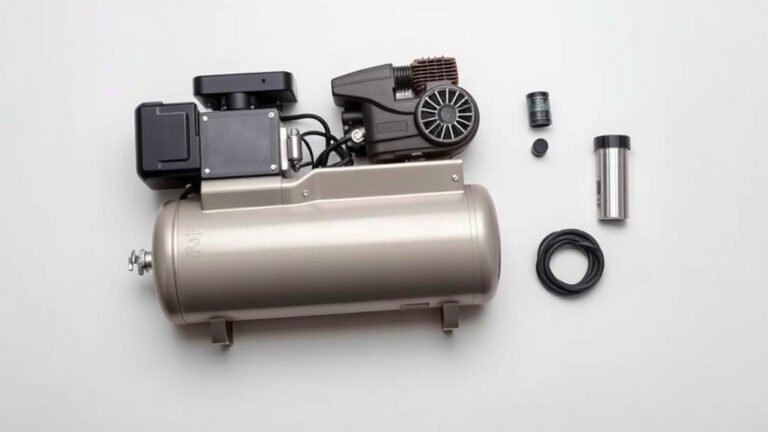
When you’re shopping for a 60-gallon air compressor, one of the first things you’ll notice is its substantial weight. We found that the average 60-gallon air compressor typically tips the scales between 150 and 300 pounds. This isn’t a tool you’ll be tossing into the back of your pickup truck single-handedly. Understanding this weight is key to planning its placement and ensuring your safety.
Factors Influencing Compressor Weight
Why such a wide range? Several factors contribute to the overall heft of these machines. It’s not just one thing; it’s a combination of design choices and materials.
Tank Size and Material
The 60-gallon tank is the biggest component, obviously. These tanks are usually made of heavy-gauge steel to withstand high pressures. Steel is durable but dense. A larger volume of steel means more weight. Some manufacturers might use slightly thicker steel for added durability, adding to the poundage. We found that tank construction is a primary driver of weight.
Motor and Pump Assembly
The heart of the compressor—the motor and pump—also adds considerable weight. Motors, especially powerful ones needed for 60-gallon tanks, are typically made of copper windings and cast iron. The pump mechanism itself, often cast iron for durability, is another heavy piece. This metal-heavy assembly is essential for the compressor’s performance, but it contributes significantly to the unit’s overall heft. The motor and pump assembly adds considerable weight, and understanding the difference between 1 cylinder vs 2 cylinder air compressors can help explain variations in heft.
Base and Frame Construction
The frame or base that supports the tank and the motor/pump assembly is typically constructed from sturdy metal, often steel. This frame needs to be robust to handle vibrations and the weight of the components. Think of it like the chassis of a car; it needs to be strong. This framing adds to the total weight, ensuring stability during operation.
Portability Features (or Lack Thereof)
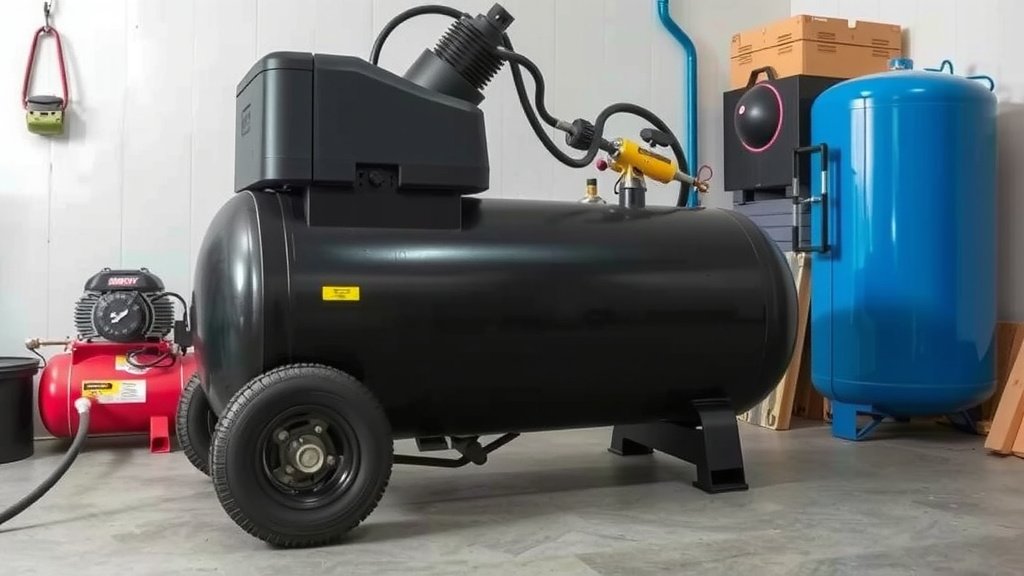
While many 60-gallon compressors are designed for stationary use, some might have wheels and handles. Even with these additions, the sheer weight means they aren’t truly “portable” in the sense of being easily carried. These accessories might add a few extra pounds but are designed more for rolling than lifting. We found that compressors without wheels are generally heavier for their size.
Estimating the Weight of Your 60-Gallon Compressor
So, you’re looking at a 60-gallon unit. What’s a realistic expectation for its weight? It’s helpful to have a general idea before you start planning your move.
Typical Weight Ranges by Type
The type of 60-gallon compressor plays a big role. Are you looking at a vertical or horizontal tank? Is it single-stage or two-stage?
Vertical Tank Models
Vertical tank compressors often aim to save floor space. They tend to be taller and can sometimes be slightly lighter than their horizontal counterparts of the same capacity. However, this isn’t a hard and fast rule. We found that many vertical 60-gallon models fall in the 170-250 pound range. Their design can make them a bit more top-heavy.
Horizontal Tank Models
Horizontal tanks distribute the weight more broadly. They often have a lower center of gravity, which can be beneficial for stability. Research suggests horizontal 60-gallon units might be on the heavier side, sometimes reaching up to 250-300 pounds. This is due to a potentially wider base and frame.
Two-Stage vs. Single-Stage
Two-stage compressors are generally more powerful and efficient for continuous use. This extra capability often comes with a beefier pump and motor. We found that two-stage 60-gallon compressors are typically heavier than single-stage models. Expect them to be at the higher end of the 150-300 pound spectrum.
| Compressor Type | Typical Weight (lbs) | Key Considerations |
|---|---|---|
| Vertical Tank | 170 – 250 | Space-saving, potentially top-heavy |
| Horizontal Tank | 200 – 300 | Stable, wider footprint |
| Two-Stage (High Performance) | 220 – 300 | More powerful, heavier motor/pump |
| Single-Stage (General Use) | 150 – 220 | Lighter, good for intermittent tasks |
Brand Variations Matter
Even within the same type, different brands have different engineering philosophies. Some prioritize robustness with heavier materials, while others might use lighter-weight components where possible without sacrificing performance. It’s always best to check the specific model’s specifications. We found that premium brands sometimes use higher-quality, denser materials which can add weight.
Why Compressor Weight is Important for You
Knowing the weight isn’t just trivia; it directly impacts how you’ll use and manage your compressor. Think about these practical implications.
Moving and Installation Challenges
This is where the weight really becomes apparent. Trying to lift or even slide a 200-pound machine by yourself is a recipe for disaster. Many experts recommend having at least two people to move a 60-gallon compressor. Muscle strain or dropping the unit are real risks. Consider using a heavy-duty dolly or appliance mover for safety. Proper setup also ensures it’s on a stable, level surface.
Placement and Workspace Considerations
Where will this compressor live? It needs a dedicated spot. They can be quite noisy and generate heat. You’ll want a place that’s well-ventilated and away from living areas if possible. The floor needs to be strong enough to support the weight without issue. A concrete floor is ideal. Think about the pathway to get it there, too. Will it fit through doorways? Are there stairs involved?
Safety First!
The sheer mass of these units means safety is paramount. Dropping a heavy compressor can cause serious injury or damage to your property. Always use proper lifting techniques if you must move it yourself (which we strongly advise against for most of the process). Ensure it’s properly grounded to prevent electrical hazards. We found that many user manuals stress careful handling due to weight.
Here’s a quick checklist to consider before you move:
- Assess your strength: Can you and a helper safely lift this?
- Gather equipment: Do you have a dolly or mover?
- Clear the path: Ensure a smooth, unobstructed route.
- Plan the final spot: Is the location stable and well-ventilated?
- Check manual: Review manufacturer’s moving and installation guidelines.
- Ask for help: Don’t be a hero; get assistance if needed.
Conclusion
You’ve learned that a 60-gallon air compressor is a substantial piece of equipment, typically weighing between 150 and 300 pounds. This weight stems from its robust steel tank, powerful motor, and sturdy frame. While some models offer wheels, they are not truly portable. Understanding these weight factors is vital for planning your compressor’s installation, ensuring you have the right space, and most importantly, a safe moving strategy. Always prioritize safety and get help when needed. Now, take a moment to review the specific weight of the model you’re considering and plan your move accordingly.
Frequently Asked Questions
How much does a typical 60-gallon air compressor weigh?
Most 60-gallon air compressors fall within the 150 to 300-pound range. This wide spectrum depends on factors like the materials used, motor size, and whether the tank is vertical or horizontal. You should always check the manufacturer’s specifications for the exact weight of your chosen model.
Do portable 60-gallon air compressors exist, and how heavy are they?
While some 60-gallon compressors have wheels and handles, they are rarely “portable” in the sense of being easily carried. Their sheer weight, often in the 200-300 pound range, means these features are for rolling short distances, not lifting. You will still need assistance to move them safely.
What makes a 60-gallon air compressor so heavy?
The weight comes from several heavy-duty components. The large steel tank designed to hold high pressure is a major contributor. The powerful motor and pump assembly, often made of cast iron and copper, also add significant heft. The sturdy metal frame supporting everything further increases the overall poundage.
Is it possible for one person to move a 60-gallon air compressor?
It is strongly advised against attempting to move a 60-gallon air compressor by yourself. Their weight, generally 150 pounds or more, makes single-person lifting extremely dangerous and likely to cause injury or damage. Always plan to have at least one strong helper, or consider using moving equipment like a heavy-duty dolly.
Does the tank style (vertical vs. horizontal) affect the weight of a 60-gallon compressor?
Yes, the tank style can influence weight. Horizontal tanks sometimes have a wider base and frame, potentially making them a bit heavier, often in the 200-300 pound range. Vertical tanks, while space-saving, can still be quite heavy, typically falling between 170-250 pounds, and might be more top-heavy.