How Many Types of Air Compressor Exist? A 2026 Guide
There are generally considered to be two main types of air compressors: reciprocating (piston) and rotary (screw). You might also encounter other variations, but these two form the primary categories. Understanding these differences is key to picking the right one for your needs.
We found that while piston compressors are common for smaller jobs, rotary types often handle larger, continuous tasks. The choice depends heavily on your specific application and how much air you need, how often. It’s not a one-size-fits-all situation, so knowing the distinctions is helpful.
- Air compressors primarily fall into two main categories: reciprocating and rotary.
- Reciprocating compressors use pistons.
- Rotary compressors use screws or other rotating elements.
- Many other variations exist, but these are the core types.
- Your best choice depends on your job’s demands.
Let’s break down these types and explore some of their variations so you can get a clear picture of your options.
Understanding the Different Types of Air Compressors
So, you’re wondering about the variety of air compressors out there. It’s a great question because not all air compressors are created equal! We’ve found that most air compressors fall into two main families, but there are many useful variations within those families. Think of it like cars: you have sedans and SUVs, but then you have compact SUVs, luxury SUVs, sports sedans, and so on. Let’s dive into the core categories first.
The Two Main Families: Piston vs. Rotary
The two biggest players in the air compressor world are reciprocating (piston) compressors and rotary (screw) compressors. These two types work on fundamentally different principles to get the air compressed. Your choice between them often comes down to how much air you need and how often you need it.
Reciprocating (Piston) Air Compressors
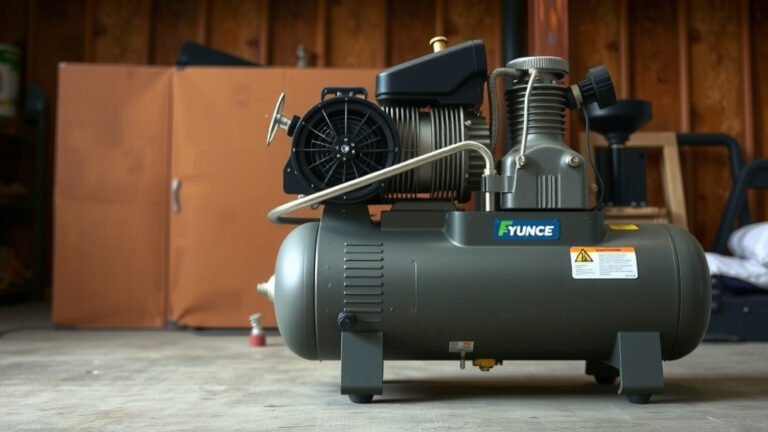
These are the ones most people picture when they think of an air compressor. They’ve been around forever! Piston compressors work much like the engine in your car. They use a piston that moves back and forth inside a cylinder.
How Piston Compressors Work
As the piston moves down, it creates a vacuum, drawing air into the cylinder through an intake valve. Then, as the piston moves back up, it squeezes (compresses) that air and forces it out through an outlet valve. This cycle repeats over and over. For smaller, intermittent tasks, a piston compressor is often a fantastic and economical choice.
Single-Stage vs. Two-Stage Piston Compressors
Within the piston family, there are two main sub-types: single-stage and two-stage.
- Single-Stage Piston Compressors: These compress the air in one stroke of the piston. They’re generally simpler and less expensive. They’re perfect for lighter-duty jobs like inflating tires, powering brad nailers, or running small air tools. We found they typically reach pressures up to about 90-120 PSI.
- Two-Stage Piston Compressors: These use two cylinders, or one cylinder with two pistons, to compress the air. The air is compressed by the first piston and then sent to a second, smaller cylinder for further compression. This results in higher pressures (often 175 PSI or more) and a more consistent air supply. Many experts suggest these are better for heavier-duty applications like powering impact wrenches, spray painting, or running larger air tools continuously.
Pros and Cons of Piston Compressors
We found that piston compressors are generally easier to maintain and more affordable upfront. They’re also quite portable, especially the smaller ones. However, they can be noisy and tend to vibrate more than rotary types. They also have a duty cycle, meaning they need to rest periodically to avoid overheating.
Rotary (Screw) Air Compressors
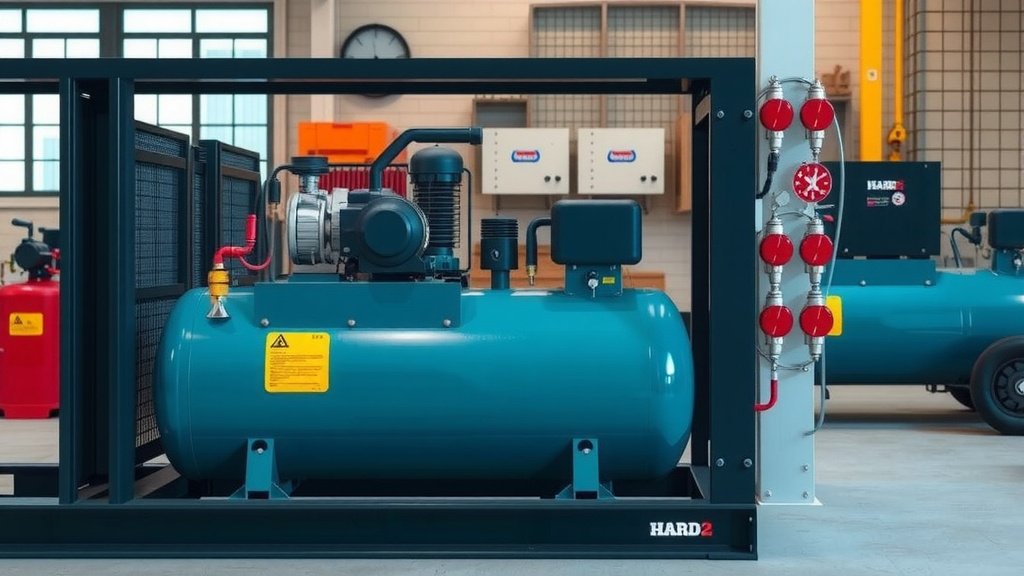
Now, let’s talk about rotary compressors. These are the workhorses you’ll often find in industrial settings or garages where a constant, high volume of compressed air is needed. Instead of pistons, they use two meshing screws (rotors) that turn in opposite directions.
How Rotary Compressors Work
As the screws rotate, they trap air in the spaces between their threads. This trapped air is then squeezed and pushed towards the discharge end of the compressor. This method provides a very smooth and continuous flow of compressed air. They are designed for heavy-duty, continuous operation.
Single-Stage vs. Two-Stage Rotary Compressors
Similar to piston compressors, rotary types can also be single or two-stage, but the mechanism is different. Even within rotary, there can be variations in the screw design (e.g., single screw, twin screw).
- Single-Stage Rotary: The air is compressed in one pass through the screws. These are generally used for applications that don’t require extremely high pressures but need a consistent supply.
- Two-Stage Rotary: The air is compressed in two steps, usually involving intercooling between stages. This allows for higher pressures and greater efficiency. Many industrial applications rely on these for their reliable, high-volume output.
Pros and Cons of Rotary Compressors
Rotary screw compressors are known for their efficiency and ability to run continuously without needing long rest periods. They are also generally quieter and vibrate less than piston models. The trade-off? They are significantly more expensive, both to purchase and often to maintain, and they are typically much larger and heavier, making them less portable.
Other Types of Air Compressors to Consider
While piston and rotary compressors cover the vast majority of applications, you might encounter a few other types. These are often specialized or variations on the main themes.
Scroll Air Compressors
Scroll compressors use two interleaving scroll-shaped components. One is stationary, and the other orbits around it. As the orbiting scroll moves, it traps air pockets that get progressively smaller, compressing the air. They are known for being very quiet and vibration-free. We found they are often used in medical and laboratory settings where quiet operation and clean air are critical.
Centrifugal Air Compressors
These use a high-speed rotating impeller to fling air outwards at high velocity. The air then enters a diffuser, which slows it down and converts its kinetic energy into pressure. Centrifugal compressors are excellent for very large volumes of air, but they typically don’t achieve very high pressures on their own. They’re common in large industrial plants, chemical processing, and power generation. Many sources indicate they are best suited for continuous, high-flow applications.
Diaphragm Air Compressors
Diaphragm compressors use a flexible diaphragm that moves up and down to change the volume of a chamber, drawing in and expelling air. A key feature is that the air being compressed never touches any mechanical parts, leading to very clean, oil-free air. They are often used in applications where contamination is a concern, like medical equipment or some food processing. They generally have lower flow rates and pressures compared to piston or screw types.
A Quick Comparison Table
To help you visualize the differences, here’s a table summarizing some key aspects. Keep in mind these are general comparisons, and specific models can vary widely.
| Type | How it Works | Typical Use Cases | Pros | Cons |
|---|---|---|---|---|
| Piston (Reciprocating) | Piston moves in cylinder | Home garages, DIY, intermittent use, small tools | Affordable, portable, easy to maintain | Noisy, vibrations, limited duty cycle |
| Rotary (Screw) | Intermeshing screws rotate | Industrial, continuous use, high demand | Continuous air, efficient, quiet, low vibration | Expensive, larger, complex maintenance |
| Scroll | Orbiting scroll compresses air | Medical, lab, quiet applications | Very quiet, low vibration, clean air | Higher cost, lower volume than some |
| Centrifugal | Impeller spins air | Large industrial, high volume, continuous | High flow rates, efficient for large volumes | Low pressure on own, complex, expensive |
| Diaphragm | Flexible diaphragm moves | Medical, lab, oil-free needs | Oil-free air, quiet, reliable | Lower pressure and volume |
Choosing the Right Compressor for Your Needs
So, when you’re figuring out how many types of air compressors are out there, remember it’s less about the exact number and more about understanding the fundamental mechanisms. The piston and rotary types are your primary choices. Your decision hinges on a few key questions:
- How much compressed air do you need (measured in CFM)?
- What pressure (PSI) do your tools or applications require?
- Will you be using it continuously or intermittently?
- What’s your budget for purchase and ongoing maintenance?
- How important are noise levels and vibration?
Answering these will point you clearly towards the right family of compressors, and then you can explore the specific models within that family. It’s all about matching the compressor’s capabilities to your specific tasks.
Key Takeaways for Your Compressor Search
To wrap up this section, here’s a quick checklist to keep in mind as you look at different air compressors:
- Piston compressors are great for lighter, intermittent jobs.
- Rotary screw compressors are the choice for heavy-duty, continuous use.
- Consider single-stage for lower pressures, two-stage for higher demands.
- Scroll and diaphragm types offer specialized benefits like quietness or oil-free air.
- Centrifugal types are for very large industrial airflow needs.
- Always match the compressor’s CFM and PSI ratings to your tools and usage.
Conclusion
You’ve learned that air compressors aren’t just one thing; they come in several main types, with piston and rotary screw being your primary choices. Your ideal compressor depends on your specific tasks, from quick inflation jobs to constant industrial needs. We found that piston types are budget-friendly for intermittent work, while rotary screw models offer continuous, reliable air for demanding applications. By considering CFM, PSI, and how often you’ll use it, you can confidently pick the compressor that best fits your needs and budget.
Take a moment to jot down your essential requirements, and you’ll be well on your way to finding the perfect air compressor. Your next step is to compare models that match your identified needs!
Frequently Asked Questions
Are there really only two main types of air compressors?
While piston and rotary screw compressors are the two main categories you’ll encounter for most applications, we found that other specialized types exist. These include scroll, centrifugal, and diaphragm compressors, each designed for very specific needs like extreme quietness or oil-free air delivery.
What’s the biggest difference between piston and rotary screw compressors?
The core difference lies in their compression mechanism. Piston compressors use a back-and-forth motion, much like a car engine, ideal for intermittent use. Rotary screw compressors use rotating screws to compress air continuously, making them perfect for heavy-duty, constant air demands. A 1/4 inch hose can work, but it often limits your compressor’s power, and our guide explains when to use it.
Can I use a single-stage compressor for all my DIY projects?
For lighter DIY tasks like inflating tires or powering brad nailers, a single-stage piston compressor is often sufficient and economical. However, if your projects require higher pressures or more consistent airflow for extended periods, you might benefit from a two-stage piston compressor.
Which type of compressor is best for professional auto repair shops?
Professional auto repair shops typically require a consistent, high volume of compressed air to power multiple tools simultaneously. We found that rotary screw compressors are generally the preferred choice for these environments due to their ability to run continuously and deliver reliable air pressure for demanding tools like impact wrenches.
When would I choose a scroll or diaphragm compressor over a piston type?
You’d opt for a scroll or diaphragm compressor when air quality and quiet operation are top priorities. Scroll compressors are known for being exceptionally quiet and vibration-free, often used in medical settings. Diaphragm compressors are excellent for delivering very clean, oil-free air, which is critical for certain laboratory or food processing applications.