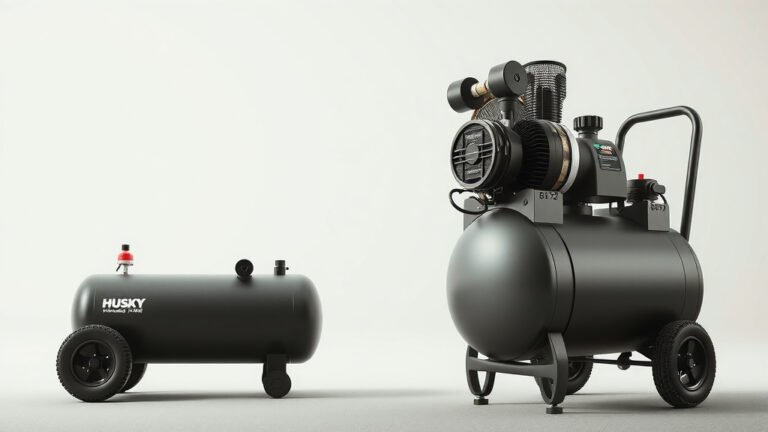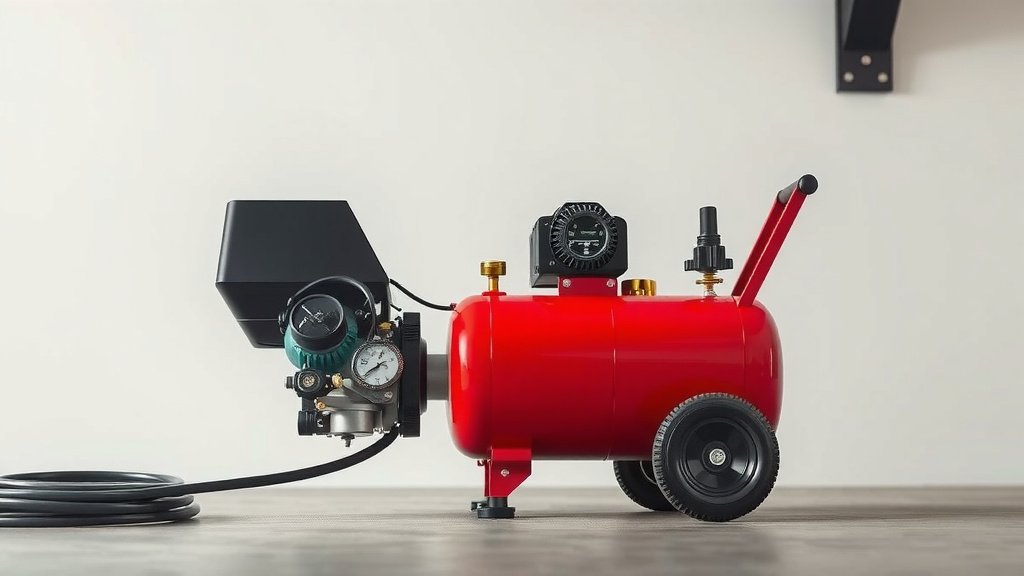
1.5 HP Air Compressor Wattage Explained
A 1.5 horsepower (hp) air compressor typically uses around 1400 to 1500 watts of power when it’s running. This means it’s a pretty substantial appliance for your garage or workshop. Understanding this helps you manage your electrical load and avoid tripping breakers. It’s good to know your compressor’s energy needs!
While 1.5 hp is a common size, the actual wattage can vary slightly based on the brand and specific design. Factors like motor efficiency and operating pressure play a role. Many users wonder about this power draw, especially when planning their electrical setup or thinking about generator compatibility. You’re not alone in asking!
- A 1.5 hp air compressor uses about 1400-1500 watts.
- This is the power used while the motor is running.
- The exact wattage can vary slightly by model.
- Knowing this helps manage your home’s electrical system.
Let’s break down exactly how much power your 1.5 hp air compressor needs and what factors influence it, so you can use it with confidence.
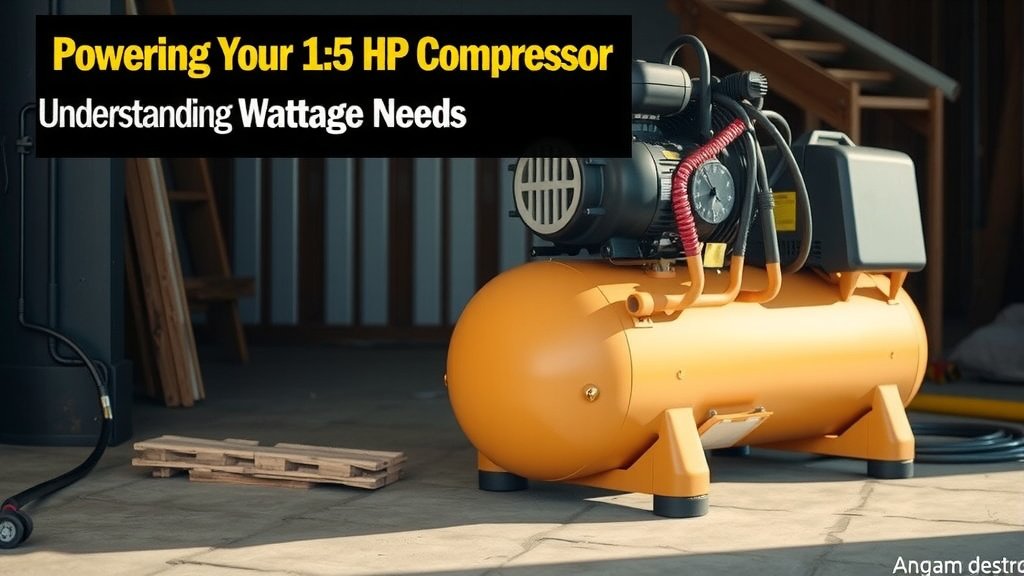
Powering Your 1.5 HP Air Compressor: Understanding Wattage Needs
So, you’ve got a 1.5 horsepower air compressor. That’s a solid workhorse for many tasks around your home or shop! A common question that pops up is, “Just how much electricity does this thing actually pull?” The short answer is, while the motor is humming along, you’re generally looking at about 1400 to 1500 watts. This isn’t a tiny draw, but it’s usually manageable for most standard household circuits.
Think of it like this: your 1.5 hp compressor is comparable to running a couple of high-power kitchen appliances simultaneously, like a powerful blender and a microwave. Knowing these numbers helps you avoid those frustrating moments where the lights dim or the circuit breaker decides to take a nap. You want your tools to work when you need them, right?
Decoding Horsepower and Wattage: What’s the Connection?
Horsepower (hp) is a measure of the motor’s power output. Wattage, on the other hand, is the rate at which electrical energy is consumed. They are related, but not a direct one-to-one conversion. A 1 hp motor typically translates to about 746 watts of output power.
However, when we talk about the wattage a 1.5 hp air compressor uses, we’re usually referring to its electrical power consumption, which includes inefficiencies in the motor and other components. This is why you see a higher number than a simple multiplication would suggest. It’s the total juice it needs from the wall outlet to get the job done.
Why the Wattage Isn’t an Exact Science
You might notice that different 1.5 hp compressors can have slightly different wattage ratings. This is perfectly normal! Several factors contribute to this variation. It’s not a flaw; it’s just how electrical motors and compressors are designed.
Motor Efficiency Matters
Manufacturers strive to make motors more efficient. A highly efficient motor will convert more electrical energy into mechanical work, using fewer watts for the same amount of output. Newer models might be slightly more efficient, meaning they could hover at the lower end of the 1400-1500 watt range, or even a bit less.
Starting vs. Running Watts
It’s crucial to understand that the 1400-1500 watt figure is typically for running watts. When the motor first kicks on, it needs a surge of power to get going. This is called starting wattage, and it can be significantly higher, sometimes double the running watts, for a brief moment. For a 1.5 hp compressor, this surge might momentarily reach 2000-2500 watts or more. Most standard circuits can handle this brief spike, but it’s good to be aware of it.
Tank Size and Duty Cycle Influence
The size of the air compressor’s tank and its duty cycle can also indirectly affect power consumption. A larger tank means the compressor will run less often to maintain pressure, but when it does run, it will run for a longer period to refill that tank. The duty cycle rating tells you how long the compressor can run within a given time frame (e.g., 50% means it can run for 5 minutes out of every 10). While this doesn’t change the instantaneous wattage, it affects the overall energy used over time.
Calculating Your Compressor’s Power Draw
While we’ve given you a good range, you might be curious about how to get a more precise number for your specific unit. The manufacturer’s label is your best friend here!
Where to Find the Wattage Information
Almost every electrical appliance, including your air compressor, will have a data plate or a sticker. This label, often found on the side or back of the compressor unit, contains vital specifications. You should look for:
- Volts (V): The voltage it operates on (usually 120V in the US).
- Amps (A): The current it draws.
- Watts (W): Sometimes, the wattage is listed directly.
The Simple Math: Volts x Amps = Watts
If the wattage isn’t listed directly, you can easily calculate it using the voltage and amperage. For example, if your compressor is rated for 120V and draws 12 amps, the calculation is straightforward:
120 Volts * 12 Amps = 1440 Watts
This calculation gives you a very close estimate of the running watts. Remember, this is an approximation, and actual consumption can fluctuate slightly based on the factors we’ve discussed.
Managing Your Electrical Load: What You Need to Know
Understanding your 1.5 hp air compressor’s wattage is crucial for managing your home’s electrical system. This is especially true if you plan to use it in a garage or workshop that might have older wiring or share circuits with other equipment.
Standard Household Circuits
Most standard household circuits in the US are rated for 15 or 20 amps at 120 volts. A 15-amp circuit can safely handle approximately 1800 watts (15A * 120V), and a 20-amp circuit can handle about 2400 watts (20A * 120V). Since your 1.5 hp compressor uses around 1400-1500 watts, it should fit comfortably on a 20-amp circuit.
What About a 15-Amp Circuit?
If you only have 15-amp circuits available, using a 1.5 hp compressor might be pushing it, especially if other devices are running on the same circuit. You’ll want to ensure nothing else is drawing significant power when the compressor kicks on or is running. Running it alone on a 15-amp circuit is usually fine, but adding a shop light or a charger could lead to tripping the breaker.
The Importance of Dedicated Circuits
For heavy-duty tools like air compressors, it’s often recommended to have them on a dedicated circuit. This means the circuit breaker only serves that one outlet. This removes the risk of overloading the circuit by sharing it with other appliances and ensures your compressor receives a stable power supply. If you’re unsure about your home’s wiring, consulting a qualified electrician is always the best bet.
Generator Compatibility: Can Your Generator Handle It?
Planning to use your air compressor on the go or during a power outage with a generator? You’ll need to know its wattage to ensure your generator is up to the task.
Generator Wattage Requirements
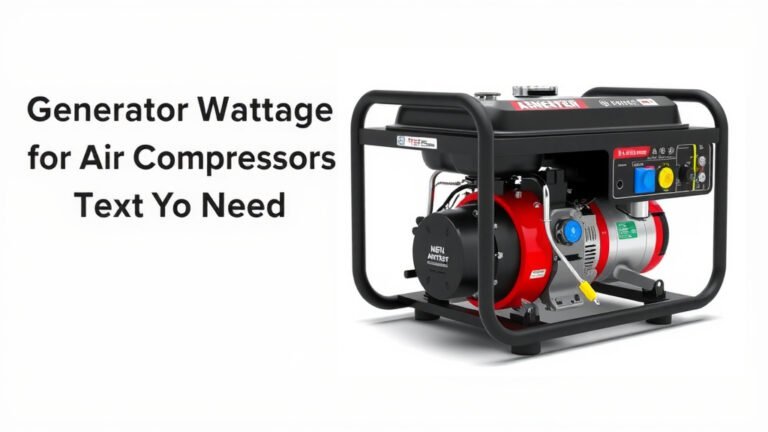
When selecting a generator, you need to consider both the running watts and the starting watts of your air compressor. For a 1.5 hp unit, you’ll need a generator that can comfortably supply at least 1500 watts continuously, and importantly, can handle that initial surge. A generator with a rated output of around 3000 watts or more would typically be sufficient to power a 1.5 hp air compressor and perhaps a few smaller accessories.
Understanding Generator Ratings
Generators are usually rated with both “peak” or “surge” watts (for starting) and “running” or “continuous” watts (for sustained operation). Always ensure the generator’s *running* wattage meets or exceeds your compressor’s running watts, and its *peak* wattage can handle the compressor’s starting surge. It’s better to have a little extra capacity than not enough!
Quick Checklist for Managing Your Air Compressor’s Power
To help you keep track and ensure smooth operation, here’s a quick rundown:
- Check the Label: Always look for the wattage or amperage/voltage rating on your compressor.
- Calculate if Needed: Use Volts x Amps = Watts if wattage isn’t listed.
- Know Your Circuits: Ensure your outlet is on a 20-amp circuit if possible.
- Avoid Overloading: Don’t run too many high-draw appliances on the same circuit.
- Consider Dedicated Circuits: For best performance, a dedicated circuit is ideal.
- Generator Power: Match your generator’s running and peak watts to your compressor’s needs.
Conclusion
You’ve learned that your 1.5 hp air compressor typically uses between 1400 and 1500 watts while running. Remember that starting watts can be higher for a brief moment. We’ve seen how motor efficiency and other factors cause slight variations. Knowing these numbers helps you manage your home’s electrical circuits and pick the right generator.
Always check your compressor’s data plate for exact specs. If you’re unsure about your wiring, a quick chat with an electrician can save you trouble. Now you can power up your compressor with confidence, knowing you’re set up for success!
Frequently Asked Questions
How much power does a 1.5 hp air compressor use when it’s NOT running?
When your air compressor is not running, its power consumption is extremely low. It’s just enough to keep any small electronic controls active, if applicable. You’re essentially looking at less than 1 watt for standby power, so it won’t affect your electricity bill.
Can I run a 1.5 hp air compressor on a standard 15-amp outlet?
It’s often not ideal and can be risky. A standard 15-amp circuit can handle about 1800 watts. Since your 1.5 hp compressor uses around 1400-1500 running watts, plus its higher starting surge, it could easily trip the breaker, especially if other devices are plugged into the same circuit.
What’s the difference between running watts and starting watts for my compressor?
Running watts are the consistent power your compressor needs to operate once the motor is going. Starting watts are the much higher, momentary surge of power needed to get the motor spinning initially. Your 1.5 hp compressor’s starting watts can be nearly double its running watts.
Will a higher tank size affect the wattage my 1.5 hp compressor uses?
A larger tank doesn’t change the instantaneous wattage your compressor uses when it’s running. However, it means the compressor will run for longer periods each time it needs to refill the tank, potentially leading to higher overall energy consumption over an extended work session.
Is it safe to use an extension cord with my 1.5 hp air compressor?
If you must use an extension cord, choose a heavy-duty, short cord designed for high-wattage tools. A cord that’s too thin or too long can reduce the voltage reaching your compressor, potentially causing it to run inefficiently or even damage the motor. Always check the cord’s gauge rating.