Air Compressor vs Vacuum Pump: Which Do You Need
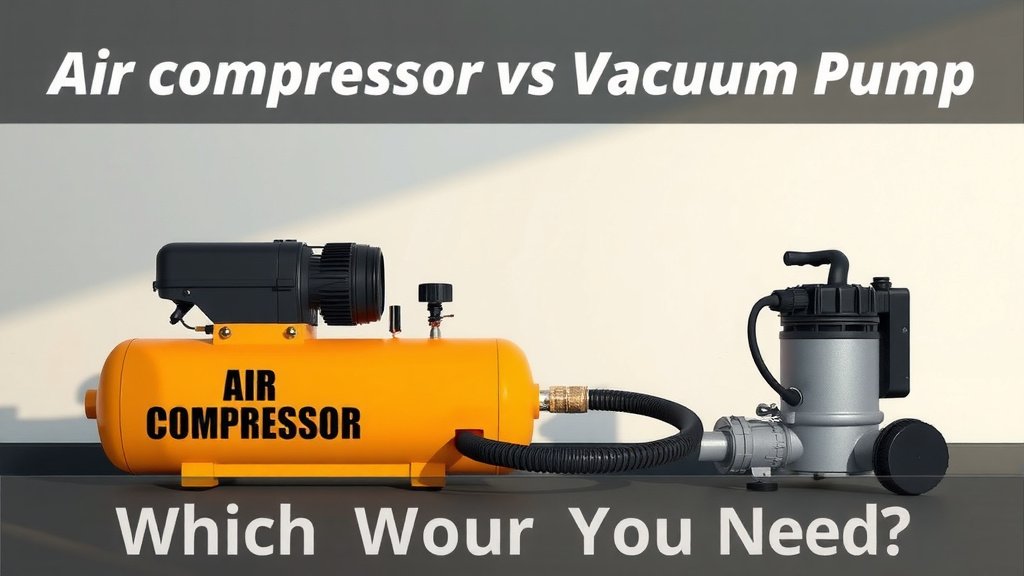
Choosing between an air compressor and a vacuum pump depends entirely on your project’s needs. Think of it this way: an air compressor pushes air out forcefully, while a vacuum pump pulls air in to create a low-pressure space. They do opposite jobs, so you’ll need the right tool for the task.
While both tools manipulate air pressure, their functions are distinct. An air compressor is your go-to for tasks requiring pressurized air, like powering pneumatic tools or inflating tires. A vacuum pump, conversely, excels at removing air, useful for applications like vacuum sealing or degassing materials. Understanding this core difference is key to selecting the right equipment for your job.
- Air compressors create pressurized air to push things.
- Vacuum pumps remove air to create low pressure.
- They perform opposite functions, so choose wisely.
- Your project’s needs will dictate which tool is best.
Let’s dive deeper into what makes these two devices tick and how you can tell which one is the right fit for you.
Understanding Air Pressure: Compressors vs. Vacuum Pumps
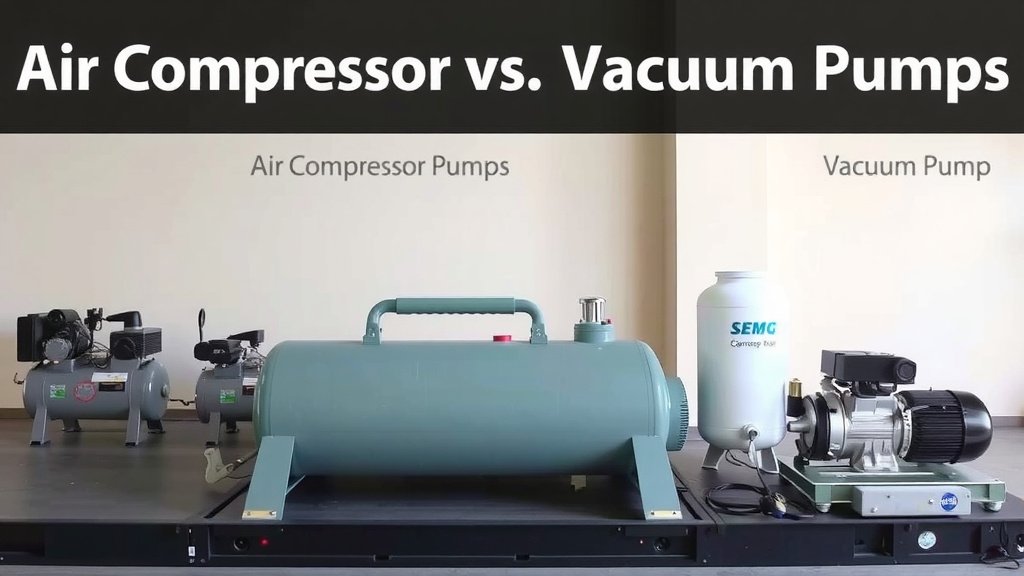
At their core, air compressors and vacuum pumps are both devices that deal with air pressure. But they do opposite jobs. An air compressor takes in air and squeezes it into a smaller volume. This increases the air’s pressure. A vacuum pump, on the other hand, removes air from a contained space. This lowers the pressure inside that space.
How Air Compressors Work: Building Up Pressure
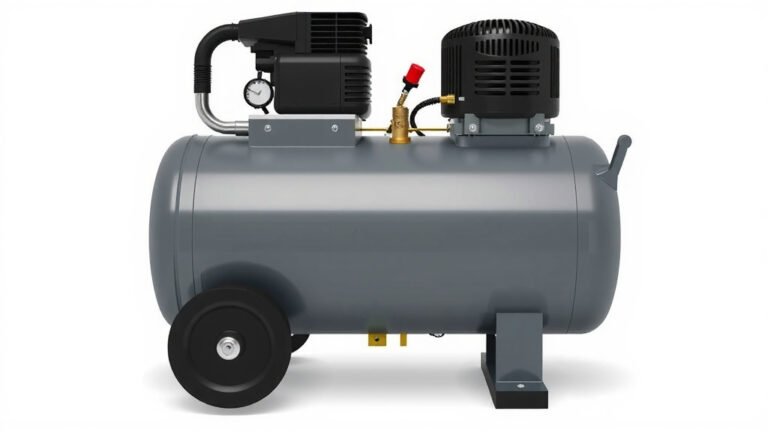
Think of an air compressor like a lung for your tools. It breathes in ambient air. Then, it compresses that air. This compressed air is stored, ready to be released under high pressure. This stored energy is what powers many tools.
The Compression Process
Compressors use various methods to squeeze air. Piston compressors are common. They work like a bicycle pump, using a piston to push air into a chamber. Rotary screw compressors use interlocking screws. They trap and compress air as they turn. Regardless of the method, the goal is the same: to create pressurized air.
Common Uses for Air Compressors
You’ll find air compressors in many places. They power pneumatic tools like nail guns and impact wrenches. These tools need a constant blast of compressed air to operate effectively. They are also used for inflating tires on cars, bikes, and other vehicles. You might also use them for cleaning dusty areas with an air blower attachment. Some are used in industrial settings for manufacturing processes.
How Vacuum Pumps Work: Creating a Low-Pressure Environment
Now, let’s flip the script. A vacuum pump does the opposite. Instead of building pressure, it removes it. It pulls air out of a sealed area. This creates a partial vacuum. This means the pressure inside is much lower than the surrounding atmosphere. It’s like creating an empty space for air to rush into.
The Mechanism of Air Removal
Vacuum pumps use different technologies to remove air. Rotary vane pumps are popular. They use rotating vanes to move air from the inlet to the outlet. Diaphragm pumps use a flexible diaphragm. It moves up and down to push air out. Some specialized pumps use other methods, but the result is always lower pressure.
Applications Where Vacuum Pumps Shine
Where do you need to remove air? Vacuum sealing food is a common example. Removing air helps preserve food longer by preventing spoilage. In labs, vacuum pumps are used for degassing liquids and solids. This removes dissolved gases. They are also used in scientific experiments that require low-pressure conditions. Manufacturing processes, like vacuum forming plastics, rely on them too.
Key Differences at a Glance
Understanding the fundamental difference is key. You need to know what your project demands. Is it force and power, or is it removal and suction?
| Feature | Air Compressor | Vacuum Pump |
|---|---|---|
| Primary Function | Increases air pressure | Decreases air pressure |
| Airflow Direction | Pushes air out | Pulls air in |
| Typical Output | Pressurized air | Low-pressure space (vacuum) |
| Common Applications | Powering tools, inflating | Sealing, degassing, suction |
Pressure vs. Suction: A Simple Analogy
Imagine blowing up a balloon. You’re using an air compressor’s principle – pushing air to create pressure. Now imagine using a straw to drink a milkshake. You’re creating suction by pulling air, much like a vacuum pump. See? Opposite jobs.
When to Choose an Air Compressor
You should reach for an air compressor when your task requires force. Do you need to drive a nail? That’s a compressor’s job. Do you need to inflate something to a higher pressure than the atmosphere? Again, a compressor is your friend. Many woodworking and automotive repair tasks rely on them heavily.
Projects Benefiting from Compressed Air
- Powering nail guns or staplers
- Inflating tires or sports equipment
- Operating impact wrenches or ratchets
- Spraying paint or sandblasting
- Cleaning with an air duster
When to Choose a Vacuum Pump
A vacuum pump is your choice when you need to remove air. This is essential for creating a seal. It’s also critical for processes that can’t tolerate air. Think about preserving food or creating specific scientific environments. If your goal is to suck air out, this is the tool.
Tasks Suited for Vacuum Pumps
- Vacuum sealing food for longer storage
- Degassing epoxy resins or other materials
- Creating a vacuum for scientific experiments
- Vacuum forming plastics
- Removing air from a sealed container for preservation
Making the Right Choice for Your Needs
So, how do you decide? Ask yourself what you want to achieve. Do you want to push air out or pull air out? The answer usually becomes clear quickly. Always consider the specific requirements of your project. Researching the tools needed for your specific task can also guide you.
Your Project Checklist
Before you buy, consider these questions:
- Do I need to power a tool that requires force?
- Is my goal to inflate something beyond atmospheric pressure?
- Do I need to remove air to preserve something?
- Am I trying to create a low-pressure environment for a process?
- What is the specific air pressure range required for my application?
By answering these, you’ll be well on your way to picking the correct device. It’s all about matching the tool to the task. Many sources, like the U.S. Department of Energy, highlight the importance of selecting the right equipment for energy efficiency and optimal performance.
Conclusion
Choosing between an air compressor and a vacuum pump boils down to one core question: do you need to push air out or pull air out? Compressors provide the force for tools and inflation, while pumps create the void for sealing and specialized processes. Understanding this fundamental difference is key to selecting the right equipment for your project. Always consider the specific needs of your task before making a decision. This will save you time and ensure your project is completed efficiently and effectively. Now, go forth and pick the tool that truly fits your needs!
Frequently Asked Questions
Can an air compressor be used as a vacuum pump?
Generally, no, an air compressor is not designed to function as a vacuum pump. Their internal mechanisms are built for opposite purposes: compressing air versus removing it. Attempting to use one as the other could damage the equipment and won’t achieve the desired low-pressure effect.
Can a vacuum pump be used to inflate things?
A vacuum pump cannot inflate things because it removes air, it doesn’t push it out under pressure. To inflate an object, you need to introduce air at a higher pressure than what’s outside. A vacuum pump does the exact opposite.
What’s the main difference in how they move air?
The main difference is the direction of airflow relative to the desired outcome. An air compressor takes ambient air and pushes it into a tank or directly to a tool, increasing pressure. A vacuum pump actively removes air from a sealed space, decreasing pressure within that space.
Are there any dual-function machines that do both?
While less common for DIY use, some specialized industrial equipment can perform both functions, often by reversing their operating mode or by incorporating separate compressor and vacuum pump systems into one unit. For most typical applications, you’ll need separate machines.
How do I know if my project needs pressure or suction?
If your project involves powering tools, inflating tires, or spraying materials, you likely need the force provided by compressed air. If your goal is to remove air for preservation, create a seal, or facilitate a process that requires a low-pressure environment, you need the suction from a vacuum pump.