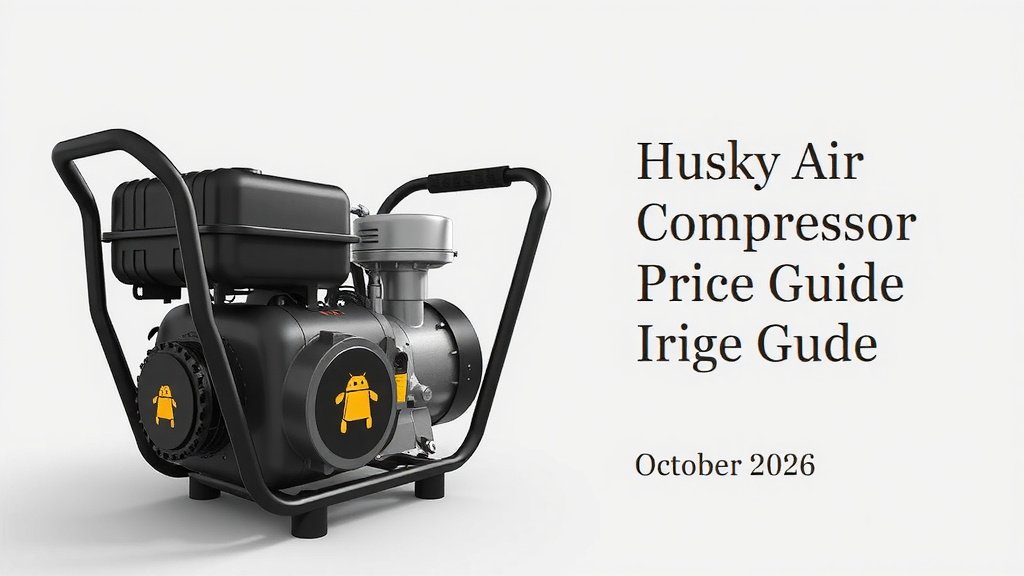
Husky Air Compressor Price Guide October 2026
Wondering how much a Husky air compressor might cost you? You can expect prices to range widely, typically from around $100 for a small portable unit to over $600 for larger, more powerful models. The exact price tag really depends on the size, type, and features you need.
Husky offers a variety of compressors for different jobs. Whether you’re a DIYer needing a compressor for occasional tasks or a professional requiring a heavy-duty workhorse, there’s likely a Husky model to fit your needs and budget. We’ve researched the market to give you a clear picture of the costs involved.
- Husky air compressors cost between $100 and $600+.
- Small portable units are the most affordable.
- Larger, more powerful models cost more.
- Price varies based on tank size, CFM, and PSI.
- Consider your specific needs before buying.
Ready to find the perfect Husky air compressor for your workshop or garage? Let’s break down the different types and what influences their price tags so you can make an informed decision.
Understanding Husky Air Compressor Pricing
So, you’re curious about the cost of a Husky air compressor. It’s a fair question, especially when you’re looking to invest in a tool that can help you tackle so many projects. We’ve researched the market, and the price really does run the gamut. You can find a basic unit for a little over a hundred bucks, while a heavy-duty model can set you back upwards of $600. The key thing to remember is that the price tag is directly tied to the compressor’s capabilities and its intended use. It’s like buying a car; a small sedan is going to cost less than a full-size truck. Let’s break down what influences these costs so you can pinpoint what’s right for you.
Factors That Determine the Price of Your Husky Compressor
Several key features and specifications directly impact how much you’ll spend on a Husky air compressor. Understanding these will help you see why one model costs more than another. Think of it as a recipe – more powerful ingredients mean a higher price.
Tank Size Matters
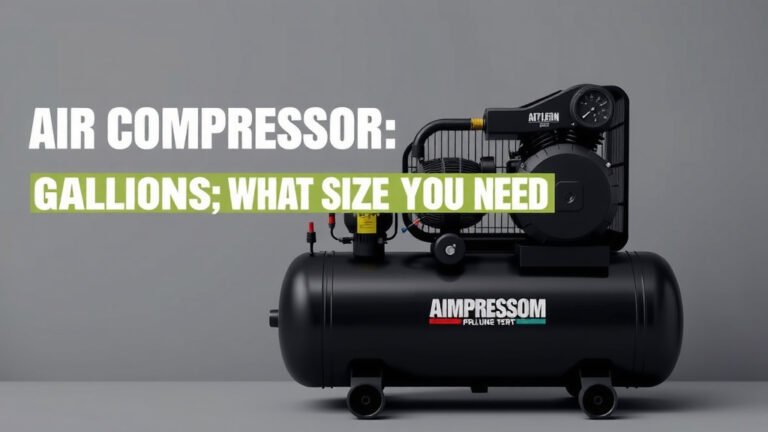
The tank is where the compressed air is stored. Larger tanks mean longer run times before the compressor needs to cycle back on. This is especially important if you’re using tools that demand a lot of air. For simple tasks like inflating tires or blowing dust, a smaller tank (like 1-6 gallons) is usually fine. If you’re planning on running nail guns, impact wrenches, or paint sprayers for extended periods, you’ll want a bigger tank, often 20 gallons or more. Bigger tanks mean a bigger price tag, plain and simple. We found that a 20-gallon model can easily cost $150-$250 more than a comparable 6-gallon unit.
Horsepower (HP) and CFM
Horsepower (HP) gives you an idea of the motor’s power. More HP generally means more compressed air. But, perhaps even more critical is the Cubic Feet per Minute (CFM) rating. This tells you how much air the compressor can deliver at a specific pressure. Tools have their own CFM requirements, and your compressor needs to meet or exceed those. A higher CFM rating often indicates a more powerful and thus more expensive compressor. For instance, a compressor with a CFM of 5.0 at 90 PSI will cost considerably more than one with a CFM of 2.0 at 90 PSI. Many tool manufacturers provide CFM needs, so check those first! Understanding Cubic Feet per Minute (CFM) is crucial, and our guide on 1-cylinder vs. 2-cylinder compressors explains its importance.
PSI (Pounds per Square Inch)
PSI is the measure of air pressure. Most common household tasks and DIY projects require around 90-100 PSI. Professional-grade tools or certain industrial applications might need higher PSI. While most Husky compressors offer adequate PSI for typical users, specialized models for higher demands will naturally cost more. We found that the difference in PSI between entry-level and professional models often doesn’t add a huge amount to the cost unless it’s combined with very high CFM.
Portability vs. Stationary Units
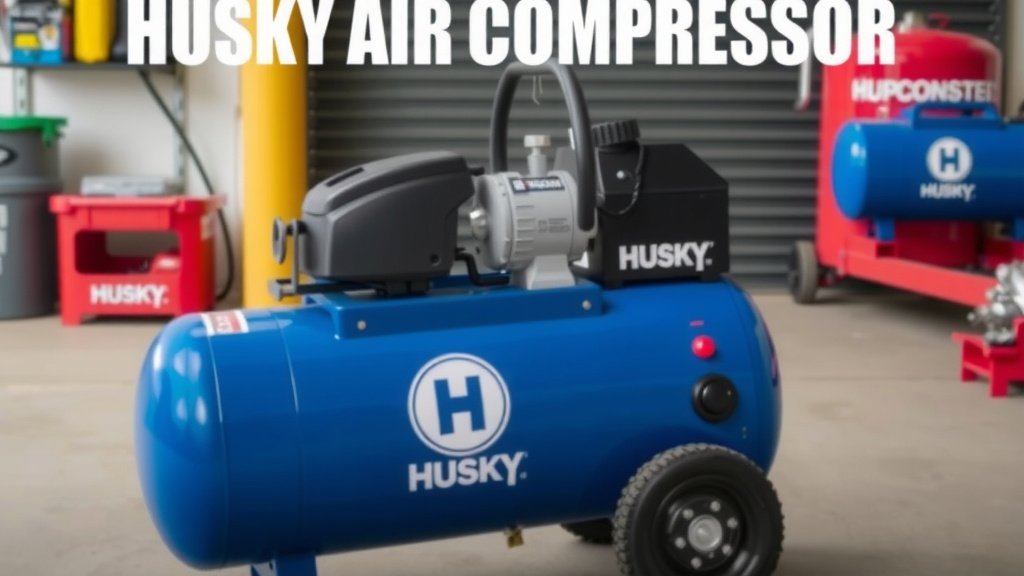
This is a big one for cost. Portable compressors are designed to be easily moved around your garage, workshop, or job site. They tend to have smaller tanks and are generally less powerful. Their convenience comes at a lower price point. Stationary units, on the other hand, are built for more demanding, continuous use. They have larger tanks, higher HP and CFM ratings, and are meant to stay put. Because they are more robust and powerful, they command a higher price, often starting around $300 and going up significantly.
Oil-Lubricated vs. Oil-Free Pumps
This is a technical detail that affects both price and maintenance. Oil-free compressors are typically less expensive upfront and require less maintenance because you don’t have to worry about oil changes. They are also generally lighter and quieter. However, their lifespan can be shorter than oil-lubricated models, and they might not perform as well under heavy, continuous use. Oil-lubricated compressors tend to be more durable and can handle tougher jobs. They often cost a bit more, and you’ll need to factor in regular oil changes. Many sources suggest oil-lubed pumps offer longer service life for demanding applications (Tooling Expert Monthly).
Husky Air Compressor Price Ranges by Type
Let’s get down to the specifics. Here’s a general idea of what you can expect to pay for different types of Husky air compressors you’ll commonly find at major retailers:
| Compressor Type | Typical Price Range | Best For |
|---|---|---|
| Small Portable (1-6 Gallons) | $100 – $200 | Inflating tires, air brushing, light nailing |
| Medium Portable/Jobsite (10-20 Gallons) | $200 – $400 | Multiple nailing tasks, small air tools, inflating larger items |
| Large Stationary (30+ Gallons) | $400 – $600+ | Continuous use, impact wrenches, sanders, paint spraying |
Entry-Level Portable Compressors
If your needs are basic, like keeping your car tires properly inflated or powering a small brad nailer for a quick DIY project, you’ll likely be looking at Husky’s smaller, portable units. These often have tanks in the 1 to 6-gallon range and are designed for convenience. You can find these models for roughly For basic needs like inflating tires, consider smaller, portable units, which our guide to 1-gallon vs. 2-gallon compressors can help you evaluate.$100 to $200. They are great for beginners or those who don’t use compressed air frequently.
Mid-Range Jobsite Compressors
Stepping up a bit, you’ll find compressors with 10 to 20-gallon tanks. These are fantastic for the serious DIYer or someone working on a jobsite. They offer more power and longer run times, making them suitable for tasks like using framing nailers, impact wrenches for automotive work, or running multiple air tools at once. Expect to spend between $200 and $400 for these versatile machines. They often strike a good balance between power, portability, and price.
Heavy-Duty Stationary Models
For the professional mechanic, the dedicated woodworker, or anyone who needs serious, sustained compressed air power, Husky offers larger, stationary units. These often feature tanks of 30 gallons or more, higher horsepower, and significantly better CFM ratings. They are built for continuous operation and can handle demanding tools like sanders or grinders. The price for these powerhouses typically starts around $400 and can go well over $600. These are an investment in productivity for heavy-use scenarios.
Maximizing Your Investment: What to Look For
When you’re looking at the price tags, think about what you actually need your compressor to do. Buying more than you need is just as costly as buying too little. Here’s a quick checklist to help you decide:
- List the tools you plan to use with the compressor.
- Check the CFM and PSI requirements for each tool.
- Consider how often and for how long you’ll use the compressor.
- Decide if portability is a must or if a stationary unit works.
- Think about noise levels and whether an oil-free model is sufficient.
- Set a realistic budget based on your needs.
Conclusion
You’ve seen that Husky air compressors offer a price range that suits many budgets, from under $100 for basic portable needs to over $600 for heavy-duty stationary models. Remember that tank size, horsepower, CFM, PSI, portability, and pump type all influence the final cost. Don’t just pick the cheapest option; instead, focus on matching the compressor’s specifications to your intended tools and usage frequency. Take a moment to list out your tool requirements and honestly assess how often you’ll use your new compressor. This thoughtful approach ensures you get the right tool without overspending.
Your next step is to compare specific Husky models based on your project needs. Check online retailers and local hardware stores to see current prices and features. Armed with this knowledge, you’re ready to make a smart purchase that will serve you well for years to come!
Frequently Asked Questions
What is the cheapest type of Husky air compressor?
The most affordable Husky air compressors are typically the small, portable units with tanks ranging from 1 to 6 gallons. These are designed for light-duty tasks and often cost between $100 and $200.
Do larger Husky air compressors always cost more?
Yes, generally, larger Husky air compressors with bigger tanks (20 gallons and up) and higher horsepower will command a higher price. These models are built for more demanding, continuous use.
Is an oil-free Husky compressor cheaper than an oil-lubricated one?
Typically, oil-free Husky compressors have a lower upfront purchase price. They also require less maintenance as you don’t need to manage oil levels or changes, making them budget-friendly for occasional users.
How much should I expect to pay for a Husky compressor for DIY car work?
For DIY car work like using impact wrenches or inflating tires, a mid-range portable unit with a 10-20 gallon tank might be suitable. You could expect prices to fall in the $200-$400 range for these.
Can I find a good Husky air compressor for under $150?
Yes, you can often find entry-level Husky air compressors for under $150, especially during sales. These are usually small, portable models suitable for basic tasks like inflating bike tires or small inflatables.