Porter Cable Air Compressor Cost: What to Expect
You’re probably wondering, “How much is a Porter Cable air compressor?” The price can vary a lot, typically ranging from $100 for small portable models to over $500 for larger, more powerful ones. Factors like tank size, horsepower, and CFM (cubic feet per minute) really affect the cost.
Deciding on the right Porter Cable air compressor depends on your needs. Are you a DIYer needing a lightweight unit for occasional tasks, or a professional requiring a robust machine for daily use? We found that understanding these different types will help you find the perfect fit and price point for your workshop or job site.
- Porter Cable air compressors range from $100 to $500+.
- Price depends on tank size, horsepower, and CFM.
- Choose based on your DIY or professional needs.
- Consider the types of tools you’ll power.
- Portability vs. power is a key decision factor.
Ready to find out which one is best for you? Let’s dive into the details of Porter Cable air compressor pricing and what you should consider.
Understanding Porter Cable Air Compressor Pricing
So, you’re looking to buy a Porter Cable air compressor and want to know the price tag? It’s a common question, and the answer isn’t a single number. We found that Porter Cable air compressors can range anywhere from about $100 for the most basic, portable units to well over $500 for larger, more powerful shop compressors. The price really hinges on what you need it to do.
Factors That Influence the Cost
Several key features directly impact how much you’ll spend on your Porter Cable air compressor. Think of these as the ingredients that go into the final price.
Tank Size Matters
Larger tanks hold more air, meaning your compressor doesn’t have to cycle on as often. This is great for tools that use a lot of air. Smaller tanks are lighter and more portable. A compressor with a 1-3 gallon tank might cost under $150, while a 20-gallon or larger model could easily be $300 or more. Bigger isn’t always better, though; it depends on your space and how you’ll use it.
Horsepower and Airflow (CFM)
Horsepower (HP) generally indicates how much power the motor has. More HP usually means it can fill the tank faster and maintain pressure better. CFM, or Cubic Feet per Minute, is arguably the most important spec. It tells you how much air the compressor can deliver at a certain pressure (usually PSI). Tools like impact wrenches or nail guns have specific CFM requirements. A compressor with a higher CFM output will generally be more expensive. For instance, a unit delivering around 4-5 CFM at 90 PSI will cost more than one delivering 2 CFM.
Portability vs. Stationary Units
Are you going to haul your compressor around the job site, or will it stay put in your garage? Portable compressors, often called “pancake” or “hot dog” styles, are usually less expensive. They typically have smaller tanks and are designed for lighter tasks. Stationary or “wheelbarrow” style compressors are built for more demanding, continuous use and have much larger tanks, often leading to a higher price point. We found that the convenience of portability often comes with a slightly higher per-gallon-of-air cost.
Features and Build Quality
You’ll also find price differences based on extra features. Things like oil-lubricated pumps are generally more durable and powerful than oil-free ones, but they also tend to cost more. Better noise reduction technology, more robust regulators, and higher-quality materials can also add to the price. Many experts say that investing a little more in build quality can save you money on repairs down the line.
Price Ranges for Common Porter Cable Models
Let’s break down what you might expect to pay for different types of Porter Cable air compressors.
Entry-Level & DIY Models (Under $200)
If you’re a hobbyist or a DIYer tackling small projects like inflating tires, using brad nailers, or cleaning, you can find excellent options in this range. These are often compact, oil-free compressors with smaller tanks (around 1-6 gallons). They’re easy to carry and quick to set up. We found these are perfect for occasional use around the house.
- Typical Tank Size: 1-6 gallons
- Portability: High, often very lightweight
- Common Uses: Tire inflation, light nailing, air dusting
- Price: $100 – $200
Mid-Range & Versatile Compressors ($200 – $400)
Stepping up, you’ll find compressors that offer more power and versatility. These might have larger tanks (6-20 gallons) and higher CFM outputs, making them suitable for a wider range of tasks. You could power staple guns, finish nailers, and even some smaller spray paint guns with these. Many in this range are still reasonably portable with wheels. Many users report these offer a great balance of power and price for home workshops.
- Typical Tank Size: 6-20 gallons
- Portability: Moderate, often with wheels
- Common Uses: Brad nailers, finish nailers, staplers, light automotive work, some painting
- Price: $200 – $400
Professional & High-Performance Units (Over $400)
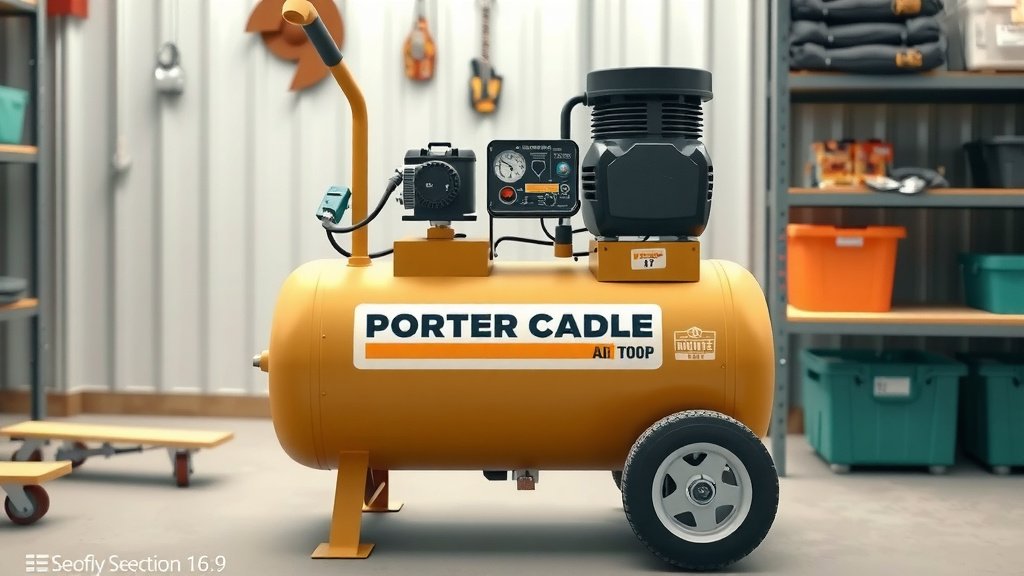
For serious DIYers, auto mechanics, or professional contractors, these are the workhorses. They typically feature larger tanks (20+ gallons), higher horsepower motors, and robust CFM outputs. These units are designed for continuous operation and can handle demanding tools like impact wrenches, grinders, and sanders. They often have oil-lubricated pumps for longevity and quieter operation. While pricier, they are built to last and perform under pressure.
- Typical Tank Size: 20+ gallons
- Portability: Low, often stationary or heavy with wheels
- Common Uses: Heavy automotive work, framing nailers, die grinders, sanders, continuous operation
- Price: $400+
Considering Your Tool’s Air Needs
Before you buy, take a moment to think about the tools you plan to power. Your air compressor needs to meet or exceed the CFM requirements of your most demanding tool. For example, a framing nailer uses significantly more air than a brad nailer. If you’re unsure, look at the tool’s manual or manufacturer’s website for its CFM rating at 90 PSI. Many experts advise getting a compressor with a CFM rating about 1.5 times higher than your tool’s requirement to ensure it can keep up without struggling.
Here’s a quick look at some common tool needs:
| Tool | Approx. CFM @ 90 PSI | Recommended Compressor Type |
|---|---|---|
| Brad Nailer/Stapler | 0.5 – 1.5 CFM | Small Portable (1-6 gal) |
| Finish Nailer | 1.5 – 2.5 CFM | Mid-Size Portable (6-10 gal) |
| Impact Wrench/Caulking Gun | 3 – 5 CFM | Medium to Large (10-20 gal) |
| Framing Nailer/Grinder | 5 – 7+ CFM | Large Stationary (20+ gal) |
| Sanders/HVLP Paint Sprayers | 7 – 10+ CFM | Large Stationary (30+ gal, higher HP) |
Checklist: Are You Ready to Buy?
To make sure you’re getting the best value and the right compressor for your money, consider these points:
- Have you identified the primary tools you’ll use?
- Do you know the CFM requirements for those tools?
- How much space do you have for a compressor?
- Do you need it to be portable or will it stay in one place?
- What’s your budget, and how does it align with the features you need?
- Are you comfortable with oil-free (less maintenance, typically cheaper) or do you prefer oil-lubricated (more durable, often quieter)?
Conclusion
You’ve now got a clear picture of how much a Porter Cable air compressor might cost. We found that pricing really depends on your specific needs, from simple DIY tasks to demanding professional jobs. By considering tank size, CFM, portability, and the tools you’ll power, you can pinpoint the right unit within your budget. Don’t just guess; match the compressor’s capabilities to your projects. Your next step is to review your tool requirements and start comparing models based on the price ranges we discussed. This informed approach ensures you get the best performance and value.
Frequently Asked Questions
Are Porter Cable air compressors reliable?
Based on user feedback and industry reputation, Porter Cable generally offers reliable air compressors, especially for their price point. Many models are built for durability, and their performance often exceeds expectations for DIY and even some professional applications. You can expect solid build quality for the cost.
What’s the difference between oil-free and oil-lubricated Porter Cable compressors?
Oil-free Porter Cable compressors are typically lighter, require less maintenance, and are often more affordable, making them great for portability and lighter tasks. Oil-lubricated models usually run quieter, last longer under heavy use, and offer more consistent power, though they demand regular oil checks.
Can I use a small Porter Cable compressor for automotive work like changing tires?
Yes, many smaller, portable Porter Cable compressors can handle basic automotive tasks like inflating tires or using a brad nailer for minor projects. However, for tasks requiring continuous air, like using an impact wrench for prolonged periods, you’ll need a larger unit with higher CFM output.
How do I know if I need a bigger tank size?
You’ll likely need a bigger tank if your tools cycle on and off frequently, or if they require a steady supply of air. Tools like framing nailers, grinders, or spray paint guns use air much faster than smaller tools. A larger tank acts as a buffer, reducing compressor cycling and maintaining consistent pressure.
Where is the best place to buy a Porter Cable air compressor?
You can find Porter Cable air compressors at major home improvement stores, online retailers, and sometimes at tool specialty shops. We recommend comparing prices and reading reviews across different platforms to ensure you’re getting the best deal and the right model for your needs.