Choosing the Right Air Purifier for Your Home
Selecting the right air purifier for your home is all about matching its capabilities to your specific needs. You should focus on the room size it can cover and the types of air pollutants you want to remove, like dust, pollen, or smoke. Prioritizing these factors ensures you get the most effective clean air for your living space.
Many people wonder about the best way to achieve fresher air indoors. We found that considering the air changes per hour (ACH) rating is also key. This tells you how quickly the purifier can clean the air in a room. Additionally, checking for HEPA filters is a smart move, as they are excellent at capturing tiny particles.
- Match purifier size to your room.
- Consider what pollutants you need to remove.
- Look for a good ACH rating.
- HEPA filters are generally best for particles.
- Check the CADR for smoke, dust, and pollen.
Let’s walk through exactly how to pick the perfect air purifier for your home. We’ll cover the essential features to look for so you can breathe easier.
Choosing the Right Air Purifier for Your Home
You’re ready to improve your home’s air quality. That’s fantastic! Picking an air purifier might seem overwhelming at first. But don’t worry, we’re here to guide you. We’ve researched what really matters. It boils down to a few key features that ensure you get the best clean air possible.
Understanding Air Purifier Performance Metrics
Before you even look at specific models, it helps to know a few technical terms. These metrics tell you how well a purifier will work in your space. Think of them as your air purifier’s report card.
CADR: The Speedometer for Clean Air
You’ll often see something called CADR. This stands for Clean Air Delivery Rate. It’s a standardized measurement. It tells you how quickly an air purifier can remove certain particles from the air. The higher the CADR, the faster it cleans. We found that CADR ratings are especially important for dealing with smoke, dust, and pollen.
What Does CADR Actually Mean for You?
CADR ratings are specific to different pollutants. You’ll usually see three: smoke, dust, and pollen. For example, a purifier might have a high CADR for smoke but a lower one for dust. This means it’s exceptionally good at clearing smoky air quickly.
Research suggests that for a room of a certain size, you should look for a CADR that’s at least two-thirds of the room’s square footage (Association of Home Appliance Manufacturers – AHAM). So, for a 150-square-foot room, you’d want a CADR of at least 100 for dust and pollen.
Air Changes Per Hour (ACH): How Often It Cycles
Another important number is ACH, or Air Changes Per Hour. This tells you how many times the purifier can circulate and clean all the air in a room within one hour. For most homes, we found that an ACH rating of 4 or 5 is ideal. This means the air is being cleaned 4 to 5 times every hour.
Why ACH Matters for Different Needs
If you have allergies or asthma, a higher ACH rating can be very beneficial. It means your air is being filtered more frequently. For general air quality improvement, an ACH of 4 is often sufficient. Some units offer multiple fan speeds, allowing you to adjust the ACH based on your needs.
Filter Types: The Heart of the Purifier
The filter is what does the actual cleaning. Different filters tackle different types of pollutants. Choosing the right filter technology is key to getting the results you want.
HEPA Filters: The Gold Standard for Particles
When people talk about air purifiers, HEPA filters usually come up. HEPA stands for High-Efficiency Particulate Air. We found that true HEPA filters are certified to capture at least 99.97% of airborne particles down to 0.3 microns in size.
What does that mean for you? Think tiny things like dust mites, pet dander, mold spores, and even some bacteria. If your goal is to remove these common allergens and irritants, a HEPA filter is a must-have.
“HEPA-type” vs. True HEPA
Be aware that some filters are marketed as “HEPA-type” or “HEPA-like.” These aren’t the same as true HEPA filters. They might capture a good amount of particles, but they don’t meet the strict HEPA standard. Always look for the “True HEPA” certification if particle removal is your priority.
Activated Carbon Filters: For Odors and Gases
Do you deal with cooking smells, pet odors, or volatile organic compounds (VOCs) from cleaning products or paint? If so, you’ll want a purifier with an activated carbon filter. These filters work by adsorption. They trap gases and odors on their surface.
The effectiveness of a carbon filter depends on how much carbon is in it and how thick the filter is. A thicker, heavier carbon filter will generally do a better job of removing odors and gases than a thin, superficial layer. Many purifiers combine a HEPA filter with an activated carbon filter for comprehensive cleaning.
Other Filter Technologies
You might also encounter other filter types like pre-filters, UV-C light, or ionizers. A pre-filter is a great first line of defense. It catches larger particles like hair and lint, which helps prolong the life of your main HEPA filter. UV-C light is sometimes used to kill airborne germs, though its effectiveness in a typical home setting can vary (EPA). Ionizers release negative ions to charge particles, causing them to clump and fall. Some people prefer to avoid ionizers due to potential ozone production, so check the unit’s specifications.
Room Size and ACH Rating: A Perfect Match
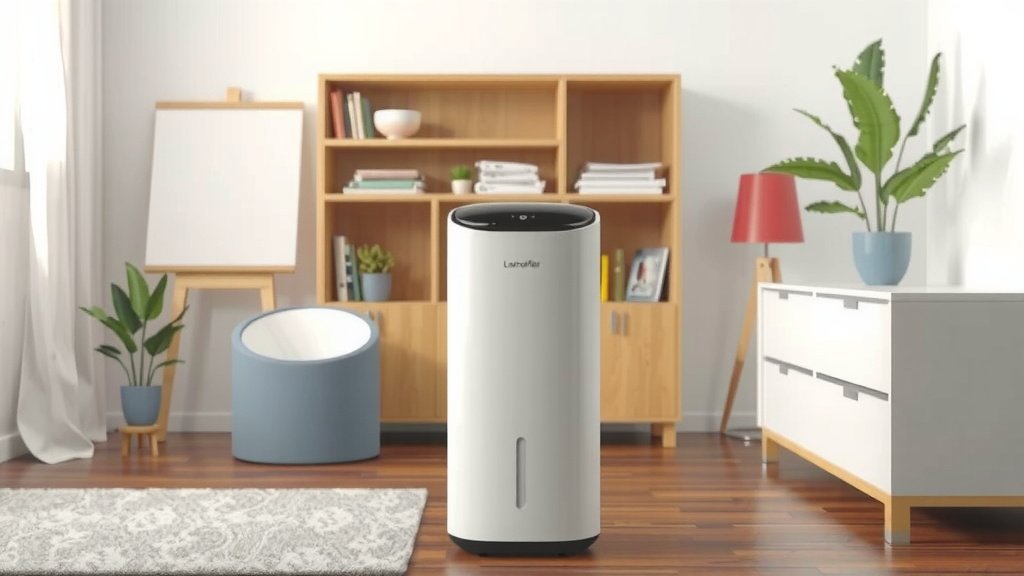
Matching the air purifier’s capacity to your room size is critical. Buying a unit that’s too small is like trying to cool a whole house with a personal fan – it just won’t cut it. We found that most manufacturers will list the recommended room size for their purifiers.
Calculating Your Needs
To get it right, measure the length and width of the room you want to purify. Multiply them to get the square footage. For example, if your living room is 15 feet by 20 feet, that’s 300 square feet. Now, check the purifier’s specifications. Does it say it’s effective for rooms up to 300 square feet?
Remember the ACH rating here. For that 300-square-foot room, you want a purifier that can achieve an ACH of 4 or 5 within that space. If the manufacturer only lists a maximum room size without ACH, use the general guideline: aim for a CADR that’s at least two-thirds of the room’s square footage (AHAM).
Noise Levels and Energy Efficiency: Practical Considerations
An air purifier is going to run, often for long periods. So, you should consider how noisy it is and how much energy it uses.
Decibels (dB) and Sleep Settings
Air purifiers operate at different noise levels, measured in decibels (dB). On their lowest setting, many purifiers run very quietly, often between 20-30 dB. This is comparable to a whisper. On their highest settings, they can sound like a loud fan. If you plan to use the purifier in your bedroom, look for models with a “sleep mode” or very low dB rating on their quietest setting.
Energy Star Certification
For ongoing costs, check for the Energy Star certification. Energy Star certified products are more energy-efficient than standard models. This means they can save you money on your electricity bill over time. We found that while an Energy Star rating isn’t strictly necessary, it’s a nice bonus for both your wallet and the environment.
Quick Checklist for Choosing Your Air Purifier
Here’s a quick recap to help you make your selection:
- Confirm Room Size: Measure your room and ensure the purifier’s coverage matches or exceeds it.
- Check CADR Ratings: Look for high CADR scores for the pollutants you want to remove (smoke, dust, pollen).
- Prioritize True HEPA: If allergens and fine particles are your concern, always choose a unit with a True HEPA filter.
- Consider Carbon: If odors or gases bother you, ensure it has a substantial activated carbon filter.
- Review ACH: Aim for an ACH of 4-5 for effective air changes in your space.
- Listen Up: Check noise levels, especially if it’s for a bedroom or quiet area.
Conclusion
You’ve learned how to choose an air purifier that truly fits your home. Remember to match the purifier’s size to your room dimensions and check its CADR ratings for specific pollutants like smoke and pollen. Prioritize True HEPA filters for allergen removal and consider activated carbon for odors. Watching the ACH rating ensures quick, effective air circulation. By focusing on these key features, you can confidently select a unit that will help you breathe cleaner, fresher air every day. Your next step is to measure your room and compare those measurements to the purifier’s specifications.
Frequently Asked Questions
How do I know which CADR rating is best for my home?
Research suggests you should aim for a CADR rating that is at least two-thirds of your room’s square footage. For example, a 150 sq ft room would benefit from a CADR of at least 100 for dust and pollen. Higher CADR means faster cleaning, which is especially helpful for smoke.
Is a “HEPA-type” filter as good as a “True HEPA” filter?
Not quite. We found that “True HEPA” filters are certified to capture 99.97% of particles down to 0.3 microns. “HEPA-type” or “HEPA-like” filters might capture a good amount, but they don’t meet the strict HEPA standard for particle removal.
What is a good ACH rating for general use?
For most homes, an ACH rating of 4 or 5 is ideal. This means the air purifier can clean all the air in the room four to five times every hour. If you have allergies, a higher ACH might offer additional benefits.
Should I worry about the noise level of an air purifier?
Yes, especially if you plan to use it in a bedroom or a quiet living space. We found that many purifiers have a whisper-quiet setting (around 20-30 dB), often labeled as “sleep mode.” Check the decibel rating for lower settings.
Are air purifiers expensive to run?
The running cost depends on energy efficiency and filter replacement frequency. Look for Energy Star certified models to save on electricity bills. Filter replacements are a recurring cost, so factor those into your budget when making your selection.
![5 Best Hepa Air Purifier for Pets [In 2026]](https://homeunderstandable.com/wp-content/uploads/2025/05/best-hepa-air-purifier-for-pets.jpg)