How to Use Your Air Compressor for Tires at Home
Yes, you can absolutely use an air compressor to inflate your car tires at home. It’s a straightforward process that can save you time and money. Many homeowners find it easier than visiting a gas station. Properly inflated tires improve your car’s fuel efficiency and tire lifespan.
Using an air compressor is a great way to maintain optimal tire pressure. This means fewer trips to the air pump and more confidence on the road. Many people wonder if it’s complicated, but we found it’s quite manageable. Keeping your tires inflated is a key part of car maintenance that even beginners can handle.
- Connect the hose to the compressor.
- Attach the nozzle to your tire valve.
- Inflate to the recommended pressure.
- Check the pressure with a gauge.
- Disconnect and repeat for other tires.
Ready to give your tires the air they deserve? Let’s walk through exactly how to use your air compressor for your tires step by step.
Inflating Your Car Tires Safely with an Air Compressor
Using an air compressor at home for your car tires is a straightforward task. It’s a convenient way to keep your tires properly inflated. This can lead to better gas mileage and a smoother ride. Let’s break down how you can do it with confidence.
Understanding Your Air Compressor and Tire Needs
Know Your Compressor Type
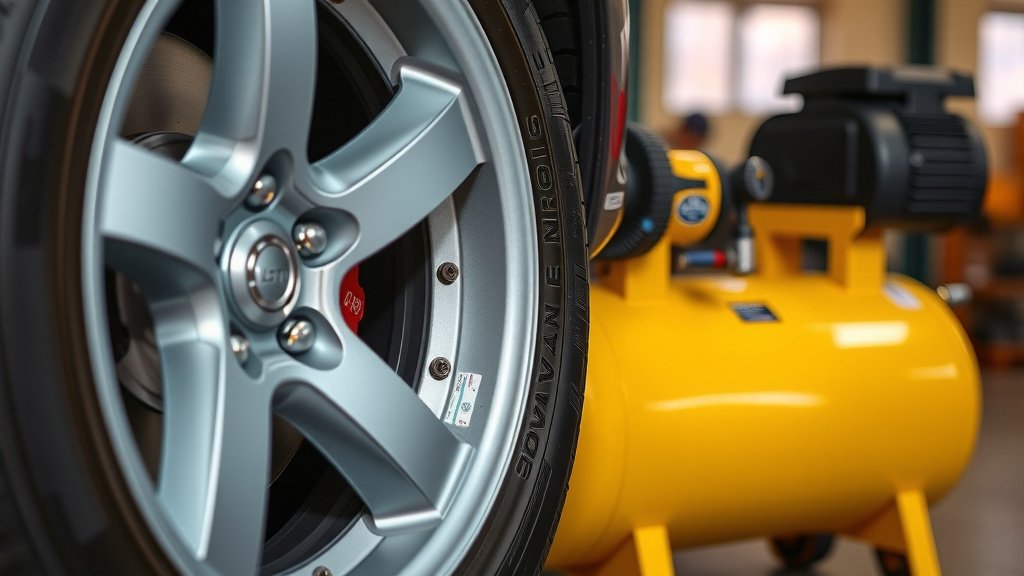
Air compressors come in various types. You might have a small, portable one that plugs into your car’s 12V outlet. Or perhaps you have a larger workshop compressor. The principle is the same, but the setup might differ slightly. Portable compressors are super handy for on-the-go fixes, while larger ones offer more power and speed. We found that most home users gravitate towards convenient portable models for tire inflation.
Finding Your Tire’s Recommended Pressure (PSI)
This is perhaps the most critical step. Over-inflating or under-inflating your tires can be dangerous and costly. You’ll find the correct tire pressure listed on a sticker inside your driver’s side doorjamb. It’s also usually in your car’s owner’s manual. Never use the maximum pressure listed on the tire sidewall. That number is for the tire’s maximum capacity, not your vehicle’s specific needs. Always aim for the manufacturer’s recommendation.
Why is this so important? Well, research shows that tires inflated to the correct pressure provide optimal handling and braking (National Highway Traffic Safety Administration). Incorrect pressure can lead to uneven tire wear, affecting their lifespan and your car’s safety.
Gathering Your Essential Tools
Before you start, make sure you have everything ready. You’ll need:
- Your air compressor.
- The compressor’s hose and nozzle attachment.
- A reliable tire pressure gauge. (Some compressors have built-in gauges, but a separate one is often more accurate.)
- Perhaps a towel or rag for any stray dirt.
Having these items at hand ensures a smooth and efficient process. It avoids frustrating interruptions when you’re in the middle of the job.
Step-by-Step Guide to Inflating Your Tires
Preparing the Tire Valve
Locate the valve stem on your tire. It’s a small, black or metal protrusion. You’ll need to remove the valve cap. Just unscrew it counter-clockwise. Keep the cap somewhere safe, like your pocket, so you don’t lose it. The valve stem has a small pin in the center that releases air when pressed.
Connecting the Air Compressor Hose
Attach the air compressor’s nozzle to the tire’s valve stem. Most nozzles have a lever or a screw-on mechanism.
- Lever Type: Push the nozzle firmly onto the valve stem and flip the lever down to lock it in place.
- Screw-On Type: Screw the nozzle onto the valve stem until it’s snug.
Inflating the Tire
Now it’s time to add air!
- For compressors with a built-in gauge: Watch the gauge as you inflate.
- For compressors without a gauge or if using a separate gauge: Inflate in short bursts.
Checking and Adjusting the Pressure
Use your tire pressure gauge to get an accurate reading. Place the gauge firmly on the valve stem. It will display the current pressure. If you’ve hit the target PSI, you’re good to go! If you’re a bit over, don’t panic. Press the small pin in the center of the valve stem with the back of the gauge or a small tool. This will release a little air. Recheck the pressure and repeat until it’s just right. We found that a digital gauge makes this step particularly easy and accurate.
Disconnecting and Replacing the Cap
Once the tire is at the correct pressure, carefully detach the compressor nozzle. If it has a lever, lift it up. If it’s screw-on, unscrew it. You might hear a tiny puff of air as it disconnects. Immediately screw the valve cap back onto the valve stem. This keeps out dirt and moisture, which can damage the valve.
Repeat for All Tires
Now, just repeat this entire process for the remaining three tires. Don’t forget your spare tire if your vehicle has one and it’s easily accessible! It’s a good habit to check your tire pressure at least once a month and before long road trips. This routine maintenance is surprisingly effective.
Quick Checklist for Tire Inflation Success
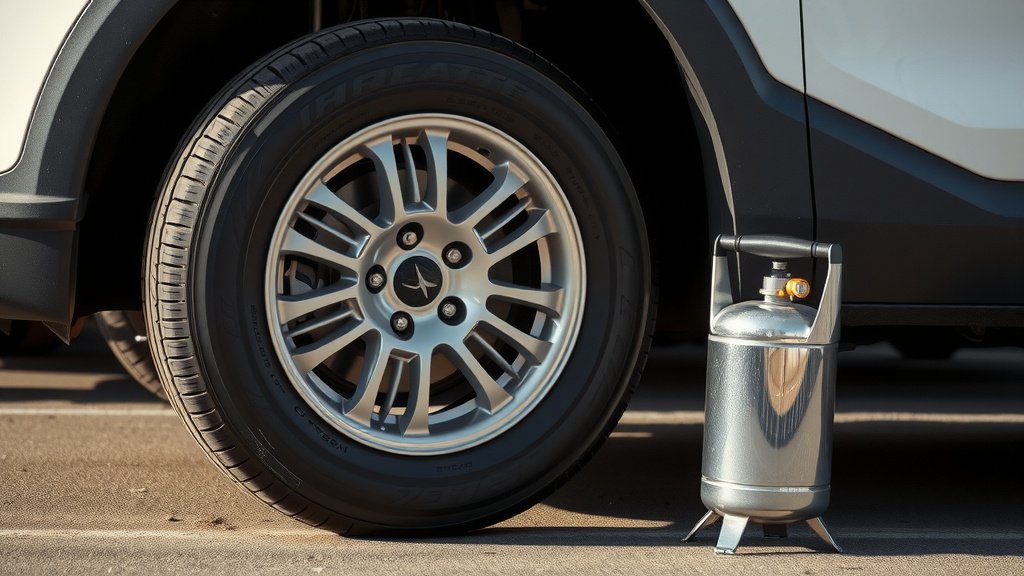
- Find your vehicle’s recommended PSI (doorjamb sticker or manual).
- Remove the valve cap from the tire stem.
- Securely attach the air hose nozzle to the valve stem.
- Inflate in short bursts, checking pressure frequently.
- Use a reliable gauge to confirm correct PSI.
- Replace the valve cap when finished.
Troubleshooting Common Issues
Air Leaking from the Connection
If you hear a constant hissing sound when the nozzle is attached, it means air is escaping. Make sure the nozzle is pushed on firmly and straight. For screw-on types, ensure it’s threaded correctly and tightly. Sometimes, a slightly bent valve stem can cause leaks. If the problem persists, you might need a different nozzle attachment or a new hose.
Compressor Not Pumping Air
For portable compressors, ensure it’s properly plugged into the 12V outlet and that the car’s ignition is on (or in accessory mode). Check if the compressor has an on/off switch that needs to be activated. If it’s an electric compressor, confirm it’s plugged into a working outlet. Some compressors have thermal overload protectors that shut them off if they overheat. Let it cool down for a bit before trying again. We found that checking the power source is usually the first step.
Pressure Gauge Reading Inaccurate
Tire pressure gauges can sometimes be inaccurate, especially older or cheaper models. If you suspect your gauge is off, try testing it on another tire you know is correctly inflated, or test it at a gas station air pump. If it consistently reads differently, it might be time for a new, more reliable gauge. A quick check against a known good source can save a lot of guesswork.
Conclusion
You’ve now got the knowledge to confidently inflate your car tires at home using an air compressor. Remember, finding your car’s recommended PSI is key for safety and performance. Connecting the hose, inflating in short bursts, and checking pressure with a reliable gauge ensures you hit the target every time. You’ve learned how to handle minor issues too, like leaks or gauge inaccuracies. Taking this simple maintenance step will save you time and contribute to better fuel efficiency and tire longevity. So, your next step is simple: check your tire pressure today and experience the convenience!
Frequently Asked Questions
How often should I check my tire pressure?
It’s a good habit to check your tire pressure at least once a month. You should also check it before any long road trips. Consistent checking ensures your tires are always at the optimal pressure for safety and efficiency.
Can I use any air compressor to inflate my tires?
Most common air compressors designed for home use can inflate car tires. Portable 12V compressors are popular for their convenience. Larger workshop compressors can also be used, but you’ll want to ensure you have the right attachments and know how to control the pressure output.
What if my compressor doesn’t have a built-in gauge?
If your air compressor lacks a built-in gauge, you’ll need a separate tire pressure gauge. Inflate your tire in short bursts, and use your gauge frequently to monitor the pressure. This method allows you to control the air added and prevent over-inflation.
Is it okay to inflate tires in different weather conditions?
Yes, you can inflate tires in most weather conditions. However, be aware that tire pressure naturally fluctuates with temperature. It’s best to check and adjust your tire pressure when the tires are at ambient temperature, meaning they haven’t been driven for a few hours.
What happens if I over-inflate my tires?
Over-inflating your tires can lead to a harsher ride and reduced traction. It can also cause the center of your tire tread to wear out faster. If you accidentally over-inflate, simply release a small amount of air by pressing the valve stem pin until you reach the recommended PSI.