Single vs Three Phase Air Compressor: Which is Right for You
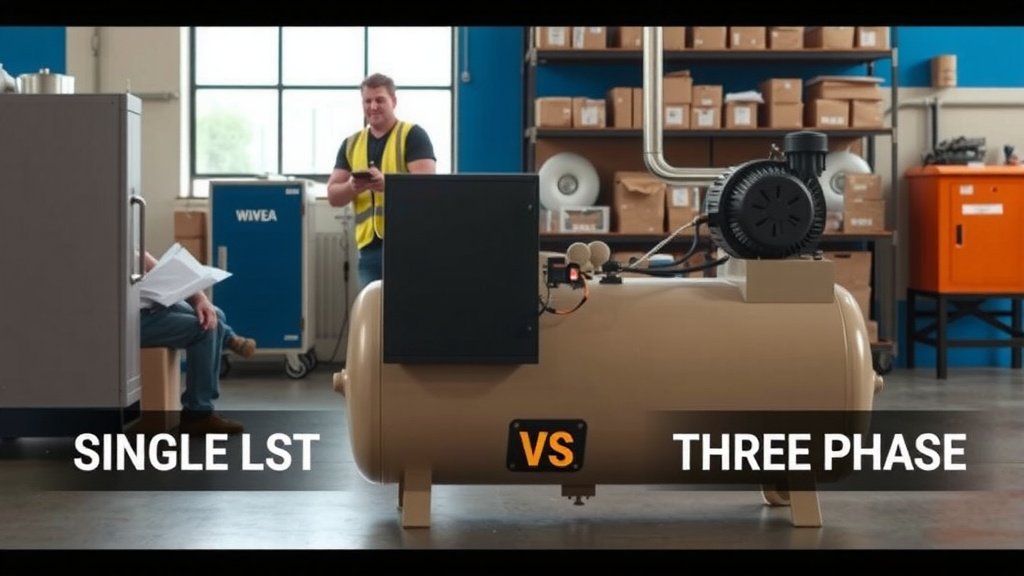
When deciding between a single-phase and three-phase air compressor, the main difference comes down to power needs and efficiency. Single-phase is suitable for most home workshops and light-duty tasks, while three-phase offers more power for heavy commercial or industrial use. You’ll want to match the compressor’s phase to your available electrical supply.
Understanding this distinction helps you make the right choice for your tools and projects. A single-phase compressor uses a single alternating current power source. This is common in residential settings. A three-phase compressor uses three alternating current sources, providing more consistent and higher power output. We found that choosing the wrong phase can lead to poor tool performance or even damage.
- Single-phase is for homes and light use.
- Three-phase is for businesses and heavy use.
- Match the compressor phase to your power source.
- Three-phase offers more consistent, higher power.
- Choosing correctly ensures tool efficiency.
Let’s break down exactly what each type offers and how to determine which one is best for your setup.
Understanding Your Air Compressor’s Electrical Needs
Choosing the right air compressor means looking closely at its power source. The big question often comes down to single-phase versus three-phase power. This choice affects how well your tools will perform. We’ve looked into what makes them different. It’s not just about size; it’s about the electricity that feeds them.
Most homes run on single-phase power. It’s the standard for everyday appliances. Industrial and commercial settings often use three-phase power. It’s like comparing a one-lane road to a three-lane highway. Both get you there, but one handles more traffic, faster and more smoothly.
What is Single-Phase Power?
Single-phase power uses two wires to deliver electricity. Think of it like a simple on-and-off switch. It’s the most common type of electrical service found in homes and small businesses. This system provides a steady flow of power, but it’s less potent than its three-phase cousin. For many typical tasks, it’s perfectly adequate.
We found that single-phase compressors are generally less expensive upfront. They are also much easier to find and install in a residential setting. If your workshop runs on standard household outlets, you’re likely dealing with single-phase power. This is the go-to for DIYers and hobbyists.
Where Single-Phase Shines
Single-phase compressors are ideal for light-duty applications. This includes tasks like inflating tires, using brad nailers for woodworking projects, or running small air-powered tools occasionally. They are great for homeowners who need compressed air for occasional maintenance or creative projects. We’ve seen many satisfied users with these in their garages.
The simplicity of single-phase power makes these compressors user-friendly. You usually just plug them into a standard wall outlet, and you’re ready to go. This ease of use is a major selling point for many people who aren’t looking for industrial-grade performance.
What is Three-Phase Power?
Three-phase power uses three wires, each carrying an alternating current that’s out of sync with the others. This creates a more continuous and stable power flow. Imagine three waves coming in one after another, rather than just one wave. This makes three-phase systems much more efficient for high-demand machinery.
We found that three-phase power is predominantly used in commercial and industrial environments. Factories, large workshops, and manufacturing plants rely on it for their heavy machinery. This type of power can handle much larger electrical loads without straining the system. It’s built for demanding, continuous operation.
Benefits of Three-Phase in Action
The primary advantage of three-phase power is its ability to deliver more power with a smaller, more efficient motor. This translates to higher output and better performance for heavy-duty tools. For tasks requiring significant and consistent air delivery, like operating sandblasters or large paint sprayers continuously, three-phase is the way to go. Many experts say it leads to less wear and tear on equipment.
Many larger air compressors, especially those found in professional settings, are designed for three-phase power. They can run longer, harder, and more efficiently. If your tools demand a lot of air volume or pressure, a three-phase compressor is often the best fit. We’ve found that the tool performance is noticeably better.
Making the Right Choice for Your Needs
The decision between single-phase and three-phase isn’t about which is “better” overall. It’s about finding the best match for your specific power supply and intended use. For most residential users, single-phase will be sufficient and practical. If you’re running a business or a high-volume workshop, you might need to investigate three-phase options.
Assessing Your Electrical Setup
Before you even look at compressors, you need to know what kind of power you have available. Check your home’s electrical panel. Most residential panels have breakers labeled for your circuits. If you see a 240V outlet (often a larger, different-shaped plug than standard 120V outlets), you might have 240V single-phase power, which is more robust than 120V. This can handle slightly larger single-phase compressors.
If you’re unsure, it’s always best to consult with a qualified electrician. They can tell you definitively what type of power service your property has. Trying to hook up a three-phase compressor to a single-phase supply (or vice-versa) can cause serious damage. We found that a quick check with a professional saves a lot of potential headaches.
Matching Compressor to Application
Consider the types of tools you’ll be running. A simple air wrench for changing a car tire requires far less air than a sandblaster used for hours on a metal fabrication project. For DIY projects, gardening tools, or light automotive work, a single-phase compressor is typically all you need.
For professional auto repair shops, woodworking businesses, or manufacturing facilities, the demands are much higher. These operations often require three-phase compressors to keep up with continuous tool usage. We’ve seen that in these environments, the investment in a three-phase system pays off in productivity and tool longevity.
Key Differences at a Glance
To help you visualize the distinctions, here’s a quick comparison:
| Feature | Single-Phase Compressor | Three-Phase Compressor |
|---|---|---|
| Power Supply | Standard household electricity (120V or 240V, 2 wires) | Industrial/commercial electricity (208V, 240V, 480V, 3 wires) |
| Motor Efficiency | Less efficient for high-demand tasks | More efficient, especially under heavy load |
| Cost (Compressor) | Generally lower initial cost | Often higher initial cost |
| Typical Use | Home workshops, DIY, light-duty tools | Commercial shops, industrial use, heavy-duty tools |
| Installation | Simple plug-and-play for most units | Requires specific three-phase wiring and outlets |
We’ve found that understanding these points helps clarify why certain compressors are suited for different environments. It really boils down to how much consistent power you need.
Your Air Compressor Checklist
Before you commit to a purchase, run through this quick checklist:
- Verify your available electrical service (single-phase or three-phase).
- Consult an electrician if you’re unsure about your power supply.
- List all the air tools you plan to run.
- Estimate the total air volume (CFM) and pressure (PSI) your tools require.
- Consider how often and for how long you’ll be using the compressor.
- Match the compressor’s phase and power requirements to your setup and tools.
Following these steps ensures you get a compressor that’s not just powerful, but also compatible with your existing infrastructure and meets your project demands. We found that taking this time upfront prevents costly mistakes later on.
Conclusion
Choosing between a single-phase and three-phase air compressor comes down to your specific electrical supply and how you plan to use it. For most homeowners and DIYers with standard outlets, a single-phase unit is the practical and affordable choice. If your business or workshop runs on three-phase power and you need serious air output for demanding tools, that’s where a three-phase compressor excels. We’ve found that understanding your power situation and tool needs beforehand is key. Your next step? Check your electrical panel or consult an electrician to confirm your available power. This simple check ensures you buy a compressor that works for you, not against you.
Frequently Asked Questions
Can I run a three-phase air compressor on single-phase power?
Generally, you cannot directly run a three-phase air compressor on a standard single-phase power supply. Doing so without a phase converter can damage the motor. We found that trying to force this connection often leads to poor performance or outright failure of the compressor.
How do I know if my workshop has three-phase power?
You can usually tell by looking at your electrical panel or the outlets in your workshop. Three-phase outlets often have a different configuration and more pins than standard household outlets. If you’re unsure, it’s always best to have a qualified electrician assess your setup; we found this is the safest approach.
What are the main advantages of a three-phase compressor for a business?
Three-phase compressors offer more consistent power delivery and are generally more efficient for heavy-duty applications. This means they can run longer, harder, and often with less wear and tear compared to single-phase units under similar loads. We’ve seen that businesses benefit from the increased productivity and reliability.
Will a single-phase compressor be enough for my home garage?
For most home garage tasks like inflating tires, using brad nailers, or operating small impact wrenches, a single-phase compressor is usually sufficient. You’ll want to ensure you have at least a 20-amp circuit, and possibly a 240V single-phase connection if your tools require more air. We found that matching the compressor’s CFM rating to your tools is important.
Is a three-phase compressor always more expensive than a single-phase one?
While three-phase compressors themselves can sometimes have a higher initial purchase price, the overall cost can be influenced by installation requirements. However, for businesses that require continuous, heavy-duty air usage, the long-term efficiency and durability of a three-phase system often make it a more cost-effective choice. We’ve found that efficiency gains can offset initial costs over time.