

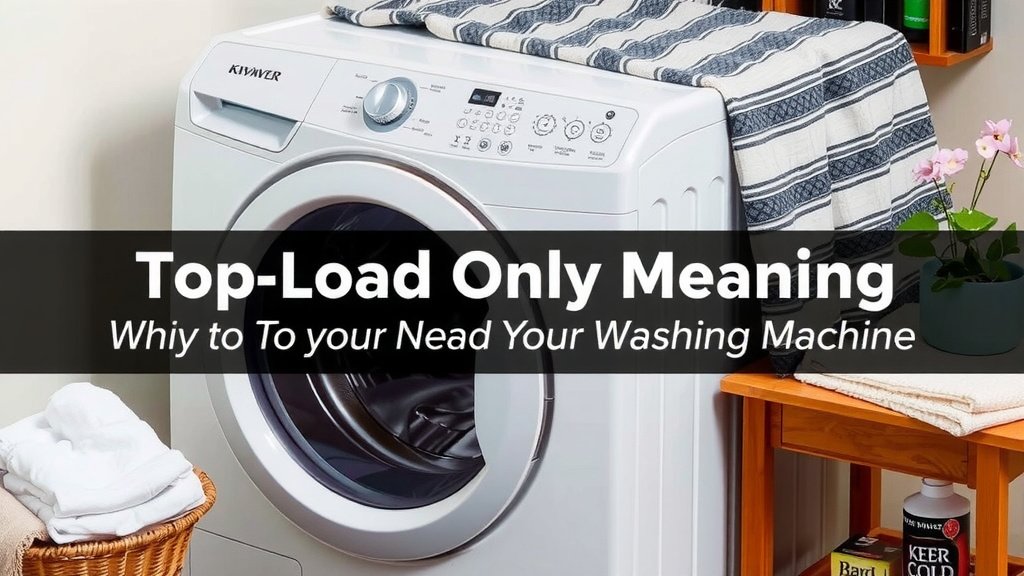
Top Load Only Meaning Explained: What You Need to Know
If your washing machine’s manual or labeling says “top load only,” it simply means the machine is designed to be loaded with laundry from the top opening. This type of washer has a vertical drum and is the traditional style of washing machine you might be familiar with. It’s important to follow this designation to ensure your machine works correctly and safely.
This contrasts with front-loading machines, which you load from a door on the front. Top-load machines often offer a quicker wash cycle and can be more affordable upfront. We found that many users prefer top-loaders for their ease of use and less bending required to load clothes.
- Top load only means you add clothes through an opening at the top of the machine.
- These are the classic style of washing machines with a vertical drum.
- They are often simpler to operate than front-loaders.
- Loading clothes is generally easier and requires less bending.
Let’s break down what that “top load only” label really means for your laundry routine.
Here is the main body content for your blog post:Understanding Your Top-Load Washing Machine
So, your washing machine has a “top load only” label. What does that actually mean for your chores? Simply put, it tells you that this particular washing machine is designed to be loaded with clothes and detergent from an opening at the very top. You won’t find a round door on the front of this appliance. Instead, you’ll lift a lid on top to access the drum where your laundry goes. It’s the classic washing machine design many of us grew up with.
This designation is key for proper operation. Using your machine as intended ensures it cleans your clothes effectively and prevents potential damage. Think of it like using the right key for the right lock – it just works better when you follow the design. This guide will help you understand everything about your top-load washing machine.
The Mechanics of a Top-Load Washer
The core difference between top-loaders and their front-loading counterparts lies in their internal mechanisms and how they agitate clothes. This affects everything from wash cycles to water usage.
Agitator vs. Impeller: Two Top-Load Styles
Within the “top load only” category, there are typically two main types of washing mechanisms you’ll encounter. Both load from the top, but they clean your clothes in slightly different ways.
The Agitator Style
This is the older, more traditional style. You’ll recognize it by a tall, finned pole right in the center of the drum. This agitator twists and turns, rubbing against your clothes to move them through the water and detergent. It’s very effective at removing tough stains because of this direct action. Many users find it to be a robust cleaning method.
However, agitator models can sometimes be harder on fabrics. The vigorous movement can lead to more wear and tear on delicate items over time. They also tend to use more water than impeller models because the water level needs to cover the agitator. We found research suggesting this style is great for heavily soiled items but may require more care for your favorite sweaters.
The Impeller Style
These are often referred to as “high-efficiency” or HE top-loaders. Instead of a central pole, they have a low-profile cone or disc at the bottom of the drum called an impeller. This piece spins and creates currents that move your clothes around in the water. It’s a gentler way to clean.
Because they use less water, impeller models are more energy-efficient and better for the environment. They also typically offer larger drum capacities, meaning you can wash more clothes at once. We found that many consumers appreciate the larger load sizes and reduced water usage. However, some users mention that the wash cycles can sometimes be a bit longer compared to older agitator models.
Loading and Unloading: The Top-Load Advantage
One of the most appealing features for many is the ease of loading and unloading. With a top-loading machine, you don’t need to bend over deeply. You simply drop your clothes in from above.
This makes it a much more accessible option for people with back or knee issues. We’ve heard from many users who switched to a top-loader specifically because it eased the physical strain of doing laundry. It’s a small difference that can make a big impact on your daily routine.
Benefits of Choosing a Top-Load Washer
Beyond the straightforward operation, top-loading machines come with several advantages that make them a popular choice for households across the country.
Ease of Use and Accessibility
As we’ve touched upon, the primary benefit is the simple loading process. No bending, no stooping. Just open the lid and toss in your laundry. This is especially true for models without an agitator, which often have very deep tubs.
Faster Wash Cycles
Generally speaking, top-loading washers, particularly those with agitators, tend to have shorter wash times than front-loaders. A typical wash cycle on a top-loader might last around 30-40 minutes. Front-loaders can sometimes take an hour or more for a full cycle.
This means you can get your laundry done more quickly, which is fantastic for busy families or anyone who dislikes waiting for the wash to finish. If speed is a priority for your laundry day, a top-loader might be your best bet.
Cost-Effectiveness
When comparing new washing machines, top-loaders often come with a lower upfront cost. You can find reliable top-loading models at a more budget-friendly price point than many comparable front-loading machines. This makes them an attractive option for those looking to save money without compromising on essential cleaning functions.
While some high-efficiency top-loaders might have a slightly higher price tag, they generally remain more affordable overall. This initial saving can be a significant factor for many households.
Things to Consider with a Top-Load Washer
While top-loaders offer many great advantages, there are a few points to keep in mind to ensure you get the most out of your machine.
Water Usage Comparison
Older agitator models typically use more water than front-loading machines. This is because the water needs to fill higher to adequately cover the clothes and the agitator. High-efficiency (impeller) top-loaders use much less water, often comparable to front-loaders, due to their design that doesn’t require the drum to be fully submerged (National Resources Defense Council).
If water conservation is a major concern for you, look for an HE top-load model. These use advanced technology to clean clothes effectively with less water, which is better for your utility bills and the environment.
Fabric Care and Wear
The vigorous action of agitator models, while great for tough stains, can be a bit rougher on fabrics. This can lead to increased pilling or stretching of delicate items over time. Many experts suggest using mesh laundry bags for your delicates when washing them in an agitator machine.
Impeller models are generally gentler on clothes, as the cleaning action relies more on tumbling and water currents. We found that consumers often report less wear and tear on their garments with impeller-style top-loaders.
Balancing Loads
Washing machines need to have their loads balanced to spin properly without excessive vibration. Top-loaders can sometimes become unbalanced if heavy items like towels or jeans are loaded unevenly. You might notice your machine vibrating or even walking across the floor.
Many modern top-load washers have built-in sensors to detect an unbalanced load and will stop or pause the cycle to allow you to redistribute the clothes. It’s good practice to distribute items evenly as you load the machine.
Here’s a quick checklist for your top-load washer:
- Load clothes through the top opening.
- Distribute laundry evenly for better balance.
- Check if your model is agitator or impeller.
- Consider using mesh bags for delicates.
- Follow manufacturer’s instructions for detergent use.
- Ensure the lid is closed before starting a cycle.
Conclusion
You’ve now got a clear picture of what “top load only” means for your washing machine. It means you’ll be loading your clothes from the top, enjoying a simpler process that often requires less bending. Whether you have a traditional agitator model for tough stains or a high-efficiency impeller for gentler, water-saving washes, your top-loader is designed for straightforward operation. To make the most of your machine, remember to load evenly for balance and always follow its specific instructions for the best results.
Ready to tackle your laundry? Next time you load your washer, you’ll do so with confidence, knowing exactly how your top-load machine works best for you.
Frequently Asked Questions
Can I lay my top-load washer on its side for moving?
No, you should avoid laying a top-load washer on its side. These machines are designed to stand upright. Laying it on its side could damage internal components or cause water to leak into areas it shouldn’t. Always transport your top-loader in an upright position to keep it safe.
Why is my top-load washer making loud banging noises?
Loud banging noises usually mean your load is unbalanced. Heavy items like towels or blankets can shift to one side during the spin cycle. Try pausing the machine and redistributing the clothes evenly. Some newer models have sensors to help with this, but manual adjustment is often needed.
What’s the difference between an agitator and an impeller top-loader?
An agitator is a tall pole in the center that twists and turns to move clothes, offering robust cleaning but can be rougher on fabrics. An impeller is a low-profile disc that creates water currents to gently move clothes. Impellers are generally more water-efficient and gentler on laundry.
Do top-load washers use more water than front-loaders?
Older agitator top-loaders typically use more water than front-loaders because the water level needs to be higher. However, high-efficiency (HE) impeller top-loaders use much less water, often comparable to front-loaders. Look for the HE label if water conservation is important to you.
How often should I clean my top-load washing machine?
It’s a good idea to clean your top-load washer about once a month. You can use a washing machine cleaner or a mixture of vinegar and baking soda. Running an empty hot water cycle with these cleaners helps remove detergent buildup, mold, and odors. This keeps your machine running efficiently and your clothes smelling fresh.
![7 Best And Cheapest Washing Machine [In 2026]](https://homeunderstandable.com/wp-content/uploads/2026/09/7-best-and-cheapest-washing-machine-in-2026-featured-768x432.jpg)
![7 Best Mini Washer And Dryer [In 2026]](https://homeunderstandable.com/wp-content/uploads/2026/08/7-best-mini-washer-and-dryer-in-2026-featured-768x432.jpg)