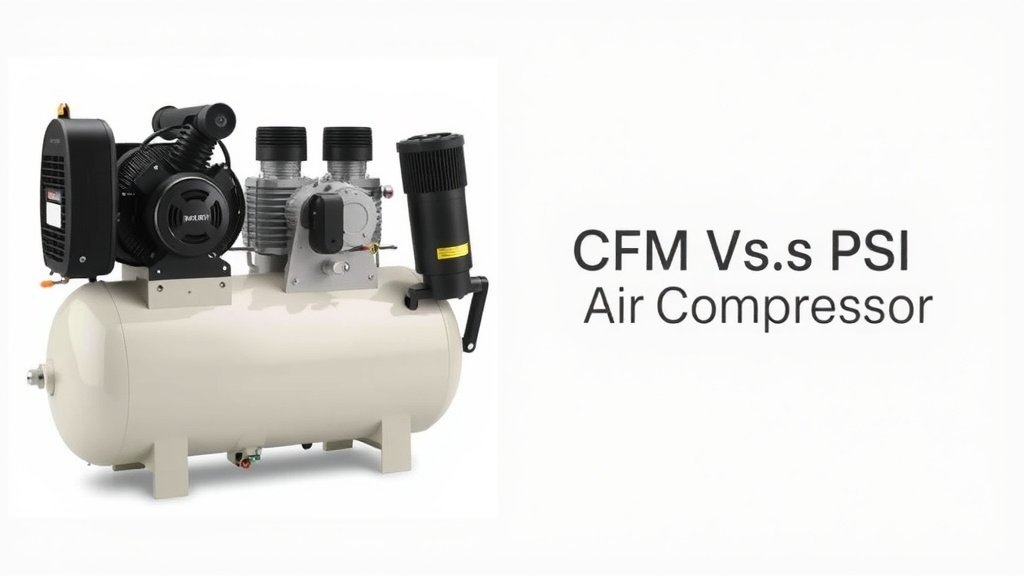
CFM vs PSI Air Compressor: Understanding the Difference
When picking an air compressor, understand that CFM measures air volume and PSI measures air pressure. You need the right CFM for your tools, while PSI is more about the tool’s required operating pressure. Think of CFM as the amount of air delivered, and PSI as the force of that air. Getting both right is key for your air-powered tools to work their best.
Many DIYers and pros alike often mix up these two terms. It’s easy to do! CFM, or Cubic Feet per Minute, tells you how much air the compressor can supply. PSI, or Pounds per Square Inch, indicates how strong the air is when it comes out. You’ll often see compressors rated for both, but knowing which one matters most for your specific job is essential for efficient work.
- CFM = air volume (how much air)
- PSI = air pressure (how strong the air is)
- Tools need specific CFM to run properly.
- Check your tool’s requirements first.
- A higher CFM compressor can power more tools.
Let’s dive into what CFM and PSI actually mean for your projects and how to pick the right compressor to avoid frustration.
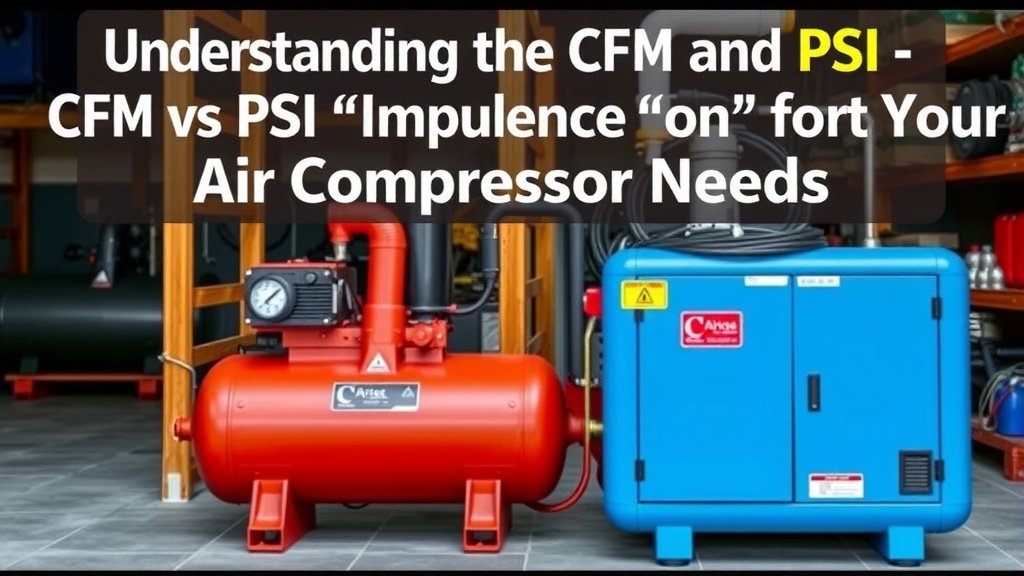
Understanding CFM and PSI for Your Air Compressor Needs
When you’re looking at air compressors, you’ll always see two main numbers: CFM and PSI. It’s easy to get them mixed up, but they tell you very different things about how an air compressor works. Knowing what each one means is really important. It helps you pick the right tool for the job. You don’t want to buy a compressor that’s too weak or too powerful for your needs.
What Exactly is CFM?
CFM stands for Cubic Feet per Minute. Think of it like the size of the pipe that delivers air. A higher CFM means more air is coming out of the compressor. It’s the volume of air the compressor can supply. This is super important for tools that need a steady flow of air to work correctly. Many experts say CFM is the more critical measurement for most air tools (Tool User’s Guide).
Why CFM Matters for Your Tools
Different air tools need different amounts of air. A small nail gun might only need a little CFM. But a larger tool, like an impact wrench or a sander, needs a lot more. If your compressor doesn’t produce enough CFM, your tool will struggle. It might not run at all, or it will work slowly and ineffectively. You might even damage the tool. We found that matching tool demand to compressor supply is key for performance.
CFM and Multiple Tools
If you plan to use more than one air tool at the same time, you need to add up their CFM requirements. Your compressor must meet this combined demand. A compressor rated for 5 CFM might be fine for a single framing nailer. But it won’t handle two nail guns and a stapler working together. Many DIYers learn this the hard way. A good rule of thumb is to have a compressor with at least 1.5 times the total CFM needed for your most demanding tool combination.
What is PSI?
PSI stands for Pounds per Square Inch. This measures the force or strength of the air coming out of the compressor. It’s how hard the air is pushing. Most air tools have a specific PSI range they need to operate effectively. You’ll usually find this information on the tool itself or in its manual.
PSI and Tool Performance
If the air pressure is too low, your tool won’t have enough power. An impact wrench might not be able to loosen a stubborn bolt. A spray gun might not atomize paint correctly. On the other hand, if the PSI is too high, you can damage the tool. Many tools have a regulator that allows you to set the PSI to the correct level. Experts recommend always using a regulator to protect your tools (Industrial Safety Manual).
PSI vs. CFM: A Quick Comparison
Let’s make it simple. Imagine a water hose. CFM is like the width of the hose – how much water can flow. PSI is like how hard you turn on the faucet – how much pressure is behind the water. You might have a very wide hose (high CFM), but if the faucet is barely on (low PSI), you won’t get much power. Or you could have a narrow hose (low CFM) with the faucet on full blast (high PSI), and it would just spray weakly.
How to Choose the Right Compressor: CFM vs. PSI
So, which number is more important, CFM or PSI? The answer really depends on your tools and your projects. Most of the time, CFM is your primary concern when selecting an air compressor.
Prioritizing CFM
Your air tools are designed to use a certain amount of air. If the compressor can’t supply that amount (CFM), the tool simply won’t work right, no matter how high the PSI is. We found that checking tool requirements first is the most effective strategy. Always look up the CFM needs of the tools you use most often. Then, find a compressor that meets or exceeds those needs.
Understanding PSI Requirements
While CFM is usually the deciding factor for compressor size, PSI is still critical for tool function. You need to ensure your compressor can deliver the required PSI for your tools. Most compressors will have a maximum PSI rating. You’ll then use a regulator to set the output PSI for your specific tool. It’s a balancing act. You need enough CFM to keep the tool running and the correct PSI for it to perform.
A Simple Checklist for Selecting Your Compressor:
- Check your tools: Find out the CFM and PSI requirements for your most-used air tools.
- Prioritize CFM: Ensure the compressor’s CFM output meets or exceeds your tools’ needs.
- Consider future needs: Think about any new tools you might buy.
- PSI matters for operation: Make sure the compressor can maintain the required PSI for your tools.
- Don’t forget tank size: A larger tank stores more air, which helps with longer jobs.
- Budget and portability: Consider how much you can spend and if you need to move it around.
Common Scenarios and Compressor Needs
Let’s look at some examples. If you’re mostly using a small brad nailer for trim work, you won’t need a huge compressor. A smaller, portable unit with around 2-4 CFM at 90 PSI is often sufficient. However, if you’re using an impact wrench for automotive work, or a large sander for woodworking, you’ll need a compressor with much higher CFM. We found that a 5-10+ CFM rating at 90 PSI is common for these heavier-duty applications. A smaller, portable unit with around 2-4 CFM at 90 PSI is often sufficient. Our list of best gallon air compressors offers more options.
| Tool Type | Typical CFM (at 90 PSI) | Typical PSI Range | Notes |
|---|---|---|---|
| Brad Nailer / Stapler | 1-2 CFM | 70-100 PSI | Low demand, small portable compressors work well. |
| Finish Nailer / Framing Nailer | 2-4 CFM | 80-120 PSI | Moderate demand, requires a slightly larger compressor. |
| Impact Wrench / Ratchet | 5-8 CFM | 90-130 PSI | High demand, needs a substantial compressor. |
| Orbital Sander / Grinder | 8-12+ CFM | 90-140 PSI | Very high demand, often requires a larger, stationary unit. |
This table is a general guide. Always check your specific tool’s manual for exact specifications. Many experts suggest adding a 20-30% buffer to your CFM calculation to ensure consistent performance (Tool Manufacturers Association).
Conclusion
You’ve learned that CFM is all about the volume of air your compressor delivers, while PSI is about its force. For your air tools to perform at their best, matching their CFM requirements is usually your top priority. PSI is important for correct operation, but you can often adjust it with a regulator. Don’t just guess – always check your tool’s manual first. We found that this simple step prevents a lot of frustration and ensures your tools work efficiently. Now you’re ready to pick the right compressor for your workshop!
Frequently Asked Questions
What happens if my compressor’s CFM is too low for my tool?
If your compressor’s CFM output is lower than what your tool needs, your tool will likely struggle to operate. You might notice it running slower, pulsing, or not working effectively at all. In some cases, consistent under-delivery of air can even lead to premature wear on the tool.
Can I use a compressor with a higher PSI than my tool requires?
Yes, you can, but you must use a regulator. Most compressors will produce a higher maximum PSI than your tools need. A regulator allows you to dial down the air pressure to the specific level your tool requires. Always ensure your regulator is functioning correctly to prevent damage.
Is it better to have more CFM or more PSI for general DIY use?
For most general DIY tasks, CFM is generally more important than PSI. Tools need a consistent volume of air to run properly. While they need a certain PSI, if the volume of air (CFM) isn’t there, the tool won’t perform regardless of the pressure. Always check your tools’ CFM needs first.
How much extra CFM should I look for beyond my tool’s requirement?
It’s wise to have a compressor that offers at least 20-30% more CFM than your most demanding tool or combination of tools requires. This buffer ensures that the compressor doesn’t have to run at its absolute limit constantly, leading to more consistent air delivery and a longer lifespan for the compressor.
Does tank size affect CFM and PSI?
The tank size on an air compressor doesn’t directly affect its CFM output or maximum PSI. Instead, a larger tank acts as an air reservoir. This means it can store more compressed air, allowing you to use air tools for longer periods before the compressor has to cycle on and build pressure again, which is helpful for tasks requiring continuous air flow. The tank size on an air compressor doesn’t directly affect its CFM output or maximum PSI. Our guide to 1 vs 2 gallon compressors explains tank roles.