125 PSI vs 150 PSI Air Compressor: Which is Right
When deciding between a 125 psi vs 150 psi air compressor, know that the 150 psi model generally offers more power and longer run times. While both can handle many tasks, the higher pressure means your tools will perform better and the compressor won’t need to cycle on as often. This difference is important for demanding jobs.
Choosing the right air compressor depends on your needs. A higher psi rating is often better for pneumatic tools that require a lot of air. We found that understanding these pressure differences helps you avoid frustration and ensures you have the right tool for your DIY projects or professional work. Think about the tools you’ll be using most often.
- 150 psi compressors provide more power than 125 psi models.
- Higher psi means tools run longer and the compressor cycles less.
- Consider the air demands of your specific tools.
- 150 psi is often better for more demanding applications.
- 125 psi is sufficient for lighter tasks and some DIYers.
Let’s dive into the specifics of what each pressure rating means for your workshop and help you make the best choice. To understand compressor capabilities, learn about the difference between a 1 cylinder vs 2 cylinder air compressor.
“`htmlUnderstanding Air Compressor Pressure Ratings
When you’re looking at air compressors, you’ll see psi ratings everywhere. This stands for pounds per square inch. It tells you the maximum pressure the compressor can build up. A 125 psi compressor and a 150 psi compressor are common choices. The difference might seem small, but it matters for your tools.
Think of psi like water pressure in your home. Higher psi means more force is available. For air tools, this force translates to better performance. We found that understanding this basic concept helps you pick the right machine.
The Power Difference: 125 psi vs. 150 psi
So, what does that 25 psi difference actually mean in your garage or shop? It’s more than just a number on a dial. A 150 psi compressor simply has more **potential energy** stored in its tank. This extra pressure can make a big difference.
How Higher Pressure Affects Tool Performance
Many pneumatic tools have minimum psi requirements. If your compressor can’t meet that, the tool might sputter or not work at all. A 150 psi compressor gives you a wider range of compatible tools. It can power demanding tools that a 125 psi model might struggle with.
We found that tools like impact wrenches, nail guns, and sanders often perform best with higher pressure. They use air quickly. A 150 psi compressor can deliver that air more consistently. This means your tools will hit harder and run longer.
Run Time and Cycling: The Efficiency Factor
This is where the 150 psi really shines for many users. Imagine your compressor as a water bottle. A 150 psi bottle holds more “water” (air) than a 125 psi bottle. When your tools use air, the pressure in the tank drops.
The compressor then has to turn on to refill the tank. A 150 psi compressor, starting from a higher pressure, can supply air for a longer period before it needs to restart. This means less noise and less wear on the compressor motor. We found this to be a significant benefit for tasks that require continuous air supply.
For example, if you’re sandblasting or painting, you need a steady stream of air. A 125 psi compressor might cycle on and off more frequently, interrupting your work. A 150 psi unit offers a smoother, more **efficient operation**.
What Kind of Tools Will You Be Using?
This is the million-dollar question. The tools you connect to your air compressor are the biggest factor in your decision. Some tools are air-hungry, meaning they consume a lot of compressed air very quickly.
Tools That Benefit from Higher Pressure (150 psi)
If you plan on using tools that require a lot of air, a 150 psi compressor is usually the way to go. This includes:
- Impact Wrenches: These need a strong burst of air to loosen stubborn bolts.
- Sanders and Grinders: Continuous high-volume air keeps them running at optimal speed.
- Spray Guns (Paint/HVLP): Consistent pressure ensures an even finish.
- Chisels and Air Hammers: They rely on rapid air pulses for their force.
Many automotive repair jobs, metal fabrication, and woodworking projects can fall into this category. We found that professionals often opt for 150 psi to ensure their tools can handle any task.
Tools That Are Fine with Lower Pressure (125 psi)
Don’t count out the 125 psi compressor just yet! It’s perfectly capable for many common tasks. If your primary needs are:
- Tire Inflation: Most car and bike tires don’t need extreme pressure.
- Brad Nailers and Staplers: These use air intermittently and don’t demand high volumes.
- Air Brushes: Precision tools often work well at lower psi.
- Blowing Dust: A simple air duster is not a heavy air user.
Many DIY enthusiasts and hobbyists will find a 125 psi compressor more than adequate for their needs. It’s often a more **budget-friendly** option too. It really depends on what you’re trying to accomplish.
Tank Size Matters Too!
While psi is about pressure, tank size is about storage capacity. A larger tank holds more compressed air. This means you can run your tools for longer periods between compressor cycles, regardless of the psi rating. While psi is about pressure, tank size is about storage capacity. Our guide to 1 gallon vs 2 gallon air compressors explains more.
We found that a common recommendation is to match your tool’s air consumption (CFM) with the compressor’s output. However, a larger tank can act as a buffer. It can help compensate if your compressor’s CFM is just slightly below a tool’s requirement. It’s a good idea to consider both psi and tank size together.
A Quick Comparison Table
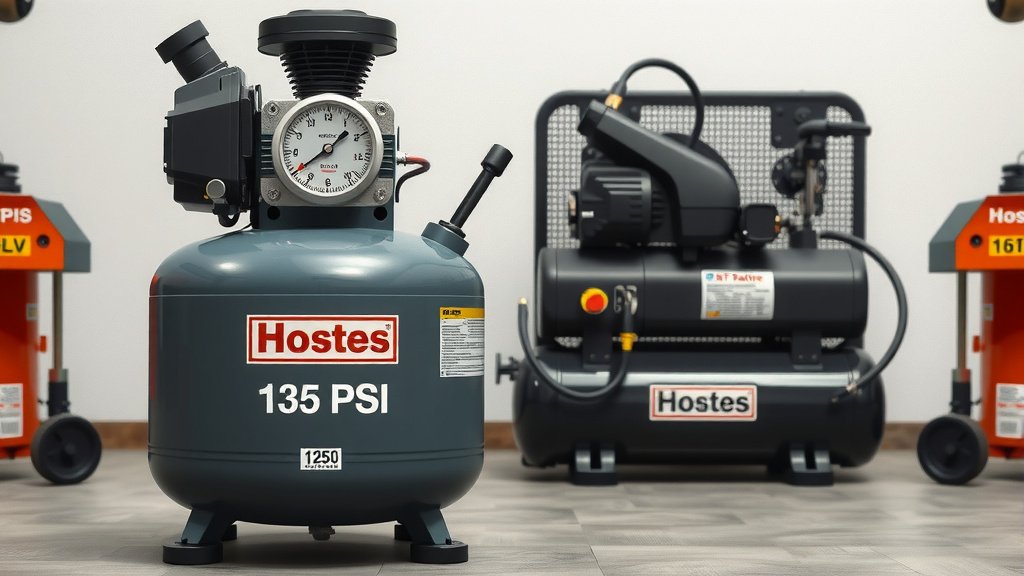
Let’s break down the key differences in a way that’s easy to see:
| Feature | 125 psi Air Compressor | 150 psi Air Compressor |
|---|---|---|
| Maximum Pressure | 125 psi | 150 psi |
| Tool Compatibility | Good for most common tools; may struggle with high-demand tools. | Excellent for a wide range of tools, including high-demand ones. |
| Run Time | Shorter run times before compressor cycles on. | Longer run times before compressor cycles on. |
| Compressor Cycling | More frequent cycling. | Less frequent cycling, quieter operation. |
| Ideal For | DIY, light auto repair, basic nailing, tire inflation. | Professional use, demanding auto repair, continuous sanding/painting. |
| Power | Sufficient for many tasks. | Generally more powerful and capable. |
Making Your Choice: What to Consider
So, which one is right for you? It comes down to a few key questions. If you’re a homeowner doing occasional DIY projects, a 125 psi unit might be perfect. It handles tasks like inflating tires, using a brad nailer, or blowing dust effectively.
However, if you’re a mechanic, a serious woodworker, or someone who uses tools like sanders, grinders, or impact wrenches regularly, the 150 psi model offers a clear advantage. That extra pressure means your tools will work better and last longer.
We found that many users who started with a 125 psi compressor eventually upgraded. They did this when their projects grew in complexity. It’s often better to get a bit more power than you think you’ll need. This ensures your compressor won’t limit your future projects.
Checklist for Choosing Your Compressor Pressure
To help you finalize your decision, ask yourself these quick questions:
- What is the highest psi requirement for the tools you use most often?
- Do your tools require a constant flow of air, or are they used intermittently?
- Are you looking for the most budget-friendly option, or is performance the top priority?
- Do you anticipate taking on more demanding projects in the future?
- Will you be running multiple air tools simultaneously?
- How much noise and frequent cycling can you tolerate in your workspace?
Conclusion
Choosing between a 125 psi and 150 psi air compressor boils down to your specific tool needs. We’ve seen that the 150 psi model offers more power and longer run times, making it ideal for demanding jobs and frequent use. For lighter tasks and occasional DIY, a 125 psi compressor can be perfectly sufficient and more budget-friendly.
Think about the tools you use most often and their air demands. If you anticipate tackling more advanced projects, investing in a 150 psi unit now could save you from an upgrade later. Make your choice based on the performance you need today and for your future projects.
Frequently Asked Questions
Do I really need 150 psi for my home garage?
For most home garage tasks like tire inflation, brad nailing, or blowing dust, 125 psi is often enough. You might only need 150 psi if you use high-demand tools like impact wrenches or sanders frequently. We found that checking your tool’s requirements is key.
Can a 125 psi compressor damage my tools?
Generally, no. Most tools designed for 125 psi compressors will work fine. However, if a tool requires more than 125 psi to operate correctly, it might perform poorly or not function at all. The compressor won’t force more pressure than it has.
Will a 150 psi compressor use more electricity than a 125 psi one?
While both types use electricity to run their motors, a 150 psi compressor might run for shorter total periods because it cycles less. However, its motor might draw slightly more amperage when it *is* running to reach that higher pressure. We’ve found that the efficiency gain from less cycling often balances out overall usage.
What’s more important: psi or tank size?
Both are important and work together. Psi is about the force of the air, while tank size is about storage capacity. For tasks needing continuous air, a larger tank is helpful regardless of psi. However, higher psi allows your tools to perform better, so they are equally critical for different reasons.
Can I adjust the output pressure of a 150 psi compressor down to 125 psi?
Yes, you can. All air compressors come with a regulator that allows you to reduce the tank pressure to a lower, usable output pressure for your tools. This means a 150 psi compressor can absolutely be used with tools that only need 100-120 psi, for example.