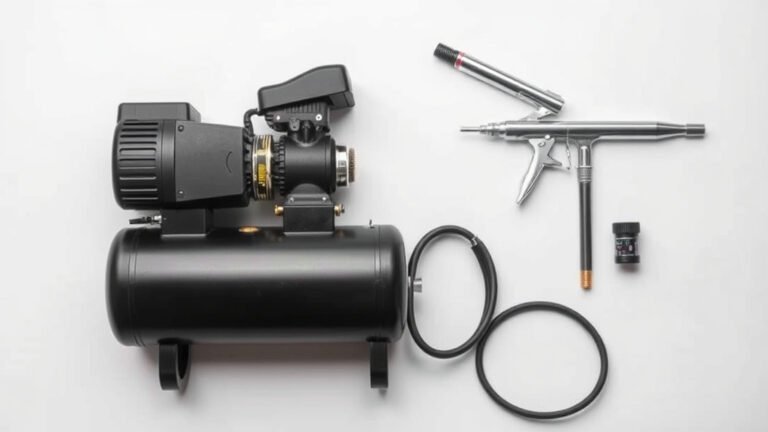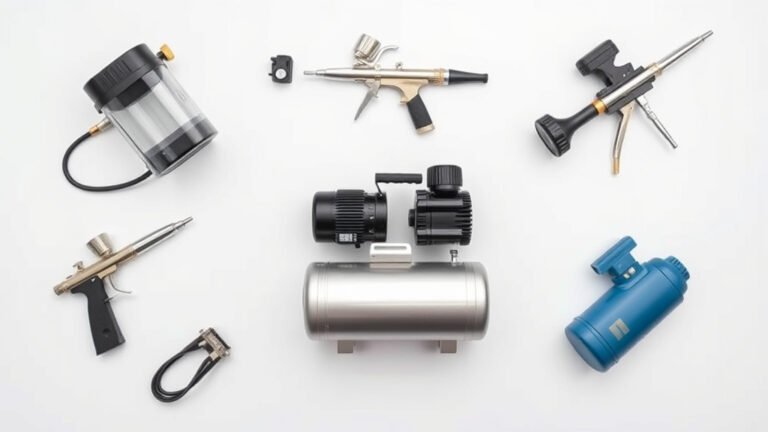
CFM vs PSI: Understanding Air Compressor Specs
Choosing the right air compressor means understanding both CFM and PSI. CFM (Cubic Feet per Minute) measures the volume of air, while PSI (Pounds per Square Inch) measures air pressure. You need the right balance for your tools, so knowing how they relate is key to a successful project.
Think of CFM as the amount of air your compressor can deliver. PSI is how hard that air is pushed. Many tools have specific CFM requirements for proper operation. A compressor with high PSI but low CFM might not run your tools effectively. It’s a common pitfall to overlook.
- CFM is air volume, PSI is air pressure.
- Tools need enough CFM to run correctly.
- Match CFM and PSI to your specific tools.
- A chart helps compare different compressor specs.
Below, we break down exactly what you need to know about air compressor CFM vs. PSI so you can pick the perfect compressor for your needs.
Understanding Air Compressor CFM and PSI for Your Tools
You’re looking to buy an air compressor, and you’ve seen numbers like CFM and PSI everywhere. It can feel a bit overwhelming at first. We’re here to help you sort it all out. Think of CFM and PSI as the two main ingredients for making your air tools happy.
What Exactly is CFM? Your Tool’s Air Appetite
CFM stands for Cubic Feet per Minute. This is the most important number when you’re picking a compressor for your tools. It tells you how much air the compressor can supply. Each air tool has a specific CFM requirement to run correctly. If your compressor doesn’t provide enough CFM, your tool will sputter or not work at all.
Why CFM is King for Tool Performance
Imagine trying to drink a thick milkshake through a tiny straw. That’s what happens when a tool gets low CFM. It can’t get the air it needs to do its job. You might have all the pressure in the world, but without enough volume, the tool won’t perform. We found that this is a common mistake beginners make when shopping for compressors.
Finding Your Tool’s CFM Needs
Check the manual or specification sticker on your air tool. It will clearly state the CFM requirement. Sometimes, tools are rated at a specific PSI, like 90 PSI. So, you’ll see something like “5 CFM @ 90 PSI.” This is the number you need to match or exceed with your compressor.
Understanding PSI: The Force Behind the Air
PSI means Pounds per Square Inch. This measures the air pressure your compressor can deliver. It’s how hard the air is pushed out of the tank. Many air tools are designed to operate at a specific PSI. For example, most impact wrenches need around 90 PSI to work effectively.
PSI: Pressure, Not Volume
While PSI is important, it’s usually secondary to CFM for most DIYers and hobbyists. You can often adjust the output PSI on your compressor. However, you can’t magically create more CFM if the compressor isn’t designed to produce it. Many experts explain that PSI is like the speed of the water from your hose, while CFM is like the width of the hose itself.
The Relationship: How CFM and PSI Work Together
Think of it this way: CFM is the amount of air available, and PSI is the force with which it’s delivered. For a tool to run smoothly, it needs both adequate air volume (CFM) and the correct air pressure (PSI). A compressor that boasts extremely high PSI but very low CFM might still struggle to power your tools. We found that matching the CFM is the first priority, then ensuring the PSI is within the tool’s operating range. CFM is the amount of air available, and PSI is the force with which it’s delivered; learn more about how hose size affects airflow.
Comparing Air Compressor Specs: A CFM vs. PSI Chart Explained
A chart can be a fantastic visual aid when you’re trying to compare different air compressors. It helps you see the CFM and PSI ratings side-by-side. This makes it easier to find a model that meets your specific needs.
Reading a Typical Compressor Specification Chart
You’ll usually find charts that list various compressor models. Key columns will include tank size (in gallons), CFM output at different PSI levels, and the maximum PSI the compressor can achieve. Pay close attention to the CFM ratings at 40 PSI and 90 PSI, as these are common benchmarks for tool usage.
Here’s a simplified look at what you might see:
| Compressor Model | Tank Size (Gallons) | CFM @ 40 PSI | CFM @ 90 PSI | Max PSI |
|---|---|---|---|---|
| Entry-Level Portable | 2-6 | 2.5 – 4.0 | 1.5 – 3.0 | 125 – 150 |
| Mid-Range DIY/Hobbyist | 10-30 | 4.0 – 6.0 | 3.5 – 5.0 | 135 – 175 |
| Professional/Shop Use | 60+ | 8.0+ | 7.0+ | 175+ |
How to Use the Chart for Your Tools
First, list out all the air tools you plan to use. Then, note the CFM requirement for each tool, usually at 90 PSI. Add up the CFM requirements for any tools you might run simultaneously. This total CFM is what your compressor needs to deliver.
For example, if your impact wrench needs 5 CFM @ 90 PSI and your air ratchet needs 3 CFM @ 90 PSI, you’ll need a compressor that can provide at least 8 CFM @ 90 PSI if you plan to use them at the same time. If you only use them one at a time, then you’d look for a compressor that meets the higher individual requirement (5 CFM in this case).
Common Pitfalls to Avoid When Using Charts
One common mistake is focusing only on the maximum PSI. While it’s good to know, it’s not as critical as the CFM output at the pressure your tools use. Another error is forgetting to account for multiple tools running at once. Many sources suggest adding a 10-20% buffer to your total CFM requirement to ensure your compressor isn’t constantly running at its absolute limit.
Matching Compressor Specs to Your Projects: A Quick Checklist
To make sure you pick the right compressor, consider these points:
- List your most demanding air tool.
- Note its CFM requirement at its operating PSI (often 90 PSI).
- Consider if you’ll run multiple tools at once.
- Add up the CFM for simultaneous use.
- Add a 10-20% buffer to your total CFM need.
- Choose a compressor that meets or exceeds your calculated CFM @ 90 PSI.
Conclusion
Choosing the right air compressor boils down to matching its capabilities to your tools’ needs. You’ve learned that CFM is your primary concern for ensuring tools operate correctly, while PSI delivers the necessary force. Remember to always check your tool’s requirements and factor in running multiple tools simultaneously. By understanding these specs and using comparison charts, you can confidently select a compressor that will power your projects efficiently. Your next step is to list your tools and their CFM needs to find that perfect match! To understand compressor capabilities, learn about the difference between a 1 cylinder vs 2 cylinder air compressor.
Frequently Asked Questions
What if my tool doesn’t list a CFM requirement?
If your tool’s manual doesn’t state a CFM requirement, look for general guidelines online for similar tool types. Many DIY forums and tool manufacturer websites offer estimates. It’s generally better to err on the side of slightly more CFM than you think you need.
Can I use a compressor with higher CFM than my tool requires?
Yes, you generally can. A compressor with a higher CFM than your tool needs is usually fine; it just means the compressor won’t have to work as hard. However, ensure the PSI is adjustable to match your tool’s specific requirement.
Is a higher PSI always better for my tools?
Not necessarily. Your tools are designed to operate within a specific PSI range. Running them at a PSI that’s too high can damage them or cause them to function improperly. Always check your tool’s manual for the recommended operating PSI.
How do I know if I need to consider running multiple tools at once?
Think about your typical workflow. If you often have two or more air tools running simultaneously, even for short periods, you need to account for that combined CFM. If you only ever use one tool at a time, you only need to meet the requirement of your most demanding single tool.
Why do charts often list CFM at both 40 PSI and 90 PSI?
Different air tools operate at different pressures. Many common tools, like impact wrenches, need around 90 PSI. Other tools might function effectively at lower pressures. Listing CFM at both benchmarks helps you compare compressors for a wider range of tool applications.