Fortress vs Kobalt Air Compressor: Which is Right for You
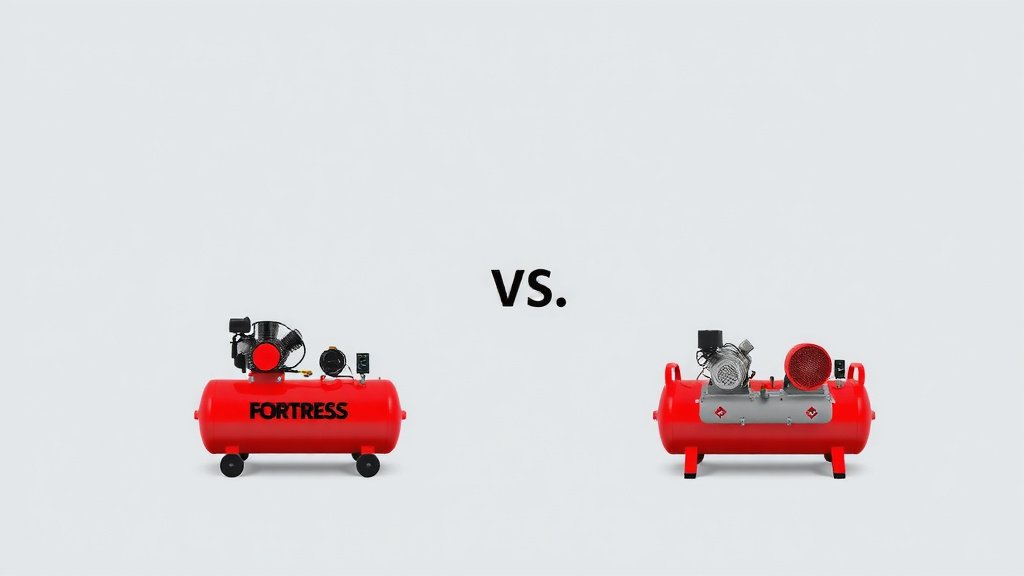
When choosing between a Fortress air compressor and a Kobalt air compressor, the best choice depends on your specific needs, but generally, Fortress often offers a slightly better balance of power and price for DIYers. Kobalt is a solid choice, but Fortress frequently wins for its robust features at a more accessible cost.
Both brands aim to provide reliable air power for your projects. We found that Fortress models tend to pack a bit more punch for the money. Kobalt can be a great option too, especially if you’re already invested in their tool ecosystem. It really comes down to understanding the CFM and PSI ratings for your intended use.
- Fortress usually wins on price-to-power ratio.
- Kobalt offers good reliability, especially for everyday tasks.
- Consider your project needs: DIY vs. professional.
- Check the air delivery (CFM) and pressure (PSI) ratings carefully.
Let’s dive into a direct comparison to help you figure out which brand will be your workshop’s new best friend. To understand compressor capabilities, learn about the difference between a 1 gallon vs 2 gallon air compressor.
Fortress vs. Kobalt Air Compressors: Which Brand Puts the Power in Your Hands?
When you’re looking to equip your garage or workshop, an air compressor is a workhorse tool. You want something reliable that won’t break the bank. Many DIYers and even some professionals wonder about the differences between Fortress and Kobalt. We’ve dug into what makes each brand tick. Generally, Fortress often hits a sweet spot for price and performance, making it a popular choice. Kobalt offers solid dependability, especially if you’re already a fan of their other tools. Let’s break down what you should consider.
Understanding Air Compressor Basics: CFM and PSI
Before we compare brands, it’s smart to know what you’re looking for in an air compressor. The two most important specs are CFM and PSI. Think of CFM (Cubic Feet per Minute) as the volume of air your compressor can deliver. Higher CFM means you can run more air-powered tools at once, or tools that need a lot of air.
PSI (Pounds per Square Inch) tells you about the pressure of the air. Most common tools operate within a range of 40-90 PSI. Your tool’s manual will tell you its specific requirements. Getting these right ensures your tools work as they should.
Fortress Air Compressors: Power for the People
Fortress is known for offering good performance at a competitive price point. They aim to give DIYers serious bang for their buck. We found that many Fortress models pack a punch, delivering solid CFM and PSI ratings that can handle a wide variety of tasks.
What We Like About Fortress
One of the biggest draws for Fortress is their value proposition. You often get more air delivery (CFM) for your dollar compared to some other brands. This makes them a great option if you’re on a tighter budget but still need robust performance for projects like automotive work, nailing, or even running impact wrenches.
We also noticed their compressors are often designed with ease of use in mind. Many feature straightforward controls, durable construction, and are built to be relatively portable for their power class. This combination makes them a favorite for home mechanics and serious hobbyists.
Potential Downsides of Fortress
While Fortress offers great value, you might find that their professional-grade features aren’t as extensive as higher-end brands. This isn’t to say they aren’t durable, but for extremely demanding, daily professional use, some users might eventually look for even more robust, specialized options.
Kobalt Air Compressors: Dependability in Your Workshop
Kobalt, a house brand for Lowe’s, has built a reputation for offering reliable tools. Their air compressors are no exception. They often strike a good balance between performance and the needs of the average homeowner or DIYer. If you’re already invested in the Kobalt tool ecosystem, their compressors can integrate well.
What We Like About Kobalt
Kobalt compressors are generally known for their consistent performance. We found they are built to last and provide stable air delivery for common tasks. This makes them a solid choice for tasks like inflating tires, using brad nailers, or running smaller air tools around the house.
Another point in Kobalt’s favor is their availability and support. Being a well-known brand, finding parts or getting service can often be straightforward. Their product line often includes a good range of sizes, from small portable units to larger stationary models.
Potential Downsides of Kobalt
When comparing apples to apples in terms of raw power (CFM), Kobalt models can sometimes be slightly more expensive than comparable Fortress units. This isn’t always the case, but it’s something we observed. For users who need maximum air output for heavy-duty tasks, you might find yourself needing a larger, more expensive Kobalt unit.
Head-to-Head: Power, Price, and Features
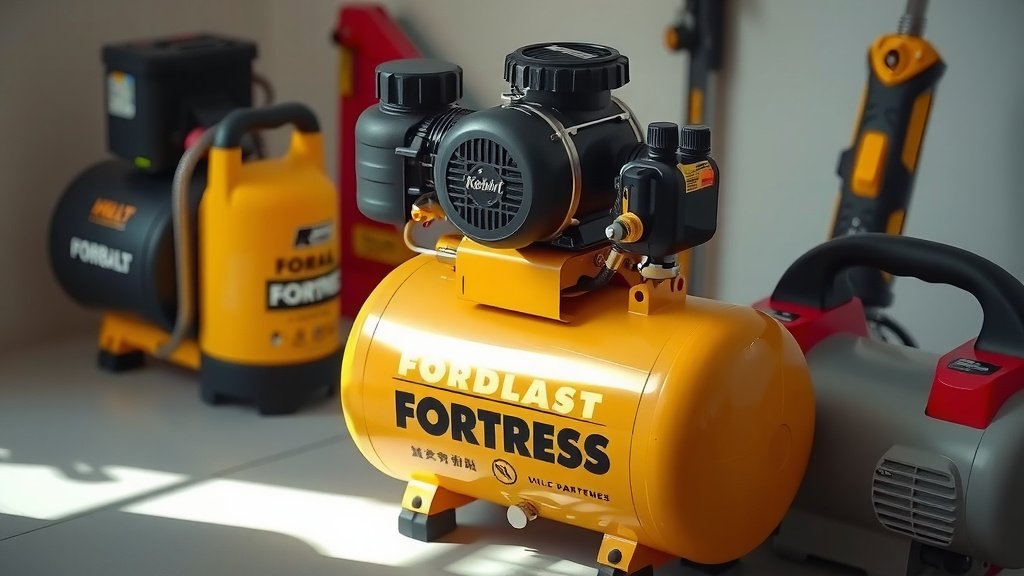
Let’s put them side-by-side on key factors. When we researched, Fortress often came out ahead in the price-to-power ratio. This means for the same amount of money, you might get a Fortress compressor that delivers more CFM than a Kobalt model.
However, Kobalt can sometimes offer a slightly more refined user experience or more integrated features, depending on the specific model. It’s a bit like choosing between a high-performance sports car and a reliable family sedan. Both get you there, but one is often built with more raw power for less money.
| Feature | Fortress | Kobalt |
|---|---|---|
| Price-to-Power Ratio | Generally Stronger | Good, but can be higher |
| Durability | Good for DIY/Hobbyist | Very Good, reliable |
| Tool Ecosystem Integration | N/A (Standalone Brand) | Good (Lowe’s Tools) |
| Availability | Harbor Freight Stores | Lowe’s Stores |
| Target User | DIYer, Home Mechanic | Homeowner, DIYer |
Which Compressor is Right for Your Projects?
The best choice really hinges on what you plan to do. If you’re a homeowner who needs a compressor for occasional tasks like inflating tires, using a brad nailer for trim work, or simple DIY projects, both brands can likely serve you well. Think about your most demanding tool.
For the Serious DIYer or Home Mechanic
If you’re frequently using tools that require a good amount of air, like impact wrenches for car maintenance, or you plan on doing projects that involve longer run times for air tools, you’ll want to pay close attention to the CFM rating. In this scenario, Fortress often provides more CFM for your budget. We found that their models tend to be geared towards providing that extra air capacity without a massive price jump.
For Everyday Household Tasks and Lighter Projects
If your needs are more basic – think inflating bike tires, powering a small finish nailer for a picture frame, or occasional dusting – then a smaller Kobalt compressor might be perfectly adequate and offer great reliability. Many experts say that for these tasks, consistency and ease of use are key, and Kobalt delivers on that.
Considering Your Tool Collection
Are you already a fan of Kobalt tools and have a battery platform or other accessories? Then a Kobalt air compressor might feel like a natural fit. However, since air compressors are typically corded and self-contained, this isn’t usually a major deciding factor. It’s more about matching the compressor’s capabilities to your project needs.
Quick Checklist: Making Your Decision
To help you decide, consider these points:
- Your Budget: How much are you willing to spend?
- Air Tool Needs: What’s the most air-hungry tool you own or plan to buy?
- CFM Requirements: Check your tool’s manual for required CFM.
- Portability: Do you need to move it around often?
- Noise Level: Some compressors are quieter than others.
- Warranty and Support: What kind of backup does the brand offer?
Conclusion
So, when you’re weighing Fortress against Kobalt for your next air compressor, remember this: Fortress often wins for the DIYer seeking more power for their dollar. You get excellent CFM for tackling bigger projects without emptying your wallet. Kobalt, on the other hand, offers reliable performance that’s great for everyday household tasks and smaller DIY jobs. We found that for most home mechanics and serious hobbyists, Fortress provides that extra oomph needed. For lighter duties, Kobalt is a dependable choice.
Ultimately, assess your most demanding tool’s air needs and your budget. Then, make the choice that fits your workshop best and get those projects done!
Frequently Asked Questions
Which brand is better for running impact wrenches?
For running impact wrenches, you’ll want a compressor with a high CFM rating. Our research found that Fortress models often deliver more CFM for the price, making them a strong contender for automotive work. Always check the specific CFM requirement of your impact wrench.
Are Kobalt air compressors quieter than Fortress?
We didn’t find a consistent pattern that one brand is universally quieter than the other. Noise levels can vary significantly by model within each brand. It’s best to look for decibel (dB) ratings if noise is a major concern for your workspace.
Can I use a Fortress compressor for professional painting?
Yes, a Fortress compressor can be suitable for professional painting, especially if you choose a model with sufficient CFM to handle your spray gun’s needs. For very high-volume or continuous professional use, you might consider models with larger tank sizes or oil-lubricated designs for extended durability.
Which brand is easier to find parts for?
Kobalt compressors, being a house brand for Lowe’s, generally have good availability for replacement parts and support through their retail channels. Fortress parts might be more exclusively available through Harbor Freight.
Is a Kobalt compressor a good investment if I already own other Kobalt tools?
If you’re already invested in the Kobalt tool ecosystem, a Kobalt air compressor can be a convenient choice for brand consistency. However, for air compressors, this usually doesn’t offer significant functional benefits beyond potential shared warranties. Focus primarily on the compressor’s CFM, PSI, and tank size for your project needs.