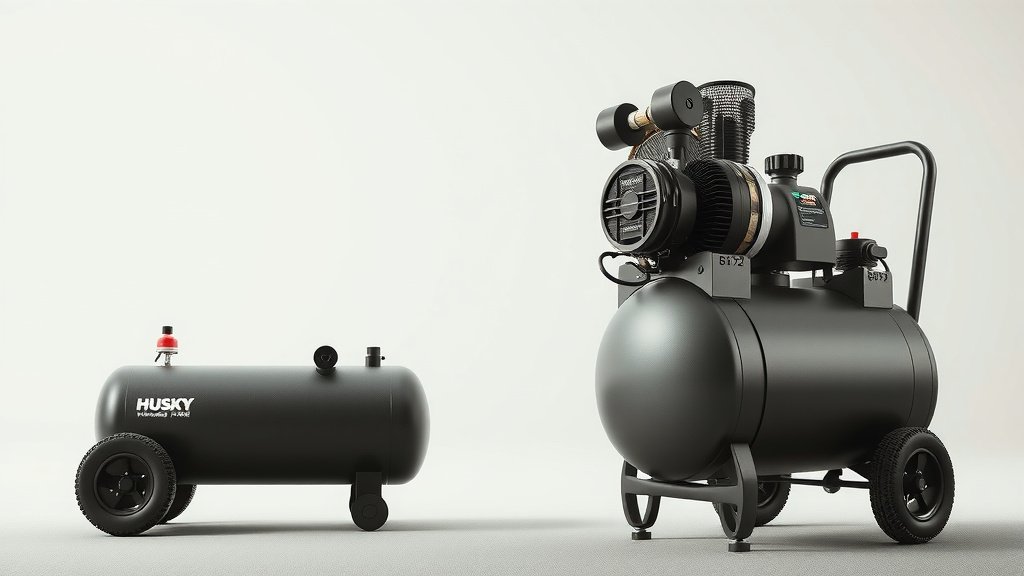
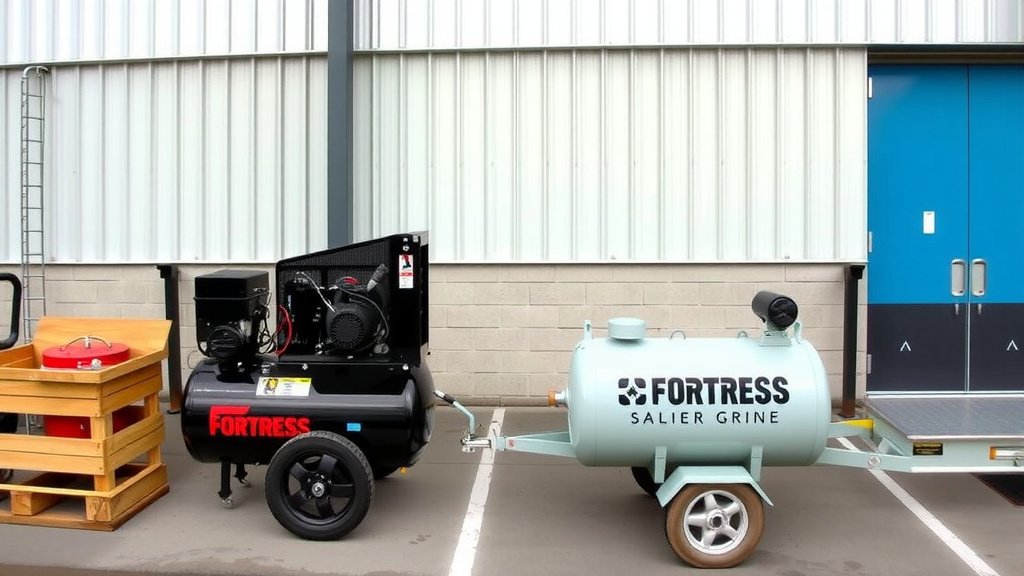
Fortress vs Husky Air Compressor: Which is Best
When deciding between a Fortress air compressor and a Husky air compressor, the choice often comes down to your specific needs and budget. Many users find that Fortress offers excellent value for DIY projects, while Husky is a reliable choice for heavy-duty use and professional settings, generally commanding a slightly higher price point.
Both brands are popular in the home garage and workshop. We found that while Fortress often focuses on user-friendly features for the average homeowner, Husky tends to equip their compressors with more robust components built for consistent performance under demanding conditions. Think about the tools you’ll power and how often you’ll use them.
- Fortress: Great for DIYers and casual use.
- Husky: Better for frequent, demanding tasks and pros.
- Consider your tool’s CFM needs.
- Think about tank size for continuous operation. Think about tank size for continuous operation, as our guide to 1-gallon vs. 2-gallon air compressors explains.
- Budget plays a key role in the decision.
Let’s break down the key differences to help you pick the perfect air compressor for your garage.
Choosing between a Fortress and a Husky air compressor can feel like a big decision for your workshop. You want something that works well without breaking the bank, right? Both brands have loyal fans. We’ve looked into what makes them tick to help you sort it out. Let’s dive into the details that matter most for your projects.
Comparing Fortress and Husky Air Compressor Options
When you’re trying to decide between Fortress and Husky, think about what you’ll be doing. Are you just topping off tires and using a brad nailer now and then? Or are you planning to run impact wrenches, sanders, or paint sprayers for hours on end?
Power and Performance Differences
This is where you’ll see some of the biggest differences. Husky generally offers compressors with more horsepower and higher CFM (cubic feet per minute) ratings. This means they can deliver more air volume. More air means your tools will run longer without the compressor struggling to keep up.
Fortress often focuses on providing enough power for common homeowner tasks. They are great for occasional use. If your tools don’t demand a lot of air, a Fortress might be perfectly fine. But for demanding tools like grinders or continuous spray painting, you’ll likely want the extra oomph a Husky can provide.
Durability and Build Quality
When we research these brands, Husky often stands out for its robust construction. Many Husky models use cast-iron cylinders, which are known for their durability and ability to handle heat. This is important if you plan to run the compressor for extended periods. They are built to last through tougher jobs.
Fortress compressors are typically designed with lighter-duty applications in mind. While still reliable for their intended purpose, they might not have the same heavy-duty components. Think of it like a sports car versus a reliable truck. Both get you somewhere, but one is built for more demanding hauls.
Tank Size and Recovery Speed
The tank size is like the air compressor’s “fuel tank.” A larger tank means you can use air-powered tools for longer periods before the compressor motor has to kick on again. For continuous tasks like spray painting or using multiple tools, a bigger tank is a huge advantage.
- Larger Tanks: Husky often offers models with larger tank capacities, from 30 gallons up to 60 gallons or more. This is great for jobs where you need consistent air pressure.
- Smaller Tanks: Fortress models tend to have smaller tanks, often in the 10-20 gallon range. These are ideal for intermittent use and portability.
Beyond tank size, recovery speed matters. This is how fast the compressor can refill the tank after it’s been depleted. Husky compressors, especially their higher-end models, generally have faster recovery times. This means less downtime waiting for the tank to fill.
Portability and Design
If you need to move your air compressor around your garage or take it to different job sites, portability is key. Fortress often has a good selection of smaller, lighter units. Many of these come with wheels and handles, making them easy to transport.
Husky also offers portable options, but some of their higher-capacity models can be quite heavy. They are more suited for a stationary setup in a workshop. If you’re always on the go, a lighter Fortress or a smaller Husky might be a better fit.
Wheeled vs. Stationary Units
Many Fortress models are designed as “pancake” or “hot dog” style compressors. These are naturally more compact and easier to move. You’ll find they are often the go-to for DIYers who need to store their compressor away when not in use.
Husky’s larger vertical tank compressors are designed more for staying put. While they have wheels, they are less about quick trips and more about being easily rolled to a corner of your garage. Consider where you’ll be storing and using it most often.
Noise Levels
Air compressors can be loud. This is a common complaint, no matter the brand. However, some models are quieter than others. We found that some of the newer Husky “quiet” models aim to reduce noise pollution. These are great if you have neighbors close by or work in an attached garage.
Fortress compressors can vary in noise. Generally, smaller compressors tend to be a bit louder relative to their size. If noise is a major concern, research specific model decibel ratings. Many sources suggest looking for oil-lubricated models, as they can sometimes run quieter and cooler than oil-free ones.
Price and Value Proposition
This is often where the decision really hinges. Fortress compressors are typically more budget-friendly. They offer good performance for the price, making them an attractive option for homeowners and hobbyists. You can get a solid unit for everyday tasks without spending a lot.
Husky compressors, especially their higher-performance or larger-capacity models, tend to be more expensive. This is due to their more robust components and greater air output. You’re paying for increased durability and power. For professionals or serious DIYers, the investment often pays off in reliability and efficiency.
Where to Find Them
You’ll primarily find Fortress air compressors at Harbor Freight Tools. Husky air compressors are most commonly available at The Home Depot. Both retailers offer various models, so it’s worth checking their websites or visiting a store to see them in person.
Making the Right Choice for Your Needs
So, how do you decide? Let’s summarize the key points to help you make a confident choice. Think about your primary use case.
- Occasional DIYer: If you mainly use air tools for small projects, like inflating tires, using a brad nailer, or light cleaning, a Fortress compressor is likely a great fit. They offer good value and handle these tasks with ease.
- Frequent User or Heavy-Duty Tasks: If you plan to run tools like impact wrenches regularly, use air sanders, or do a lot of painting, a Husky compressor is probably the way to go. Their greater power and durability will serve you better.
Key Considerations Checklist:
- What tools will you power? Check their CFM needs.
- How often will you use the compressor? Daily, weekly, monthly?
- Do you need portability, or will it stay in one place?
- What’s your budget? Fortress is usually cheaper, Husky costs more.
- How much noise can you tolerate? Look up decibel ratings.
We found that both brands have their strengths. Fortress excels in offering accessible, affordable air power for the average homeowner. Husky focuses on providing more durable, higher-output machines for demanding applications. Your ideal compressor depends entirely on the work you want to get done.
Conclusion
Deciding between a Fortress and a Husky air compressor boils down to understanding your workshop’s demands. For the DIYer tackling smaller projects, a Fortress compressor offers fantastic bang for your buck. You get reliable performance without overspending. If you’re a serious hobbyist or a professional needing to power demanding tools consistently, investing in a Husky compressor makes more sense. Their robust build and higher output handle tougher jobs with ease. Before you buy, always check your tools’ CFM requirements and consider how much runtime you’ll need. Your next step is to head to Harbor Freight for Fortress options or The Home Depot for Husky models to compare them side-by-side based on these points.
Frequently Asked Questions
Which brand is better for a beginner DIYer?
For beginners, a Fortress air compressor is often the better choice. They are more budget-friendly and simpler to operate for common tasks like inflating tires or using a brad nailer. You can get started without a huge investment.
Can a Fortress compressor handle automotive work?
A smaller Fortress compressor might handle very light automotive tasks, like topping off tires. However, for air-impact wrenches or other air tools used in automotive repair, you’ll likely find it underpowered. A Husky is generally recommended for more serious car work.
Are Husky air compressors louder than Fortress?
Noise levels vary by model for both brands. Some of Husky’s newer, specialized models are designed to be quieter. However, generally speaking, higher-horsepower compressors (which Husky often is) can sometimes be louder. Always check the decibel ratings for specific models.
Which brand offers better portability for job sites?
Fortress compressors tend to be lighter and more compact, making them easier to transport to different locations. Many Fortress models are designed with wheels and handles specifically for portability.
Is a larger tank size always better?
A larger tank size is better if you need to run air tools continuously for extended periods without interruption. If you only use air for short bursts, like inflating a ball or using a nailer for a few seconds at a time, a smaller tank might suffice and be more portable.