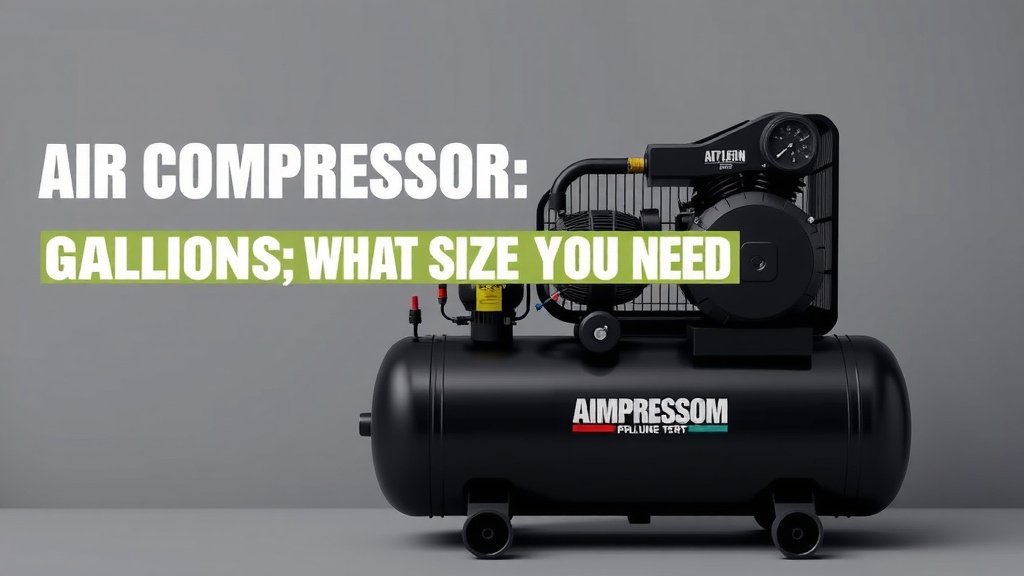
Air Compressor Gallons: What Size Do You Need
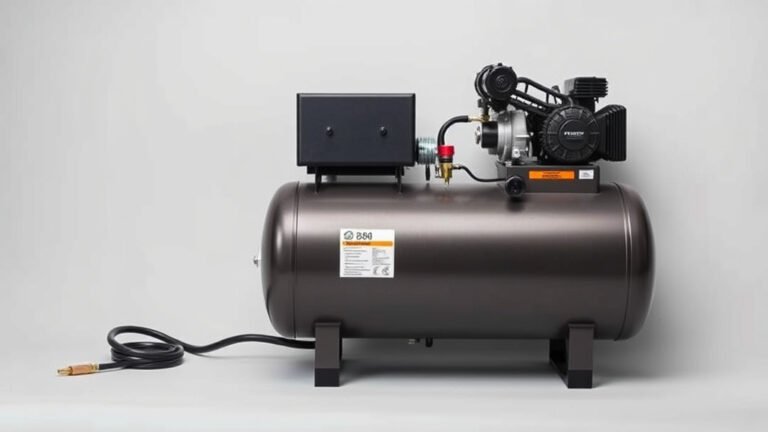
The “gallons” for an air compressor aren’t about how much air it *holds*, but rather the tank size. A 20-gallon air compressor is a popular choice for many DIYers and home garages because it offers a good balance of air capacity and portability for common tasks like inflating tires or running small air tools. The gallon number is really about the storage capacity of the tank, not how much air the compressor produces.
When choosing an air compressor, you’ll see gallons listed for tank size and CFM (cubic feet per minute) for air output. Think of the gallons like a bucket – it holds a certain amount of air. The CFM tells you how quickly the compressor can refill that bucket. For tasks like painting or sandblasting, you’ll need a compressor with both a decent tank size and a higher CFM rating. We found that understanding these two numbers is key to picking the right compressor for your needs.
- Gallons refer to the tank size, not air production.
- A 20-gallon tank is common for home use.
- CFM (Cubic Feet per Minute) measures air output rate.
- Larger tanks mean longer run times before the compressor kicks on.
- Match tank size and CFM to your intended tool usage.
Let’s break down exactly what those numbers mean and how to pick the right size for your projects.
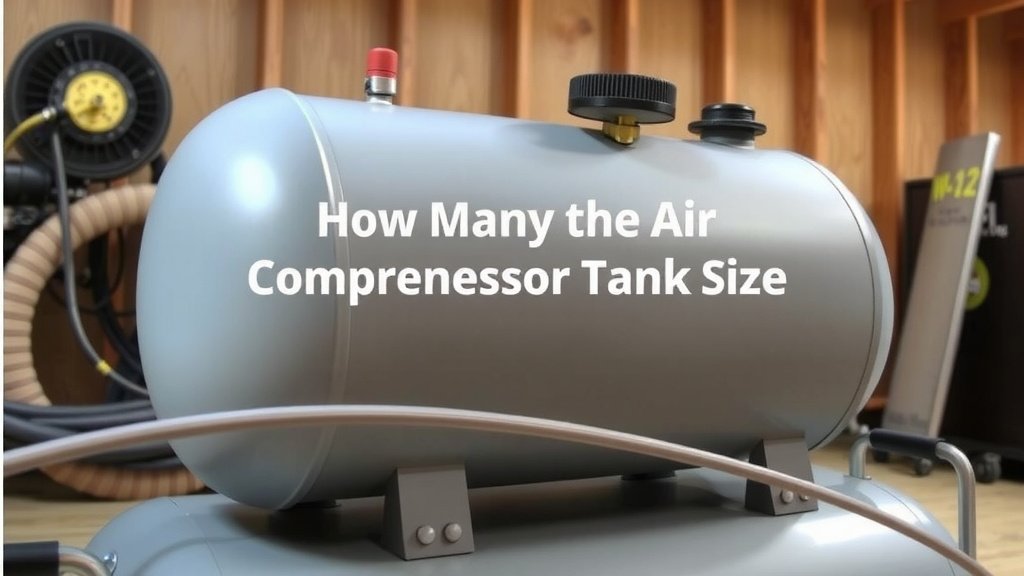
Choosing the Right Air Compressor Tank Size
So, you’re wondering about the “gallons” on an air compressor. It’s a common question! You’ll see numbers like 6 gallons, 20 gallons, or even 60 gallons. What does that really tell you about the machine? Well, that gallon number refers to the Our guide to 1 gallon vs 2 gallon air compressors can help you decide.storage capacity of the air tank. Think of it like the gas tank in your car. A bigger tank means you can go longer before you need to refuel. For an air compressor, a larger tank means it can store more compressed air, letting you run your tools for longer periods without the compressor motor needing to cycle on and off.
This tank size is super important because it directly impacts how long you can use air-powered tools. You’ve probably seen how a smaller compressor starts up again every few seconds when you use a tool. That can be annoying! A larger tank smooths this out. We found that for many home projects, a mid-size tank hits the sweet spot. It gives you enough air to work efficiently without being a giant beast to move around your garage.
Understanding the Relationship Between Tank Size and CFM
While the gallon number tells you how much air the tank can *hold*, it doesn’t tell you how *fast* it can produce that air. That’s where CFM (Cubic Feet per Minute) comes in. We see CFM as the rate of air delivery. It’s how much air the compressor can pump out in one minute.
These two numbers work together. You can have a massive tank, but if the CFM is too low, it won’t be able to keep up with air-hungry tools. Conversely, a high CFM compressor with a tiny tank will constantly be running to refill the tank. Many experts suggest you should aim for a CFM rating that’s at least 1.5 times what your most demanding tool requires. For example, if a tool needs 5 CFM, you’d ideally want a compressor that delivers at least 7.5 CFM. We found this rule of thumb helps prevent frustration.
Gallon Sizes and Their Typical Uses
Let’s break down what different tank sizes are generally good for. This will help you zero in on what you might need.
Small Tanks (1-6 Gallons)
Compressors in this range are usually portable and lightweight. They are often called “pancake” or “hot dog” style compressors. Their small tanks mean they are best suited for intermittent use. You’ll find them great for inflating tires on your car or bike, powering brad nailers for trim work, or using air dusters. We found these are fantastic for quick jobs and for people with very limited space.
Medium Tanks (10-30 Gallons)
This is often the sweet spot for home garages and DIY enthusiasts. A 20-gallon air compressor falls right into this category and is incredibly popular for a reason. These tanks offer a good balance. They can handle longer run times than smaller tanks. You can comfortably use them for tasks like running impact wrenches for car maintenance, powering framing nailers, or even small air sanding projects. Many users report that a 20-gallon size is versatile enough for a wide range of home repairs and hobbyist projects. We found this size offers a noticeable upgrade in usability over the smaller units.
Large Tanks (40-80+ Gallons)
If you’re running continuous-use tools or doing professional-level work, you’ll likely need a larger tank. These bigger compressors are often stationary units, meaning they are meant to stay in one place. They are designed to supply a consistent flow of air for tools like sandblasters, spray guns for painting cars, or running multiple air tools at once. The large tank size ensures the compressor doesn’t have to work overtime. Many workshops and professional garages opt for these to ensure uninterrupted operation. We found that for serious automotive work or large painting jobs, the investment in a larger tank is well worth it.
Matching Your Needs to the Right Gallon Size
So, how do you pick the right one for *your* garage? It really comes down to the tools you plan to use and how often you’ll be using them.
Consider Your Air Tools
This is the most critical factor. Different air tools demand different amounts of air. A small nail gun might only need 1-2 CFM, while a die grinder could pull 5-10 CFM. Some spray guns for painting can need even more. We recommend looking up the CFM requirements for your specific tools. This information is usually found in the tool’s manual or on the manufacturer’s website.
For example, if your main tools are brad nailers and staplers for occasional DIY projects, a smaller tank (under 10 gallons) might be perfectly fine. But if you plan on using an impact wrench regularly to work on your car, or if you want to get into spray painting, you’ll definitely want to step up to at least a 20-gallon or larger tank with a good CFM rating to match. Many sources suggest that a 20-gallon compressor is a fantastic starting point for most home mechanics and DIYers because of its versatility.
Think About Usage Frequency and Duration
Will you be using your air compressor for just a few minutes here and there, or for extended periods? If you’re just topping off tires or doing a quick nail gun job, a smaller tank is fine. But if you’re planning to sand a piece of furniture for an hour or paint a car door, you’ll want a larger tank. The larger the tank, the longer you can use the tool before the compressor has to refill.
We found that users often underestimate how quickly a tank can drain. A 5-minute sanding session can empty a small tank quickly, leading to frequent stops. For continuous or longer jobs, the larger storage capacity of bigger tanks becomes essential. It’s about minimizing interruptions so you can get your work done efficiently. Many people are happier when they don’t have to wait for the compressor to catch up.
Portability vs. Power
Where will you be using your compressor? If you need to move it around your property or take it to a different job site, portability is key. Smaller compressors (under 10 gallons, often 1-2 HP) are designed for this. They are lightweight and often have wheels.
However, these portable units usually have smaller tanks and lower CFM ratings. Larger compressors (20 gallons and up) are often less portable, sometimes quite heavy, and might require more dedicated space in your workshop. You have to decide if you need to haul it around or if it can stay put. We found that most people start with a portable option and then upgrade to a larger stationary unit if their needs grow.
A Quick Guide to Tank Sizes
Here’s a simple table to help you visualize the general capabilities:
| Tank Size (Gallons) | Typical HP Range | Common Uses | Portability |
|---|---|---|---|
| 1 – 6 | 0.5 – 1.5 HP | Tire inflation, brad nailers, staplers, dusting | High (very portable) |
| 10 – 30 | 1.5 – 3 HP | Impact wrenches, framing nailers, small sanders, air ratchets | Medium (portable to semi-portable) |
| 40 – 60 | 3 – 5 HP | Spray painting, larger sanders, continuous tool use | Low (often stationary) |
| 80+ | 5+ HP | Industrial applications, sandblasting, large workshops | Very Low (stationary) |
Checklist for Choosing Your Compressor Gallons
Before you click “buy,” run through this quick checklist:
- What are the CFM requirements for your most-used air tools?
- How long will you typically use your air tools in one session?
- Do you need to move the compressor often, or will it stay in one place?
- What is your budget for a compressor?
- Do you have enough power supply (volts/amps) for the compressor you’re considering?
- Are you looking for a general-purpose unit or one for a very specific task?
By considering these points, you can confidently select an air compressor with the right tank size for your projects. We found that taking the time to match the compressor to your needs upfront saves a lot of headaches down the road!
Conclusion
You now know that an air compressor’s “gallons” refer to its tank size, not its air production rate. This tank capacity works hand-in-hand with CFM to determine how well your compressor can power your tools. For most home DIYers, a 20-gallon air compressor offers a fantastic blend of capability and manageability, handling tasks from tire inflation to using impact wrenches. We’ve found that by matching the tank size and CFM to your specific tools and usage habits, you’ll avoid frustration and get your projects done efficiently. Your next step is to identify your most demanding air tool and consider how often you’ll use it to make the perfect choice.
Frequently Asked Questions
Do I really need a large gallon tank for my air compressor?
Not necessarily! The “gallons” refer to tank storage. If your air tools have low CFM requirements and you use them for short bursts, a smaller tank might be sufficient. We found that for simple tasks like inflating tires or using brad nailers, smaller tanks work well. You’ll only need a larger tank for tools that require a consistent, high volume of air for longer periods.
Can I use a small compressor for painting?
It depends on the type of painting and the paint sprayer you’re using. For very light touch-ups or air dusting, a small compressor might work. However, most spray painting, especially with automotive paint or larger projects, requires a higher CFM and often benefits from a larger tank (like 20 gallons or more) to maintain a consistent air supply. We’ve seen many users struggle with small tanks for painting jobs.
What’s the difference between HP and Gallons on an air compressor?
Horsepower (HP) generally indicates the motor’s power, affecting how quickly it can *compress* air. Gallons specifically refer to the tank’s storage capacity, determining how much compressed air you have on hand. While HP is important for overall performance, the tank size dictates how long you can run your tools before the compressor needs to refill. We found that both are vital but serve different functions.
Will a larger gallon tank make my air compressor quieter?
Not directly. The gallon size of the tank primarily affects air storage. The noise level of an air compressor is more closely related to the motor’s design, the type of pump (oil vs. oil-free), and whether it has a sound-dampening enclosure. While a larger tank might mean the compressor runs less often, the periods it *is* running will produce the same amount of noise. We’ve noted that noise reduction is usually a separate feature to look for.
How do I know if my 20-gallon air compressor is too small for my tools?
If your compressor’s tank is constantly draining, and the motor is cycling on and off very frequently while you’re using your tool, it’s likely too small. You might also notice a drop in air pressure. We recommend checking the CFM requirements for your tools and comparing it to your compressor’s CFM output. If your tool’s CFM needs significantly exceed what your compressor can supply, you’ll need a larger or higher-CFM unit.