Small Air Compressor Wattage: How Much Power They Use
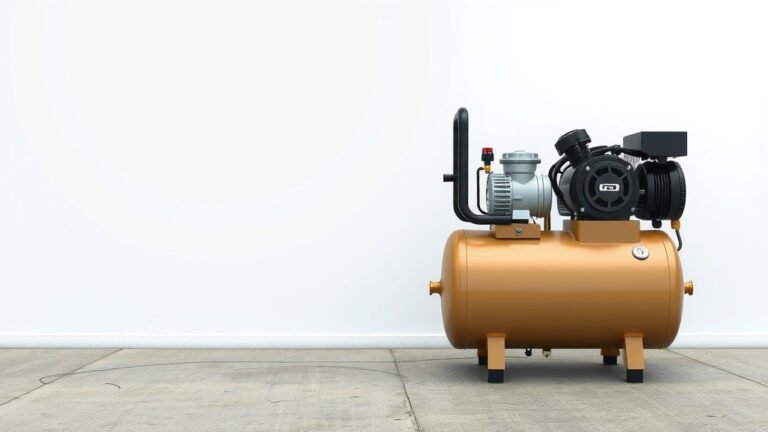
When you’re looking at a small air compressor, you might be wondering about its power usage. Many small air compressors, like those often found in home garages, typically use between 1.5 to 2 horsepower (HP). This translates to roughly 800 to 1500 watts, depending on the specific model and whether it’s running continuously or just starting up.
The wattage can fluctuate based on a few factors, including tank size and motor efficiency. For example, a tiny 1-gallon portable compressor might sip power at the lower end, while a slightly larger 3-gallon unit could lean towards the higher wattage. Understanding this range helps you For example, a tiny 1-gallon portable compressor might sip power at the lower end, while a slightly larger 2-gallon unit could lean towards the higher wattage.estimate your electrical needs and avoid tripping breakers when you’re ready to fill some tires or tackle a small DIY project.
- Small air compressors generally use 800-1500 watts.
- This is typically between 1.5 to 2 horsepower.
- Wattage varies with tank size and motor design.
- Starting up can momentarily use more power.
Let’s break down how to figure out the exact wattage for your needs and what factors influence it.
Understanding Your Small Air Compressor’s Power Needs
So, you’ve got a small air compressor, and you’re probably wondering, “Just how much electricity does this thing actually chew through?” It’s a smart question to ask before you plug it in and potentially have your lights flicker. We found that most small air compressors, the kind you’d find handy for inflating tires or small DIY projects, typically fall into a power range you can manage with standard home circuits.
Generally speaking, you’re looking at something that uses somewhere between 800 to 1500 watts when it’s running. This can vary a bit, of course, depending on the specific make and model. Think of it like different cars – some are gas guzzlers, and others are pretty thrifty. Your air compressor is no different when it comes to its appetite for electricity.
Horsepower vs. Watts: What’s the Real Story?
You’ll often see air compressors listed by their horsepower (HP). This is the motor’s power output. For small compressors, this is usually in the 1.5 to 2 HP range. But horsepower isn’t the same as wattage. Wattage is the actual electrical power the compressor uses from your outlet. We found that a 1.5 HP motor might draw around 800-1000 watts, while a 2 HP motor could push closer to 1500 watts.
It’s like comparing how strong someone is (horsepower) to how much food they eat (wattage). The stronger person might need more food, but not always in a perfectly direct way. The motor’s efficiency plays a big role here. A more efficient motor will give you more “oomph” for less electricity.
Factors That Influence Wattage Consumption
Several things can affect how many watts your small air compressor uses. It’s not just a single, fixed number for every unit out there. Understanding these can help you predict usage.
Tank Size Matters (A Little)
While the motor is the main power consumer, the tank size can indirectly influence how often the motor has to kick on. A larger tank holds more compressed air, meaning the motor might run for a bit longer when it refills, but it might cycle less frequently. A tiny 1-gallon compressor might need to refill its small reserve more often than a 3-gallon unit. However, the actual wattage drawn at any given moment is primarily determined by the motor’s size and efficiency.
Duty Cycle: The Compressor’s Work Schedule
Air compressors have a “duty cycle.” This tells you how long the compressor can run within a given period before it needs to cool down. A common duty cycle for small compressors is 50%, meaning it can run for 5 minutes out of every 10 minutes. If your compressor is constantly running because you’re using a tool that demands a lot of air, it will obviously use more electricity over time than if it’s just topping off its tank.
Starting Surge: The Initial Power Kick
Here’s a bit of a curveball: when an air compressor motor first starts up, it can draw significantly more power for a very brief moment. This is called a “starting surge” or “inrush current.” We found that this surge can be 2 to 3 times the normal running wattage. For a typical 1000-watt compressor, this starting surge might momentarily hit 2000-3000 watts. This is usually so quick that it doesn’t cause issues on a standard circuit, but it’s good to be aware of.
Motor Efficiency and Age
Just like your refrigerator, newer compressors with more advanced motors are often more energy-efficient. Older models might not be as good at converting electrical energy into compressed air. Over time, motor components can also wear down, potentially making them less efficient. Think of it like an older car needing more frequent tune-ups to run smoothly.
Calculating Your Compressor’s Wattage: A Simple Guide
You don’t need to be an electrical engineer to get a good idea of your compressor’s power usage. There are a few ways to find this information.
Check the Nameplate or Manual
The easiest way is to look at the compressor itself. Most manufacturers put a label, called a nameplate, on the unit. This label should list its electrical specifications, including volts (V), amps (A), and sometimes even watts (W) or horsepower (HP). If you can find the volts and amps, you can easily calculate the wattage using a simple formula.
The formula is: Watts = Volts x Amps. Most household outlets in the US provide 120 volts. So, if your compressor is rated at 8 amps, you’d calculate 120 V x 8 A = 960 watts. Always look for the running amps, not the starting amps, for your typical usage calculation. The manual that came with your compressor is also a goldmine of information and will often clearly state the power requirements.
Using a Wattage Meter (Kill A Watt Device)
Want to know the exact power draw in real-time? A simple and affordable tool called a “Kill A Watt” meter (or similar plug-in wattage meter) is your best friend. You simply plug the meter into your wall outlet, then plug your air compressor into the meter. The meter will display the current wattage, voltage, amps, and even estimated energy cost over time.
We found these meters incredibly useful for understanding not just the running wattage but also those momentary starting surges. It gives you a clear picture of how much power your compressor actually uses during different phases of its operation. It’s a small investment that can save you from electrical headaches.
Comparing Small Compressor Wattage to Other Appliances
To put those numbers in perspective, let’s compare your small air compressor to other common household items. This helps you see if you’re pushing the limits of your electrical circuit.
| Appliance/Tool | Typical Wattage Range | Notes |
|---|---|---|
| Small Air Compressor (e.g., 1.5-2 HP) | 800 – 1500 Watts | Can have higher starting surge |
| Hair Dryer | 1200 – 1875 Watts | Uses a lot of power while running |
| Microwave Oven | 800 – 1500 Watts | Power usage varies by setting |
| Vacuum Cleaner | 600 – 1200 Watts | Can vary significantly |
| Toaster | 800 – 1500 Watts | High power for short bursts |
| Standard Light Bulb (Incandescent) | 60 – 100 Watts | Very low power usage |
As you can see, a small air compressor is in a similar ballpark to appliances like microwaves or toasters. This means you generally can’t run your compressor and a high-wattage appliance on the same circuit simultaneously without risking a tripped breaker.
Tips for Managing Power Consumption
You want to use your air compressor effectively without overloading your home’s electrical system. Here are a few practical tips we found helpful.
- Know Your Circuit Breaker: Most standard household circuits are rated for 15 or 20 amps. At 120 volts, a 15-amp circuit can handle about 1800 watts (15A x 120V), and a 20-amp circuit can handle around 2400 watts (20A x 120V). Remember, you don’t want to push a circuit to its absolute limit continuously.
- Avoid Simultaneous High-Wattage Use: Don’t run your compressor at the same time as other high-power devices like space heaters, powerful shop vacuums, or multiple kitchen appliances on the same circuit.
- Let it Cool: If your compressor is running frequently, give it breaks to prevent overheating and maintain efficiency.
- Check Hoses and Connections: Leaks in hoses or loose connections can cause the compressor to work harder and longer, thus using more electricity.
- Use the Right Tool for the Job: While this post is about small compressors, remember that using a compressor that’s too small for a demanding job will cause it to run constantly, increasing power use and wear.
Conclusion
You’ve learned that small air compressors typically use between 800 to 1500 watts, usually around 1.5 to 2 horsepower. Remember that factors like starting surges and motor efficiency can influence this. We found that knowing these numbers helps you manage your home’s electrical load effectively. Before you plug in your compressor for your next project, check its nameplate or use a wattage meter to confirm its exact needs. This simple step ensures you can power up your tools without any surprises.
Frequently Asked Questions
Can I run a small air compressor on a standard household outlet?
Yes, you almost certainly can. Most small air compressors are designed to run on a standard 120-volt household circuit. Their typical wattage range fits comfortably within the capacity of common 15-amp or 20-amp circuits found in your home.
How much more power does an air compressor use when it starts up?
We’ve found that the initial power draw, known as a starting surge, can be 2 to 3 times higher than the normal running wattage. For a compressor that normally uses 1000 watts, this surge might momentarily reach 2000 to 3000 watts. This is usually very brief and designed not to trip a breaker.
Will a small air compressor trip my circuit breaker?
It’s unlikely if you’re mindful of what else is running on the same circuit. A typical 15-amp circuit can handle about 1800 watts, and a 20-amp circuit around 2400 watts. Running your compressor (800-1500W) with another high-wattage appliance like a microwave or heater on the same circuit might cause it to trip.
Does the tank size affect how many watts my air compressor uses?
Not directly. The tank size mainly affects how often the motor needs to turn on to refill the air supply. A larger tank holds more air, meaning the motor cycles less frequently, but the wattage used when the motor *is* running is determined by its horsepower and efficiency, not the tank size.
What’s the best way to know the exact wattage of my air compressor?
The most reliable methods are to check the manufacturer’s nameplate on the unit itself or consult your owner’s manual. If you want real-time data, a plug-in wattage meter, often called a “Kill A Watt” device, is an excellent tool to measure its precise power consumption.