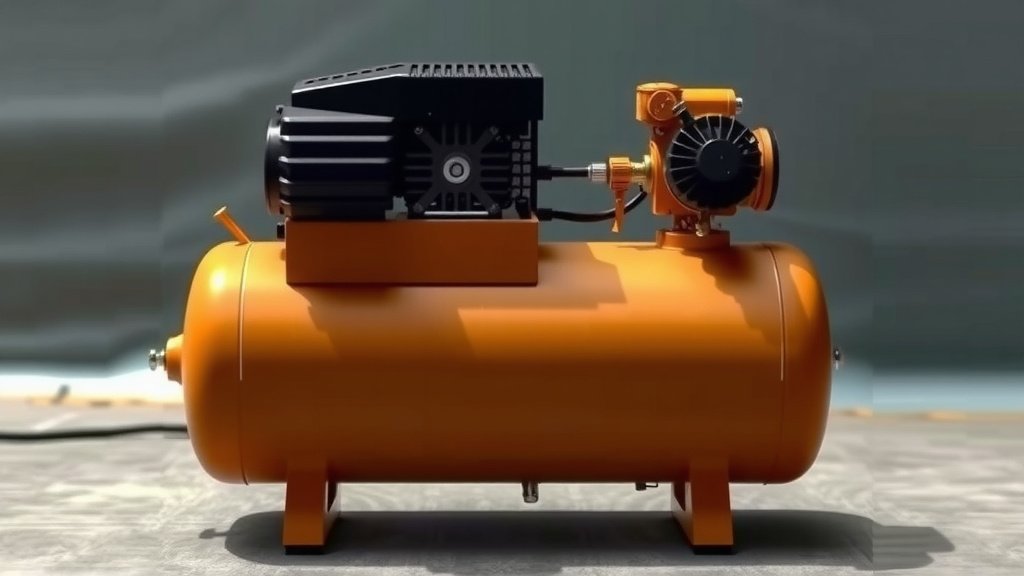
Air Compressor Wattage Explained: How Much Power Do You Need
The number of watts an air compressor uses varies greatly, but most home and hobbyist compressors run between 100 to 2000 watts. Smaller pancake compressors might use around 500 watts, while larger shop compressors can need 2000 watts or more. The power draw depends on the motor size and how hard it’s working.
Understanding your air compressor’s wattage is important for a few reasons. It helps you figure out if your electrical circuit can handle the load. It also gives you a better idea of your energy costs. Some tools need a lot of air, making the compressor work harder and use more power.
- Wattage varies widely: From 100W for small units to over 2000W for big ones.
- Motor size matters most: Bigger motors need more power.
- Check your breaker: Ensure your electrical system can support the compressor.
- Energy bills are affected: Higher wattage means higher electricity costs.
Let’s dive deeper into what influences your air compressor’s power consumption and how to manage it effectively.
So, you’re wondering how much juice your air compressor needs? It’s a fair question, and the answer isn’t a simple one-size-fits-all number. Think of it like asking how much gas a car uses – it depends on the engine, how fast you’re driving, and what you’re hauling.
Understanding Your Air Compressor’s Power Needs
We found that the wattage your air compressor draws is primarily dictated by its motor size. A bigger motor needs more electricity to turn. It’s not just about the motor’s listed horsepower either. The compressor’s duty cycle and the air demand of the tool you’re using play huge roles.
What is Wattage, Anyway?
Wattage is a measure of electrical power. It tells you how much energy your air compressor is consuming at any given moment. You’ll often see a compressor rated in horsepower (HP), but watts are what you need to focus on for electrical calculations. A general rule we found is that 1 horsepower is roughly equal to 746 watts. But remember, this is the motor’s peak potential, not its constant draw.
Horsepower vs. Wattage: What’s the Real Story?
Many compressors boast their horsepower, which can be a bit misleading. This is often the “peak” or “maximum” horsepower, not the continuous running horsepower. The continuous horsepower is a much better indicator of sustained power draw. We found that a compressor might advertise 3 HP but could realistically run on about 1.5 to 2 continuous HP. This translates to a lower, more consistent wattage draw when it’s actually working.
The Role of Air Demand and CFM
The tool you connect to your air compressor has its own air requirements. These are usually measured in Cubic Feet per Minute (CFM). If your tool needs a lot of air (high CFM), your compressor’s motor has to work harder and longer to keep up. This increased workload directly translates to a higher wattage consumption. We found that running a sandblaster or a large impact wrench will push your compressor to use more power than running a small brad nailer.
| Compressor Type | Typical Wattage Range (Running) | Common Uses |
|---|---|---|
| Pancake / Small Portable | 300 – 800 Watts | Inflation, brad nailers, light stapling |
| Twin-Stack / Mid-Size | 800 – 1500 Watts | Hobbyist projects, medium-duty nailing, some spray painting |
| Vertical Shop / Larger Portable | 1500 – 2500+ Watts | Impact wrenches, sanders, continuous spray painting, small mechanic shops |
| Industrial / Large Stationary | 3000+ Watts | Professional automotive shops, manufacturing |
Starting vs. Running Watts
It’s also important to know about starting watts. When an electric motor first starts, it needs a surge of power to get moving. This starting wattage can be two to three times higher than the running wattage. For most home compressors, this surge is short-lived. However, if your circuit breaker trips, it could be due to this initial power demand. We found that checking your circuit breaker’s amperage rating is key here.
Calculating Your Compressor’s Wattage
You can often find the wattage listed on the compressor’s data plate or in the owner’s manual. If it’s only listed in amps and volts, you can calculate it yourself. The formula is simple: Watts = Volts x Amps. For example, a compressor drawing 10 amps on a 120-volt circuit uses 1200 watts.
Understanding Amperage Draw
Amperage (amps) is the flow rate of electricity. Volts are the “pressure.” Together, they determine wattage. Many household circuits are rated for 15 or 20 amps. A compressor that draws too many amps can overload the circuit, causing the breaker to trip. We found that it’s wise to add up the amperage draw of all potential devices on a circuit before plugging in your compressor.
Impact on Your Electricity Bill
The more watts your compressor uses, and the longer it runs, the more it will affect your electricity bill. Think of it like leaving lights on all the time – the higher the wattage bulb, the more energy used. We found that understanding your compressor’s typical wattage helps you estimate its running cost. If you use it only for short bursts, the impact is minimal. Frequent, long-duration use adds up.
Energy-Saving Tips for Air Compressors
Want to keep your energy costs down? We found a few helpful strategies. First, choose a compressor with the right CFM rating for your needs. Oversizing can lead to wasted energy. Regularly maintain your compressor, ensuring no air leaks in hoses or fittings. Also, try to run your compressor during off-peak hours if your utility offers time-of-use rates. These small steps can make a difference.
Choosing the Right Compressor for Your Electrical Setup
Before you buy, consider your home’s electrical capacity. Most standard outlets in the US are 120-volt circuits. Larger compressors, especially those with higher HP ratings, might require a 240-volt circuit, similar to what an electric dryer or oven uses. Many experts recommend having a dedicated circuit for larger air compressors to avoid tripping breakers. We found that checking your main electrical panel is a good starting point.
Here’s a quick checklist to help you manage your compressor’s power needs:
- Check the compressor’s rated wattage or amperage.
- Verify the circuit breaker capacity in your home.
- Ensure the tool’s CFM requirement matches the compressor’s output.
- Inspect all hoses and fittings for air leaks.
- Keep your compressor well-maintained for optimal efficiency.
- Consider a dedicated circuit for high-draw compressors.
Conclusion
We’ve learned that the wattage an air compressor uses can vary quite a bit, from a few hundred to over two thousand watts. Remember, it’s not just about the horsepower rating; motor size, the tool’s air demand (CFM), and even the starting surge all play a role. Understanding these factors helps you prevent tripped breakers and manage your energy costs. Before you power up your next project, take a moment to check your compressor’s specifications and your home’s electrical capacity. This simple step ensures your compressor runs smoothly and efficiently for all your DIY tasks. Understanding the difference between a 1 cylinder vs 2 cylinder air compressor helps ensure efficient operation.
Frequently Asked Questions
How can I easily find out how many watts my air compressor uses?
Look for a data plate on the compressor itself, usually on the motor housing or tank. The owner’s manual is also a great place to find this information. If you only see voltage and amperage ratings, you can easily calculate watts by multiplying them together (Watts = Volts x Amps).
Will my air compressor’s starting watts trip my circuit breaker?
Yes, the initial surge of power needed to start the motor, known as starting watts, can be two to three times higher than the running watts. If your circuit breaker trips right when you turn on the compressor, this high starting demand is often the cause.
Is it okay to plug my air compressor into a regular household outlet?
For smaller compressors (under 1000-1500 running watts), a standard 15-amp or 20-amp, 120-volt outlet is usually fine, provided nothing else is drawing significant power on that same circuit. Larger, more powerful compressors might need a dedicated 240-volt circuit or at least one with a higher amperage rating.
How does the tool I connect affect my air compressor’s wattage?
Tools that require a high volume of air (measured in CFM) will make your compressor’s motor work harder and run longer to maintain pressure. This increased workload directly leads to higher wattage consumption. For example, a sandblaster uses much more air than a small brad nailer.
Can I reduce the amount of electricity my air compressor uses?
You can save energy by ensuring you have a compressor with the correct CFM rating for your needs – avoid oversizing. Regularly check for and fix air leaks in hoses and fittings, as these force the compressor to run more often. Also, try to run your compressor during off-peak electricity hours if your utility offers those rates.