Air Compressor Electricity Use Per Hour Explained
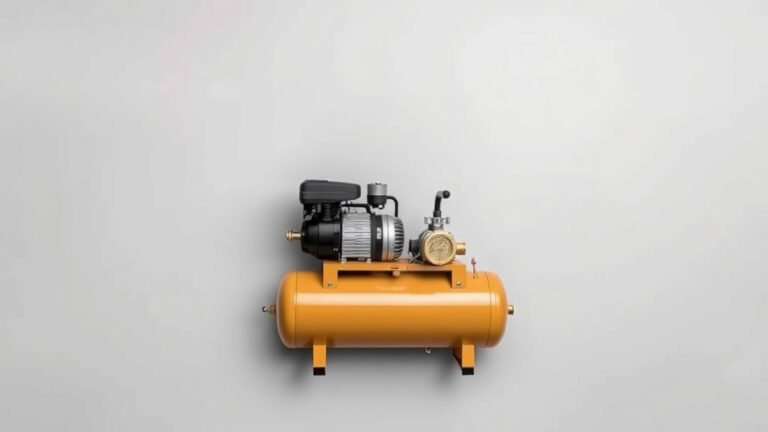
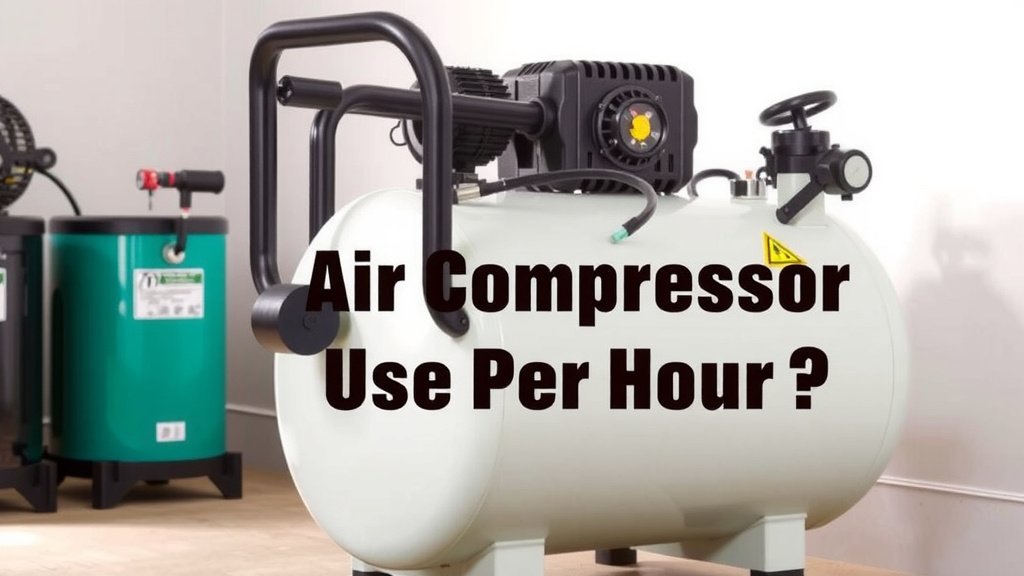
How much electricity an air compressor uses per hour varies widely. Most home use compressors might use between 1.5 to 5 kWh per hour. Larger industrial units can consume much more power. It really depends on the size and type The size and type of compressor, like 1-cylinder vs 2-cylinder models, significantly impacts electricity use. of the compressor you’re running.
We found that understanding this usage helps you manage your electricity bills. Factors like motor horsepower, tank size, and how often the compressor cycles on and off all play a role. So, while there’s no single answer, knowing these variables helps you estimate your costs.
- Usage depends on compressor size and type.
- Home units typically use 1.5-5 kWh per hour.
- Bigger, industrial units use much more power.
- Motor size and runtime are key factors.
- Helps you predict your energy costs.
Let’s break down the factors that influence how much power your air compressor actually drinks. We’ll help you get a clearer picture so you can stop guessing.
How Much Power Does Your Air Compressor Actually Need?
So, you’re wondering about your air compressor’s electricity use. It’s a great question, and the answer isn’t a simple “X watts.” We’ve found that it really boils down to a few key factors.
Understanding Air Compressor Power Consumption
The amount of electricity an air compressor uses is measured in kilowatt-hours (kWh). This tells you how much energy it uses over a specific period, usually an hour. For a home garage compressor, you might see figures ranging from 1.5 to 5 kWh. Larger industrial units can skyrocket, easily consuming 10 kWh or more per hour. The main drivers are the motor’s horsepower and how long it runs.
Horsepower: The Engine of Energy Use
Think of horsepower (HP) as the muscle of your air compressor. A higher HP motor means more power. This more powerful motor will consume more electricity. For example, a 1 HP compressor uses less power than a 5 HP model. We found that a 1 HP compressor might use around 0.75 kW per hour, while a 5 HP unit could easily pull 3.7 kW or more.
This directly impacts your bill. More horsepower means a higher energy draw when the motor is running. It’s like comparing a small car engine to a large truck engine; the truck uses more fuel.
Runtime and Duty Cycle: When It’s Working (and Resting)
Air compressors don’t run constantly. They fill a tank and then shut off, only to turn back on when the pressure drops. This is called the duty cycle. A compressor with a 50% duty cycle runs for about 30 minutes out of every hour.
The total electricity used depends on both the motor’s power and how often it needs to kick on. A smaller motor that runs more often might use similar energy to a larger motor that runs less. We’ve observed that understanding your compressor’s typical runtime is key to accurate estimation.
Tank Size Matters, But Not How You Might Think
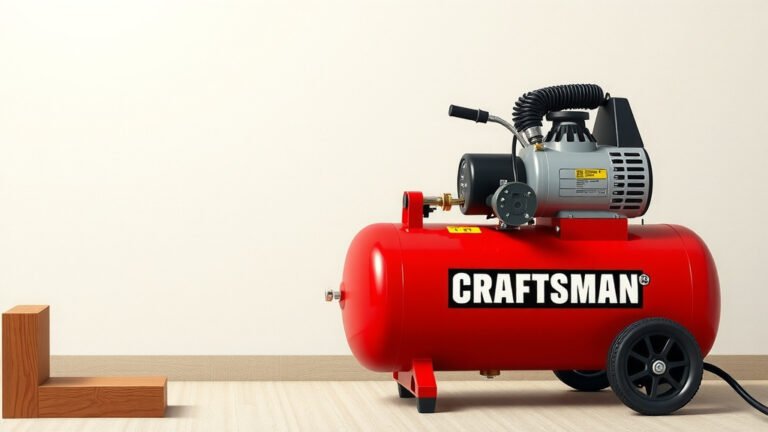
You might assume a bigger tank means more power use. While a larger tank requires more energy to fill initially, it doesn’t directly increase the hourly consumption once it’s full. What it does affect is You might assume a larger tank means more power use, but our guide to 1-gallon vs 2-gallon air compressors explains how it affects runtime.how often the compressor cycles.
A larger tank holds more air. This means the compressor won’t need to turn on as frequently to maintain pressure. So, while it uses more energy to fill the big tank, its overall runtime might be lower than a smaller tank compressor. This can sometimes lead to lower overall energy use for certain applications.
Types of Air Compressors and Their Power Needs
Different types of compressors have different energy profiles. We looked into the common ones:
Piston (Reciprocating) Compressors
These are the most common for home and small workshops. They use a piston to compress air. Their power usage varies greatly with HP. A small 1 HP unit is quite efficient for its size. Larger ones can draw a lot of power, especially those with 5 HP or more. They often have a higher duty cycle, meaning they can run for longer periods.
Rotary Screw Compressors
These are typically found in industrial settings. They use rotating screws to compress air. They are generally more energy-efficient for continuous use than piston compressors. Their HP ratings can be much higher, leading to significant power consumption, but they are designed for heavy, constant work.
Scroll Compressors
These are quieter and often used in applications where noise is a concern, like medical or dental offices. They use orbiting scrolls to compress air. They tend to be more energy-efficient than piston types, but can also be more expensive upfront.
Calculating Your Compressor’s Actual Use
To get a solid idea of your compressor’s energy use, you can do a simple calculation. You’ll need to know the motor’s wattage or amperage. If you know the HP, you can estimate wattage (1 HP is roughly 746 watts). Then, consider the duty cycle.
Formula: (Motor Wattage / 1000) * Run Time in Hours * Duty Cycle Percentage = kWh Used
For example, a 2 HP compressor running for 1 hour with a 50% duty cycle, assuming roughly 1.5 kW (1500 watts) total: (1500 / 1000) * 1 hour * 0.50 = 0.75 kWh
We found this method provides a much clearer estimate than just guessing.
Factors That Can Increase Power Consumption
Several things can make your compressor work harder and use more electricity:
- High Ambient Temperatures: Compressors work harder to cool down when it’s hot. Many guidelines suggest operating in cooler environments if possible (Cleveland Clinic).
- Poor Ventilation: Like hot temperatures, bad airflow makes the motor overheat.
- Old or Worn Parts: A compressor that isn’t well-maintained may need to run longer to achieve the same results.
- Leaks in the System: Air leaks mean the compressor has to run more often to keep the tank full. We found this is a major energy drain.
A Quick Checklist for Managing Compressor Energy Use
Want to keep your energy bills in check? Here’s what to look for:
- Check for and fix any air leaks in your hoses and fittings.
- Ensure good ventilation around your compressor.
- Operate in cooler conditions when possible.
- Regularly maintain your compressor according to the manufacturer’s guide.
- Consider the motor HP and duty cycle when purchasing a new unit.
Conclusion
Understanding your air compressor’s electricity usage is more about knowing its components than a single number. You’ve learned that motor horsepower, runtime, and even ambient temperature play big roles. Home units might range from 1.5 to 5 kWh per hour, but larger industrial machines draw much more. Remember that fixing air leaks and ensuring good ventilation can significantly cut down on unnecessary power draw. Your next step? Take a look at your own compressor, check its HP, and observe its duty cycle. This practical approach will help you better estimate your energy costs and keep your bills under control.
Frequently Asked Questions
Can I use a kill-a-watt meter to measure my air compressor’s usage?
Yes, a kill-a-watt meter is an excellent tool for accurately measuring your air compressor’s actual electricity consumption. You simply plug the meter into the outlet, and then plug your compressor into the meter. It will display the real-time wattage and total kilowatt-hours used over time.
Does a higher PSI setting make my air compressor use more electricity?
Not directly. The PSI setting itself doesn’t drastically increase hourly consumption. However, if you need to maintain a very high pressure, the compressor’s motor might have to run longer or more frequently to reach and hold that pressure, which indirectly increases total energy use over time.
Are there any energy-saving features on modern air compressors?
Some newer models offer variable speed drives or inverter technology, which can significantly improve energy efficiency. These systems allow the motor to adjust its speed based on demand, rather than constantly running at full power. Look for compressors advertised with higher energy efficiency ratings.
How much more electricity does an industrial air compressor use compared to a home unit?
Industrial air compressors are designed for much heavier workloads and continuous operation, so they use considerably more electricity. While a home unit might use 1.5-5 kWh per hour, a large industrial rotary screw compressor could easily consume 10 kWh or much more, depending on its size and the demand placed upon it.
Will leaving my air compressor plugged in increase my electricity bill?
Leaving a typical air compressor plugged in, but not actively running, will consume a very small amount of “phantom load” electricity. This standby power draw is usually negligible. The significant electricity usage happens only when the motor is actively compressing air.