60 Gallon Air Compressor Cost: What to Expect
So, you’re wondering, how much is a 60-gallon air compressor? You can expect to spend anywhere from $400 to $1,000 or even more. The price really depends on the brand, features, and overall quality you’re looking for. We’ve found that many models fall right in the middle of that range.
A 60-gallon air compressor is a pretty common size for home garages and small workshops. It’s a good balance between power and portability for many DIY projects. Keep in mind that factors like the compressor’s horsepower and CFM Our guide to 1-cylinder vs 2-cylinder air compressors details how horsepower and CFM affect performance. rating will also affect the price.
- Price range: $400 – $1,000+
- Factors: Brand, features, quality
- Horsepower and CFM matter
- Good for home garages/small workshops
Let’s break down what influences the cost and help you figure out the best option for your needs.
HTML:Understanding the Cost of 60-Gallon Air Compressors
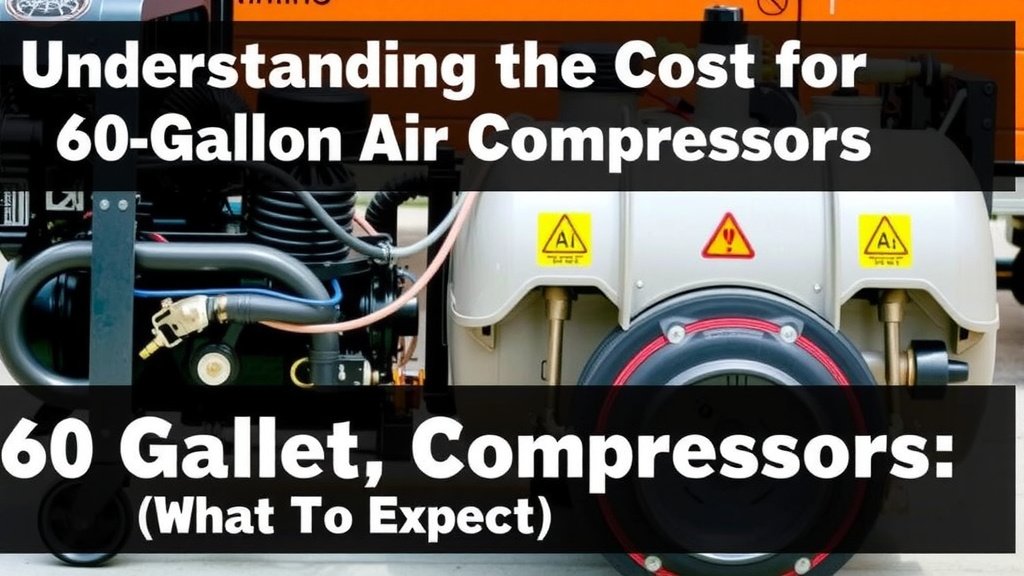
So, you’re curious about how much a 60-gallon air compressor might set you back. You’re in the right place to find out! We’ve looked into the market, and the price tag for these workhorses generally falls between $400 and $1,000. Some premium models might nudge that price higher, but this range covers most of what you’ll find for home and small workshop use. Your final cost hinges on a few key things: the brand reputation, the specific features included, and the overall build quality.
Key Factors Influencing Price
When you’re looking at a 60-gallon air compressor, several factors play a big role in its price. Think of it like buying a car; a basic sedan is different from a fully loaded SUV. Here’s what we found makes a difference:
Brand Reputation and Quality
Just like with any purchase, brand name matters. Companies that have been around for a while and have a solid reputation for making durable tools often come with a slightly higher price. We found that well-known brands tend to cost more because they’ve built trust over years of reliable performance. This doesn’t mean less-known brands are bad, but for peace of mind, sticking with a proven name can be worth the extra dollars. You’re often paying for guaranteed quality and better customer support.
Horsepower (HP) and Cubic Feet per Minute (CFM)
These two specs are really the heart of an air compressor’s performance. Horsepower tells you how much power the motor has to drive the compressor. CFM is how much air it can deliver per minute at a certain pressure. More HP and higher CFM ratings usually mean a higher price. Why? Because they can handle bigger jobs and more demanding tools. For example, if you plan to run multiple air tools at once or use something that gobbles up a lot of air, like a sandblaster, you’ll need a higher CFM. This usually translates to a more robust motor and pump, which cost more to produce.
We’ve seen that a minimum of 3-5 HP is common for 60-gallon models, and CFM ratings often range from 10 to 15 CFM at 90 PSI. Anything above that will likely increase the cost. Make sure the CFM rating matches the air demands of the tools you plan to use. Running a tool that requires more air than your compressor can provide will lead to frustration and poor performance.
Compressor Type: Single-Stage vs. Two-Stage
You’ll typically see two main types of compressors for this size: single-stage and two-stage. Single-stage compressors compress air once. They are generally less expensive and suitable for lighter tasks. Two-stage compressors compress the air twice, resulting in higher pressure and a more consistent air supply. These are usually more durable and efficient for heavy-duty use. Because of the added complexity and superior performance, two-stage models are often pricier than their single-stage counterparts. For a 60-gallon tank, many users opt for a two-stage compressor for better overall capability.
Tank Size and Orientation
While we’re focused on 60-gallon models, the tank itself can influence cost. Most 60-gallon compressors are vertical, meaning they stand tall and take up less floor space. This is great for garages where space is often limited. Horizontal tanks are less common in this size but might be found. The tank material and its design for durability and safety also factor in. However, the 60-gallon capacity itself is the primary driver for this size, so differences between tanks of the same volume are usually minor price-wise, unless one has special coatings or features.
Power Source: Electric vs. Gas
Most 60-gallon compressors you’ll find are electric. They are quieter and cleaner, making them ideal for indoor use in garages or workshops. Electric models require a dedicated circuit, often 240-volt, so ensure your electrical setup can handle it. Gas-powered compressors are less common in this size for workshops, as they are much louder and require ventilation. They offer portability for job sites away from power. Gas models typically cost more upfront and have ongoing fuel costs. For the typical home garage user, electric is the standard and often more budget-friendly choice overall when you factor in running costs.
Understanding the Features That Add Cost
Beyond the core specs, extra features can also add to the price tag of a 60-gallon air compressor. These might include things that enhance usability, durability, or convenience.
Portability and Design
While a 60-gallon tank is large, some models are designed with better mobility in mind. This might include robust wheels, sturdy handles, or a more balanced design for easier maneuvering around your workspace. If a compressor is exceptionally well-built for moving, expect it to cost a bit more. However, for most stationary workshop uses, this isn’t a primary concern.
Noise Level and Vibration Dampening
Air compressors can be noisy! Some manufacturers invest in technologies to reduce noise and vibration. These can include better motor insulation, sound-dampening shrouds, or improved pump designs. If you work in a residential area or simply prefer a quieter environment, you might look for these features. Compressors marketed as “quiet” or “low noise” often come at a premium because of the engineering involved.
Build Materials and Durability
The quality of materials used directly impacts longevity and price. Cast iron pump bodies are generally considered more durable and reliable than aluminum ones, especially for heavier use. Better seals, thicker metal for the tank, and higher-grade components all contribute to a longer lifespan but also a higher initial cost. We found that models built with premium materials tend to be more expensive upfront but can save you money in the long run by avoiding frequent repairs or replacements.
| Compressor Type & Features | Typical Price Range | Best For |
|---|---|---|
| Basic Electric Single-Stage (3-4 HP) | $400 – $600 | Light DIY, occasional use, inflation, air brushing |
| Standard Electric Two-Stage (4-5 HP) | $600 – $850 | Home workshops, automotive work, running multiple tools |
| Premium Electric Two-Stage (5+ HP, Quiet Features) | $850 – $1,000+ | Professional use, heavy-duty tasks, continuous operation |
Making Your Budget Work for You
Deciding on a 60-gallon air compressor means balancing your budget with your needs. Don’t overspend if you don’t need the highest power. Conversely, don’t underspend and get a compressor that can’t keep up.
A Quick Checklist for Your Purchase Decision
When you’re ready to buy, keep these points in mind to ensure you get the best value:
- Assess your tool needs: What CFM and PSI do your air tools require?
- Consider your workspace: Do you need a vertical unit for space saving? Is noise a major factor?
- Prioritize build quality: Look for cast iron pumps and durable construction.
- Brand reliability: Does the brand have a good track record for this type of equipment?
- Electrical requirements: Can your existing power supply handle a 240V compressor if needed?
- Read reviews: See what other users say about performance and longevity.
By carefully considering these factors, you can find a 60-gallon air compressor that fits your budget and reliably powers your projects for years to come. It’s an investment, and taking the time to choose wisely will pay off.
Conclusion
So, you’ve learned that a 60-gallon air compressor typically costs between $400 and $1,000. Your final price depends on factors like brand reputation, horsepower, CFM rating, and whether it’s a single-stage or two-stage model. Investing in a quality compressor means matching its capabilities to your tools and workspace needs. Don’t forget to consider build materials and any extra features for noise reduction or portability. Take the time to assess your specific requirements and compare options before you buy. This thoughtful approach ensures you get a reliable compressor that serves you well for many projects to come.
Frequently Asked Questions
What’s the cheapest a 60-gallon air compressor can be?
You can often find basic electric 60-gallon air compressors for around 400 dollars. These models are usually single-stage and have lower horsepower. They’re suitable for lighter tasks but might struggle with heavy-duty air tools. Always check the CFM rating to ensure it meets your tool’s needs.
Is a two-stage compressor always more expensive than a single-stage one?
Yes, typically a two-stage 60-gallon compressor will cost more than a comparable single-stage model. This is because the two-stage design is more efficient and durable, offering higher pressure and a more consistent air supply. The added complexity in its engineering also contributes to the higher price point.
How much extra do quiet features add to the price of a 60-gallon compressor?
Compressors advertised as “quiet” or having noise-dampening features can add a significant amount to the cost. You might see an increase of $100 to $300 or more compared to a standard model with similar core specs. This premium is for the specialized engineering aimed at reducing operational noise.
Does the tank orientation (vertical vs. horizontal) affect the price of a 60-gallon compressor?
For 60-gallon compressors, tank orientation usually has a minor impact on price. Most are vertical to save floor space, which is a common design choice. Differences in cost between vertical and horizontal tanks of the same volume are generally minimal unless there are other unique design features involved.
Are there any hidden costs to consider when buying a 60-gallon air compressor?
Yes, beyond the purchase price, you might have additional costs. If you buy a 240-volt electric model, you may need an electrician to upgrade your home’s wiring or install a new circuit. You’ll also need appropriate air hoses, fittings, and potentially an air dryer or filter, which add to the overall investment.