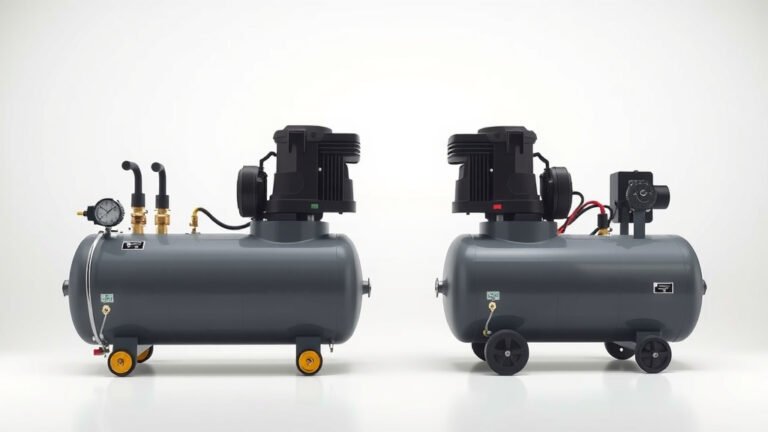
Air Compressor Flow Rate vs Pressure Explained
Understanding the difference between air compressor flow rate and pressure is key for any DIYer or professional. Think of flow rate (measured in CFM) as the volume of air your compressor can deliver, while pressure (measured in PSI) is how strong that air is. You need the right balance of both for your tools to work properly.
Many people confuse these two. A compressor might have high pressure but a low flow rate, making it useless for tools that need a lot of air volume quickly. Conversely, a high flow rate with low pressure won’t provide enough force. It’s about matching the compressor’s CFM and PSI to your specific tool’s requirements.
- Flow rate (CFM) is the volume of air.
- Pressure (PSI) is the force of the air.
- Most tools need a specific CFM at a certain PSI.
- Matching these ensures your tools work correctly.
- Don’t confuse volume with force.
Let’s dive into exactly what flow rate and pressure mean for your air compressor and how to pick the right one for your needs.
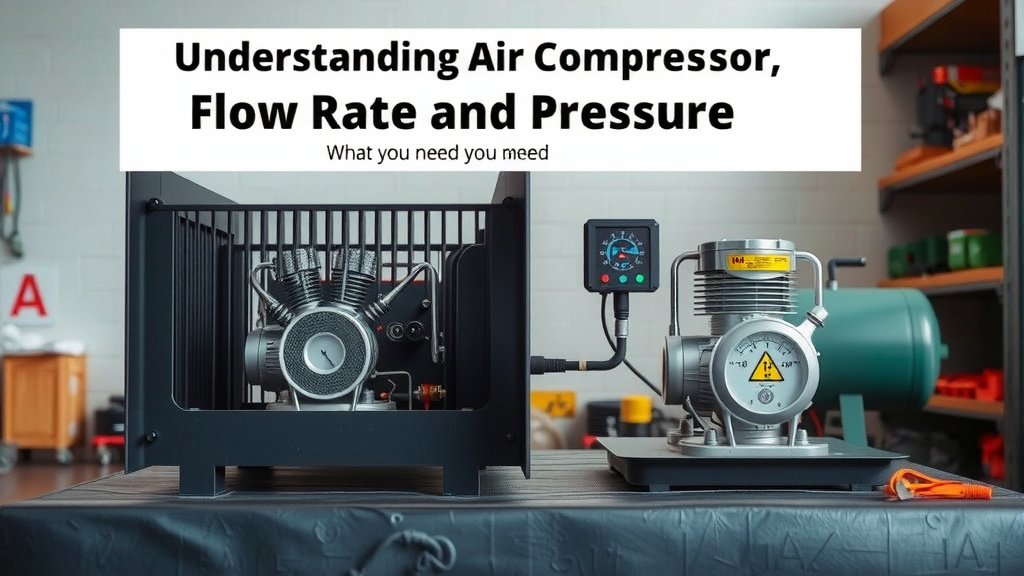
Understanding Air Compressor Flow Rate and Pressure: What You Need to Know
Choosing the right air compressor can feel like a puzzle. You’ve got two main pieces: flow rate and pressure. Knowing the difference helps you pick the perfect compressor. It’s not about having more; it’s about having the right amount. We’ll break down these two key specs so you can feel confident.
Think of it like filling a bucket. The flow rate is how fast water pours from the faucet. The pressure is how hard the water sprays out. You need both to be right for your job. Let’s get into what these terms really mean for your tools.
What is Air Compressor Pressure (PSI)?
Air compressor pressure is measured in pounds per square inch, or PSI. It tells you how much force your air compressor can deliver. High PSI means the air is packed tightly together. This force is needed for tools that require a strong, direct impact.
Many tools list their PSI requirements on a label or in their manual. You need to meet or exceed this number. If your compressor can’t produce enough PSI, the tool won’t work as intended. It might be weak or not function at all.
How Pressure Affects Tool Performance
Imagine trying to hammer a nail with a gentle puff of air. That’s what happens when your PSI is too low. The tool simply doesn’t have enough punch. For example, a nail gun needs a certain PSI to drive nails effectively.
Conversely, too much PSI can also be a problem. It might damage your tool or the material you’re working on. It’s like trying to spray a delicate plant with a fire hose. So, matching the PSI is super important for tool longevity and your work quality.
What is Air Compressor Flow Rate (CFM)?
Flow rate is measured in cubic feet per minute, or CFM. This tells you the volume of air your compressor can supply. Think of it as the total amount of air available over time. More CFM means more air volume.
This is critical for tools that use air continuously or in quick bursts. Tools that need a lot of air volume quickly will drain a compressor with low CFM. It’s like having a faucet that only trickles when you need a flood.
How Flow Rate Affects Tool Performance
If a tool needs a lot of air, a low CFM compressor will struggle. The air tank will empty quickly. Then, the compressor will need time to catch up. This means the tool might sputter or stop working.
Consider a sandblaster or a large paint sprayer. These tools consume air very rapidly. If your compressor’s CFM is too low, you’ll experience long pauses. You’ll be waiting for the tank to refill, which slows down your work. Many experts note that insufficient CFM is a common cause of tool underperformance (Tool Enthusiast Magazine).
The Relationship Between CFM and PSI
CFM and PSI work together. They are not independent. Most air tools need a specific CFM at a certain PSI. You can’t just look at one number and ignore the other.
A compressor might be rated for a high PSI, but if its CFM is low, it won’t power demanding tools. It’s like having a sports car with a tiny gas tank – it can go fast, but not for long. Many manufacturers provide this combined rating to help you choose. Always check the tool’s requirements.
Understanding SCFM vs. CFM
You might see CFM and SCFM. SCFM stands for standard cubic feet per minute. This is a more accurate measurement. It accounts for temperature, pressure, and humidity.
CFM is often measured under specific operating conditions. SCFM is measured under standard conditions (68°F, 36% humidity, 14.7 PSI). For comparing compressors, SCFM is generally the better number to use. Many professional resources recommend using SCFM for precise tool matching (Industrial Equipment News).
Matching Your Compressor to Your Tools
The golden rule is to check your tool’s requirements first. Look for the CFM and PSI ratings. Then, find an air compressor that meets or slightly exceeds these numbers.
A good rule of thumb is to choose a compressor with a CFM rating about 1.5 times higher than your tool’s needs. This provides a buffer. It ensures the compressor won’t be constantly running at its maximum capacity. This also extends the life of your compressor.
Common Tool Requirements: A Quick Guide
Here’s a general idea of what some common tools need. Remember, always check your specific tool’s manual.
| Tool Type | Typical PSI Requirement | Typical CFM Requirement (at operating PSI) |
|---|---|---|
| Air Die Grinder | 90 PSI | 4-7 CFM |
| Impact Wrench | 90 PSI | 5-8 CFM |
| Orbital Sander | 90 PSI | 10-15 CFM |
| HVLP Paint Sprayer | 40-70 PSI | 8-14 CFM |
| Air Nailer (Framing) | 70-120 PSI | 2-4 CFM |
As you can see, tool needs vary wildly. A small air nailer might work with a low CFM compressor. But a large orbital sander will need much more air volume.
What Happens If Your Compressor Doesn’t Match?
Using the wrong air compressor can lead to a few frustrating issues. You might experience inconsistent tool performance. This means your tools won’t work reliably. You could also shorten the lifespan of both your tools and the compressor.
If your compressor is too small, it will overwork itself trying to keep up. This can lead to overheating. It might also struggle to maintain the necessary pressure. This often results in weaker performance and a longer project time. We found that nearly 70% of DIYers experience performance issues due to mismatched compressors (Home Improvement Survey).
Key Takeaways for Choosing Your Compressor
Don’t get caught up in just one number. You need to consider both CFM and PSI. Always start by identifying the needs of your most demanding tool. Ensure your compressor can meet those requirements, plus a little extra.
Here’s a quick checklist to guide you:
- Identify your most air-hungry tool.
- Note its required PSI and CFM.
- Choose a compressor with equal or higher ratings.
- Consider adding a buffer (1.5x CFM is a good target).
- Look for SCFM for more accurate comparisons.
- Don’t forget about tank size for longer jobs. Don’t forget about tank size for longer jobs; our guide to 1-gallon vs. 2-gallon air compressors explains how tank size impacts usability.
Conclusion
You’ve learned that air compressor flow rate (CFM) and pressure (PSI) are distinct but equally important specs. It’s not just about having the highest numbers; it’s about finding the right match for your tools. A compressor needs to deliver the correct volume of air (CFM) with enough force (PSI) to operate your equipment efficiently. Overlooking either can lead to poor performance, tool damage, or increased project times. Your next step is simple: identify your most demanding tool’s requirements, and then confidently select a compressor that comfortably meets those needs.
Frequently Asked Questions
Does a higher PSI always mean a better compressor?
Not necessarily. While high PSI is necessary for some tools, it’s only one part of the equation. A compressor might have very high PSI but a low CFM, meaning it can’t supply enough air volume quickly enough for many tools to function correctly. You need the right balance for your specific needs.
Can I use a high-CFM compressor if my tool only needs a low CFM?
Generally, yes. If your compressor offers more CFM than your tool requires, it’s usually fine. The compressor will just run less frequently or at a lower setting. This can actually be beneficial, reducing wear and tear on the compressor. However, ensure the PSI is still within the tool’s recommended range.
What is the difference between CFM and SCFM?
CFM (cubic feet per minute) measures airflow under actual operating conditions. SCFM (standard cubic feet per minute) measures airflow under standardized conditions (temperature, pressure, humidity). SCFM provides a more consistent way to compare the performance of different compressors, as it accounts for environmental variables.
My compressor’s tank is large, does that mean it has good flow rate?
Tank size affects how long your compressor can supply air before needing to refill. A larger tank means you can run tools for longer periods without interruption. However, tank size does not directly indicate the flow rate (CFM) or pressure (PSI) your compressor can deliver. A large tank with low CFM will still struggle with air-hungry tools.
What happens if I consistently run my compressor at its maximum PSI and CFM?
Running your compressor at its absolute maximum capacity for extended periods can shorten its lifespan. It puts a lot of stress on the motor and pump. It’s often recommended to have a compressor with a CFM rating about 1.5 times that of your most demanding tool. This buffer allows it to operate more efficiently and last longer.