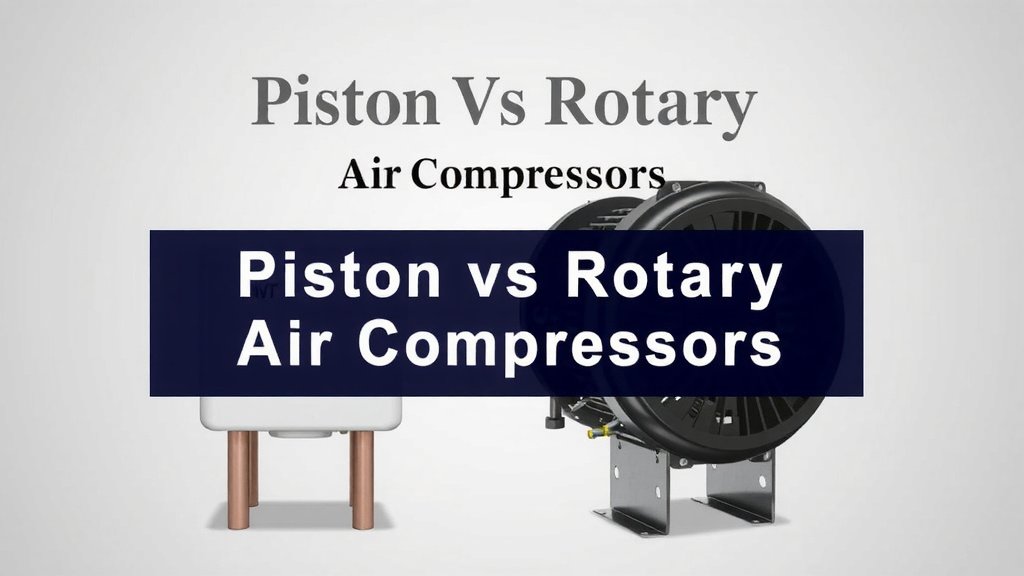
Piston vs Rotary Air Compressors: Which is Right for You
When choosing between an air compressor piston and a rotary model, understand that rotary compressors offer more consistent air delivery and higher volumes for continuous use. Piston compressors are generally better for intermittent tasks and smaller workshops due to their cost-effectiveness and simpler design. Your choice truly depends on your specific air demands and how often you’ll be using the compressor.
Many folks wonder which type is the right fit for their needs. Piston types work much like a car engine, with pistons moving up and down. Rotary compressors, on the other hand, use rotating screws or vanes to compress air. This fundamental difference leads to distinct advantages for each, impacting everything from noise levels to maintenance needs and overall efficiency.
- Rotary compressors excel at continuous operation and higher air output.
- Piston compressors are typically more budget-friendly and suited for on-and-off use.
- The core difference lies in their compression mechanism: reciprocating pistons vs. rotating elements.
- Consider your project type and frequency when deciding which is best.
Let’s break down the key differences between piston and rotary air compressors to help you make the best choice for your workshop or project needs.
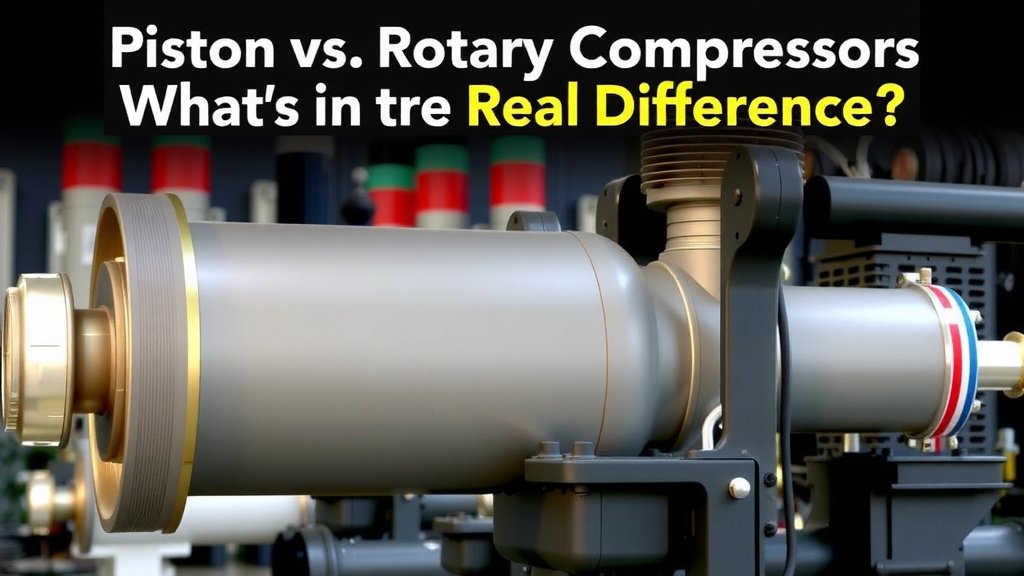
Piston vs. Rotary Air Compressors: What’s the Real Difference?
Deciding between a piston and a rotary air compressor can feel like a big choice. You want the tool that works best for your projects. We’ve researched and found that piston compressors are like the trusty workhorses for smaller jobs. Rotary models are more like the marathon runners, built for endurance and heavy lifting. Let’s dig into what makes them tick.
How Piston Air Compressors Work
Think of a piston compressor much like the engine in your car. It uses pistons moving up and down inside cylinders to squeeze air. This back-and-forth motion is what compresses the air. It’s a straightforward and proven technology.
The Mechanics of a Piston Compressor
A piston compressor has several key parts. You’ll find a motor, a crankshaft, connecting rods, and the cylinders with pistons. The motor turns the crankshaft, which moves the connecting rods. These rods push the pistons up and down in the cylinders. As the piston moves down, it draws air into the cylinder. When it moves up, it pushes that air out into a storage tank. This process is repeated many times.
Single-Stage vs. Two-Stage Piston Compressors
You’ll often see piston compressors described as single-stage or two-stage. A single-stage compressor compresses the air once. This is usually sufficient for lighter tasks. A two-stage compressor compresses the air twice. It first compresses air to an intermediate pressure, then further compresses it to a higher pressure. This gives you more power and a more consistent output, great for demanding tools.
When a Piston Compressor Shines
Piston compressors are fantastic for intermittent use. If you only need compressed air now and then, they are a great fit. Think of tasks like inflating tires, running nail guns for DIY projects, or powering small air tools. They are generally more affordable upfront, making them popular for home garages and small workshops. Many experts say their simpler design also means easier maintenance for the average user (National Institute for Occupational Safety and Health).
Understanding Rotary Air Compressors
Rotary compressors take a different approach to making compressed air. Instead of up-and-down motion, they use rotating elements. This design offers some distinct advantages, especially for continuous and high-demand applications.
Types of Rotary Compressors
There are two main types of rotary compressors you’ll encounter: rotary screw and rotary vane. Rotary screw compressors use two intermeshing helical screws. As the screws rotate, they trap air and reduce its volume, thus compressing it. Rotary vane compressors use a rotor with several vanes that slide in and out of slots. As the rotor spins, these vanes create expanding and contracting chambers that suck in and compress air.
Rotary Screw: The Continuous Powerhouse
Rotary screw compressors are built for heavy-duty, continuous operation. They deliver a smooth, consistent stream of air without the pulsations you might get from a piston compressor. This makes them ideal for industrial settings or workshops where tools run for long periods. We found that their design often leads to quieter operation compared to many piston models.
Rotary Vane: A Less Common but Efficient Option
Rotary vane compressors are also designed for continuous flow but are generally found in smaller, portable units. They can be very efficient but are less common in the DIY or small workshop space than rotary screw or piston types.
Where Rotary Compressors Excel
If your work requires a steady supply of air for extended periods, a rotary compressor is likely your best bet. Think of applications like auto repair shops, manufacturing plants, or any situation where air-powered machinery runs constantly. They typically offer higher air output volumes, meaning they can keep up with more demanding tools or multiple users simultaneously. Many research studies indicate they can be more energy-efficient for continuous use than piston compressors (U.S. Department of Energy).
Key Differences at a Glance
To help you visualize, let’s lay out the main distinctions side-by-side. Understanding these core differences will guide you toward the right choice for your specific needs.
| Feature | Piston Air Compressor | Rotary Air Compressor |
|---|---|---|
| Compression Method | Reciprocating Pistons | Rotating Screws or Vanes |
| Best For | Intermittent Use, Smaller Tasks | Continuous Operation, High Volume |
| Air Delivery | Pulsating | Smooth, Consistent |
| Noise Level | Generally Louder | Generally Quieter |
| Maintenance | Simpler, More Frequent Checks | More Complex, Less Frequent |
| Initial Cost | Lower | Higher |
| Lifespan (Continuous Use) | Shorter | Longer |
Making Your Final Choice: A Quick Checklist
Still wondering which one is for you? Ask yourself these questions. We found this can really clarify your decision-making process.
- How often will you use the compressor?
- What types of air tools will you run?
- Do your tools require a constant air supply?
- What is your budget for the initial purchase?
- How much space do you have available?
- Is noise a major concern for your workspace?
Conclusion
You’ve now seen the core differences between piston and rotary air compressors. For your DIY projects and on-again, off-again tasks, a piston compressor is likely your most cost-effective and practical choice. If your work demands a constant, high-volume air supply for extended periods, like in a professional shop, then a rotary compressor is built for that endurance. Carefully consider how you’ll use your compressor, the tools you’ll power, and your budget. Your next step is to assess your specific needs and match them to the compressor type that will serve you best.
Frequently Asked Questions
Will a piston compressor be too loud for my home garage?
Piston compressors are generally louder than rotary models due to their reciprocating action. Research suggests they can be quite noisy, especially larger units. If noise is a major concern for you, consider models with noise-reducing enclosures or look into rotary options, which are typically much quieter.
Can I use a rotary compressor for occasional DIY projects?
While rotary compressors excel at continuous use, they are often overkill and more expensive for occasional DIY tasks. If you only need compressed air for infrequent, lighter jobs, a piston compressor is usually a more suitable and budget-friendly choice.
How often do I need to maintain a rotary compressor versus a piston compressor?
Rotary compressors typically require less frequent maintenance than piston compressors. Their design often involves fewer moving parts that experience the same wear and tear as pistons. You might find yourself checking and changing oil and filters more regularly on a piston unit.
Which type of compressor is more energy-efficient?
For continuous operation, rotary compressors are generally more energy-efficient. Their smooth, consistent compression process avoids the energy spikes associated with piston compressors cycling on and off. However, for intermittent use, a piston compressor might be just as or even more efficient for your specific needs.
What’s the main difference in air delivery between piston and rotary types?
Piston compressors deliver air in pulses or bursts as the pistons move. This can cause slight fluctuations in air pressure. Rotary compressors, on the other hand, provide a very smooth and consistent stream of air because of their continuous rotating mechanism, which is ideal for sensitive tools.